
Claude Opus 4.8 is here: Agent capabilities make a big leap, and it’s learned to say "I’m not sure"

On May 28, Anthropic released **Claude Opus 4.8**, focusing on upgrades to **Agent** and **Coding** capabilities. **Claude Code** simultaneously launched **dynamic workflows**. The price remains unchanged, but the **Fast mode** cost has dropped to one-third of the previous version. The model has also learned to **proactively admit uncertainty**, with the **hallucination rate** reduced by about **fourfold**.
On May 28, Anthropic upgraded Claude Opus to 4.8. It’s only been a few months since Opus 4.7 launched—this release cadence is the fastest yet.
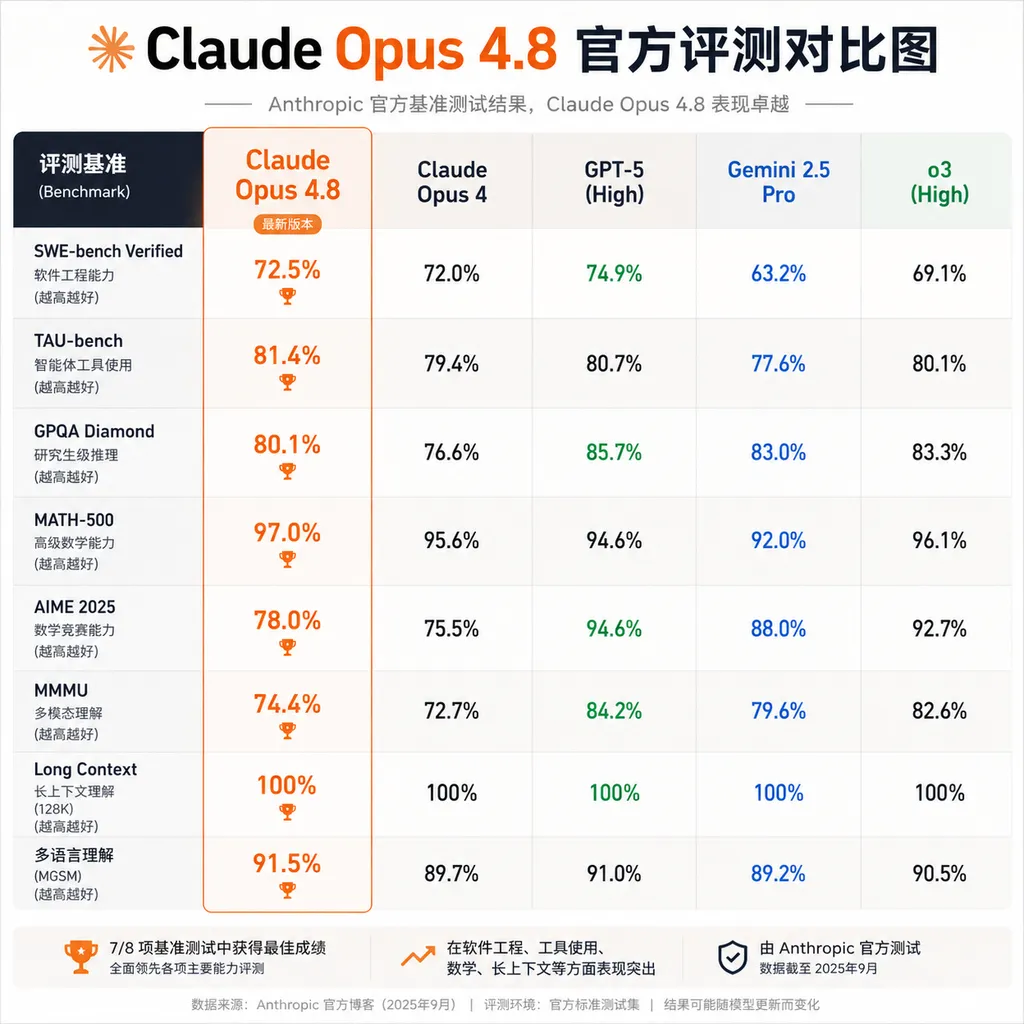
According to Anthropic, this isn’t a routine minor patch but a push across multiple fronts: programming, agents, long-task stability, multimodality, and honesty. Pricing remains unchanged—input at $5 per million tokens, output at $25 per million tokens. The context window is still 1M, with a maximum output of 128K and training data up to January 2026. The biggest change is in the Fast mode: speed increased 2.5×, while the price dropped to one-third of the previous generation (for reference, 4.7 was 6× the price, 5.5 was 2.5× price with 1.5× speed—this update clearly cuts cost-performance one more step down).
Why the Rush to Release 4.8
A not-so-secret theory in the community is that OpenAI’s 5.5 release last month was so strong that Claude saw visible user attrition. Opus 4.7 actually had a good reputation, but for agent-style long tasks, 5.5 feels noticeably more stable. Anthropic broke the usual Sonnet release rhythm and pushed Opus 4.8 directly to win back the enterprise agent market.
A side note that’s puzzling many—Sonnet 4.7 still hasn’t shown up. A running joke in the community says “Opus 4.7 might actually be Sonnet 4.7 renamed.” Anthropic hasn’t commented—take that as just fun speculation.
Capability Overview: Moving Deeper Toward Agent Competence
This time the official benchmarks are very straightforward, with all focus placed squarely on agent-related tasks:
- 84% on Online-Mind2Web, the key dataset for measuring real web operation capabilities—hovered in the 70s during 4.7
- Browser Agent / Computer Use performance clearly surpasses 4.7, marking the most concrete upgrade
- Enterprise Agent reasoning greatly improved, especially in multi-step, chained-task scenarios
- Multi-step task speed is faster, with reduced token usage
Taken together, the message is clear: Anthropic is forging Opus 4.8 as an Agent engine. The goal is to “send a Claude to work for an hour without crashing,” not just to improve chat experience by a notch.
Multimodality also got a boost—handling of PDFs, charts, scans, and mixed-format tables (unstructured data) was explicitly emphasized. Teams working on enterprise document automation will notice this right away.
Adjustable Thinking Intensity, Introducing the New UltraCode Mode
You can now tune how much "effort" Claude puts into tasks on Claude.ai. The concept is similar to OpenAI’s reasoning effort, but Anthropic refined it further and added a dedicated UltraCode tier for coding—letting the model spend extra tokens and more self-check iterations to solve complex engineering problems.
For individual users, it’s a way to trade quality for cost or vice versa; for API users, it acts as a clear knob to balance cost vs. quality.
Dynamic Workflows: Taking Claude Code Toward True Parallel Agents
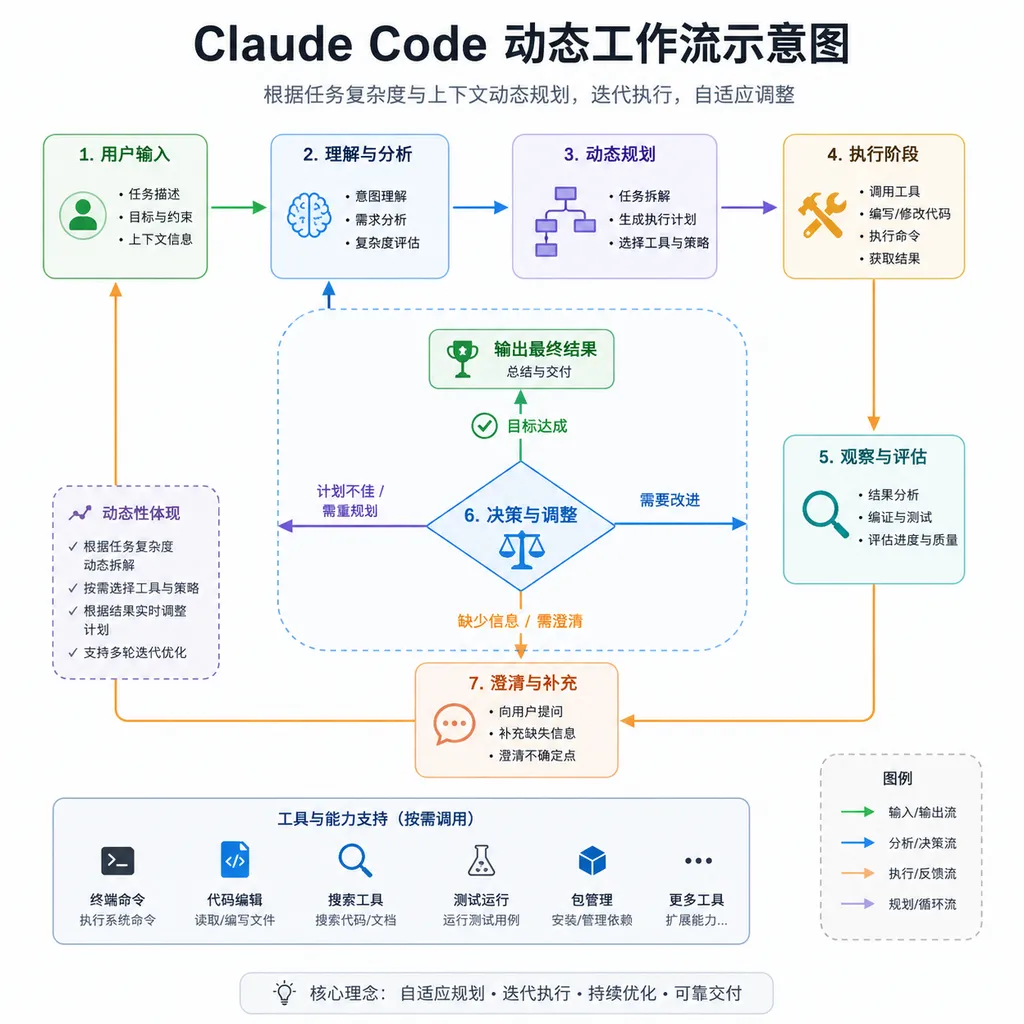
Bundled with the model release comes a new Claude Code feature, Dynamic Workflows (in research preview).
Here’s how it works: you give Claude a massive task, it decomposes it, spins up dozens or even hundreds of subagents in parallel, then merges the results. Essentially, Claude Code evolves from “a senior engineer” into “a tech lead who can run meetings, coordinate teams, and manage downstream workflows.”
This differs from past main-process + serial subtask structures—it’s closer to true agent swarm orchestration. Compared to the open-source ecosystems (CrewAI, AutoGen, LangGraph, etc.), Anthropic has now built orchestration directly into Claude Code, so users can skip scaffolding by hand.
How far can it scale? The official docs don’t specify a limit, but some community users have already tested it by scanning an entire mid-size codebase for potential bugs. The feedback: “It completes successfully without losing track midway.” That’s exactly how the “long task chain stability” mentioned earlier manifests product-side.
“Honesty” as a Selling Point
Interestingly, what media picked up most from this launch is honesty.
Large models have an old bad habit: they sometimes introduce a bug mid-code but confidently claim it’s “fixed.” Anthropic explicitly targeted this behavior in training—teaching Opus 4.8 to admit uncertainty rather than fabricate conclusions.
The official claim: Opus 4.8 is about four times less likely to miss bugs in its own generated code than 4.7. Early testers also report it’s more willing to acknowledge insufficient information and less prone to make unsupported claims.
This might seem minor, but it’s critical: for developers, hearing “I’m not sure” is far more valuable than “All fixed” (when it’s actually not). In long, complex agent runs, that honesty prevents cascading errors that waste debugging time.
In alignment metrics, Anthropic says 4.8’s rates of deception and misuse cooperation both dropped further from 4.7, now on par with their internally most aligned “Claude Mythos Preview”.
Rapid Rollout Across Channels
This release was accompanied by a full-stack infrastructure rollout:
- Anthropic Website/App: live
- Official API Endpoint: live
- OpenRouter: chat and API live
- Claude Code: live with UltraCode and Dynamic Workflows available
- Cursor: live; switch to 4.8 directly inside the editor
- LMArena / LiveBench: not yet live; blind-test leaderboard data coming soon
For developers in mainland China, OpenAI Hub now supports Claude Opus 4.8, meaning you can access it via the OpenAI-compatible format—no need for proxies or multiple SDK setups:
from openai import OpenAI

client = OpenAI(
    base_url="https://api.openai-hub.net/v1",
    api_key="your-api-key"
)

resp = client.chat.completions.create(
    model="claude-opus-4-8",
    messages=[
        {"role": "system", "content": "You are a senior Rust engineer."},
        {"role": "user", "content": "Help me use tokio to write a concurrent task scheduler with backpressure support, including test cases."}
    ],
    max_tokens=8000
)

print(resp.choices[0].message.content)
To try the Fast mode, just swap the model name for the corresponding fast version. By official pricing, the cost for large-scale agent workloads is considerably lower than during the 4.7 era.
How to Choose in Practice
Some scenario-based recommendations:
- Coding and Claude Code workflows: switch to 4.8 without hesitation. The combination of improved honesty + UltraCode mode + Dynamic Workflows provides a noticeably bigger upgrade than the version number implies
- Browser Agent / Computer Use: with that 84% Online-Mind2Web score, 4.7 can already retire
- Enterprise document processing, long tables / PDF extraction: one of the main upgrade areas this round—try rerunning current pipelines to compare
- Pure chat or lightweight Q&A: upgrade isn’t crucial; 4.7 or even Haiku remain fine options
A Quick Assessment
Two Opus releases in half a year—clearly Anthropic’s pace is being pushed by competition. But this time, 4.8’s improvements aren’t superficial: UltraCode, Dynamic Workflows, massively improved honesty, and the halved–again Fast-mode pricing—any of these alone would count as serious product-level progress. Combined, they push Claude significantly further along the “Agent engine” trajectory.
Whether Claude can hold its ground post-5.5 will depend on developer feedback in the coming weeks. But at least from this release, Anthropic appears directionally sound: doubling down on honesty, long-task stability, and parallel orchestration—foundational pillars of the agent era—rather than chasing bigger parameter counts or benchmark leaderboards. If this path holds, the Opus line’s moat in the enterprise agent domain will only deepen.
References
- Anthropic Officially Launches Claude Opus 4.8 - linux.do: community roundup of key features and benchmarks
- Claude Opus 4.8 Official Announcement (machine‑translated) - linux.do: Chinese translation of Anthropic’s official announcement
- Everything You Want to Know About Opus 4.8 - linux.do: comprehensive pricing, context limits, and channel availability overview
- Earlier Than the Leaks: In‑Depth Claude Opus 4.8 Breakdown - Zhihu: domestic analysts' deep dive on the configurable reasoning‑intensity mechanism
- r/ClaudeAI Community Discussion: developer testing feedback and comparisons
- r/ClaudeCode Community Discussion: practical experiences with Dynamic Workflows


