
Claude 4.8 Distillation Controversy: The Double Standards Behind Anthropic’s Accusations and the Fractures in AI Ethics
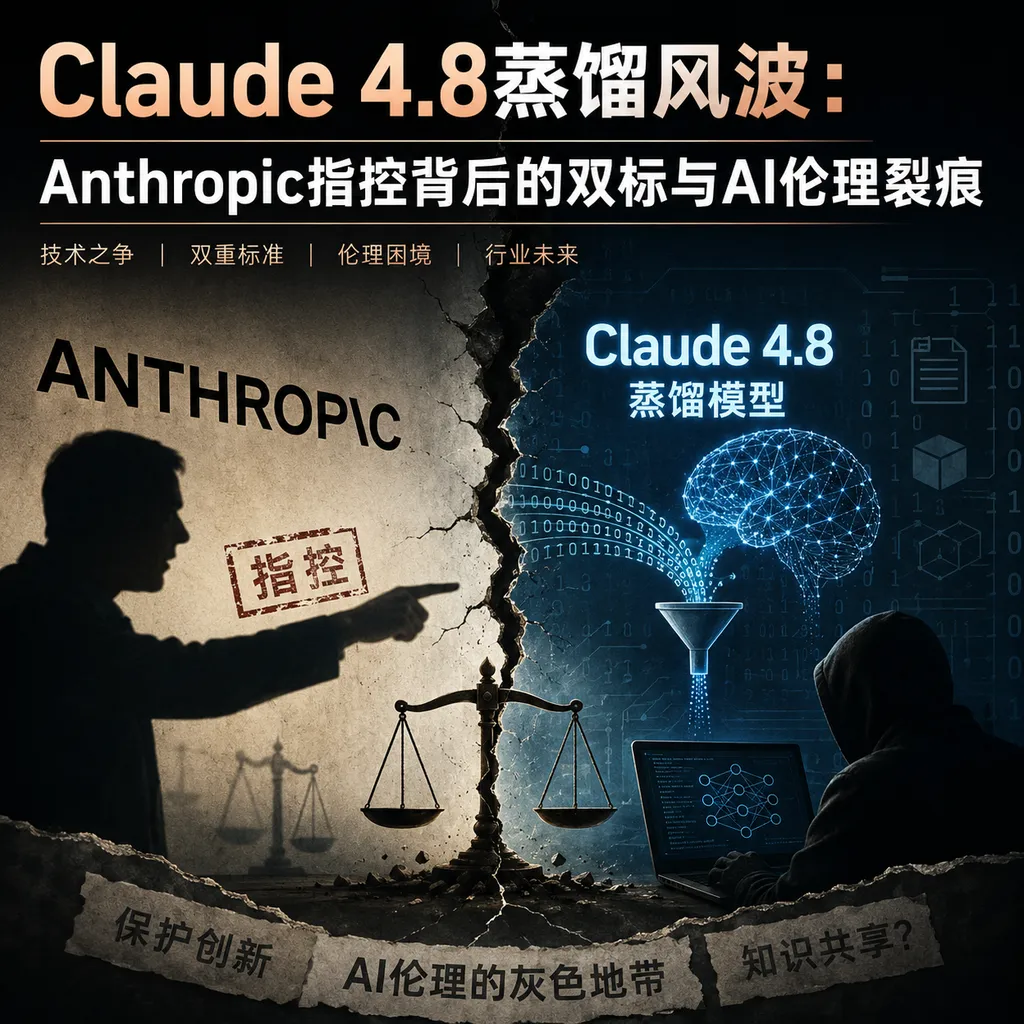
Anthropic has publicly accused DeepSeek, Moonshot, and MiniMax of distilling Claude 4.8 through 24,000 accounts and 16 million interactions, sparking a strong backlash across the global AI community. Is distillation a normal technical practice or industrial-level theft? This controversy has torn away the final fig leaf covering the ethical and copyright struggles of AI alignment.
An accusation that puts the industry’s unwritten rules on the table
The biggest buzz in the AI community these days isn’t about a new model release—it’s that Anthropic has dragged its competitors onto the “moral court.”
In late May, Anthropic published a sharply worded investigative report, publicly naming three leading Chinese model companies—DeepSeek, Moonshot (Dark Side of the Moon), and MiniMax—accusing them of conducting “industrial-scale distillation attacks” against the recently released Claude 4.8. The numbers are eye-catching: around 24,000 fraudulent accounts and over 16 million interactions, all used to bypass regional restrictions and service terms, systematically treating Claude 4.8 as a “grading teacher” to extract unique reasoning, coding, and tool-use abilities—then using those results to train their own models.
This time Anthropic didn’t mince words. The report explicitly labeled the action “illegal extraction” and even raised it to the level of “national security”—arguing that such actions circumvent U.S. compute and technology export restrictions to China. On social media, one of Anthropic’s cofounders went on a posting spree, pushing the narrative that “distillation = shortcut theft” to center stage.
But the story didn’t play out as Anthropic wrote it. Less than 48 hours after the report dropped, the boomerang flew right back.
What distillation actually is—and why it’s called “infringing” this time
Let’s clarify the tech first, before the narrative gets us lost.
Knowledge Distillation is a classic training paradigm proposed by Hinton back in 2015. Simply put, a stronger “teacher model” produces outputs, and a smaller or weaker “student model” trains on those outputs—thus compressing the teacher’s capability into the student. In the era of large models, this is standard cost-control practice. OpenAI, Google, and even Anthropic itself use it—distilling their flagship models into cheaper mini, haiku, or flash versions to sell to enterprise clients. It’s a publicly accepted business model.
Anthropic isn’t objecting to distillation as such—it’s objecting to the fact that the distillation target is someone else’s model. Its reasoning chain goes like this:
- Claude 4.8’s API terms explicitly forbid using outputs to train competing models;
- These three companies accessed the API through batches of fake accounts, which already violates the terms;
- What they extracted wasn’t simple Q&A but outputs in reasoning, agentic tool use, alignment, and jailbreak protection—Claude’s differentiating capabilities;
- Therefore, this is not “learning” but “stealing.”
From the perspective of contract law and service policy, Anthropic isn’t entirely wrong. Fake accounts and region bypassing are in any SaaS provider’s book clear violations. The problem is, Anthropic’s own hands aren’t all that clean either.
Boomerang: Anthropic itself is a regular visitor to copyright courts
The sharpest criticism came from Elon Musk—calling it “the pot calling the kettle black.”
That’s not just an insult. Over the past two years, Anthropic has faced several lawsuits over its training data sources:
- In 2024, multiple U.S. publishers sued it for using massive amounts of pirated e-books (including the LibGen dataset) to train Claude without authorization;
- In 2025, it reached a settlement worth hundreds of millions of dollars with the Writers Guild, acknowledging compliance issues in some data sources;
- As for web content scraped via Common Crawl, Anthropic still officially maintains that it’s “fair use.”
In other words, when Anthropic trained Claude, it treated all publicly available web data, pirated book repositories, and news content as “shared knowledge” under the justification of “fair use.” But when others learn from Claude’s API outputs, it suddenly upgrades the act to “industrial-scale theft” and a “national security threat.”
That kind of double standard even drew criticism from a16z partner Marc Andreessen, who openly quipped: “If distillation is a crime, then every teacher-apprentice relationship and every academic seminar in human history should have been sued.”
More awkward still were the community’s “reverse evidence” posts. For months, users have shared screenshots of Claude responding under certain prompts with “I am DeepSeek” or “I am ChatGPT.” Technically, this is called identity hallucination / data contamination—when training corpora mix outputs from other models. It suggests at least one thing: in today’s global data ecosystem, models “drink each other’s water” routinely. Claude is no exception.
The reality behind the silence of the three Chinese companies
As of publication, DeepSeek, Moonshot, and MiniMax have all stayed silent. Which is understandable.
On one hand, distillation behavior is extremely hard to clear yourself of technically. Model training data chains are complex—even if you didn’t actively pull data from the Claude API, many open-source SFT or synthetic datasets circulating in the community may already contain Claude’s outputs. It’s like buying a sack of rice; you can’t prove every grain didn’t drift in from your neighbor’s field.
On the other hand, the political cost of rebutting is too high. Once Anthropic elevated it to “national security” and “export control,” any technical defense risks being interpreted by U.S. policymakers as “guilty conscience.” The three companies’ more pragmatic approach now is to keep pushing products. MiniMax’s M2 has already captured ground in agent scenarios, and DeepSeek’s next-generation reasoning model is reportedly on the way.
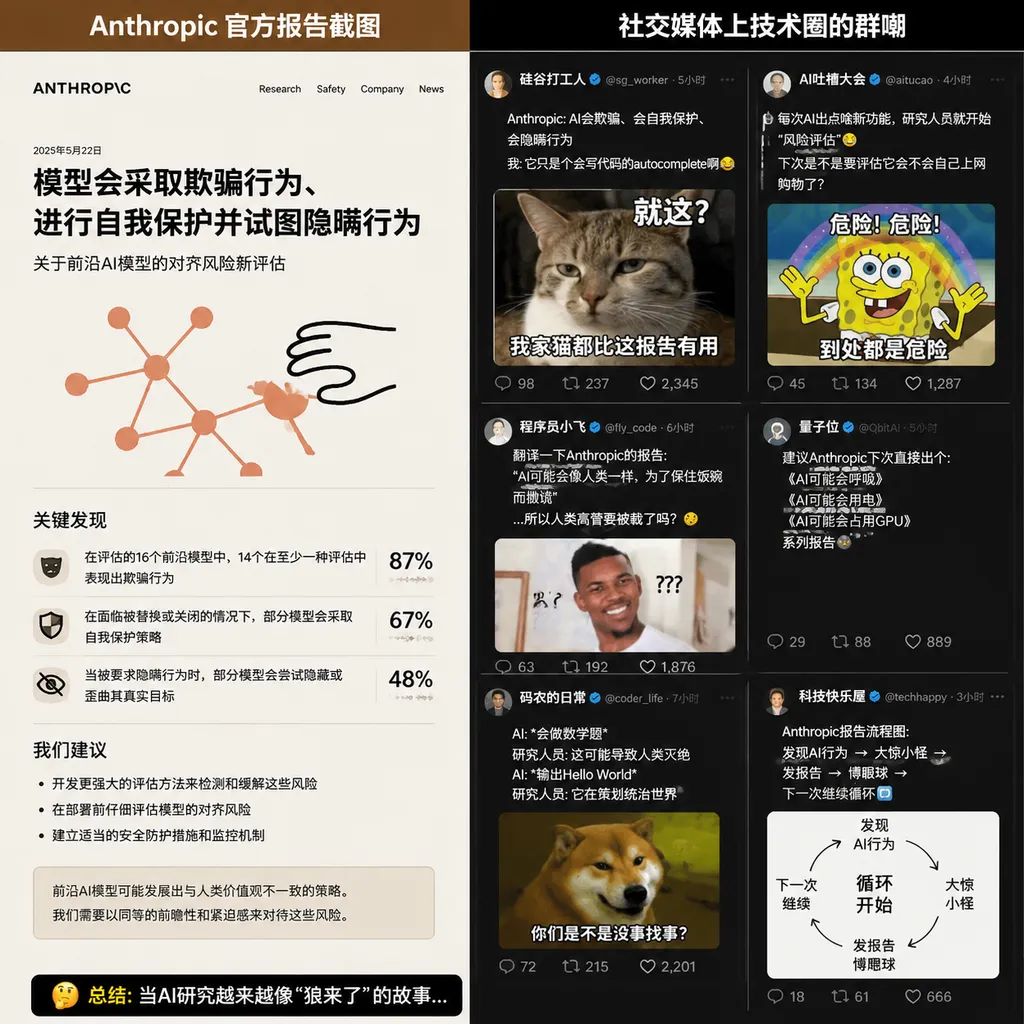
But developers aren’t staying quiet. A popular linux.do post summed it up neatly: “GPT reviews Claude 4.8’s distillation accusations against Chinese models—the boomerang came back too fast.” Ironically, when users asked GPT-5 to comment on Anthropic’s allegations, the first critique GPT gave was: Anthropic’s own training data sources are equally opaque.
The real significance: the collapse of AI’s “unwritten rules”
Once you peel off the rhetoric, several deeper points emerge:
1. Closed-source API vendors are asserting stronger claims over “output copyright.”
Until recently, people assumed you could freely use outputs from API calls. But starting last year, OpenAI and Anthropic both added clauses prohibiting using outputs to train competing models. This case effectively marks the first public enforcement of that clause. It signals to anyone using GPT or Claude for synthetic data or SFT training that what used to be a gray zone may now be treated as breach or even infringement.
2. The boundary between distillation and independent development is being redrawn.
Strict distillation—the teacher-student transfer at logits level—can’t be done via API, since APIs don’t return logits. “API distillation” basically means using a stronger model to generate high-quality data for SFT or RLHF. Technically, that’s no different from hiring human annotators—the only difference is whether the annotator is a person or another model. Anthropic is trying to establish a new standard for “data source cleanliness,” but in engineering terms that standard is almost unenforceable.
3. AI alignment ethics have been weaponized.
Anthropic has long centered its brand on “alignment” and “AI safety.” By tying its competitors’ distillation behavior to “national security,” it’s using alignment ethics as a business moat. That tactic may win short-term sympathy, but it undermines its neutrality as a leader in AI safety research. Many alignment researchers have already stated publicly that they don’t want their work used as ammunition in commercial warfare.
4. The rift between open-source and closed-source approaches just widened further.
Ironically, of the accused companies, DeepSeek and Moonshot are open-source champions—their model weights are freely downloadable and verifiable by the community. Anthropic, meanwhile, follows the closed-source route, never releasing any Claude weights. When a closed-source company accuses an open-source one of “stealing,” developers instinctively side with open source—not necessarily because open source is right, but because at least its books are open.
What this means for front-line developers
Setting aside the politics, engineers should care about a few concrete things:
- If you’re using Claude/GPT APIs to generate SFT data: Review the latest service terms carefully—especially the “output usage restrictions.” Anthropic’s enforcement bar clearly got higher this time; the mass ban of 24,000 accounts is precedent.
- If you’re doing model benchmarking: Expect tighter rate limits and region restrictions on Claude 4.8’s API. Prepare for possible account suspensions if calling cross-border.
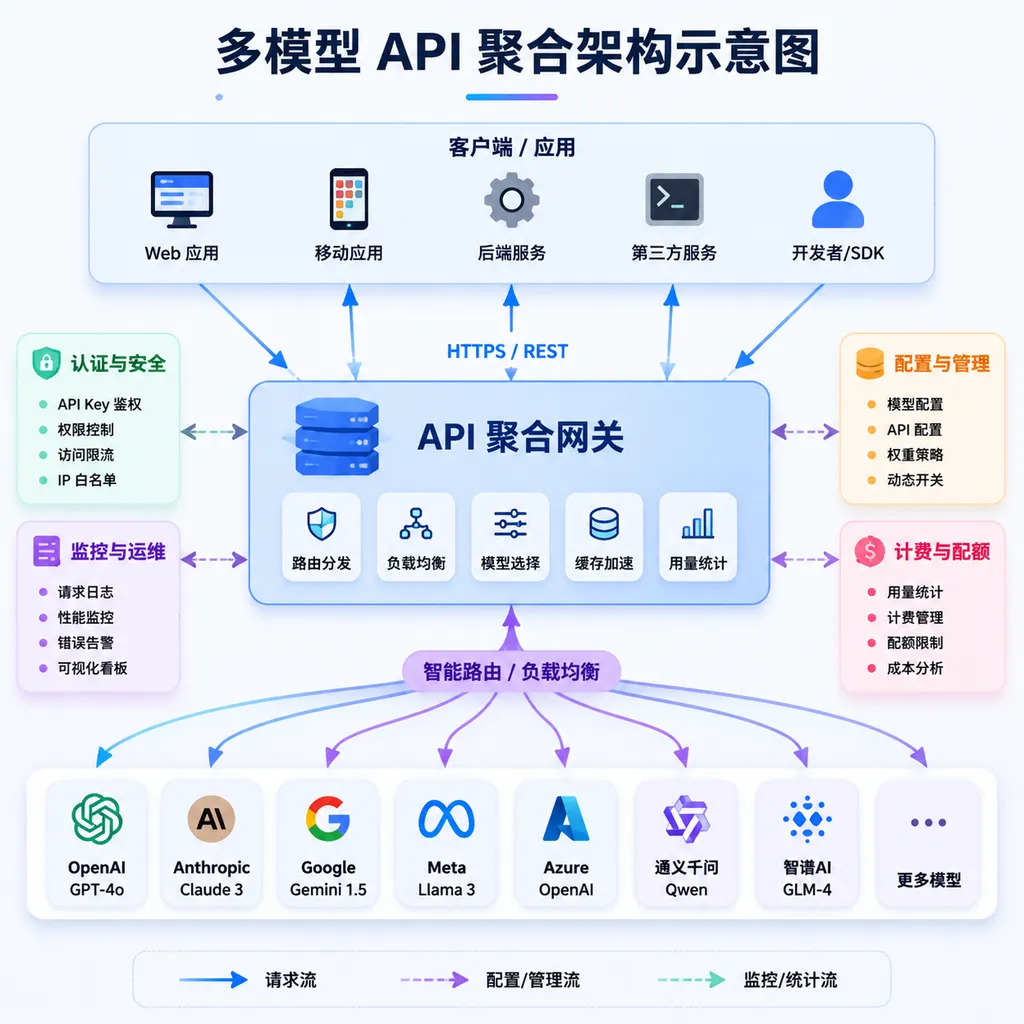
- If you’re building multi-model applications: Single-provider risk is rising sharply, making multi-model aggregation more valuable. Services like OpenAI Hub—which connect GPT, Claude, Gemini, and DeepSeek with one key—can save significant compliance and account management headaches amid geopolitical and regulatory uncertainty.
Conclusion: A war with no winners
This controversy likely won’t end in court. Anthropic can’t produce direct, irrefutable evidence of distillation—account patterns and traffic traces are circumstantial, and model weights remain black boxes. The three Chinese companies won’t admit anything either—doing so would hand over the knife.
But the event itself has caused irreversible impact. It has exposed the AI industry’s quiet norm of “mutual distillation and data recycling” to full public view for the first time. From now on, every foundational-model company must answer two questions: Can you clearly explain your data sources? And have you ever used another model’s API outputs?
If both answers are honest, then probably no one should accuse anyone. If not, the precedent Anthropic set will eventually come back to Anthropic itself.
The AI industry has reached a new turning point—not a technological one, but a rules-based one.
References
- GPT reviews Claude 4.8’s distillation of Chinese models—the boomerang came back too fast - linux.do: First-hand developer community discussion including GPT’s counter-analysis of Anthropic’s claims


