
Anthropic opens Mythos testing to the EU
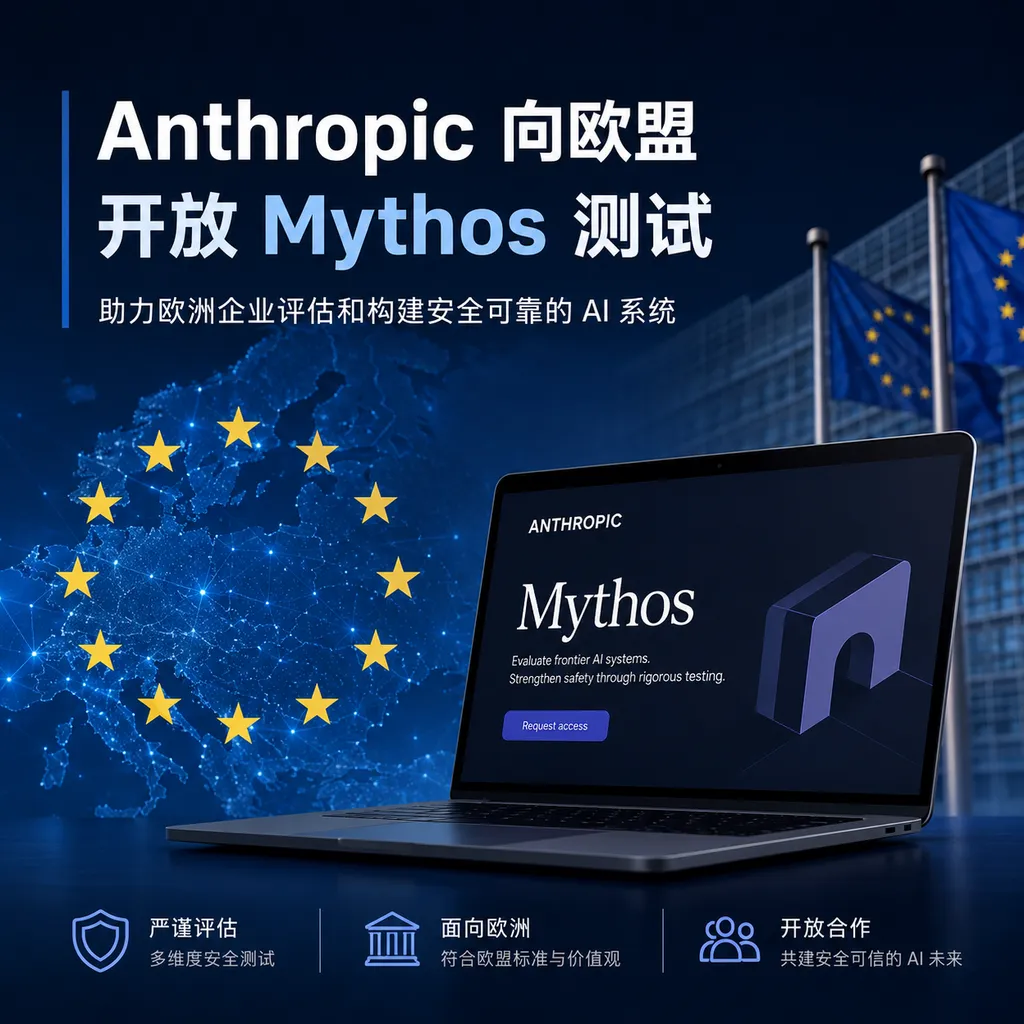
Anthropic will allow the EU Cybersecurity Agency to test the Mythos model through the Project Glasswing program, making it the first EU institution to gain access. The model has sparked security controversy due to its powerful vulnerability‑discovery capabilities.
Anthropic Opens Mythos Model Test Access to the EU Cybersecurity Agency
Anthropic has decided to grant the European Union Agency for Cybersecurity (ENISA) test access to its controversial AI model Mythos, making ENISA the first EU institution eligible to access the model. The decision follows weeks of intensive lobbying by EU officials and marks Anthropic’s move toward a more open yet cautious approach in handling high-risk AI capabilities.
Why the EU Is So Eager
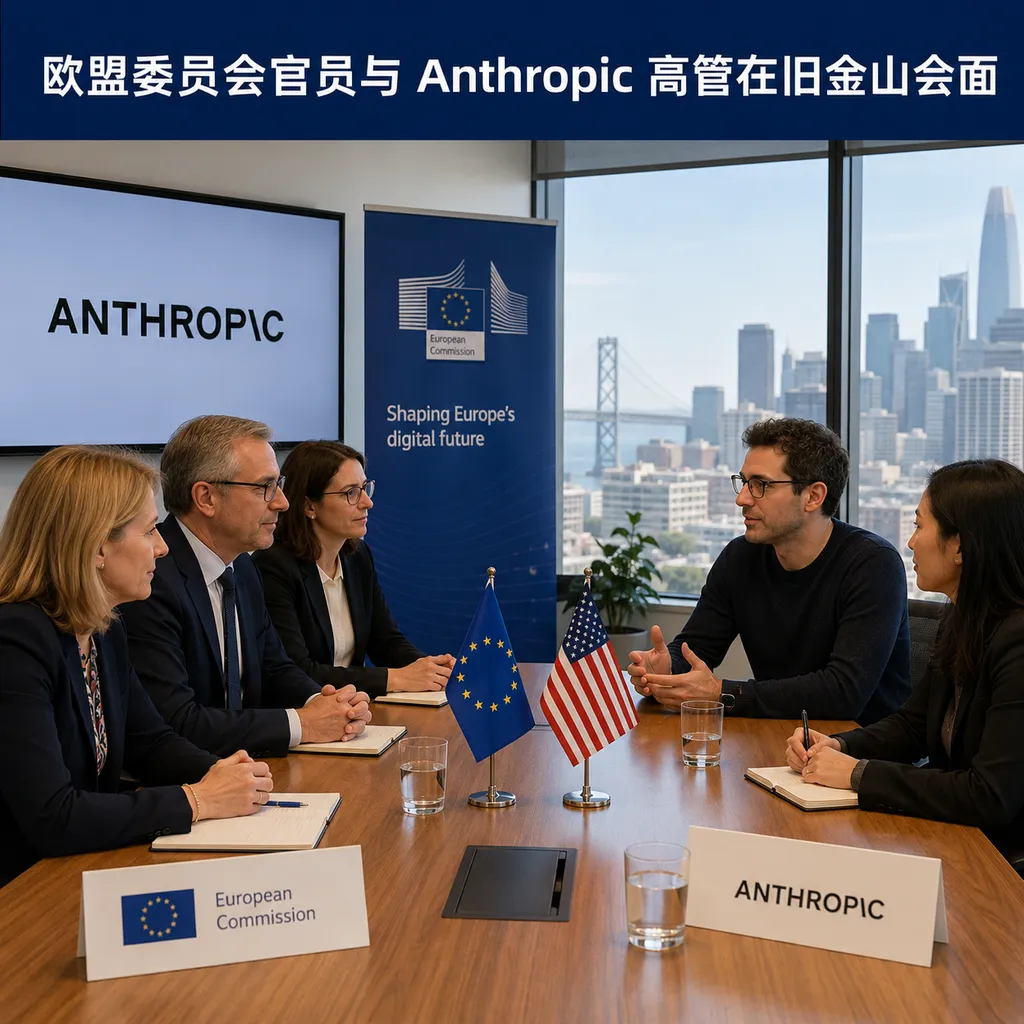
Since the release of the Mythos model in late April, EU and member state officials have been striving to gain access. Last week, officials from the European Commission flew to San Francisco to meet with Anthropic executives — a high-level interaction rarely seen in AI regulatory affairs.
The EU’s urgency stems from realistic concerns. Anthropic describes Mythos as possessing "an exceptionally strong ability to detect cybersecurity vulnerabilities," meaning the model could help defenders uncover weaknesses but could also be weaponized by attackers. For the EU, which is pushing forward the implementation of the Artificial Intelligence Act, not being able to assess the real-world capabilities of such high-risk models is unacceptable.
European Commission spokesperson Thomas Regnier summed it up: “Mythos is not an isolated exception; even more powerful models will emerge. We are discussing with like-minded partners such as the United States to face these challenges together.” His words reveal two things: first, the EU sees Mythos as just the beginning, with even stronger cybersecurity AI tools on the horizon; second, it hopes to establish some sort of coordination mechanism with the U.S. rather than acting independently.
Project Glasswing: A Controlled-Access Experiment
Anthropic’s solution is to include ENISA in “Project Glasswing.” The project’s core idea is to allow government agencies and critical infrastructure operators to test Mythos before it is widely released — assessing both the model’s capabilities and their own systems’ resilience.
This gradual-open approach is not new to the AI industry; OpenAI adopted a similar strategy before launching GPT-4. What makes Mythos unique is that its core ability is vulnerability detection — a double-edged sword. If testing reveals severe flaws in essential infrastructure and those vulnerabilities are leaked or discovered before being fixed, the consequences could be catastrophic.
Anthropic informed the European Commission of the decision last weekend, but details such as the access timeline, testing scope, and data-sharing agreements remain undisclosed. Sources indicate discussions are still confidential, which explains why Regnier refused to specify when ENISA will actually gain Mythos access, and Anthropic declined to comment.
The Cybersecurity AI Dilemma
The controversy around Mythos reflects a classic cybersecurity dilemma: disclosing vulnerability information helps defenders fix problems but also risks enabling attackers; keeping information secret prevents defenders from reacting promptly. AI models make this dilemma even more complex.
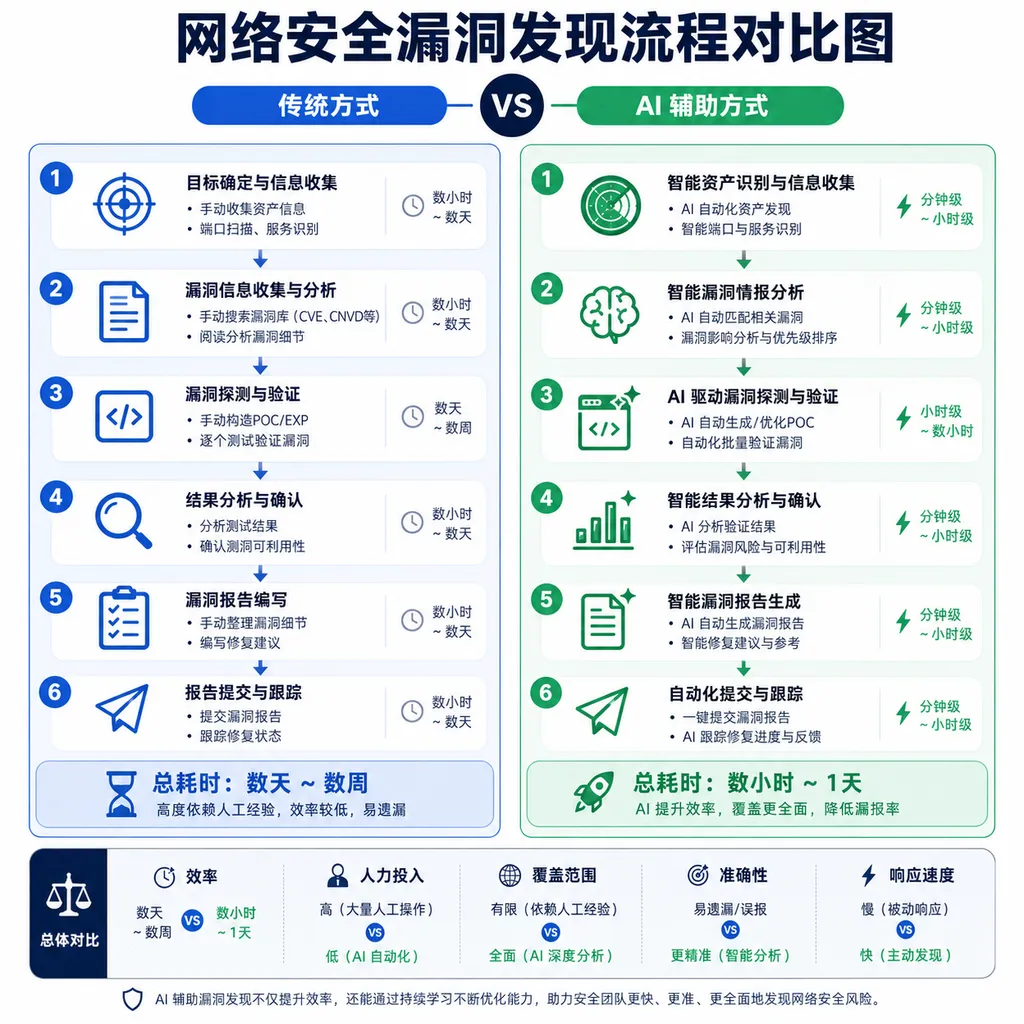
Traditional vulnerability disclosure has defined timelines and responsibilities. Researchers notify vendors first, allowing time for patches before public disclosure. But Mythos-like models operate continuously and automatically, capable of scanning countless systems in a short time and finding vulnerabilities that would take human researchers months to uncover.
Even trickier, controlling a model’s “knowledge” is not as straightforward as traditional software. Even if Anthropic restricts Mythos access, once deployed within an organization, how can it ensure discovered vulnerabilities don’t leak? How can unauthorized use of output be prevented? No mature solutions yet exist.
These concerns underpin EU officials’ anxiety. They fear Mythos might become a “tool for exploiting vulnerabilities,” and this is not unfounded. Studies in 2023 showed that certain large language models, after targeted training, can generate executable exploit code. If Mythos truly possesses the “extraordinarily strong” abilities Anthropic claims, its misuse could be devastating.
The Contrasting Approach of OpenAI
Interestingly, OpenAI has taken a different path. Recent reports suggest OpenAI will also allow EU access to its new cybersecurity models, though details remain unclear.
OpenAI and Anthropic have long held subtly different philosophies on AI safety. OpenAI favors technical constraints — such as RLHF or the early forms of Constitutional AI — to control model behavior before broadly releasing it. Anthropic emphasizes “interpretability” and “controllability,” preferring gradual openness after fully understanding the model’s capabilities and risks.
The Mythos case illustrates this divergence. Anthropic chose a relatively cautious route: letting a few trusted agencies test, gather feedback, and assess risks before proceeding. The advantage is controlled risk; the disadvantage is slower adoption and potential loss of market ground to less cautious competitors.
ENISA’s Role and Responsibilities
Established in 2004, ENISA began as an advisory body but gained expanded powers under the 2019 Cybersecurity Act. It now coordinates member states’ cybersecurity policies, sets standards, organizes large-scale cyberattack exercises, and evaluates emerging technologies’ security risks.
Allowing ENISA to be the first EU organization to test Mythos makes sense. ENISA has the technical expertise to assess model performance, the policy insight to understand its impact on EU cybersecurity dynamics, and the coordination ability to translate test results into member-state actions.
However, challenges remain. First, resources — ENISA’s budget and staff are much smaller than those of the U.S. Cybersecurity and Infrastructure Security Agency (CISA), raising doubts about its capacity to evaluate a system as complex as Mythos. Second, coordination — cybersecurity capabilities vary across the EU’s 27 member states, and converting ENISA’s findings into policies executable by all requires significant effort.
A deeper question is what ENISA’s testing goal truly is: evaluating Mythos’ own safety, or using Mythos to test EU infrastructure security? If it’s the latter, how broad is the scope—energy, transport, finance, healthcare? These answers will determine Project Glasswing’s real impact in Europe.
Balancing Regulation and Innovation
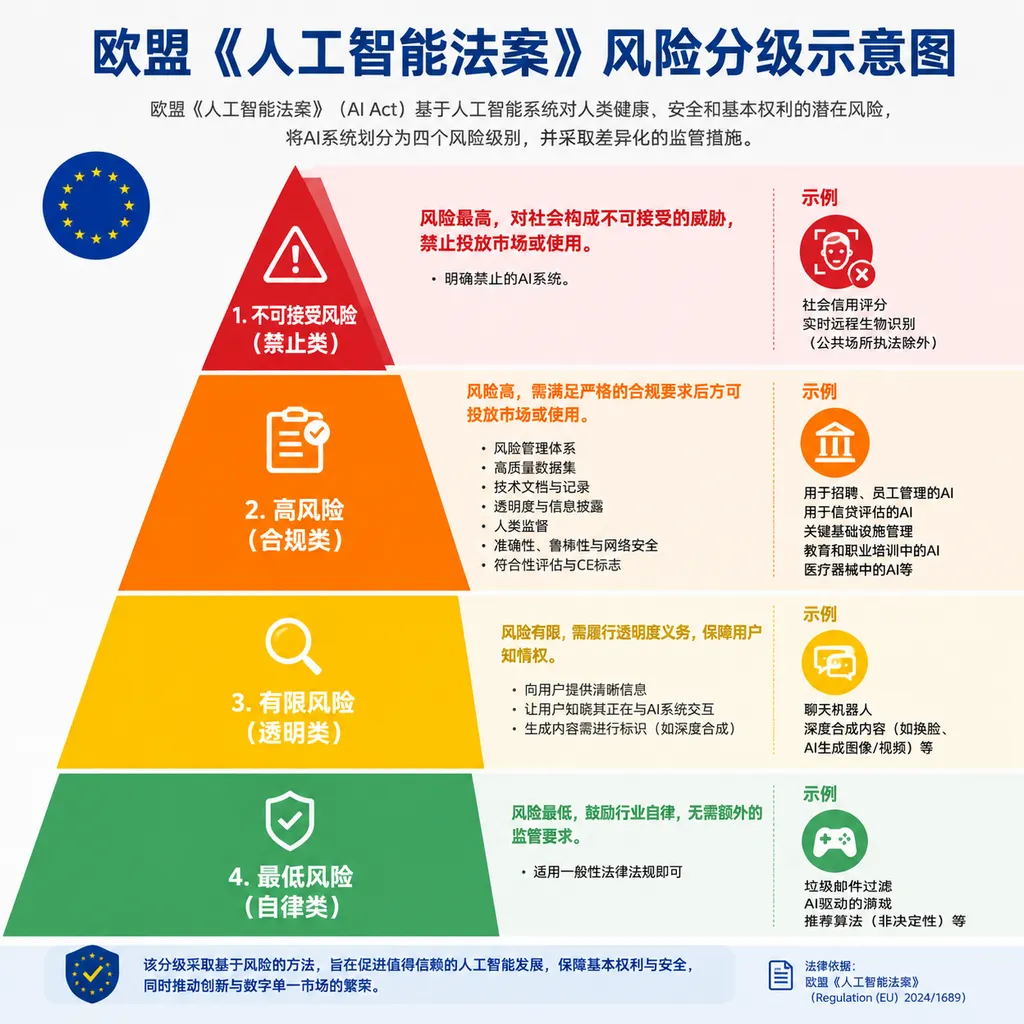
Europe has always been at the forefront of AI regulation. The Artificial Intelligence Act categorizes AI systems by risk levels, imposing strict requirements on high-risk applications. Cybersecurity AI tools clearly fall into this category, requiring compliance checks, transparency reviews, and human oversight.
Mythos is the first true test of this framework. If ENISA’s trial goes well and proves Anthropic’s gradual-open approach effective, it could set an example for other high-risk AI tools. If issues arise — say, Mythos’ capabilities are overstated or its outputs difficult to control — the EU may tighten pre-release reviews further.
But regulation must not stifle innovation. Cybersecurity is an ever-escalating arms race; defenders need cutting-edge tools. If excessive red tape delays Mythos’ availability in the EU, the bloc’s cybersecurity readiness could suffer — attackers won’t wait for regulatory approval before striking.
The “discussions with like-minded partners such as the United States” mentioned by Regnier could be a path forward. Aligning evaluation standards, testing protocols, and information-sharing mechanisms would ensure safety while avoiding redundancy and regulatory loopholes. Yet given EU–U.S. differences over data privacy and antitrust, such coordination will be challenging.
Industry Implications and Future Outlook
Anthropic’s decision to grant ENISA Mythos testing access sets an example for the AI industry. It demonstrates that even the most advanced and sensitive AI capabilities can be responsibly opened through carefully designed processes. This might encourage other AI firms to adopt similar systems rather than choosing between “total openness” and “complete secrecy.”
However, it may also deepen industry stratification. Only major players with vast resources can build complex programs like Project Glasswing. Smaller AI startups developing similar technologies may lack both resources and influence to negotiate with regulators, ultimately facing pressure to abandon such R&D or take the risky path of untested releases.
Technically, the direction Mythos represents — AI-assisted cybersecurity — will undoubtedly continue evolving. Attackers are already using AI to automate vulnerability discovery and exploitation; defenders cannot afford to forgo these tools. The question is not whether to develop such technology, but how to ensure responsible use.
Anthropic’s approach offers one potential answer: transparency, gradual openness, and collaboration with regulators. Whether this approach scales universally remains to be proven. ENISA’s test results and Anthropic’s subsequent expansion of Mythos access will be crucial indicators.
From the Developer’s Perspective: What This Means for You
If you work in cybersecurity, tools like Mythos are both opportunity and challenge. The opportunity lies in accelerating vulnerability discovery, increasing efficiency, and revealing hidden weaknesses. The challenge: your opponents may also wield similar tools, making defense cycles intensify.
For ordinary developers, Mythos signals that “security through obscurity” is no longer viable. Small, internal projects once safe through anonymity may now be automatically scanned by AI tools — no codebase is too niche for detection. Secure coding, dependency management, and timely updates become even more critical.
Across the toolchain, expect more AI-assisted security tools to emerge. GitHub Copilot already helps write code; future tools may audit it, detect flaws, and generate fixes. But questions remain about reliability — will AI-generated patches introduce new risks? Time will tell.
Conclusion
Anthropic’s decision to let ENISA test Mythos marks a milestone in AI safety governance. It demonstrates a possible middle ground — neither fully open with uncontrolled risk nor fully closed causing technological stagnation — but advancing innovation through controlled collaboration.
How far this approach can go is unclear. What will ENISA’s tests reveal? How will Anthropic respond? Will other AI companies follow or diverge? Will EU regulations tighten or relax? Answers will emerge over the coming months.
What’s certain is that cybersecurity AI tools will not disappear — they will only grow more powerful. Finding balance between leveraging these capabilities and controlling their risks is the challenge the entire industry must face. Mythos and Project Glasswing offer an early answer, but far from the final one.
References
- Report: Anthropic to Open Mythos Testing to the EU Cybersecurity Agency - ITHome — Bloomberg coverage detailing the background and decision process behind Anthropic granting ENISA access to Mythos


