
Huawei Cloud Bets on Agentic AI, Joins Forces with 20 Model Vendors to Seize the Intelligent Agent Era
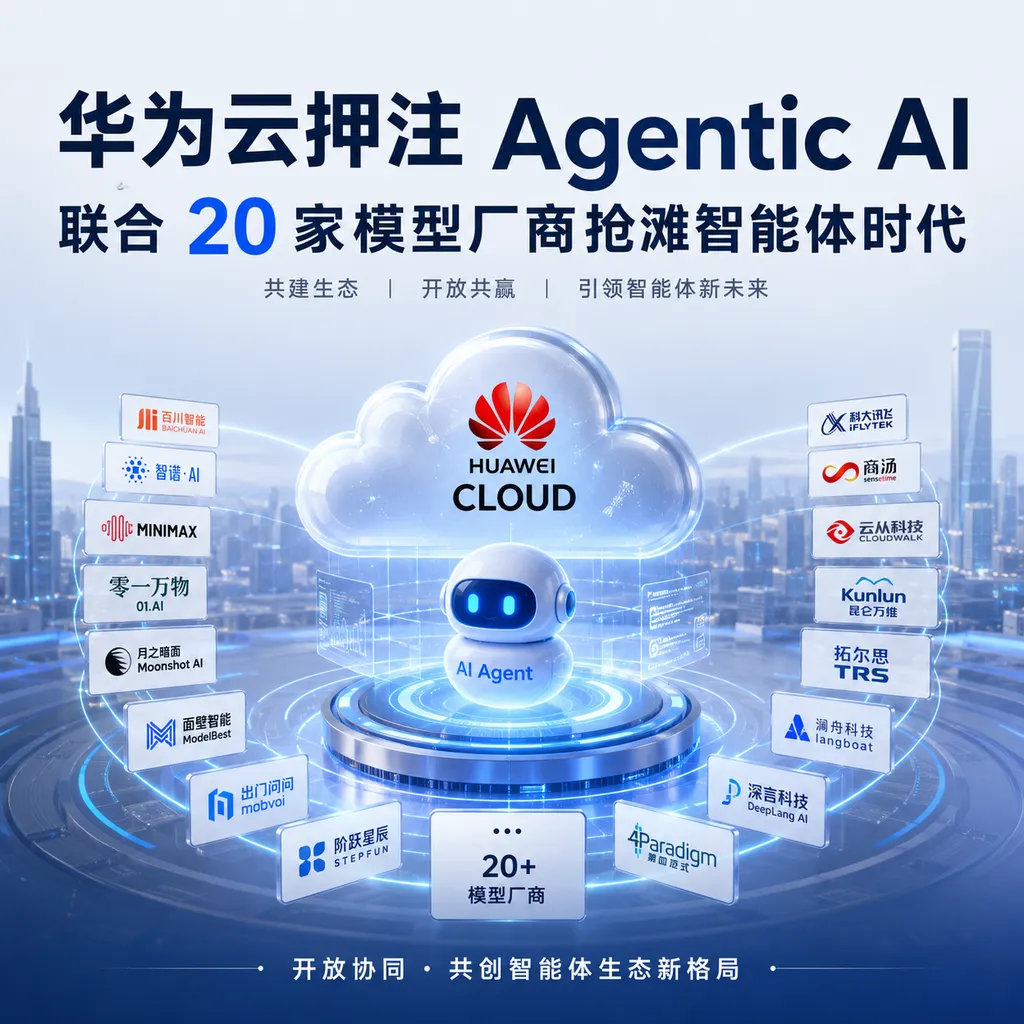
Huawei Cloud Releases New Agentic Infra Paradigm, Launches 100,000-Card Lingqu Intelligent Computing Cluster and AgentSphere Secure Sandbox, Collaborates with Leading Companies such as Zhipu, DeepSeek, and Kimi to Co-Create a Commercial Ecosystem, Shifting from "Serving Model Training" to "Serving Agent Deployment".
Huawei Cloud Bets on Agentic AI, Teams Up with 20 Model Vendors to Capture the Intelligent Agent Era
Huawei Cloud officially laid its cards on the table today in Shanghai — Agentic AI will be the core strategic focus going forward.
At the INSPIRE Creator Conference on June 5, Huawei Cloud proposed a new Agentic Infra paradigm, released four new infrastructure products, and teamed up with over 20 leading model vendors including Zhipu, DeepSeek, Minimax, Kimi, Step Star, Baidu, Meituan LongCat, iFlytek Spark, Aishi Technology, Shengshu Technology, among others, to launch the “Hundreds of Models, Thousands of Forms, Cloud for Mutual Success” ecosystem collaboration plan.
This move signals Huawei Cloud’s shift from “serving model training” to “serving Agent application deployment.” Over the past two years, cloud vendors have been racing to see who could release new models faster and whose inference costs could be lower. Now, the battleground has changed — intelligent agents are the things that can truly be monetized, and the infrastructure supporting large-scale agent operations is the real moat for cloud vendors.
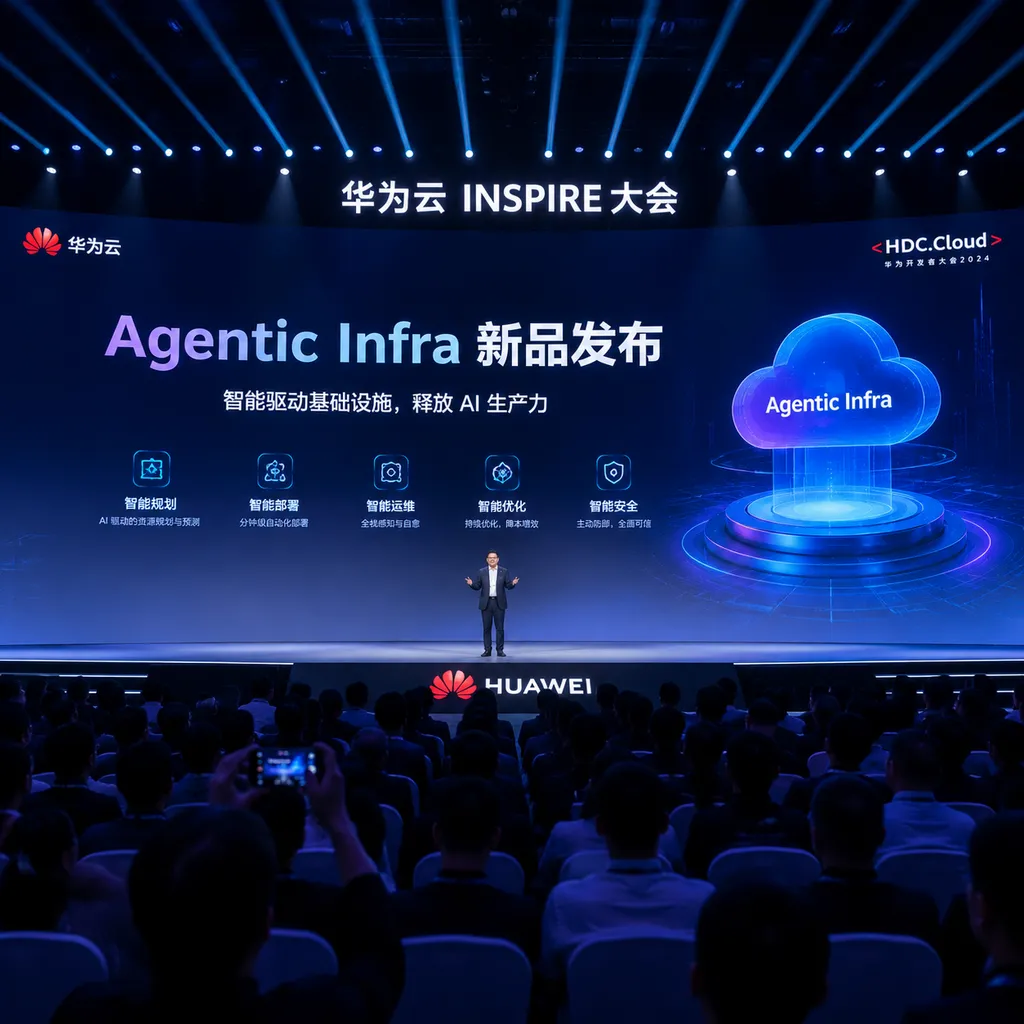
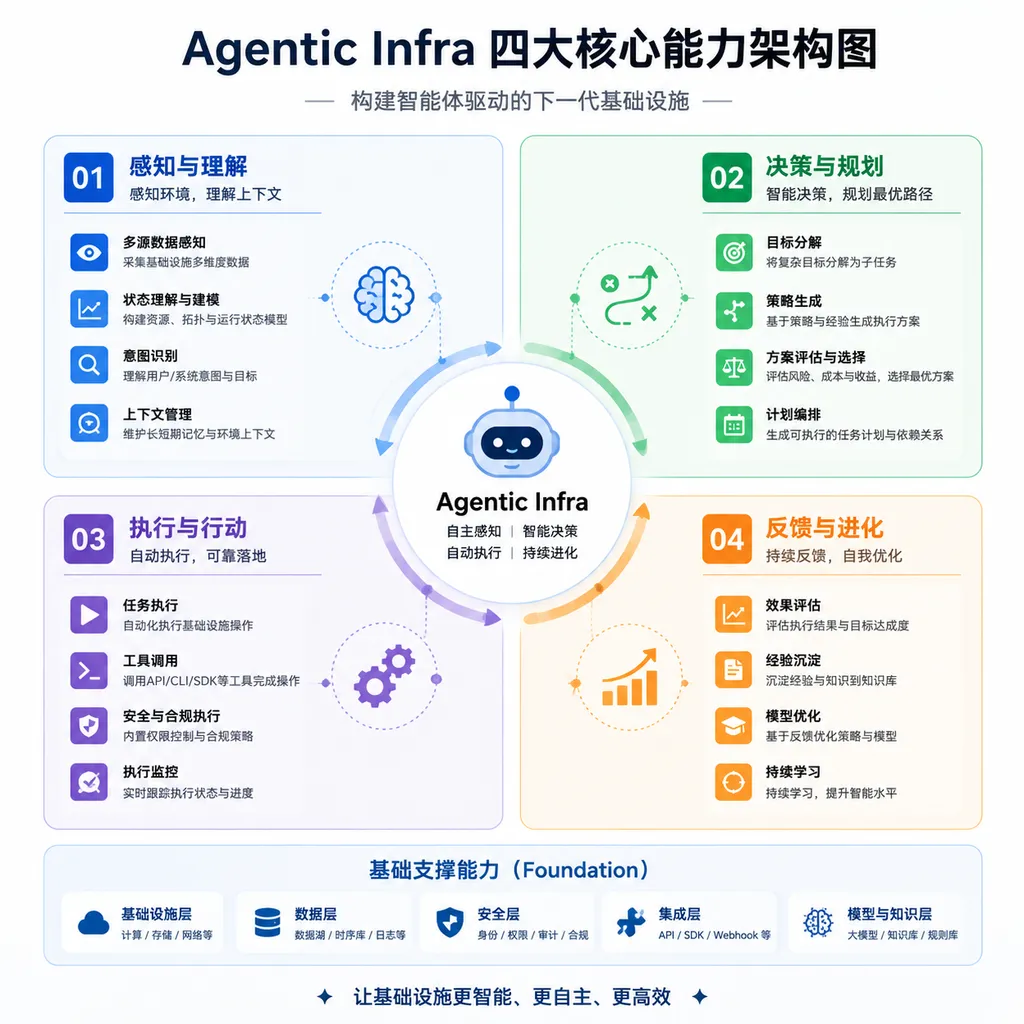
What Exactly Is Agentic Infra?
Huawei Cloud defines it as “efficient Token factory + continuous learning + integrated scheduling for training and inference + autonomous security.” Breaking it down, these four capabilities correspond to the four major pain points of large-scale agent operations.
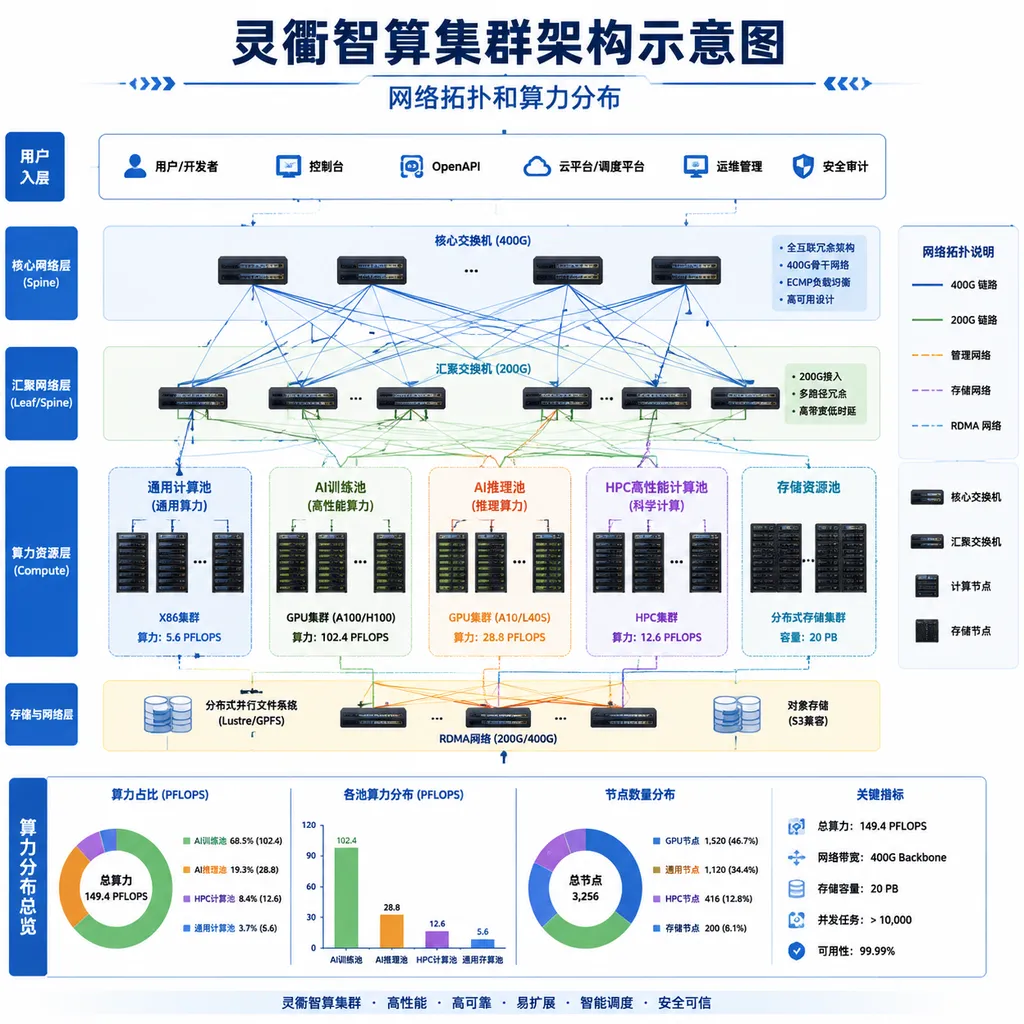
Token Factory: Agent inference latency directly impacts user experience. If you ask an Agent to book a flight and it takes 10 seconds to respond, the experience is ruined. Huawei Cloud’s AICS Lingqu Intelligent Computing Cluster supports 100,000-card scale, with total computing power of 200 EFLOPS, reducing token generation latency to under 10 ms, achieving 5 million tokens per second per thousand cards with online service availability of 99.95%. How impressive is this? Industry mainstream inference cluster latency is usually in the 50–100 ms range; Huawei’s system pushes it down to single digits.
Continuous Learning: Agents need to remember context. If you chat for an hour and it suddenly forgets what you said earlier, that’s a KV Cache capacity issue. Huawei’s AMS Agentic Memory Storage Solution uses NPU direct access to CMS (Context Memory Storage) hardware to create PB-scale memory space, supporting layered pooling of KV Cache to handle “day-long” tasks. The key design is placing hot data in high-speed storage and cold data in inexpensive storage, lowering costs while ensuring performance.
Integrated Training–Inference Scheduling: Training and inference tasks often run on separate clusters, resulting in low resource utilization. Huawei’s CCE VolcanoNext Integrated Scheduling Engine does “shared pool for training & inference + fragment consolidation” — training cards can be switched to inference immediately after tasks finish, and fragmented inference compute can be pooled for small tasks. This improves resource utilization by over 30%, cutting real costs for the vendor and enabling cheaper compute for customers.
Autonomous Security: Agents can call external APIs, execute code, and operate databases — these carry higher security risks than pure model inference. AgentSphere offers a “high-speed elastic + proactive intent protection” sandbox environment, launching in 100 ms and able to create hundreds of thousands of agent instances per minute. This suits scenarios like customer service systems — each user conversation starts a separate Agent instance, destroyed after use, ensuring isolation without affecting response speed.
From Competing on Models to Competing on Ecosystems
The list of over 20 model vendors Huawei roped in speaks volumes: Zhipu, DeepSeek, Minimax, Kimi, Step Star, Baidu, Meituan LongCat, iFlytek Spark, Aishi Technology, Shengshu Technology… covering both domestic closed-source and open-source model providers.
The core logic of this ecosystem plan: cloud vendors are no longer just “selling compute,” but helping model vendors “sell their models.” Huawei Cloud offers a complete commercialization toolchain — model training, inference optimization, agent development, application distribution, and billing. Model vendors just focus on building the model; all other links are supported by ready infrastructure.
This approach mirrors AWS’s SageMaker and Google’s Vertex AI, but Huawei’s entry point is more aggressive — directly betting on Agentic AI. The reason is simple: model API profits are already razor-thin. DeepSeek V3 has dropped inference cost to 0.14 RMB per million tokens, leaving little margin for cloud vendors. Agent applications are different — customers will pay higher premiums for “Agents that solve problems.”
Huawei Cloud also announced its “Industry AI Dream Factory,” initially covering four zones: smart healthcare, embodied intelligence, intelligent manufacturing, and scientific computing. The goal is clear — turn general capabilities into industry solutions, shortening AI’s path from lab to production line. For example, in healthcare, Huawei Cloud integrates hospital HIS systems and imaging equipment, offering ready-to-use diagnostic and follow-up Agents; in embodied intelligence, it connects with robot vendors to provide simulation and task scheduling.
What’s Different About This Infrastructure?
Huawei Cloud’s “hardware–software–chip synergy” is not mere talk. The Lingqu cluster uses Huawei’s self-developed Ascend AI chips + Lingqu network, whose advantage lies in deep integration of network and compute. Traditional GPU clusters’ bottleneck is often the network — AllReduce communication takes up 30–40% of training time; Huawei reduces this via custom network protocols and topology optimization.
AMS memory storage’s highlight is NPU direct access to CMS. Traditionally, KV Cache is stored in VRAM or main memory, with access traversing PCIe buses, causing high latency and bandwidth limits. Huawei integrates storage controllers into the NPU chip, bypassing PCIe, reducing access latency to nanoseconds. This hugely benefits long-context inference — when context length grows from 8K to 128K, KV Cache accesses grow exponentially, and latency optimization yields linear performance gains.
VolcanoNext solves the “mixed training–inference deployment” challenge. Training tasks are batch jobs, maxing all cards for hours or days; inference tasks are online services requiring low latency and high concurrency. Traditional Kubernetes schedulers cannot handle such heterogeneous loads; Huawei adds an “intent recognition” layer — allocating resources dynamically based on the task’s resource profile (compute/memory/communication-intensive) and SLA requirements.
AgentSphere’s “featherweight” design is worth noting. Traditional container launches take seconds; VMs are slower. Huawei uses WebAssembly sandbox + eBPF security policies, cutting startup to 100 ms. Benefits: strong isolation (each Agent runs independently), low overhead (no full OS needed), plus Agent behavior monitoring — e.g., abnormal API call rates or suspicious data access patterns can trigger instant shutdown.
What Are Competitors Doing?
Agentic AI is a crowded track now.
OpenAI’s GPTs and Assistants API are the earliest agent platforms, but closed — usable only with OpenAI models. Google’s Vertex AI Agent Builder supports Gemini and open-source models, but is less flexible than true cloud-native deployment. Microsoft Azure’s Semantic Kernel and AutoGen lean toward frameworks, requiring developers to build their own infra.
In China, Alibaba Cloud has ModelScope Agent and Tongyi Qianwen’s agent capabilities, Tencent Cloud offers HunYuan Assistant and AI development platform, but their focus remains “model-as-a-service,” with less aggressive infra investment than Huawei. Huawei’s Agentic Infra paradigm integrates compute, storage, scheduling, and security for agent operation, treating infra itself as a product.
Risk: Agent form factors aren’t yet fixed. Today’s Agents are mainly “conversational assistants + tool calling,” but future paradigms could differ — multi-agent collaboration, embodied intelligence, autonomous decision systems. Whether Huawei’s infra fits future forms is uncertain.
But from another angle, infra build-out is inherently a “first-mover investment” — you can’t wait for all application forms to be clear before building data centers. Huawei’s approach is to get the base capabilities (compute, storage, scheduling, security) solid; upper-layer apps are up to developers. This mirrors AWS’s early EC2/S3 logic — provide atomic capabilities and let the ecosystem combine them.
What Can Developers Do With These?
Huawei Cloud also launched AgentArts, an enterprise-grade agent platform covering the full agent development lifecycle: prompt engineering, tool orchestration, memory management, multi-agent collaboration, testing/debugging, deployment, and monitoring.
Sample scenarios:
Customer Service Agent: Integrates company ticketing systems and knowledge bases to handle pre-sales and post-sales support. Tools include intent recognition, multi-turn dialogue management, knowledge retrieval (RAG), and ticket-creation API calls. Key capability: “context memory” — remembering previous interactions so customers don’t have to repeat themselves.
RPA Agent: Automates office workflows, e.g., extracting invoice info from emails, filling forms, reimbursement approvals. AgentArts allows complex task orchestration — OCR invoice recognition, financial system API duplication checks, then submitting approvals. Traditional RPA uses fixed flows; Agents can adjust dynamically.
Code Assistant: Helps developers write code, fix bugs, write docs. High inference speed is crucial — if code completion takes 5 seconds, the experience is ruined. Huawei’s 10 ms latency is essential here.
Embodied Intelligence: Controls robots for warehouse picking, inspection, delivery. AgentArts offers “simulation + real-machine” co-debug — train the Agent in virtual environments, verify logic, then deploy to real robots. Key capability: “continuous learning” — adjusting strategies online when robots encounter new scenarios (e.g., changed shelf layout).
Huawei also launched the “Code Path University Teaching Practice Program,” offering free compute and toolchains to university developers. The clear goal: win developer mindshare. Cloud competition ultimately comes down to ecosystem — whoever gets developers productive faster gains first-mover advantage.
Is the Commercial Path Clear?
Agentic AI commercialization is still “crossing the river by feeling the stones.”
Model vendors charge via API calls, but charging models for agent apps are undecided. Per conversation? Per task completion? Per time? Different scenarios may require different models. Huawei Cloud’s “systematic business ecosystem” aims to help model vendors and app developers define business models.
Another question: how much will enterprise customers pay for Agents? If Agents are just “smarter chatbots,” premiums will be low. But if they truly replace human roles (customer service, auditing, coding), willingness to pay rises sharply. Huawei’s “Industry AI Dream Factory” essentially tests this hypothesis — packaging general Agent capabilities into industry solutions to show ROI.
Technically, Huawei’s four new products are “heavy assets” — 100,000-card clusters, PB storage, custom chips, in-house schedulers, with high R&D and operations costs. Cost recovery depends on Agentic AI market growth. If agent apps explode in the next two years, this infra becomes a “pick-and-shovel” business, making money passively; if not, the investment is sunk.
One certainty: without such investment, cloud vendors stay in the “compute-selling” red ocean of price wars. Huawei is moving up a layer to build intelligent agent era infrastructure — risky but worth betting on.
Final Thoughts
Huawei Cloud’s message is clear: Agentic AI is the next main battlefield, and cloud vendors must shift from “serving models” to “serving applications.”
The logic: models are rapidly commoditizing, open-source capability approaches closed-source, and API price wars are endless. But agent apps still have high barriers — developers must handle tool calls, memory management, security sandboxing, task orchestration. These aren’t solved by a single model API. Whoever can package these capabilities into ready-to-use infra will secure the next decade’s ticket.
Huawei’s advantage is control over its hardware stack — self-developed chips, networks, storage — enabling deep optimization. Disadvantage: late ecosystem start, with developer mindshare still on AWS/Azure. Partnering with 20 model vendors to launch an ecosystem plan shores up this weakness.
Whether this infra succeeds depends on next year’s real deployments. Tech demos are easy; scaled commercial use is different. But the direction is right — Agentic AI is indeed the next wave, and whoever builds the infrastructure first can stand firm in it.
References
- Huawei Cloud Teams Up with Over 20 Model Vendors to Launch Ecosystem Collaboration Plan — Official IT Home report containing core conference info and details of the four new products


