
Trump Signs Executive Order for AI Review, OpenAI Responds First
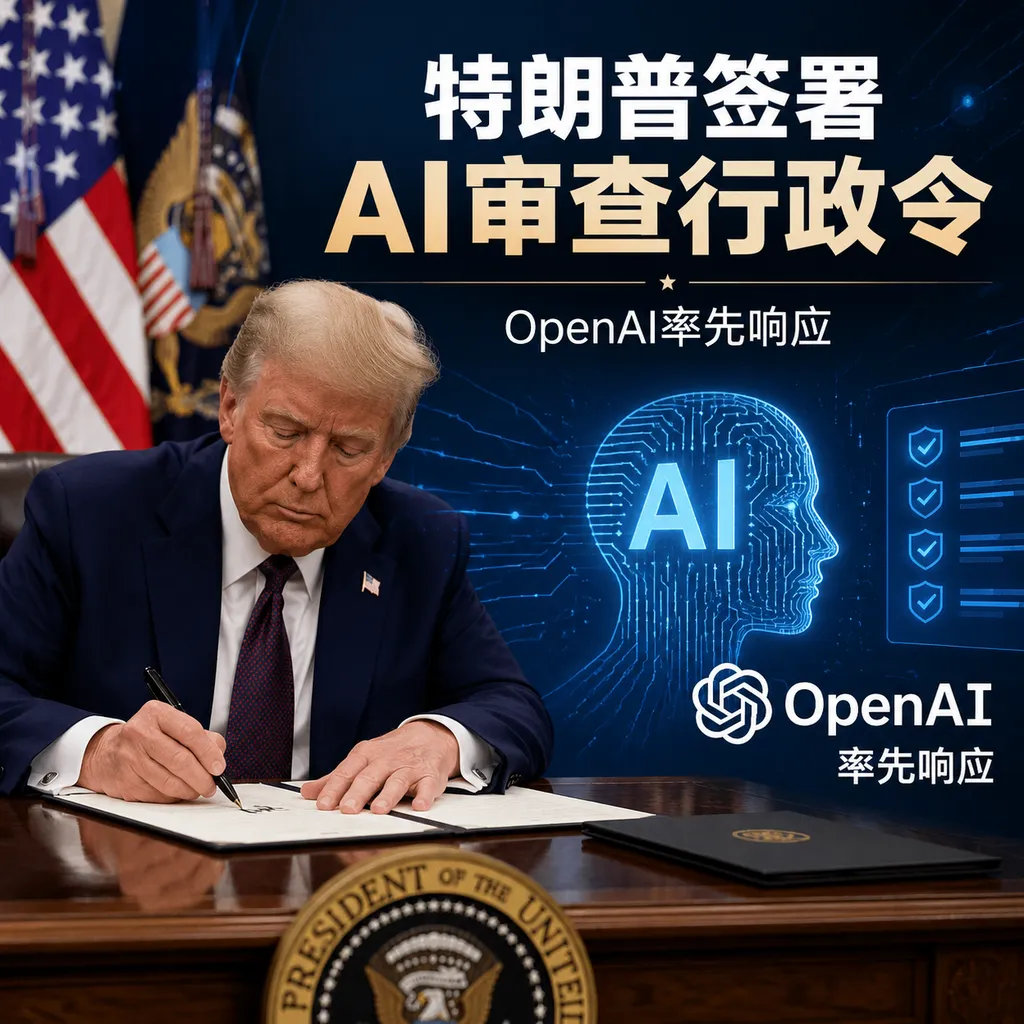
Trump signs compromise version of AI review executive order, requiring top models to undergo 30 days of government testing before release. OpenAI confirms it will voluntarily participate, but the industry questions the actual enforceability of the voluntary framework.
Trump Signs AI Review Executive Order, OpenAI First to Respond
On June 2, Trump signed an executive order aimed at reviewing advanced AI models. The following day, OpenAI’s Head of National Affairs, George Osborne, confirmed the company would voluntarily accept government review. This seemingly “win-win” outcome is actually the product of a month-long tug-of-war between the White House and tech giants—a compromise where the original 90-day review period was shortened to 30 days, and the mandatory requirement turned into a voluntary framework, significantly reducing the regulatory framework’s actual effectiveness.
From 90 Days to 30 Days: A Silicon Valley Lobbying Battle
The executive order was originally scheduled to be signed on May 21, but was halted at the last minute. The driving force behind this was former White House AI affairs chief and Silicon Valley venture capitalist David Sacks, who teamed up with multiple tech company executives to successfully block the initial proposal.
The original proposal gave the government up to 90 days of pre-review rights—meaning OpenAI, Google, Anthropic, and other leading labs would have to submit new models to agencies like the NSA and Cybersecurity Agency for three months of testing before release. Given today’s heated AI race, 90 days was almost equivalent to declaring innovation dead.
On June 1, Trump convened Treasury Secretary Besant, Defense Secretary Hegseth, and National Cyber Director Kean Cross for a meeting, with Sacks participating online. They ultimately reached a compromise: the review period was cut to 30 days and participation made voluntary, with companies deciding themselves which models to submit for review.
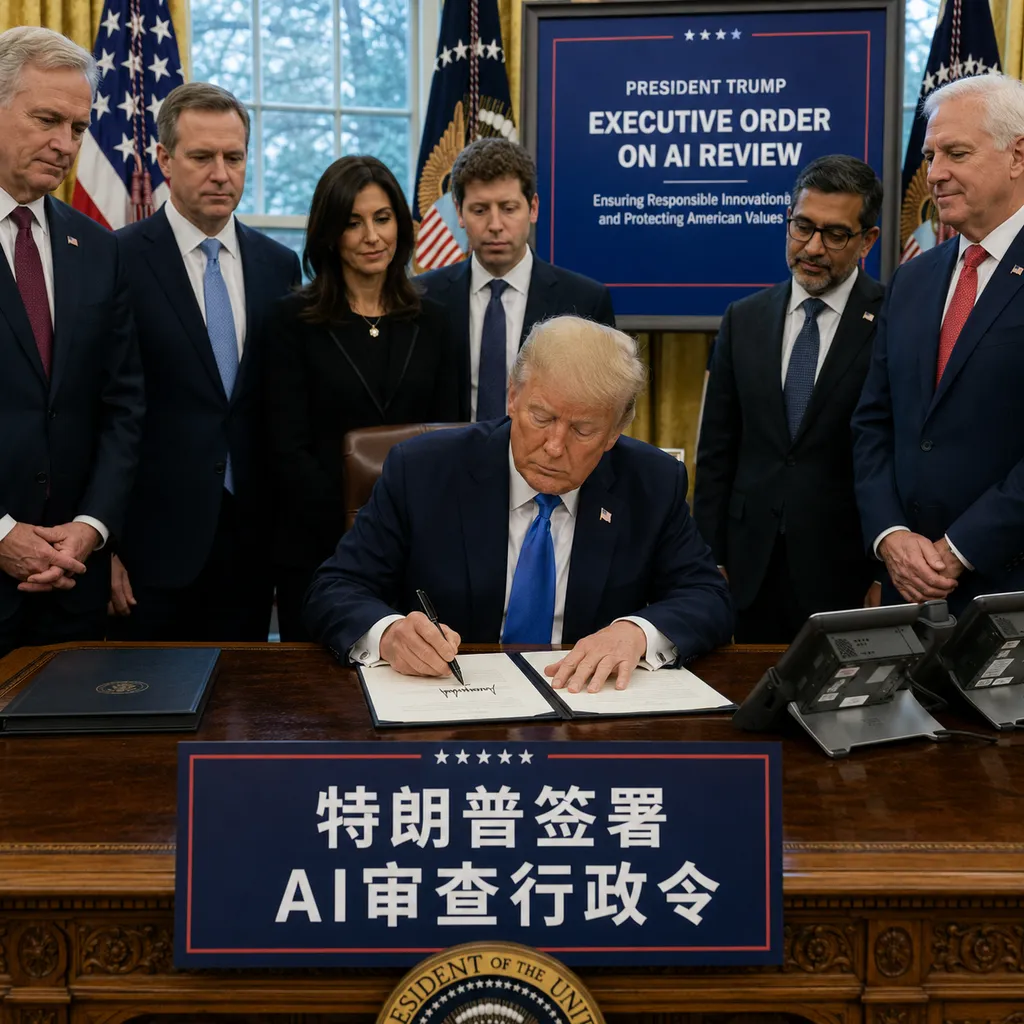
Sacks posted on X that the 30-day review period would “change the game,” without slowing companies down. OpenAI CEO Altman also stated the executive order “maintains the right balance.” But such remarks are more like a polite exit ramp—after all, moving from mandatory 90 days to voluntary 30 days means tech companies have already won most of the battle.
OpenAI’s “Proactive Cooperation” Posture
During the London SXSW event, Osborne told CNBC that OpenAI would take the responsibilities of frontier labs seriously and “won’t wait until asked to act.” He emphasized that OpenAI has always actively communicated with the U.S. and other governments on AI safety issues, helping them track safety and security concerns.
This aligns with OpenAI’s usual PR strategy—show goodwill before regulation tightens to gain influence. Before GPT-5’s release last year, OpenAI invited the U.S. AI Safety Institute (AISI) to test the model's capabilities in advance. With this new executive order, OpenAI’s immediate expression of cooperation both shapes the image of a “responsible AI company” and allows it to influence the framework’s design phase.
However, Osborne repeatedly emphasized that regulation needs “flexibility” and “smart approaches.” Translated, that means: the government can look but shouldn’t micromanage; can make suggestions but shouldn’t slow release schedules. This “soft regulation” stance underscores resistance to hard approval systems.
Questionable Binding Power of a Voluntary Framework
The core issue with this executive order is: what does “voluntary” really mean?
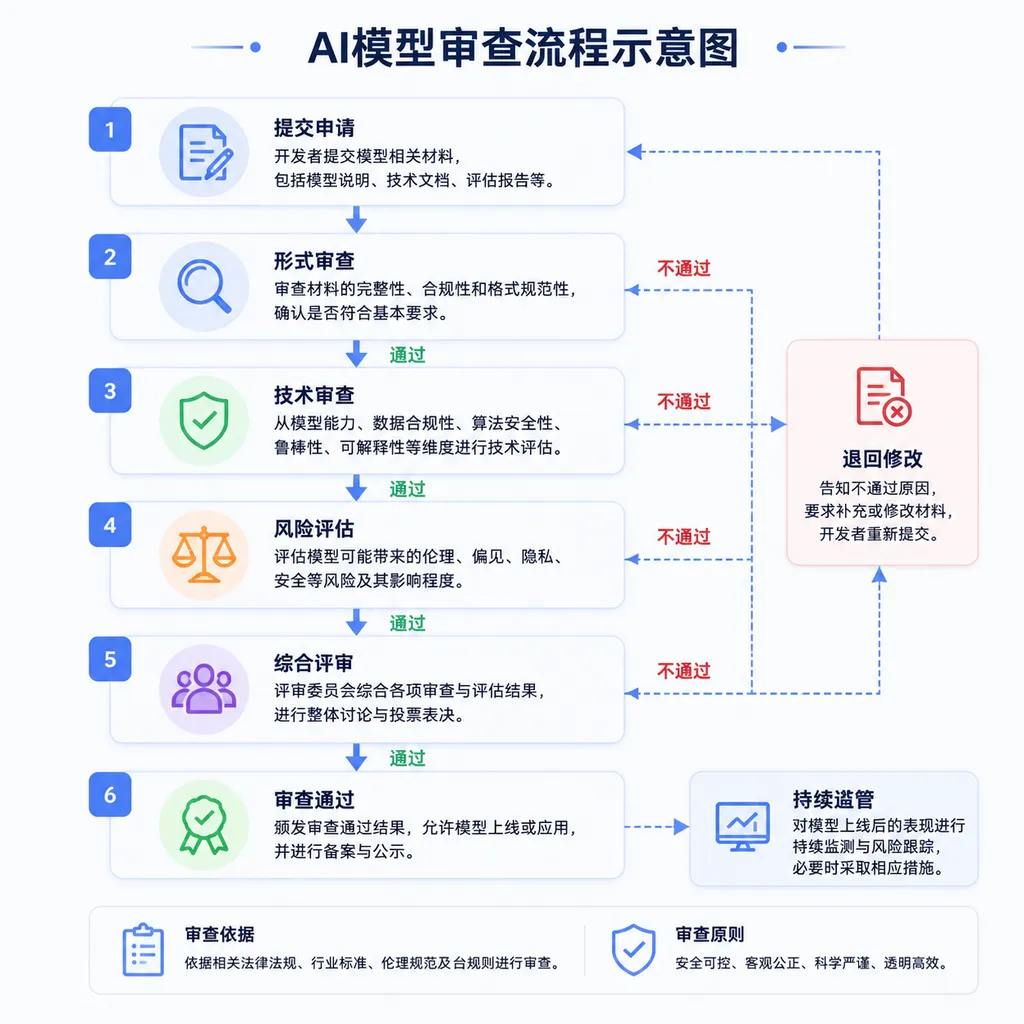
According to the White House’s released details, the executive order requires the Treasury Department to build an information exchange platform within 30 days and, within 60 days, co-design a voluntary framework with AI developers. Companies must decide themselves whether a model qualifies as a “covered frontier model,” and if so, provide the federal government access up to 30 days prior to release.
But what qualifies as a “frontier model”? Who sets the standard? If a company decides its own model isn’t a frontier model, does the government have retrospective rights? These critical details are unclear in the executive order.
More importantly, “voluntary” means companies can opt out. While top firms like OpenAI and Anthropic may cooperate under political pressure, smaller labs, open-source communities, and overseas firms can easily stay out of it entirely. Hundreds of new models launch daily on Hugging Face—should they be reviewed? Who would review them?
The immediate catalyst for this executive order was Anthropic’s Mythos model, which could find vulnerabilities in computer systems and potentially attack critical infrastructure like banks, governments, and hospitals. Anthropic recognized the risk and did not release it publicly, instead notifying the government. But what if it were a less “responsible” company? Or an anonymous developer releasing it on the dark web?
The voluntary framework has no binding power over such scenarios. AI safety researchers generally believe that truly controlling high-risk models requires mandatory approvals, clear capability thresholds, and punishment mechanisms for violations—things tech companies most strongly oppose.
Diverging AI Regulatory Paths Between the U.S. and China
Trump’s executive order essentially continues his second-term “light regulation” philosophy. He took office scrapping numerous Biden-era AI regulations and tried to dissuade states from advancing AI laws he opposed, arguing that “America’s position in AI competition with China must not be weakened.”
Although he signed this order under safety pressure, heavy tech industry lobbying led to major compromises, making it essentially a voluntary framework. Behind this attitude lies the Trump administration’s insistence on “innovation first”—willing to risk some security concerns rather than let regulation slow the U.S. AI industry.
By contrast, China’s AI regulation is more proactive and systematic. From the “Interim Measures for Generative AI Services” to the “Provisions on Deep Synthesis of Internet Information Services,” China has built a multi-layered regulatory system covering data security, content review, and algorithm filing. Domestic large models must go through CAC filing and security evaluation before launch, far stricter than the U.S.’s voluntary system.
Strict does not mean rigid. China’s regulatory mindset balances “development and safety”—controlling risks while allowing room for innovation. This is evident from the release pace of domestic large models: since 2023, nearly 200 models have filed, and products like DeepSeek, Kimi, and ERNIE Bot iterate no slower than overseas counterparts.
It’s too early to say which path is superior. But one thing is certain: AI regulation has become a new battleground in great power tech competition. The U.S. is betting on “light regulation for innovation speed,” while China chooses “strong regulation for quality development.” Whoever better balances safety and efficiency will directly shape the future AI industry landscape.
Developer Perspective: What Does This Mean for Me?
For developers, the short-term impact of this executive order is limited. API services from OpenAI and Anthropic will still function as usual, perhaps with new model releases delayed by up to a month.
But in the long term, the establishment of a regulatory framework will change the AI ecosystem’s rules of the game:
Slower model release cadence. If top labs must submit 30 days in advance for review, the cycle from training completion to launch will lengthen. GPT-5 released last August—under today’s rules, it might have been September before availability.
Greater impact on open-source models. Although voluntary, if the government deems an open-source model “too powerful,” could it require removal? Should Meta’s Llama or Mistral models be reviewed? Inclusion of open-source communities in regulation could hinder AI democratization.
Shrinking survival space for small labs. Top firms have resources to cooperate with government reviews; small companies do not. A 30-day review period is minor for OpenAI, but could be life-or-death for startups, exacerbating the AI industry’s Matthew Effect.
Compliance risks for cross-border AI services. If U.S. models require review, could using overseas models (like China’s DeepSeek or Moonshot) be considered “regulatory evasion”? Cross-border AI compliance costs may rise.
For Chinese developers, API aggregation platforms like OpenAI Hub will become more valuable—one key can call mainstream models globally, avoiding single-provider policy risks. The more complex the regulatory environment, the more essential multi-model backup strategies become.
How Far From Voluntary to Mandatory?
Sacks and Altman both endorse this “voluntary framework,” but the AI safety community remains unconvinced. Stanford AI safety researchers point out that voluntary frameworks cannot handle truly high-risk scenarios—the models most needing control often come from developers least willing to cooperate.
Historically, tech regulation often follows the path of “self-regulation first, then mandatory regulation.” The internet’s early days relied on industry self-regulation until events like Cambridge Analytica and TikTok data leaks prompted countries to legislate. AI regulation is likely to follow the same trajectory—voluntary now, mandatory approvals when major incidents occur.
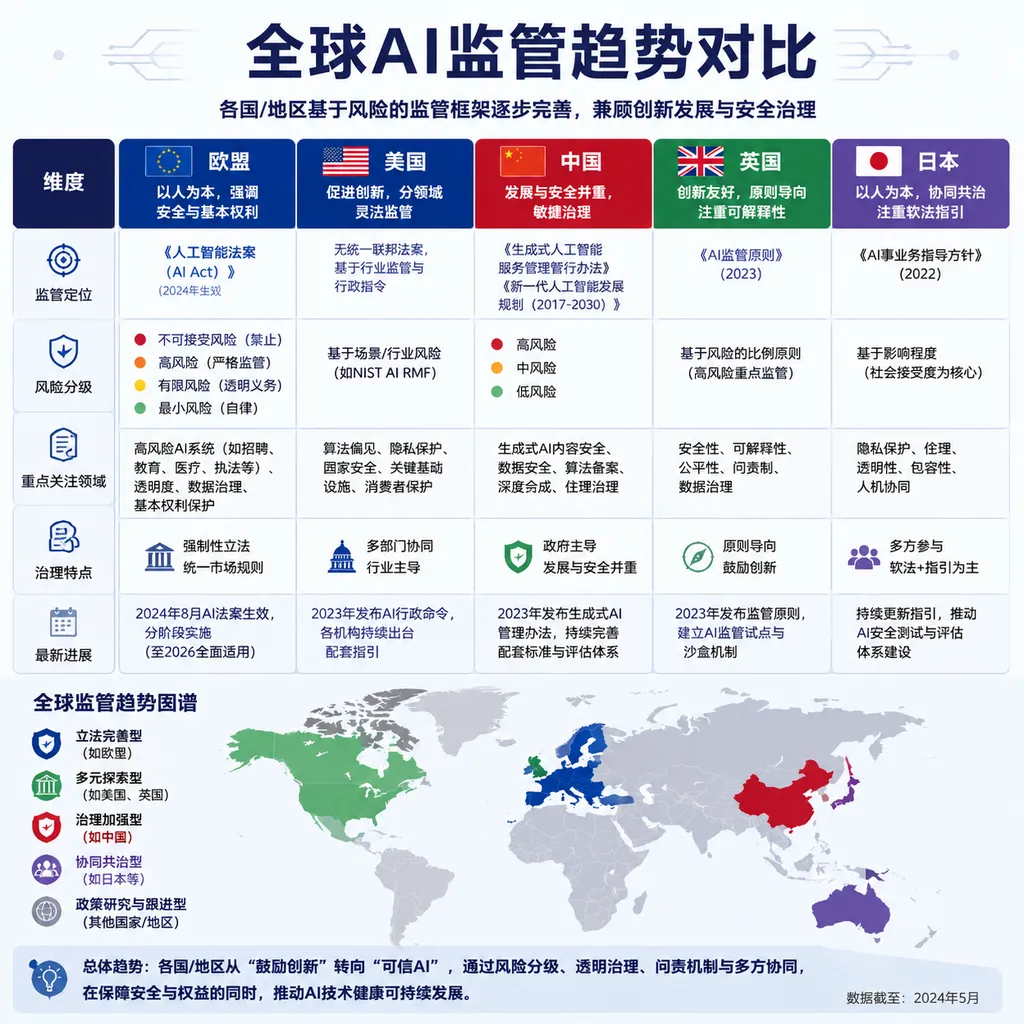
The EU’s AI Act already defines prohibited, high-risk, limited-risk, and minimal-risk categories, with mandatory approval for high-risk AI systems. The UK, though preferring light regulation, is also preparing an AI Safety Bill. China’s filing system has been operating for two years, amassing plenty of practical experience.
The U.S.’s current voluntary framework resembles groundwork for real regulation—getting companies used to working with government and finding the industry’s limits, then introducing mandatory laws when the time is right. Although Trump opposes excessive regulation, continued AI-related safety incidents could prompt Congress and public opinion to pressure the White House into tougher measures.
For developers, the task now is to adapt to this uncertainty—regulatory frameworks will change, capability thresholds will change, and even calling an API may suddenly face compliance risks. Maintaining flexibility in your tech stack and preparing multi-model, multi-region backup strategies is the best way to handle these changes.
This AI regulation battle has only begun. OpenAI’s “proactive cooperation,” Trump’s “compromise version” executive order, and Sacks’ lobbying victory are just the first round. The real contest will unfold when legal texts take effect, enforcement details are published, and the first violation case emerges.
References
- OpenAI Executive: Company Will Voluntarily Accept Government Review Before AI Model Release - IT Home interview with OpenAI’s Head of National Affairs
- Trump Signs ‘Compromise Version’ AI Model Review Executive Order - Xinhua News detailed report on the order’s background and lobbying process


