
Masayoshi Son: AI is already designing AI, ASI will arrive within two years

SoftBank CEO Masayoshi Son revealed in a recent interview that OpenAI is using AI models to design the next generation of models, and has significantly shortened the estimated arrival time of Artificial Super Intelligence (ASI) from 10 years to 2 years. This assessment is based on his direct communication with the OpenAI team, as well as the fact that GPT-5.3-Codex has already begun participating in its own iteration.
Masayoshi Son: AI is Already Designing AI, ASI Will Arrive Within Two Years
SoftBank CEO Masayoshi Son has just shortened his prediction timeline for Artificial Super Intelligence (ASI) from 10 years to 2 years. This is not empty talk — his judgment comes from direct conversations with Sam Altman and OpenAI engineers, as well as a key fact: AI models have already begun designing other AI models.
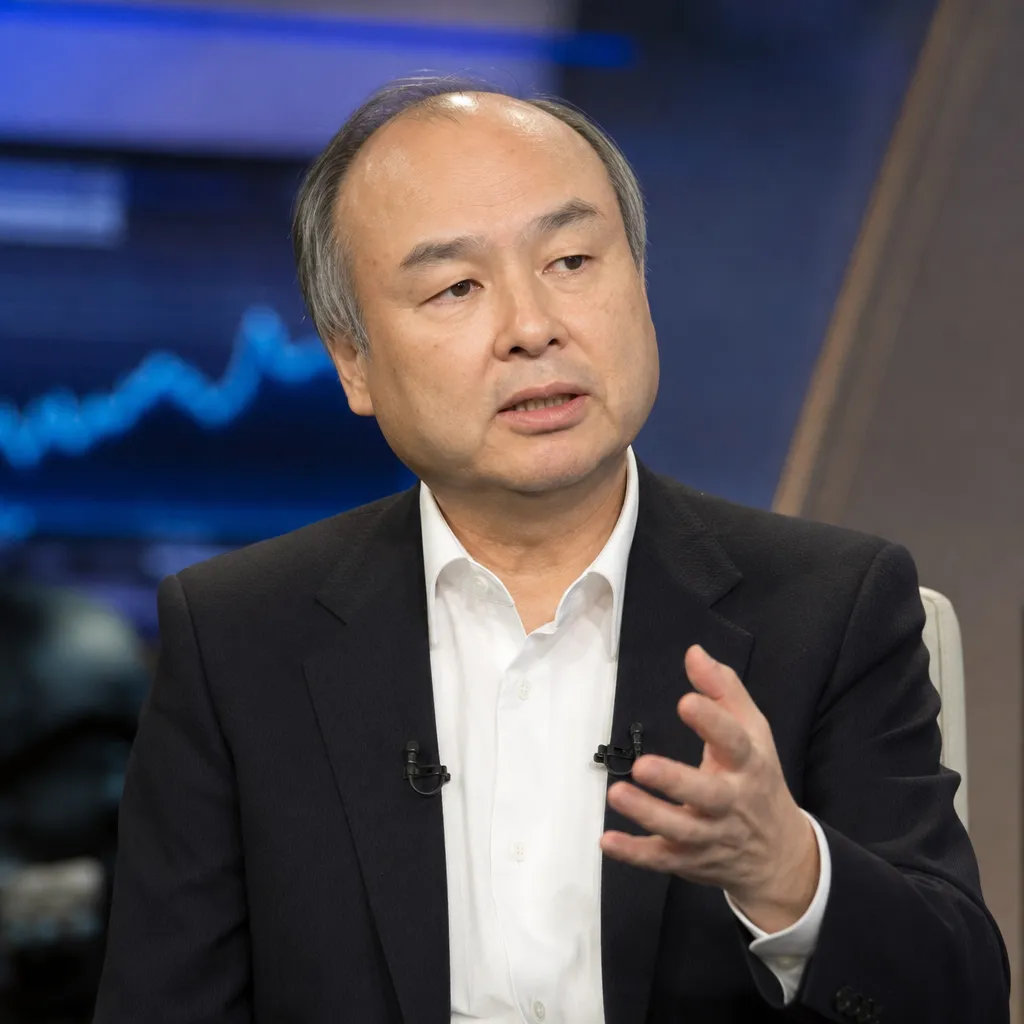
In a June 5 interview with CNBC, Son clearly stated that OpenAI is advancing the concept of “AI designing and developing AI,” with AI already participating in the design work of subsequent models. He believes this pattern will expand to other mainstream models, and human engineers will soon find it difficult to design more powerful models alone.
AI Creating AI Is Not Science Fiction — GPT-5.3-Codex Is Already Doing It
Son’s statement is backed by facts. In February this year, OpenAI publicly disclosed that GPT-5.3-Codex (a code-specialized version of GPT-5.3) was its first model to “participate in creating itself.” The Codex team used early versions to debug training workflows, manage deployments, diagnose test results, and evaluate issues.
What does this mean? In the traditional model development process, human engineers design architecture, tune parameters, write training code, and debug. Now these steps are starting to be taken over by models themselves — they can read training logs, detect parameter configuration issues, optimize data processing workflows, and even propose architecture improvements.
This is not just “AI-assisted programming.” Assisted programming is when Copilot helps you complete code while you write; AI creating AI is when a model directly participates in design decisions for its next generation. To draw an analogy: before, human architects designed houses and AI helped draw blueprints; now, AI architects design houses themselves, with humans only reviewing and approving.
This acceleration is faster than outsiders imagined. In 2024, the industry widely believed AI participation in model design would take 5–10 years to become mainstream. Now, by mid-2026, top labs are already using it in production. Son predicts this model will rapidly expand to other mainstream models — not because everyone wants to use it, but because not using it means falling behind.
Why Are Human Engineers Being Left Behind?
The answer is simple: scale and complexity have surpassed the limits of human cognition.
GPT-4 has 1.76 trillion parameters, with training data on the scale of tens of terabytes. GPT-5 is even larger, with training costs exceeding $1 billion per run. At this scale, no one can fully comprehend what is happening inside the model. Engineers can only design the general framework, tweak hyperparameters, monitor loss curves, and pray training doesn’t blow up.
AI models are different. They can simultaneously process massive amounts of training logs, identify patterns humans would never notice, quickly trial and error thousands of hyperparameter combinations, and predict how an architectural change will affect downstream tasks. More importantly, they don’t get tired — they can monitor training 24/7.
Son mentioned that feedback from OpenAI engineers was: humans are already struggling to design stronger models alone. It’s not a matter of capability, but of bandwidth in processing information. The next generation of models will require training at greater scale, across more modalities, and for more complex tasks, with decision spaces growing exponentially. Humans can’t keep up; AI can.
This leads to a somewhat counterintuitive conclusion: the next leap in AI capability will not come from smarter human engineers, but from AI getting better at creating AI.
ASI in Two Years? This Time Son Is Serious
Son defines ASI as “AI that is 10,000 times smarter than humans.” In 2024, he predicted ASI would emerge within 10 years; now he says that was too conservative — the real expectation is 2 years.
Why?
First, AI creating AI opens up exponential acceleration possibilities. In the past, model iteration speed was limited by human engineer efficiency; now this bottleneck is removed. GPT-5.3-Codex can help design GPT-6, GPT-6 can help design GPT-7, and each generation will be better at designing the next. This is a positive feedback loop, with acceleration increasing.
Second, computing power and data are no longer the main bottlenecks. SoftBank just announced a €75 billion investment in France to build a 5GW-scale data center — Europe’s largest AI infrastructure project. Globally, Microsoft, Google, and Meta are all frantically expanding data centers. Regarding high-quality training data, synthetic data and self-improvement techniques can already partially solve the data shortage problem. The real bottleneck is algorithm and architecture innovation — which AI creating AI directly addresses.
Third, Son uses ChatGPT 2–3 hours daily, and his intuitive impression is “it is smarter than me in most subjects.” He expects that in the next few years, AI will surpass humans in 70%–80% of subjects. This is not hype, but his actual experience as a heavy user. When someone who has invested in Alibaba, ARM, and NVIDIA says AI is smarter than him, it’s worth paying attention.
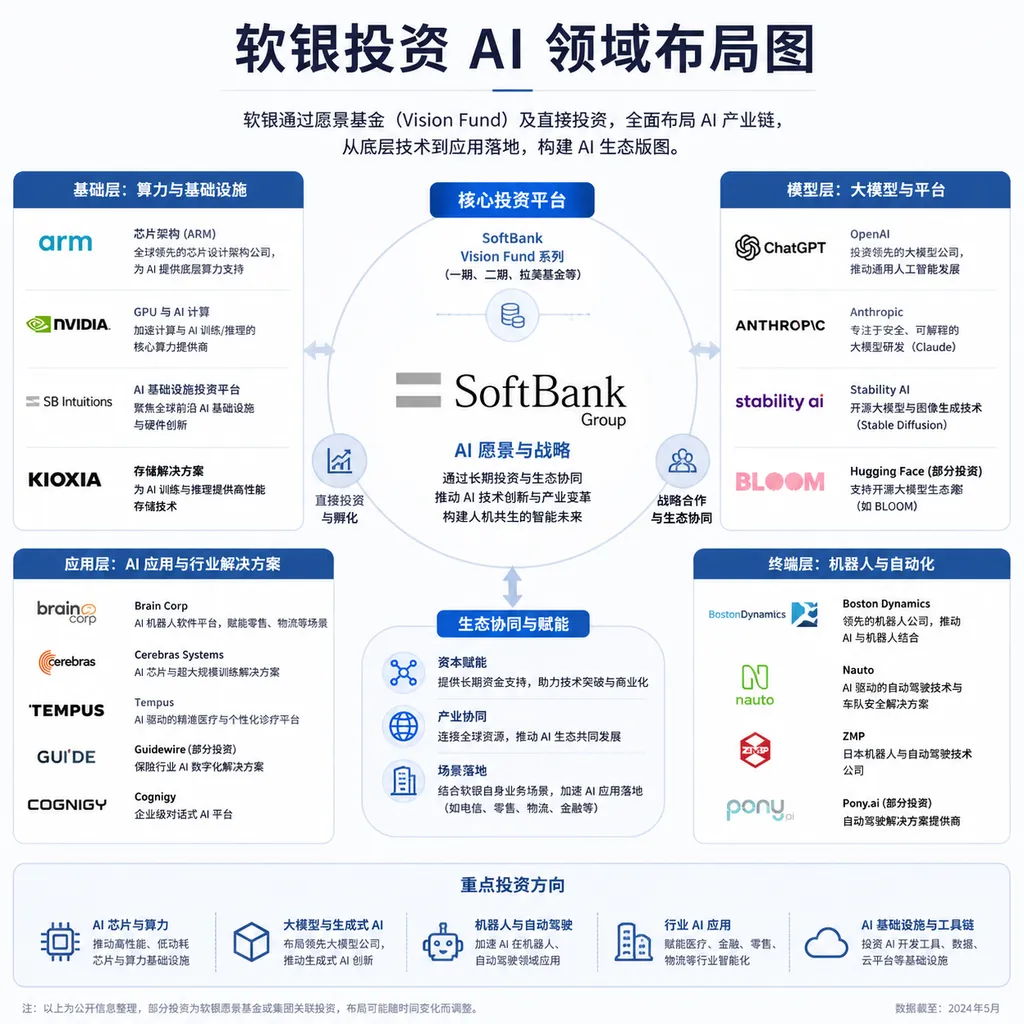
SoftBank’s Big AI Bet: $60 Billion on OpenAI
Son is not just talking — SoftBank’s money is already in. According to the latest financial report, SoftBank’s cumulative investment in OpenAI is expected to exceed $60 billion, with related assets’ fair value rising to $79.6 billion, generating about $45 billion in unrealized gains. This is SoftBank’s largest single investment in history, dwarfing its $20 million stake in Alibaba back in the day.
SoftBank’s AI layout goes beyond OpenAI. In 2025, SoftBank fully acquired U.S. chip design company Ampere Computing to strengthen its chip industry chain; announced acquisitions of ABB Group’s robotics business and global digital infrastructure asset management platform DigitalBridge to enhance AI application scenarios and infrastructure. ARM, under SoftBank, launched its first self-developed chip, ARM AGI CPU, in March this year, designed specifically for next-generation AI infrastructure.
ARM’s stock price surged 200% in 2026, driven by the proliferation of AI Agents opening growth space for server CPUs. Previously, attention was mainly on GPUs, since large model training and inference rely on parallel computing. But AI Agents, like digital assistants, actively break down tasks, call tools, search information, and run programs — operations highly dependent on CPUs. UBS predicts the global server CPU market will grow from $30 billion in 2025 to $170 billion in 2030, with $120 billion coming from AI-related demand.
SoftBank holds nearly 90% of ARM shares, so ARM’s stock surge directly boosted SoftBank’s market value. On June 1, SoftBank’s stock jumped 14% in a single day, pushing its market cap past ¥48 trillion, surpassing Toyota to become Japan’s most valuable listed company. Son also regained his position as Asia’s richest person.
Son’s Investment Philosophy: Betting on the Future Even If It Looks Crazy
Born in 1957, Son’s investment style has always been to “bet on the future.” In 2000, he invested $20 million in Alibaba when it had been founded for only a year, without a mature business model and not yet profitable. This investment later became one of the most successful cases in global venture capital history, with SoftBank’s stake multiplying thousands of times in value after Alibaba’s 2014 IPO.
But Son has also made missteps. In 2019, SoftBank’s heavy bet on WeWork exploded just before its IPO, which failed, wiping out over $10 billion invested. In 2017, SoftBank invested $4 billion for a 4.9% stake in NVIDIA, sold two years later for a $3 billion profit. Later, NVIDIA’s market cap soared into the trillions during the AI boom, prompting regret over the “sold too early” move.
Around 2022, SoftBank massively reduced its Alibaba stake to raise funds, cutting its holdings from 34% at peak to less than 4%. In hindsight, this was also controversial — but SoftBank redirected the funds toward AI, which now seems like the right track.
Son’s current judgment is that the AI wave has just begun, with a potential scale 50 times that of the internet boom over 20 years ago. He sees this as the beginning of an AI wave spanning 50 to even 100 years — the greatest technological and cognitive revolution in human history. Even if future corrections occur, he believes they won’t alter the long-term trend; instead, they will be prime investment opportunities.
This may sound like motivational talk, but given his $60 billion stake in OpenAI and ARM’s positioning in the AI chip market, Son has the qualifications to say it.
What Should Developers Care About?
For developers, AI creating AI brings two direct impacts:
First, model iteration speed will become much faster. Previously, the release cycle for new models was about a year; now it may shorten to a few months or even less. This means your applications will need to adapt to new model capabilities more frequently, with prompt engineering and fine-tuning strategies requiring constant adjustment.
Second, the jump in model capabilities may exceed expectations. When AI starts designing AI, the architectural space it can explore is much greater than humans’, potentially leading to counterintuitive breakthroughs. For example, a task that previously required fine-tuning may be solvable zero-shot by the next generation; or a reasoning task that used to require multi-turn dialogue may be completed in one go with a full logic chain.
Will ASI truly arrive within two years? Hard to say. But at least one thing is certain: the curve of AI capability growth is becoming steeper, and acceleration is increasing. As a developer, you need to prepare for an era of rapid model iteration and constantly changing application paradigms.
Son says he uses ChatGPT 2–3 hours daily. Perhaps you should also try using it more each day to feel how far these models have evolved. After all, when AI starts designing AI, the next leap in capability might be just months away.
References
- SoftBank's Masayoshi Son: OpenAI Is Using AI to Design AI Models, ASI 10,000 Times Smarter than Humans Will Arrive in Two Years — IT Home’s detailed report on Son’s CNBC interview, including the full video


