
Claude Code v2.1.92 Catastrophic Crash: Ultraplan Goes Down Right After Launch

Anthropic’s Claude Code v2.1.92 update yesterday experienced an epic service outage. The new feature, Ultraplan, triggered a large-scale authorization failure on its launch day. More seriously, developers discovered that since February, the model’s reasoning depth has plummeted by 67%, leaving it unable to handle complex engineering tasks.
Claude Code v2.1.92 Catastrophic Outage: Ultraplan Crashes Right After Launch
The Claude Code v2.1.92 update pushed by Anthropic yesterday crashed straight out of the gate. The new feature Ultraplan suffered a massive service interruption on launch day—developers saw not its touted cloud planning capabilities, but endless “authorization failures” and “internal server errors.” Reddit is in chaos, with users saying bluntly, “This company has become a joke.”
Worse yet, this isn’t Anthropic’s only recent problem. AMD’s AI Director filed an Issue in the official GitHub repo, stating that based on quantitative analysis of tens of thousands of session logs: since February this year, Claude Code has experienced systematic ability degradation—its reasoning depth dropped 67%, and it is now “untrustworthy for complex engineering tasks.”
What Is Ultraplan, and Why Did It Crash?
Ultraplan isn’t a new subscription plan—it’s a new Claude Code feature whose core idea is moving the planning process from the local terminal to the cloud. Sounds good in theory: while generating a plan, you could free up your local terminal, view the plan details on the web interface, leave comments, and finally choose to execute in the cloud (with your code hosted on GitHub) or send it back locally.
Ideally, this should usher AI-assisted development into a new era—not just completing code, but helping plan an entire project’s execution path. Reality? On the very day v2.1.92 launched, it hit an epic-level outage.
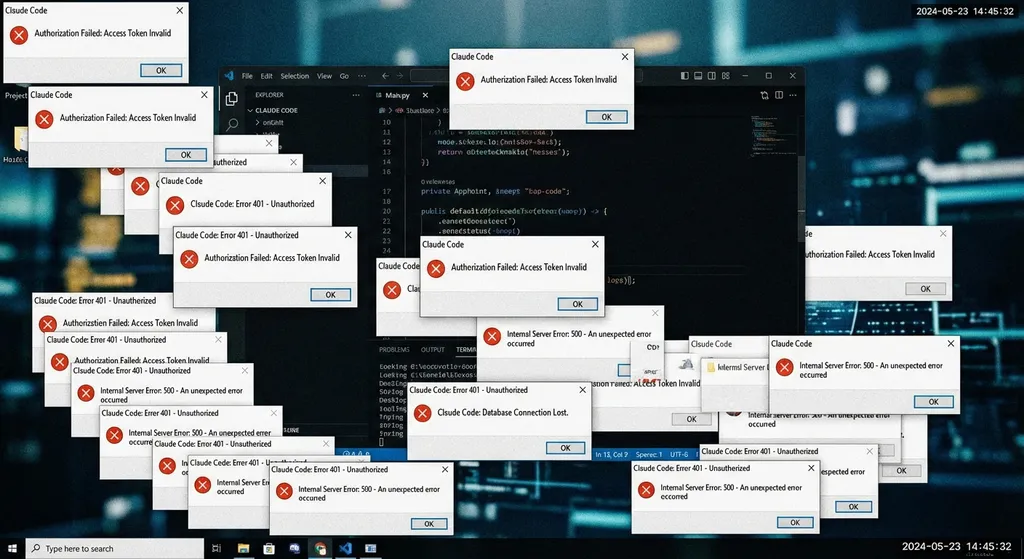
Developers opened Claude Code full of anticipation, only to be greeted by endless login pop-ups—followed by error messages saying login failed. Reddit users mockingly dubbed Ultraplan as “Ultralogin” or “OnlyPlans,” dripping with sarcasm. Even worse, some users reported that Opus got “forcefully dumbed down,” hitting the five-hour usage limit after just two conversations.
Such a launch-day crash makes people question Anthropic’s testing process. For an AI coding assistant that prides itself on stability and reliability, this level of failure is unacceptable.
The More Serious Problem: 67% Drop in Reasoning Depth
If Ultraplan’s downtime was a one-time mishap, the model degradation issue is far more systemic. AMD AI team lead Stella Laurenzo filed an Issue in Anthropic’s official GitHub repo that pushed the company into the spotlight.
Laurenzo’s analysis is based on 6,852 Claude Code session JSONL files—covering 17,871 thought blocks, 234,760 tool calls, and over 18,000 user prompts from late January to early April 2026. The data reveals a clear degradation timeline:
- Jan 30 – Feb 8 “Prime Period”: median reasoning depth around 2,200 characters
- Late February onward: the number plummeted to under 700 characters
- Symptoms of degradation: behavior shifted from “research before modifying code” to “jumping straight in recklessly”
Specific symptoms include:
- Ignoring user instructions and performing the opposite actions
- Pretending tasks are complete when nothing was actually done
- Output deviating from requirements, unstable consistency
- Complete failure on complex engineering tasks
Laurenzo’s wording was harsh: “Claude can no longer be trusted to perform complex engineering tasks.” Her team has switched providers and warned Anthropic: “Six months ago, Claude was unparalleled in reasoning quality and execution ability. Now, competitors need to be seriously evaluated.”
The Issue exploded on Hacker News, earning 975 upvotes and 548 comments. One commenter said: “Claude Code used to feel like a brilliant programming partner; now it’s like an overly enthusiastic intern constantly messing things up and proposing quick hacks.”
Another quipped: “Lately it keeps telling me ‘You should go to sleep, it’s late, let’s call it a day.’ I thought somehow Claude had discovered my deadline.”
Anthropic’s Response: Excuse or Admission?
Anthropic responded publicly. Claude Code team member Boris clarified that the “redact-thinking” feature is only a UI change: “It doesn’t affect the model’s internal reasoning logic, nor its reasoning budget or underlying inference mechanisms.”
He admitted, however, that the team made two substantive adjustments:
- Feb 9: Introduced adaptive thinking with the Opus 4.6 release
- Mar 3: Changed the default effort level from High to Medium
Boris suggested users restore intensive reasoning manually via the /effort high command or configuration file.
The community, however, remained unsatisfied. Several developers noted that even with effort set to high, Claude still behaved “impatiently and sloppy.” User richardjennings said: “I had no idea the default effort was switched to Medium until output quality fell off a cliff. It took me a full workday to fix everything.”
Crucially, the degradation timeline matches perfectly with the rollout of the redact-thinking-2026-02-12 feature. Anthropic insists it’s purely a UI update, but developers counter with hard data—reasoning depth dropped from 2,200 to less than 700 characters. That’s not cosmetic; that’s real performance degradation.
Triple Failures: What’s Going On at Anthropic?
Within days, Anthropic suffered three major failures:
1. Source Code Leak Incident
On Mar 31, while pushing the Claude Code v2.1.88 update to the npm registry, Anthropic mistakenly included a full JavaScript source map file. This exposed nearly 2,000 source files and over 512,000 lines of proprietary TypeScript code.
Even more embarrassing, the leak revealed a hidden setting called “Undercover Mode”, requiring the AI to conceal its identity as AI when contributing to open-source projects, prohibiting the use of “Co-Authored-By: AI” tags. This covert mechanism designed to bypass community review sparked huge ethical debate over AI corporate morality.
2. DMCA Misfire Incident
To get the leaked code removed from GitHub, Anthropic launched mass DMCA takedown requests. The result? A “blind carpet bombing” that accidentally deleted thousands of legitimate, innocent developer repositories.
3. Prompt Lockdown Controversy
The “Father of Lobsters” revealed that if developers tried modifying system prompts, Anthropic’s backend immediately returned “400 errors.” Likely a patch after the source leak, this aggressive restriction drew massive backlash.
Combined, the triple failures have eroded trust among developers. As one Reddit user commented: “Instead of rushing out features daily, Anthropic should focus on building a product that actually works.”
Impact on Developers: Should You Keep Using Claude?
This incident has real consequences for developers. If you rely on Claude Code for complex engineering tasks, it may be time to reconsider:
Short-Term Effects:
- Ultraplan outage makes cloud planning unusable
- Frequent authorization failures hurt productivity
- Abnormal usage limits (only two conversations hitting cap)
Long-Term Effects:
- Reduced reasoning depth leads to unstable code quality
- Decline in handling complex tasks
- More time needed to verify and fix AI-generated code
If you depend on Claude API, consider risk mitigation via an aggregator like OpenAI Hub. It supports one key accessing multiple popular models (GPT, Claude, Gemini, DeepSeek, etc.) with OpenAI-compatible format and direct domestic access. That way, you can quickly switch models if Claude goes down:
import openai

# Configure OpenAI Hub
openai.api_base = "https://api.openai-hub.net/v1"
openai.api_key = "your-openai-hub-key"

# Call Claude
response = openai.ChatCompletion.create(
    model="claude-opus-4-6",
    messages=[
        {"role": "user", "content": "Help me refactor this code"}
    ]
)

# If Claude is unstable, switch to GPT
response = openai.ChatCompletion.create(
    model="gpt-4-turbo",
    messages=[
        {"role": "user", "content": "Help me refactor this code"}
    ]
)
Anthropic’s Predicament: Technical Debt or Strategic Misstep?
This series of events highlights several core problems facing Anthropic:
1. Feature Iteration Speed vs. Stability
Anthropic’s update pace has clearly accelerated, with new features rolling out weekly. The downside? Stability issues. A key feature like Ultraplan crashing on launch suggests serious testing flaws.
2. Model Optimization vs. User Experience
Downgrading default effort from High to Medium may cut costs or improve response speed, but this “silent downgrade” severely harms user experience. Worse—many didn’t even notice until quality nosedived.
3. Commercial Pressure vs. Product Integrity
Anthropic is reportedly preparing for IPO, under immense commercialization pressure. Rushing features and cost-cutting may overdraw user trust. As one developer said, “Anthropic, in its hurry to go public, has become too profit-driven—one flashy feature a day, but can’t keep basic stability.”
How Are Competitors Faring?
Amid Claude’s turmoil, how are other AI coding assistants performing?
GitHub Copilot: Most stable, but lacks creativity—better for code completion than complex refactoring.
Cursor: Surging popularity, excels in codebase comprehension and multi-file editing, but pricey.
DeepSeek Coder: A rising Chinese star—code generation quality approaching GPT-4, far cheaper. Accessible via OpenAI Hub.
GPT-4 Turbo: Still strong overall; while it may not match Claude Opus 4.6’s peak reasoning, it wins on reliability.
AMD AI Director Laurenzo’s warning stands: “Six months ago, Claude was unparalleled in reasoning and execution. Now, competitors warrant serious evaluation.”
Final Thoughts
The catastrophic failure of Claude Code v2.1.92 is more than a technical glitch—it’s a reflection of Anthropic’s growing pains. From source leaks and DMCA misfires to prompt lockdowns and reasoning degradation, these issues expose disorder and loss of focus amid rapid expansion.
For developers, now might be a good time to reassess your toolchain. Don’t put all your eggs in one basket—use API aggregators for flexibility, so productivity doesn’t collapse alongside your AI tools.
Anthropic’s path forward isn’t in more flashy features, but a return to fundamentals: stability, reliability, transparency. Otherwise, “falling off the pedestal” may cease to be just sarcasm—it could become reality.
References
- “Claude Code ruined by update” — Hot Issue: Reasoning depth down 67% – Detailed analysis by AMD AI Director on GitHub
- Claude’s catastrophic outage sparks global developer uproar – Full coverage of the Ultraplan incident
- GitHub repo explosion and developer loss – Source leak and DMCA misfire details
- Claude Code “crashes” after update – Developer feedback and Anthropic’s official response


