
GLM-5.2 to be released in a few days: Zhipu accelerates iterative programming capabilities

Zhipu GLM-5.2 is expected to be released within a week. GLM-5.1 has just improved its programming capabilities by 30%, approaching Claude Opus 4.6. The new version’s iteration pace continues the previous 7-day internal testing pattern, demonstrating Zhipu’s aggressive strategy in the AI coding race.
GLM-5.2 to be Released Within Days: Zhipu Accelerates Iteration in Programming Capability
Zhipu GLM-5.2 is about to be released. Based on community observations, whenever Zhipu’s beta models appear, the official release usually follows within 7 days—GLM-4.7, GLM-5.0, and GLM-5.1 have all followed this pattern. This time the beta signal for 5.2 has already appeared, and as per usual, we can expect to see the official version within this week.
This iteration speed is considered fast among domestic large models. GLM-5 was released just on February 12, and a little over a month later GLM-5.1 achieved a 30% improvement in programming capability, closing in on Claude Opus 4.6. Now 5.2 is arriving, showing Zhipu is going full throttle in the AI Coding race.
Why Focus on Programming Capability
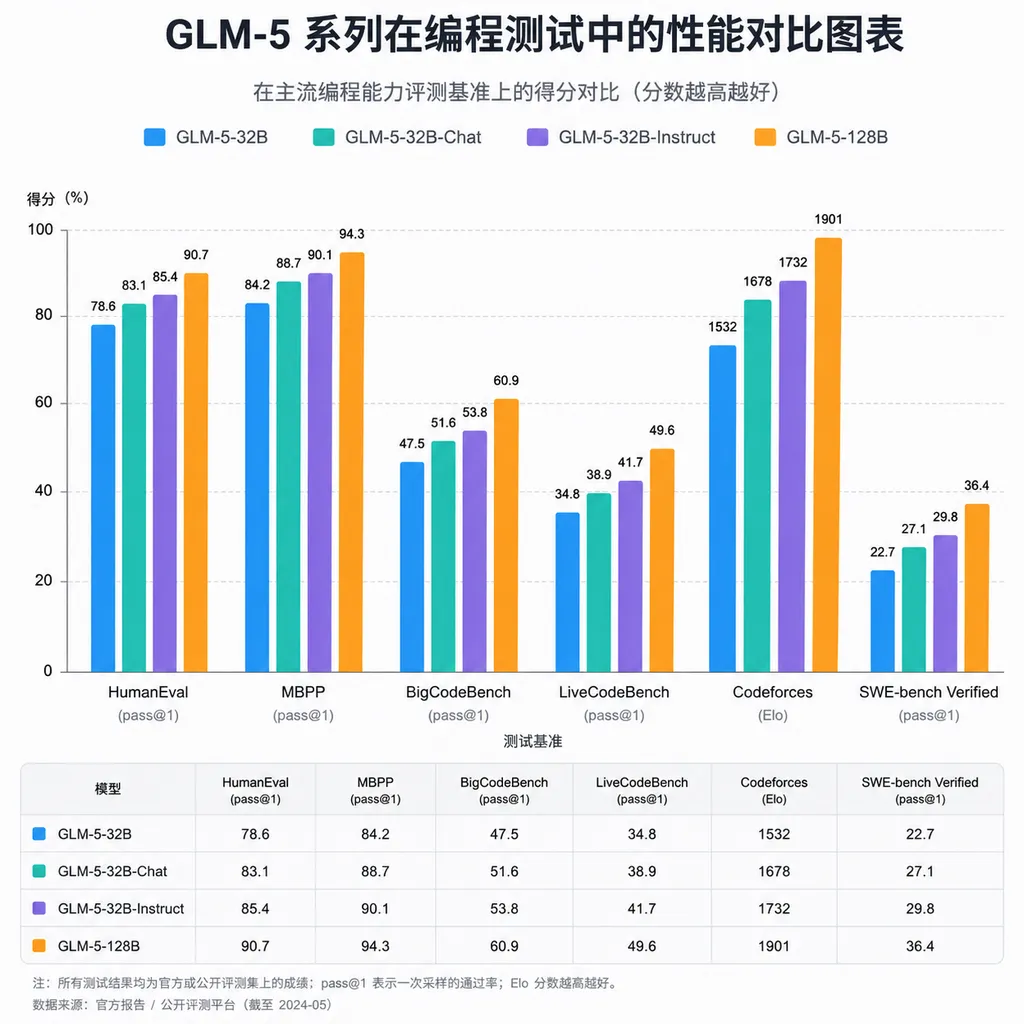
Zhipu’s recent product moves all revolve around programming. When GLM-5 was released, the official benchmark was aligned with Claude Opus 4.5’s programming capability, surpassing Gemini 3 Pro. GLM-5.1 further strengthened this, reaching near international top levels in tests such as SWE-bench Verified, HLE, and BrowseComp.
This strategic choice is not random. The AI Coding market has been validated as a real demand—Anthropic’s ARR has reached USD 30 billion, with a steep growth curve. After cutting-edge large models break the barrier of high completion rates in professional tasks within half an hour, demand for Agents and tokens grows rapidly—this is the catalyst. The global AI Coding market is at least in the hundreds of billions of USD, and China’s market is just beginning to accelerate.
Zhipu is also using commercial moves to validate this judgment. On February 12, the day GLM-5 was released, the GLM Coding Plan increased in price, cancelling the first-purchase discount, with overall increases starting at 30%. The reason: “Market demand continues to grow strongly, with user scale and call volume rapidly increasing.” Price hikes often indicate a tight supply-demand relationship or a revaluation of product value. Zhipu’s choice to raise prices at the same time as releasing a new model shows confidence in the programming capabilities of the GLM-5 series.
Technical Foundation of the GLM-5 Series
GLM-5’s parameter scale expanded from 355B (activated 32B) to 744B (activated 40B), and pretraining data increased from 23T to 28.5T. Greater pretraining compute power improved general intelligence, but what truly boosted programming ability was the new framework and training methods.
GLM-5 built the “Slime” framework, supporting larger model sizes and more complex reinforcement learning tasks, improving post-training process efficiency. Combined with asynchronous agent reinforcement learning algorithms, the model can continuously learn from long-range interactions. This combination upgraded GLM-5’s performance in programming scenarios from “writing code” to “writing projects.”
Zhipu calls this shift from “Vibe Coding” to “Agentic Engineering.” The former means writing a few lines of code and fixing bugs, while the latter means completing complex system engineering and long-range agent tasks. GLM-5.1 continued to make breakthroughs in long-range tasks, with a clear cost-performance advantage—output rate 68 tokens/sec, cost per million tokens USD 3.
This cost figure is worth noting. Cutting-edge models generally face compute inflation and token-tiering trends, making cost-performance an important competitive factor. Zhipu has kept costs low while maintaining performance, removing obstacles to commercialization.
The Window for Business Model Transformation
Zhipu’s business model is shifting from project-based to token-based billing. In 2025, localized deployment accounts for around 74%, but cloud platform revenue has been growing rapidly—cloud deployment revenue increased about 293% year-on-year. After GLM-5’s release, cloud revenues mainly from API calls are scaling quickly.
This transformation path is similar to Anthropic’s. Project-based growth is linear, token-based billing is exponential. As token call volumes increase and compute utilization is optimized, growth curves break away from the old trajectory. Zhipu’s projected revenue is RMB 2.798 billion in 2026, RMB 6.962 billion in 2027, and RMB 15.770 billion in 2028—this growth rate can only be achieved under a token-billing model.
Cloud deployment gross margins are also improving. In 2025, Zhipu’s overall gross margin is 41%, lower than 56.3% in 2024, because the share of cloud business increased, with heavy initial compute investment. But as scale effects kick in, cloud gross margins will recover, driving overall profitability improvement. Forecasts show gross margins returning to 43.2% in 2026, 50% in 2027, and 54.4% in 2028.
GLM-5.2’s release at this point fits right into the business transformation window. Every jump in model performance drives an increase in token calls. Zhipu needs to accomplish two things within this window: first, maintain technological leadership through rapid iteration; second, get developers accustomed to token-based billing.
Pressure Behind the Iteration Speed
The 7-day release rhythm seems aggressive, but is actually driven by market pressure. Since GLM-5, minimax-M2.5, kimi k2.5, combined with OpenClaw accelerating Agent penetration, token consumption has increased significantly. The market is accelerating—one step slower and you fall behind.
Zhipu’s talent base and technical reserves underpin this speed. GLM-5’s total parameters are 744B, pretraining data 28.5T, with inference and code capabilities close to international top standards. This cannot be achieved merely by stacking compute—it involves systematic breakthroughs in model architecture, training methods, and engineering optimizations. Zhipu’s ability to achieve a 30% performance boost in GLM-5.1 in just over a month shows technical accumulation has reached a stage where it can be quickly released.
But rapid iteration has its costs. Each release requires compute investment, testing, documentation updates, and community support. The GLM Coding Plan’s price hike is partly due to “ensuring stability and service quality under high loads, and increasing compute and model optimization investment.” This is an inevitable cost of rapid growth.
What GLM-5.2 Might Bring
The specific updates for GLM-5.2 are still unknown. Judging from the path from GLM-5 to GLM-5.1, possible directions include:
- Further improvement in programming capability: GLM-5.1 has already approached Claude Opus 4.6; 5.2 may surpass it in certain specialized scenarios (e.g., complex system refactoring, multi-file collaborative editing).
- Long-range task optimization: GLM-5.1 emphasized breakthroughs in long-range tasks; 5.2 may further reduce token consumption or improve task completion rates.
- Multimodal capability: 2025 large model evaluations showed GPT-5.2 and GLM-4.6V achieving “native full modality”; GLM-5.2 may fill gaps in the multimodal direction.
- Cost optimization: Further lowering inference costs while maintaining performance, expanding the cost-performance advantage.
Zhipu’s goal is clear—to stay ahead of competitors in the AI Coding race by benefiting from simultaneous increases in high-end token quantity and price. If GLM-5.2 can maintain previous iteration quality, this goal is quite achievable.
But the more crucial question is how long rapid iteration can be sustained. Once model performance reaches a certain level, marginal gains will diminish. Zhipu is building an advantage through speed now, but ultimately must rely on moats in ecosystem, application scenarios, and business model. After GLM-5.2’s release, Zhipu’s next moves will be worth watching.
The Speed Race Among Domestic Large Models
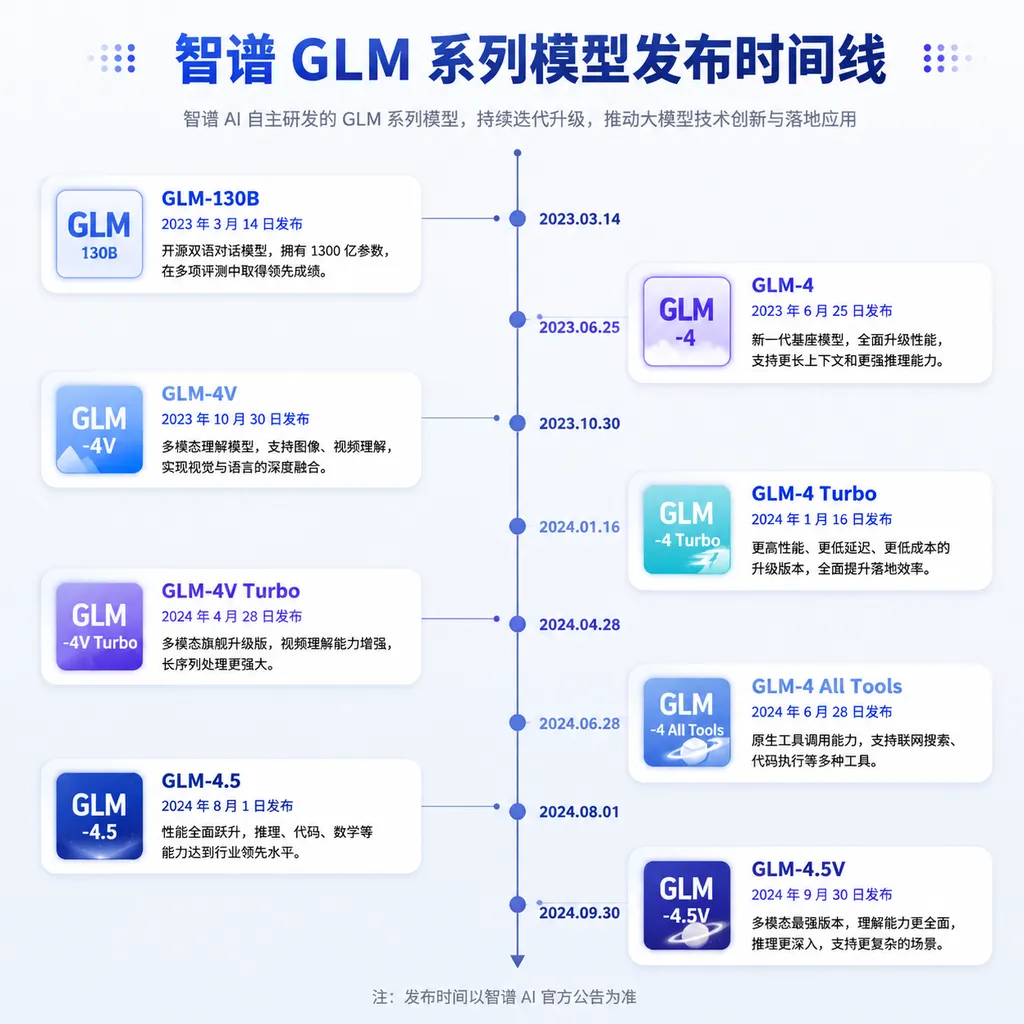
Zhipu’s 7-day release rhythm is not unique among domestic large models, but it is typical. Behind this pace are two judgments: first, the technical window is short and must be seized quickly; second, developers’ expectations for model performance are rising rapidly—being slow means being replaced.
From a global perspective, iteration speed of cutting-edge large models is accelerating. OpenAI GPT-5 was released in August 2025; Zhipu GLM-5 in February 2026—a gap of only six months. The distance between domestic large models and international top standards is shrinking, but the rate of reduction depends on iteration speed.
The imminent release of GLM-5.2 is not just Zhipu’s move, but a signal of collective acceleration among domestic large models. The market is no longer about “can it be built,” but “who can build it faster.” The 7-day release rhythm may well become the new norm.
References
- GLM-5.2 to be released soon, expected in a few days - Linux.do - Community discussion on GLM series model release patterns
- GLM-5 has been released! - Reddit ZaiGLM - International community feedback after the release of GLM-5
- From Text Assistants to Productivity Agents — 2025 Annual Evaluation of Large Models: Multimodal - 2025 evaluation of large model multimodal capabilities


