
iOS 27 Realistic Image Generation Goes Live Independently, Apple Finally No Longer Relies on ChatGPT
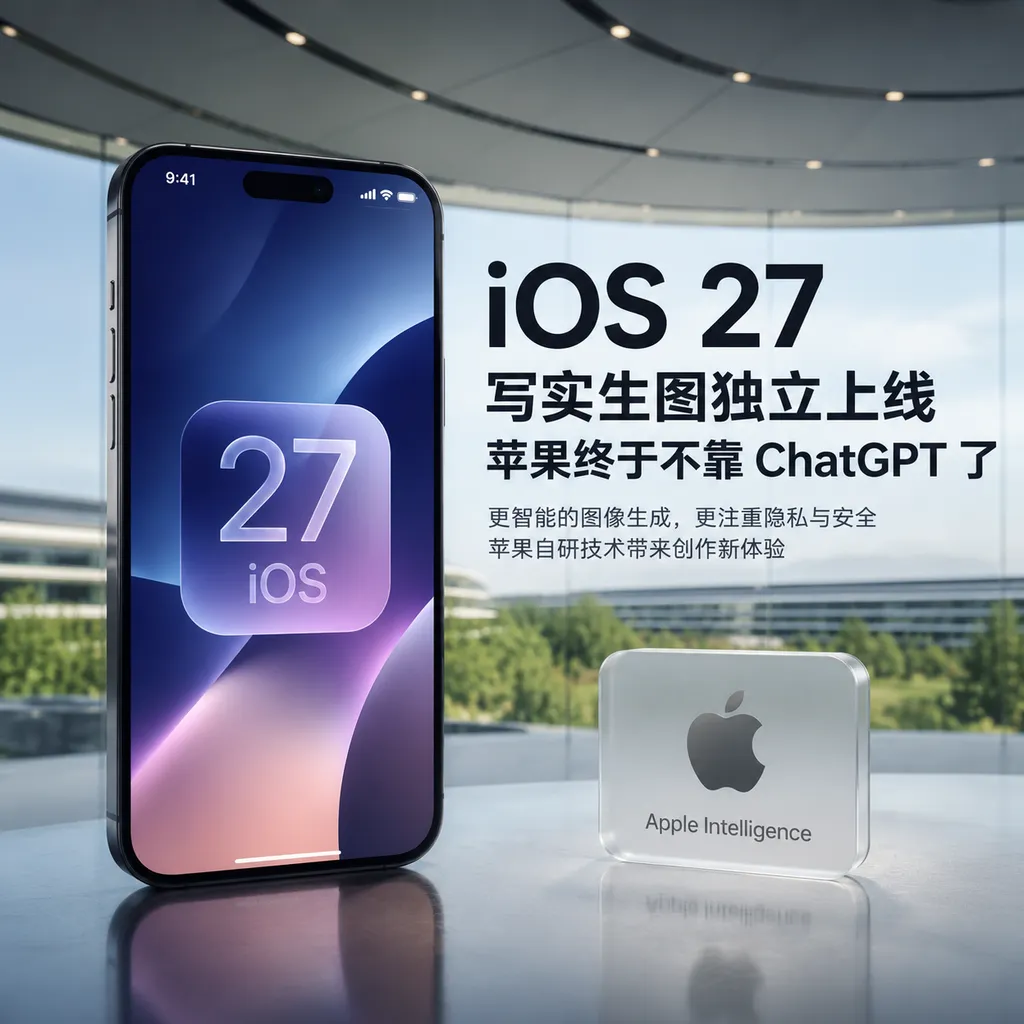
At WWDC 2026, Apple added native photorealistic style generation to Image Playground, eliminating the need to go through ChatGPT. This is the most noteworthy upgrade to Apple’s self-developed image model in the past year.
iOS 27 Photorealistic Image Generation Goes Live Independently — Apple Finally Stops Relying on ChatGPT
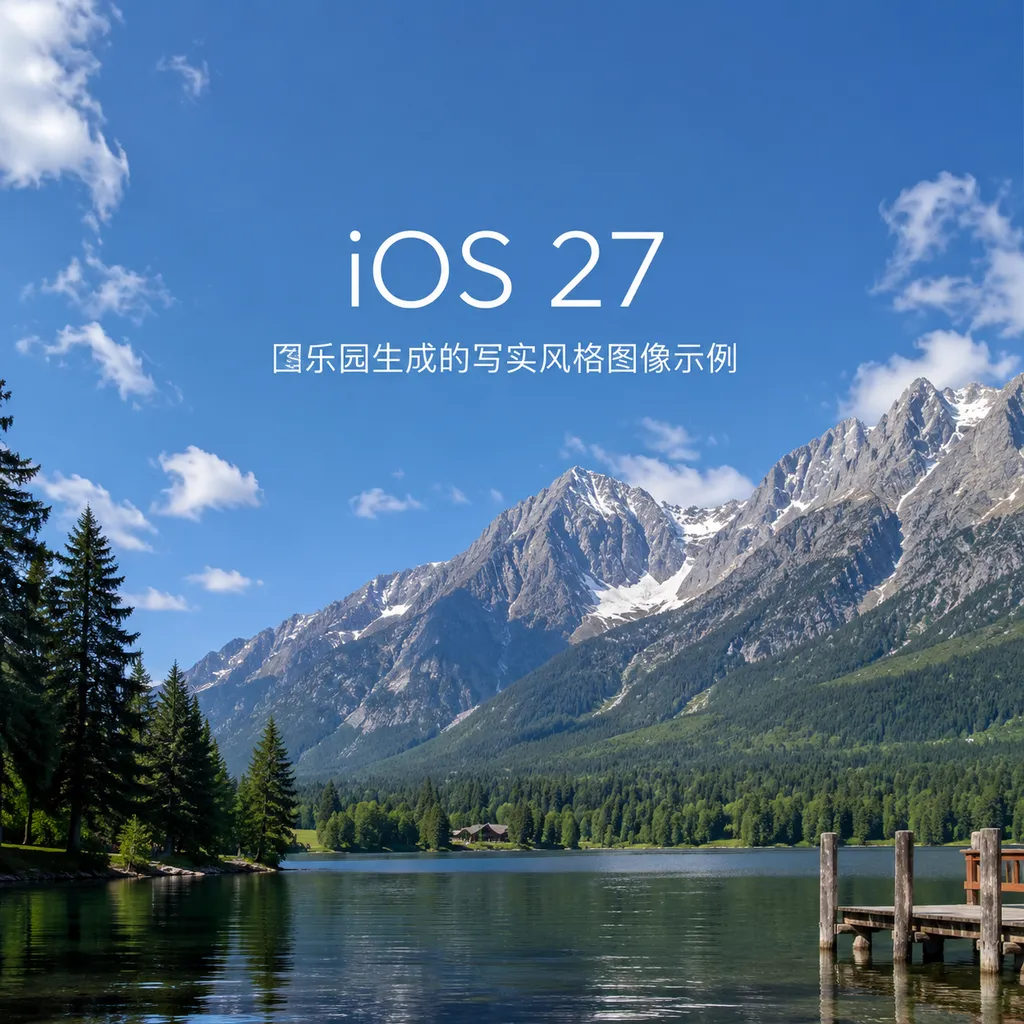
At the early hours of June 9 during WWDC 2026, Apple filled in a missing piece for Image Playground in iOS 27 — native photorealistic AI image generation. From now on, users can type a text description in Image Playground and directly get an image with photo-like quality, without having to jump to ChatGPT.
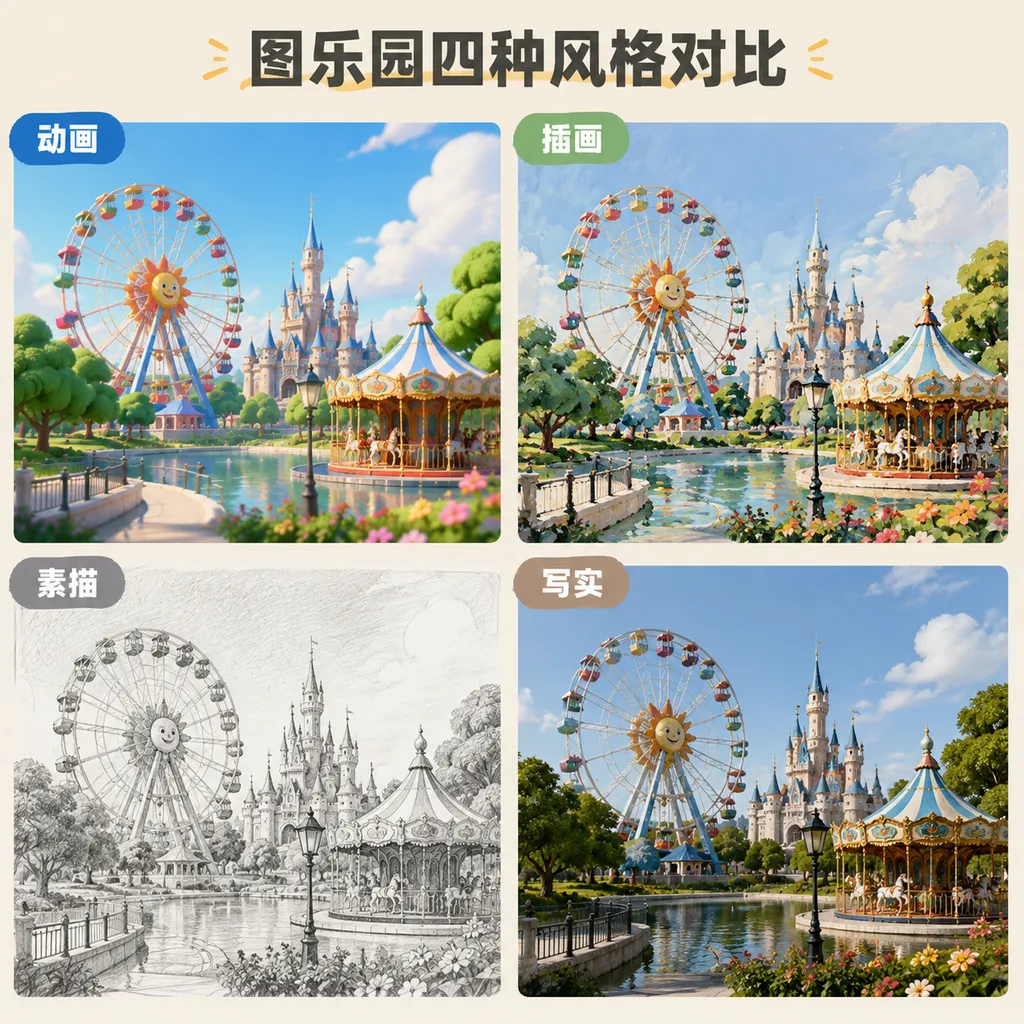
It may sound minor, but for those who used the first release of Image Playground in iOS 18.2, it means something different. A year and a half ago, when the tool could only generate “animation,” “illustration,” and “sketch” styles, it was described by outsiders as “only good for making memes”; TechCrunch was even blunter — Apple's Image Playground doesn't suck anymore.
From “Any Style” Detour to Native Support
Looking back at the timeline makes clear how awkward Apple’s path has been.
In December 2024, iOS 18.2 introduced Image Playground and Genmoji for the first time — Apple’s first attempt at embedding on-device diffusion models into the iPhone. Models ran locally, with impeccable privacy protection, but at the cost of image quality: faces had a plastic-like look, details were blurry, and compositions were conservative. Compared to competitors already running SDXL or Midjourney v6 at the time, the gap was obvious.
In the iOS 26 era of 2025, Apple took a compromise route — adding an “Any Style” option to Image Playground, essentially forwarding requests to ChatGPT’s image generation API, allowing users to bypass Apple’s preset visual templates. This was tantamount to admitting: I can’t manage photorealistic images myself, so I’ll borrow from OpenAI.
By iOS 27, Apple decided to pull that leg back. In the updated Image Playground shown at WWDC 2026, “Photorealistic” now sits alongside animation, illustration, and sketch as a native style choice. No ChatGPT account, no network jump — it calls Apple’s own (or partner’s) image model.
Own Model Upgrade Plus Third-Party Integration
This upgrade was actually leaked by Bloomberg’s Mark Gurman at the end of May. Gurman revealed two key points:
- Apple’s own image model has undergone significant optimization, greatly improving the quality for Genmoji and Image Playground;
- Image Playground will integrate third-party models beyond ChatGPT, with rumored candidates including Google’s Nano Banana.
Today’s release confirms the first point — photorealistic generation is a direct sign that the in-house model’s capabilities have crossed the necessary threshold. Apple didn’t emphasize the second point much in the keynote but hinted at it in developer docs and post-event briefings: Image Playground's backend is a pluggable model routing layer, so in the future different styles and purposes may be powered by different underlying models, and ChatGPT will no longer be the sole external option.
This design logic is consistent with Apple’s overall approach for Apple Intelligence:
- On-device small models handle privacy-sensitive, low-latency requests;
- Private Cloud Compute supports larger-parameter tasks;
- Third-party models act as optional “external experts” called upon with user consent.
Image Playground is simply applying this three-tier structure within a specific product.
What Photorealism Means
It’s worth separating “photorealistic” for special discussion. In AI image generation, photorealism is the ultimate test of a model’s fundamentals — it requires simultaneous control of lighting, materials, human anatomy, depth of field, skin texture, and countless physical details. Any one error is immediately noticeable to the human eye. This is why early Stable Diffusion and DALL·E 2 did well with cartoon styles but failed with photorealistic output.
Apple previously avoided photorealism partly because model capabilities weren’t up to par, and partly due to compliance considerations — generating photorealistic faces touches on deepfakes, portrait rights, and related legal issues. Apple has always been sensitive to such gray areas.
This time, iOS 27’s embrace of photorealism implies:
- Model quality has passed Craig Federighi’s bar, at least in low-risk demonstration scenarios like “presentation images, invitations, prototype sketches, wallpapers”;
- Apple likely applied strict safety constraints in face generation, expected to use Genmoji-era strategies — treating real people (including friends and family identified from the photo library) through separate pipelines, making it hard to induce specific real individuals from plain text prompts;
- Photorealistic output likely comes with C2PA or similar provenance signatures (Apple’s prior privacy design patterns make this a predictable move).
Appleinsider commented that photorealism elevates Image Playground from a “toy” to a “light productivity tool” — making product concept images, adding backgrounds to meeting invitations, or creating a lock screen wallpaper no longer require opening Midjourney or paying for ChatGPT Plus.
What It Means for Ordinary Users and Developers
For ordinary users, the immediate benefit of this update is: for the first time, the iPhone’s built-in AI image tool has reached a “usable” level. In the past, to generate a decent image, users had to either subscribe to ChatGPT or fuss with Midjourney commands; now they can output images directly in the system input field.
For developers, the bigger point of interest is the system-level API behind Image Playground. Apple’s usual practice is to first integrate capabilities into its own apps, then later open them to third parties. The ImagePlayground framework from iOS 18 already provided basic view components:
import ImagePlayground

struct ContentView: View {
    @State private var isPresented = false
    @State private var imageURL: URL?

    var body: some View {
        Button("Generate Image") { isPresented = true }
            .imagePlaygroundSheet(
                isPresented: $isPresented,
                concepts: [.text("Cyberpunk-style Tokyo street")],
                style: .photorealistic   // New in iOS 27
            ) { url in
                imageURL = url
            }
    }
}
In iOS 27, .photorealistic was added to the ImagePlaygroundStyle enum, so third-party apps can call it directly without needing to integrate the OpenAI SDK. For note-taking, scheduling, invitations, or e-commerce product images, this is a zero-cost entry point for photorealistic image generation.
A Small Turn in Apple’s AI Strategy
Viewed in a longer timeline, Apple’s AI strategy is quietly shifting.
When Apple Intelligence was first announced, the common criticism was that Apple “can’t build large models, so they have to rely on OpenAI as a fallback”. This perception partly came from the still-delayed Siri overhaul (Gurman recently said the new Siri was pushed back again to 2027) and partly from awkward designs like Image Playground’s “Any Style via ChatGPT.”
With iOS 27, at least on the image-generation front, Apple has regained some initiative:
- Its own model closes the gap in photorealistic capability;
- ChatGPT goes from “only aid” to “one of several aids”;
- The system-level API leaves space for third-party model integration.
This doesn’t mean Apple has caught up in the large-model race — Siri’s text shortcomings remain, and Apple has shown virtually no public achievements in multimodal reasoning. But at least in its “on-device + private cloud + external” hybrid architecture, Apple now has its own say rather than simply serving as a shell for other APIs.
A Side Note
The trend of multiple image model vendors coexisting has been obvious to developers over the past year. GPT, Claude, Gemini, DeepSeek, and various domestic models each have strengths, with none dominating the field. Developers increasingly act as “routers” — distributing requests to different models by task type, price, and latency.
That’s also the point of aggregator platforms like OpenAI Hub: one key to access mainstream closed models, OpenAI-compatible format, direct domestic connection, and eliminating the hassle of signing up for separate accounts, bypassing proxies, and dealing with different SDKs. What Apple does at the system layer, developers do on their own servers.
In Closing
Apple’s pace in AI development has always been slow, but there’s value in slowness — they rarely release an obviously substandard product hoping OTA updates will save it. The iOS 18.2 version of Image Playground was an exception, likely driven by scheduling pressure. This time in iOS 27, Apple patched in photorealism and removed ChatGPT dependence, essentially erasing that exception.
The remaining question is: when the final release reaches users, will the quality of this in-house model hold up in side-by-side comparisons with peers like Midjourney, Imagen 4, and GPT Image? That answer will only come this fall when iOS 27 officially launches.
References
- No ChatGPT Required: Photorealistic AI Image Generation in Apple iOS 27 Image Playground Debut – IT Home: First report on the photorealistic image generation feature at WWDC 2026
- Gurman: Apple iOS 27 Will Greatly Improve AI Image Model Quality – IT Home: Bloomberg journalist Mark Gurman’s early disclosure on Apple’s own image model upgrade and third-party model integration


