
Apple releases Game Porting Toolkit 4: Integrating AI agents into the game porting process
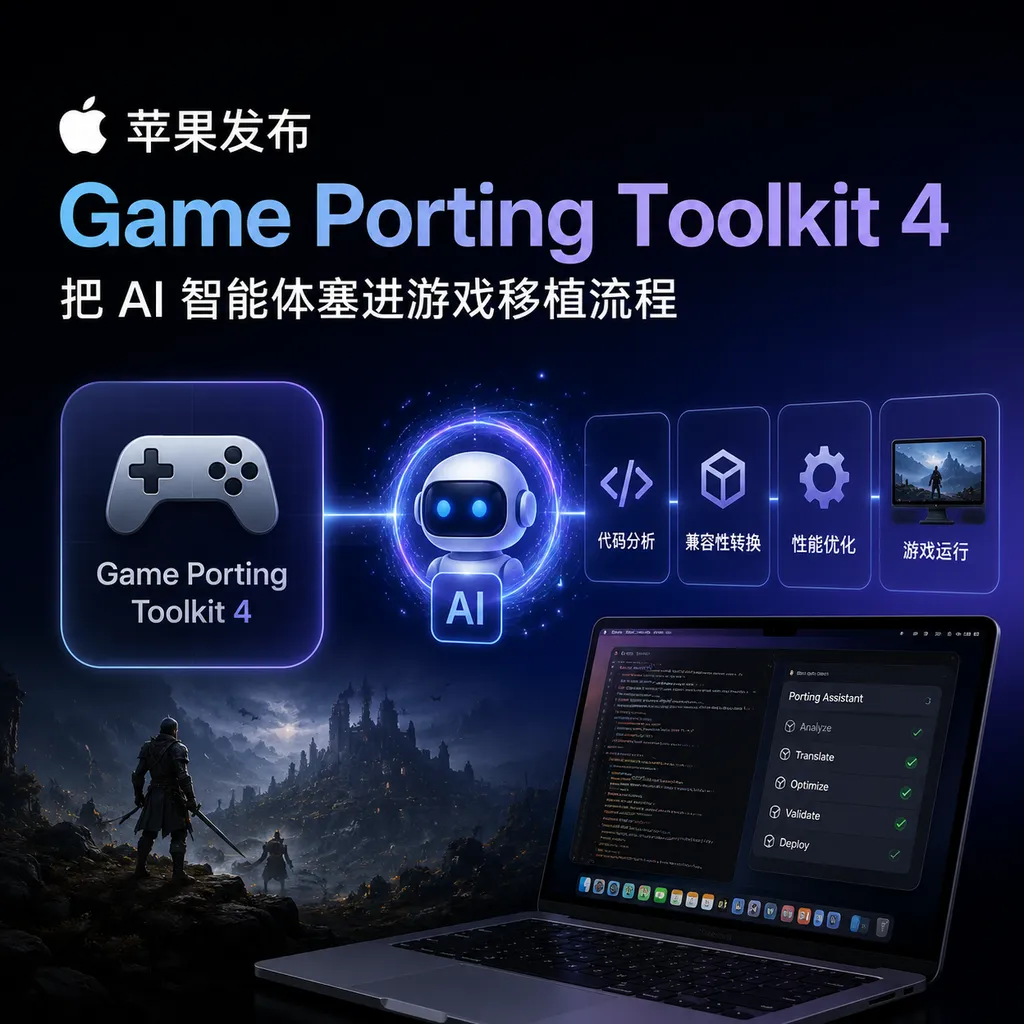
After the WWDC26 keynote ended, Apple quietly released Game Porting Toolkit 4. The biggest change this time is not the tool itself, but the accompanying launch of a GitHub open-source repository, providing agent skills and sample code, enabling AI to directly participate in Metal debugging and performance analysis.
Apple Wants AI to Help You Bring Windows Games to Mac
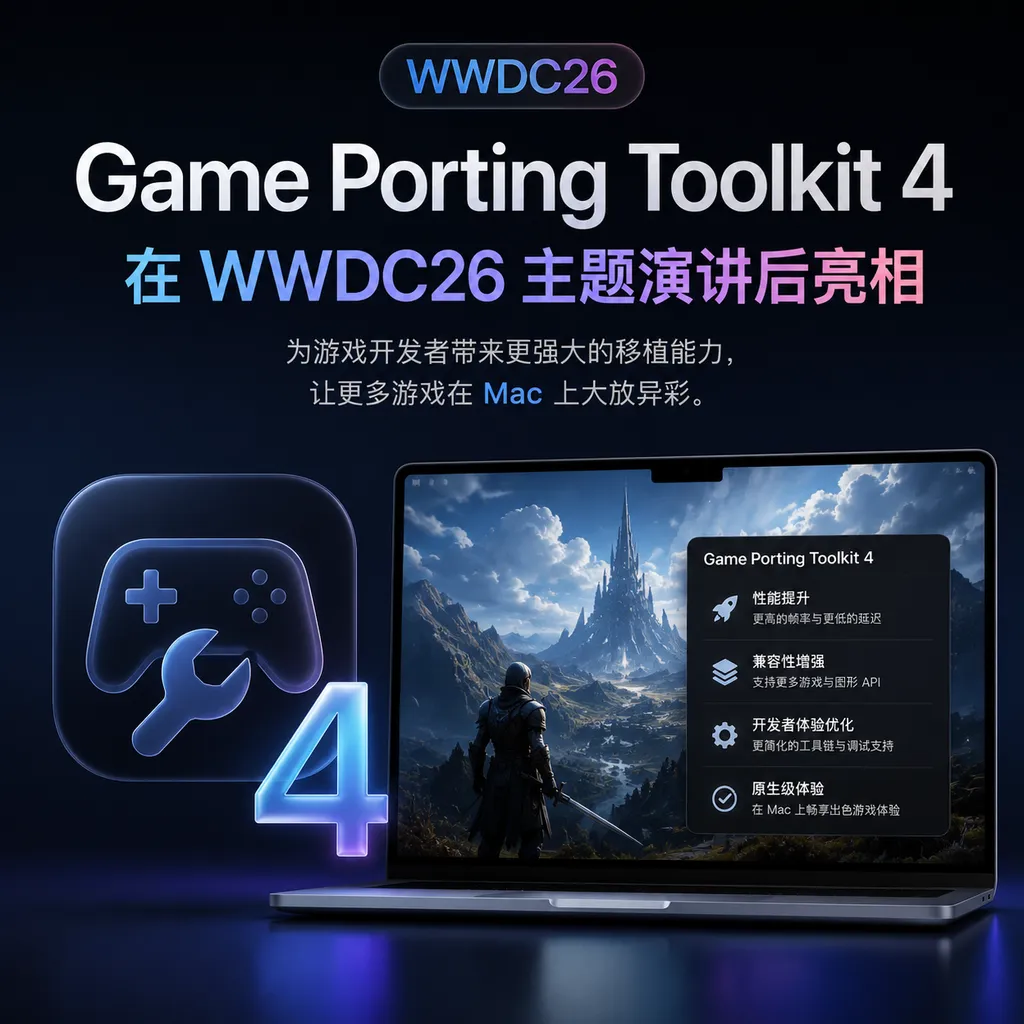
Just a few hours after the WWDC26 keynote wrapped up, Apple quietly released Game Porting Toolkit 4 (hereafter GPTK 4) on its developer channel. Compared with previous versions, the highlight of this upgrade isn’t about how fast the toolchain can run or how many DirectX calls it can support. Instead, for the first time, Apple has put AI agents front and center in the game porting process—alongside a new GitHub repository providing open-source "agent skills" and sample code, enabling developers to directly leverage AI programming capabilities to handle Metal workloads.
This is a more radical move than it may seem. Over the past three years, Apple’s Mac gaming strategy can be summed up as “lowering the barrier to entry”: from GPTK’s first edition in 2023, which used Wine + D3DMetal to run Windows binaries directly on Apple Silicon, to subsequent updates in 2024 and 2025 that added Metal Performance HUD, Metal debugger, and Remote Developer Tools for Windows. Apple has been trying to make “porting a game to Mac” something a small technical team can handle instead of requiring a large studio investment. GPTK 4 continues this path, but with one major change: Apple has begun to believe that AI agents can take over the most tedious parts of the porting process.
What Are Agent Skills and What Can They Do?
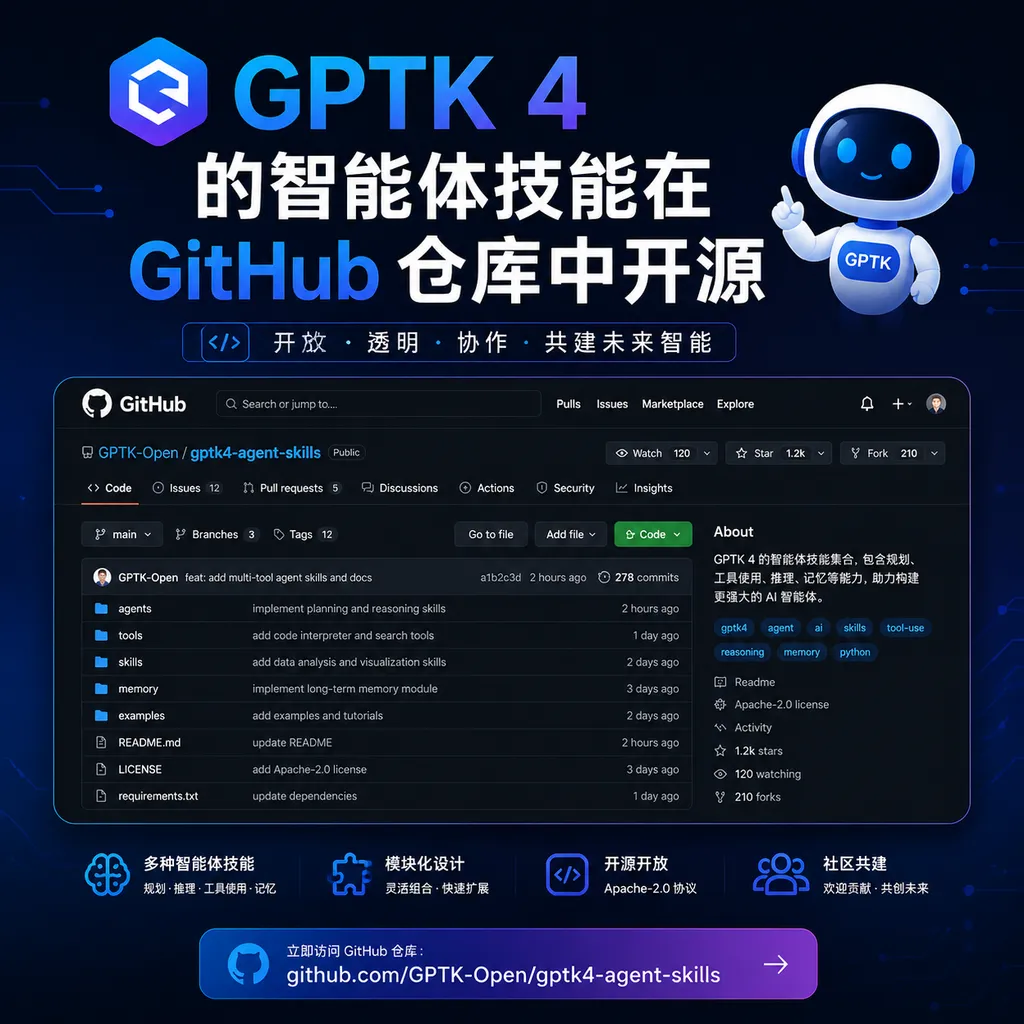
According to Apple, the GPTK 4 companion GitHub repository includes a collection of “agent skills,” prepackaged capability modules for AI agents. The key feature of these skills is “deeper knowledge of Metal” along with command-line access to the Metal toolchain. This means the AI can do far more than just write glue code or tweak headers—it can:
- Directly capture Metal workloads, grabbing a full frame of GPU commands
- Use the Metal debugger for single-frame or multi-frame debugging and analysis
- Run performance profiling tools such as Metal System Trace to locate bottlenecks
- Provide optimization suggestions based on analyses, or even generate patches directly
Anyone familiar with Metal optimization will grasp the significance immediately. Metal debugging has always been high-barrier, highly repetitive work: you open a capture in Xcode, choose the problematic frame, inspect resource bindings, shader performance, and bandwidth usage for each draw call, then return to the code, make changes, rebuild, and rerun. This loop might only run two or three times a day. Handing the process to a Metal-savvy AI agent could theoretically compress the “capture to implemented optimization” cycle from hours down to minutes.
Another noteworthy detail: Apple chose to open-source these skills on GitHub instead of bundling them into Xcode, meaning they’re not tied to a specific IDE or model. You’re free to use Claude Code, Cursor, or any other MCP/tool invocation–capable agent framework. For game studios, this is a friendly move: you don’t have to overturn your existing AI workflow.
Metal 4 Arrives in the Evaluation Environment
Another concrete change in GPTK 4 is that its evaluation environment has been upgraded to Metal 4.
As a refresher, Metal 4 is Apple’s latest generation graphics and compute API announced at WWDC25. Major updates include a rewritten resource binding model, deeper integration of machine learning acceleration, and finer-grained command encoding control. For games ported from DirectX 12 or Vulkan, Metal 4’s API concepts are closer to modern explicit APIs—a crucial advantage for porting since it reduces the mental model gap.
The practical meaning of having the evaluation environment support Metal 4 is this: developers can throw an unmodified Windows executable into it and get baseline performance data based on the newest API implementation, not a Metal 3 compatibility path fallback. If you ultimately decide to rewrite natively in Metal, this baseline will be relevant. Otherwise, previous evaluations could be 30% or more off from final performance.
A Complete Porting Pipeline Is Now Linked End-to-End
When you put the pieces of GPTK 4 together, Apple is essentially building an end-to-end pipeline:
- Evaluation Phase: Drop the Windows binary into the Metal 4 evaluation environment to get baseline performance and shader conversion verification.
- Code Migration: Map game subsystems to Apple frameworks using sample code; use Remote Developer Tools from Visual Studio for remote debugging when needed.
- Metal Optimization: Let AI agents handle the capture–debug–profile loop, with engineers reviewing only the agent’s conclusions and patches.
- Multi-Platform Distribution: Target Mac, iPad, and iPhone simultaneously via the unified Apple Silicon platform.
Historically, step three has been the weakest link. Apple’s tools for steps one and two are already mature, and step four is simpler than expected thanks to Apple Silicon’s unified architecture. But Metal optimization is where a studio’s technical depth is truly tested—and where smaller teams most often get stuck. GPTK 4’s AI integration directly targets that pain point.
What Is Apple Really Aiming for in Gaming?
It’s worth unpacking Apple’s broader gaming ecosystem play. WWDC26 also announced the Apple Games app—a unified player-facing hub integrating iPhone, iPad, and Mac titles, friends, and challenges. On the developer side, Xcode 26 gets large language model integration, Coding Tools, a Containerization framework, and more. GPTK 4 is the piece aimed squarely at “AAA game migration.”
Apple knows the Mac gaming bottleneck isn’t hardware—the GPU performance of M-series chips is easily up to AAA standards, as proven by titles like Death Stranding, Resident Evil 4 Remake, and Cyberpunk 2077 arriving on Mac. The bottleneck is whether developers are willing to invest the porting cost. If it takes a AAA studio six months and a dozen engineers to bring a game to Mac, Mac market sales alone rarely justify the expense. Apple needs to shrink six months into one, and a dozen engineers into three or four.
AI agents are the key variable in this numbers game. A Metal-savvy AI agent can theoretically “amplify” the highly experience-driven work of performance optimization and debugging—one senior engineer with an agent can do the work of what used to be a small team. If Apple bets correctly, day-one AAA launches on Mac could be commonplace by 2027.
Practical Takeaways for Developers
If you’re currently working on or considering a Mac game port, here are some points to note:
- Clone the GitHub repository even if you don’t plan to use AI agents—the sample code is the fastest way to learn Apple’s recommended framework usage, and more efficient than reading docs.
- Agent skills can plug into your existing AI workflow. Since Apple hasn’t tied them to any one model, you can use your preferred agent tool. This is particularly good for teams already using Claude or GPT for daily coding—through aggregator platforms like OpenAI Hub, a single API key can let you switch between models to compare how well each understands Metal debugging scenarios, a kind of cross-comparison that was hard to do previously.
- Re-run evaluations in the Metal 4 environment. If you tested with GPTK 3 last year, those numbers are now outdated; the new baseline may be more optimistic.
- Don’t expect agents to make architecture-level porting decisions. They excel at local optimization, bug localization, and shader conversion patches, but strategic decisions—such as subsystem mapping to Apple frameworks, or whether to go full native Metal rewrite—still need human judgement.
A Turning Point Worth Remembering
GPTK 4 likely won’t be WWDC26’s most talked-about announcement—it’s too “tool-oriented” and niche. But in the longer view, it could mark the first time Apple has made AI agents first-class citizens in its official developer workflows. Adding Coding Tools to Xcode felt more like “an AI helper in the IDE,” whereas GPTK 4 is “we assume you already have agents in your workflow, so we’re giving them professional capabilities.” These are fundamentally different mindsets.
What will be worth watching next is whether Apple extends this “agent skills” model to other Xcode domains, such as Core ML optimization, Instruments performance analysis, or even UI automated testing. If so, GPTK 4 will have been the first stop on that journey.
References
- ITHome: Perfecting the Mac gaming ecosystem, Apple updates tools to use AI for faster game porting — Chinese-language release coverage with details on agent skills and Metal 4 evaluation environment.
- GitHub: game-porting-toolkit related distribution and community versions — Community distribution repository for the Game Porting Toolkit, useful for understanding past version usage.


