
Google AI Plus price reduced to $5: Gemini 3 Pro is now cheaper

Google has cut the AI Plus monthly fee from $8 to $5, doubled storage to 400GB, kept the full suite of Gemini 3 Pro, Nano Banana Pro, and Deep Research, and even threw in Gemini Omni video generation and the Daily Brief agent.
Google Cuts AI Subscription Price Again
Today (June 9), Google did something rather straightforward: it lowered the monthly fee for Google AI Plus from $8 to $5, and doubled the storage space from 200GB to 400GB. Subscription product lead Vikas Kansal wrote plainly in the blog — existing users will see the upgraded capacity arrive in the next few days, and bills from the next cycle will reflect the new price.
Converted, that’s roughly 34 RMB per month. At this price you can access Gemini 3 Pro, Nano Banana Pro, Deep Research, plus a pack of newly added Agent features. If you’d been hesitating about paying $20 for AI Pro before, Google has essentially shaved the decision cost down to the lowest point.
Looking at the broader AI subscription market, this move is even more interesting. When AI Plus was first launched in January at $7.99, it was clearly aimed at ChatGPT Plus’s $20 — a textbook “price undercut” strategy. Less than half a year later, they cut another $3, almost 40%, showing Google has no intention of being polite in the mid-tier subscription segment.

What Do You Get for $5
Let’s outline the benefits clearly, because Google’s subscription tiers have been sliced fairly thin:
- Gemini 3 Pro / 3.1 Pro: Core models for everyday conversation and complex reasoning. AI Plus offers higher quotas than the free version, but less than AI Pro.
- Nano Banana Pro: Image generation and editing model — currently Google’s best in creative tasks.
- Deep Research: Long-chain research Agent, capable of multi-step cross-web search and summarization.
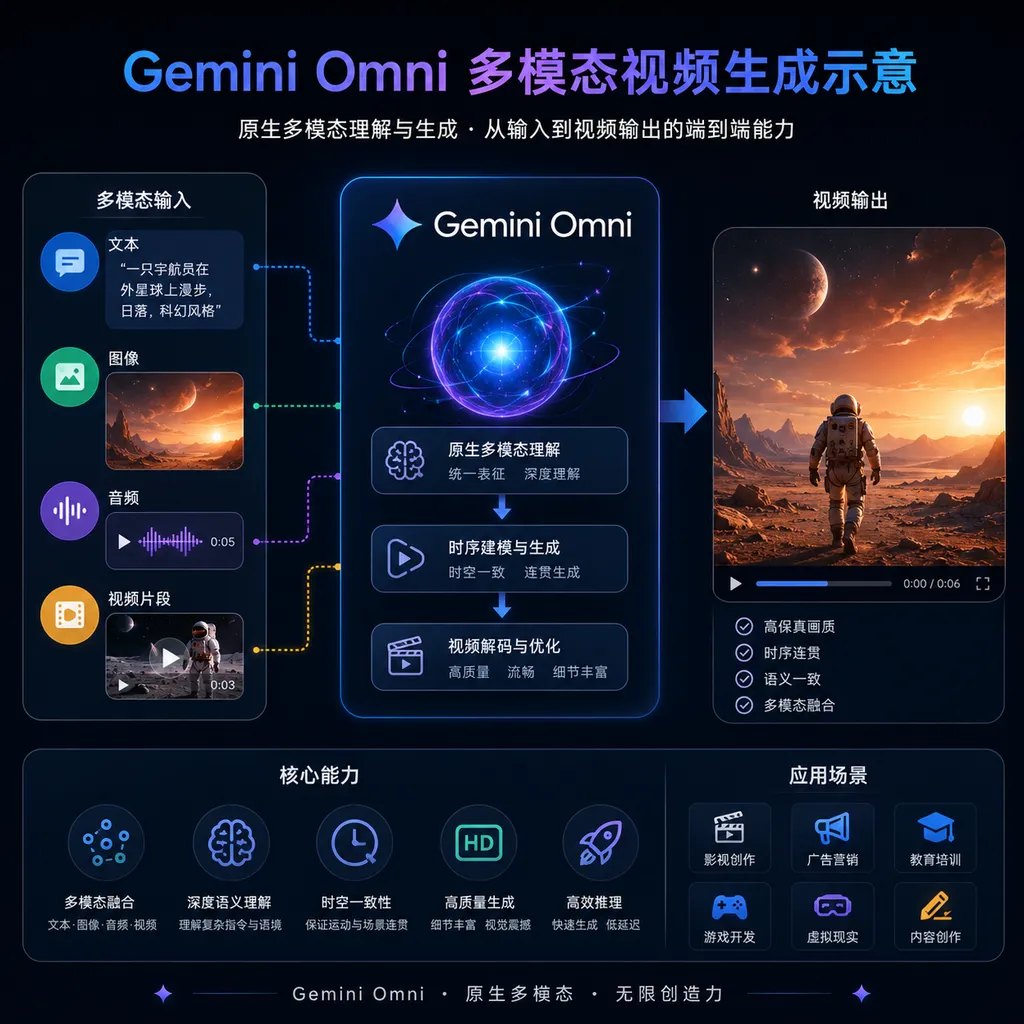
- Gemini Omni: Video generation model introduced after I/O 2026. Official description: “generate video from any input” — text, images, audio can all serve as seeds.
- Daily Brief: An agent living inside the Gemini App that proactively compiles your day’s schedule, emails, and to-dos — essentially a lightweight assistant.
- AI Email Tools: Upgraded proofreading, summarizing, and drafting abilities in Gmail.
- 400GB Cloud Storage: Doubled from 200GB, covering Drive, Gmail, and Photos.
The key trade-off here is quota. After Google I/O 2026, Gemini’s usage measurement shifted to a compute-used model (based on compute consumed), resetting every 5 hours. That means for the same Gemini 3 Pro, conversation depth, concurrent Deep Research tasks, and Omni video generation time are tighter for AI Plus than AI Pro. Still, for most individual users, getting access to flagship models for $5 is tempting enough — previously unlocking Gemini 3 Pro started at $20.
Who Is This For
Simply put, AI Plus now sits in a very precise position: stronger than the free tier, much cheaper than the Pro tier, and sufficient for occasional heavy use.
Here’s Google’s subscription ladder:
| Plan | Monthly Fee | Positioning | |------|-------------|-------------| | Free | $0 | Entry-level Gemini experience | | AI Plus | $5 | Mass access to flagship models | | AI Pro | $20 | Full features, high quota | | AI Ultra 100 | $100 | Developer-oriented, 5× quota + Antigravity | | AI Ultra 200 | $200 | Top-tier, Deep Think + Gemini Agent + 20TB |
Compared with OpenAI’s Plus/Pro/Team structure, Google is clearly more willing to subdivide price tiers. A typical user profile: occasionally use Gemini for coding assistance, AI-proof documents, play with Omni for two videos on weekends, plus 400GB cloud drive — $5/month covers this, making it arguably the best value among major providers.
Gemini Omni Is the Most Noteworthy Capability
If the price cut is a marketing move, the drop of Omni into the $5 tier is the real product change.
Omni’s selling point is “generate video from any input.” Text-to-video isn’t new; Sora and Veo already do it. But Omni emphasizes multimodal seeds — you can throw in a photo, audio clip, even a PDF, and it will generate corresponding video content. Within Google Flow (Google’s AI creative studio), it supports mixing real and generated footage, conversational iteration — closer to a creative workflow than a one-off generator.
Compared to Sora 2’s availability within ChatGPT Pro, Google’s move to lower video generation to the $5 tier sends a clear signal: video generation is no longer a moat for premium subscriptions; it’s a capability that base subscriptions should have. This will trigger ripple effects across the content creation ecosystem — independent creators, social media producers, small marketing teams will have their entry barrier nearly erased.
Usage: How to Call via API
For developers, subscription is subscription, API is API. Gemini 3 Pro and Nano Banana Pro calls on the API side are still charged per token/request. If you want to integrate these models into your own application without going through Google Cloud’s authentication process, you can use the unified interface from OpenAI Hub — one key to call Gemini, GPT, Claude, direct connection from China, compatible with OpenAI SDK format:
from openai import OpenAI

client = OpenAI(
    api_key="your-openai-hub-key",
    base_url="https://api.openai-hub.net/v1"
)

# Call Gemini 3 Pro for long-context reasoning
resp = client.chat.completions.create(
    model="gemini-3-pro",
    messages=[
        {"role": "system", "content": "You are a senior technical analyst"},
        {"role": "user", "content": "Analyze the impact of Google AI Plus price reduction on the subscription market"}
    ],
    temperature=0.7
)

print(resp.choices[0].message.content)
To call Nano Banana Pro for image generation, change the model name to the corresponding image endpoint. Parameter style matches OpenAI’s images.generate:
img = client.images.generate(
    model="nano-banana-pro",
    prompt="A cyberpunk fox leaping through neon city nightlife, cinematic composition",
    size="1024x1024",
    n=1
)
print(img.data[0].url)
The most practical point for domestic developers is — no need for proxies, no need to apply for Google Cloud quotas, transparent billing; debugging Gemini 3 Pro is no longer a slog.
Why Google Is Willing to Cut Prices
On the surface, it’s about subsidizing to grab users; dig deeper and three things are happening at once:
First, model inference costs are dropping. The Gemini 3.x series’ inference efficiency on TPU v5p is significantly better than the previous generation, and with Google betting heavily on MoE architecture, the marginal cost per inference has been driven to a level where price wars are feasible. The compute cost for $5/month would be a loss in 2024, but likely a slight profit by 2026.
Second, subscription is the entry point, Workspace is the destination. The 400GB storage move is key — it ties AI subscriptions directly to Drive, Gmail, Photos. Once the user fills up the cloud drive, migration cost sets in. This is Google’s biggest structural advantage over OpenAI: it has a ready productivity suite to use as hooks.
Third, the customer acquisition window in the Agent era. Daily Brief, Gemini Spark (in Ultra tier) and other Agent-type features are essentially meant to live long-term in users’ calendars, mailboxes, and documents. This “settle in” product form needs to bring people in first. Cutting prices is cutting the barrier.
What It Means for Domestic Users and Developers
Subscribing to AI Plus directly in China still has payment and access hurdles, but the point of attention here isn’t “can you subscribe” — it’s that the ceiling of the AI subscription market has been pushed down. Anthropic’s Claude Pro is still $20, ChatGPT Plus is still $20; Google coming in at $5 will very likely force a round of follow-ups by year-end.
For domestic model providers, it’s a signal. Kimi, Zhipu, Tongyi, Doubao already have relatively low subscription prices, but Google bundling flagship models + video generation + 400GB storage at $5 is a brutal benchmark. Local providers will need to differentiate in product combinations or deepen Agent capabilities — the window for purely competing on model capability is closing.
For developers, the most practical move is: add Gemini 3 Pro to your multi-model routing pool. Its cost-effectiveness for long-context, code generation, multimodal understanding is now hard to ignore under the new pricing. Combined with aggregated interfaces like OpenAI Hub, implementing a “route models per task” strategy is now a common engineering practice — simple Q&A goes to cheap Flash-class models, complex reasoning to Gemini 3 Pro or Claude, code tasks split further. The overall cost structure will be much healthier than betting on a single provider.
Final Thoughts
Google’s price cut isn’t an isolated move. From I/O 2026’s subscription reforms, Gemini Omni launch, compute-used billing introduction, to today’s drop of AI Plus to $5 — the entire line points to the same goal: turn AI subscriptions into an everyday consumption like Netflix, rather than a premium product serving only professional users.
$5 is a psychological price point — low enough for most people not to hesitate, high enough to provide stable cash flow. Google’s thinking here is clear: the endgame for AI subscriptions isn’t high ARPU, it’s high penetration rate. Whether ChatGPT Plus follows with a price cut within six months is worth keeping an eye on.
References
- IT Home: Google AI Plus subscription plan price cut: Monthly fee from $8 → $5, storage increased to 400GB — First-hand report on this price cut and storage expansion
- Reddit r/google: Google just undercut $20 AI subscriptions — Overseas users discussing AI Plus pricing strategy


