
OpenAI Bets Big on 10GW Data Center in Ohio: Largest Infrastructure Gamble in History
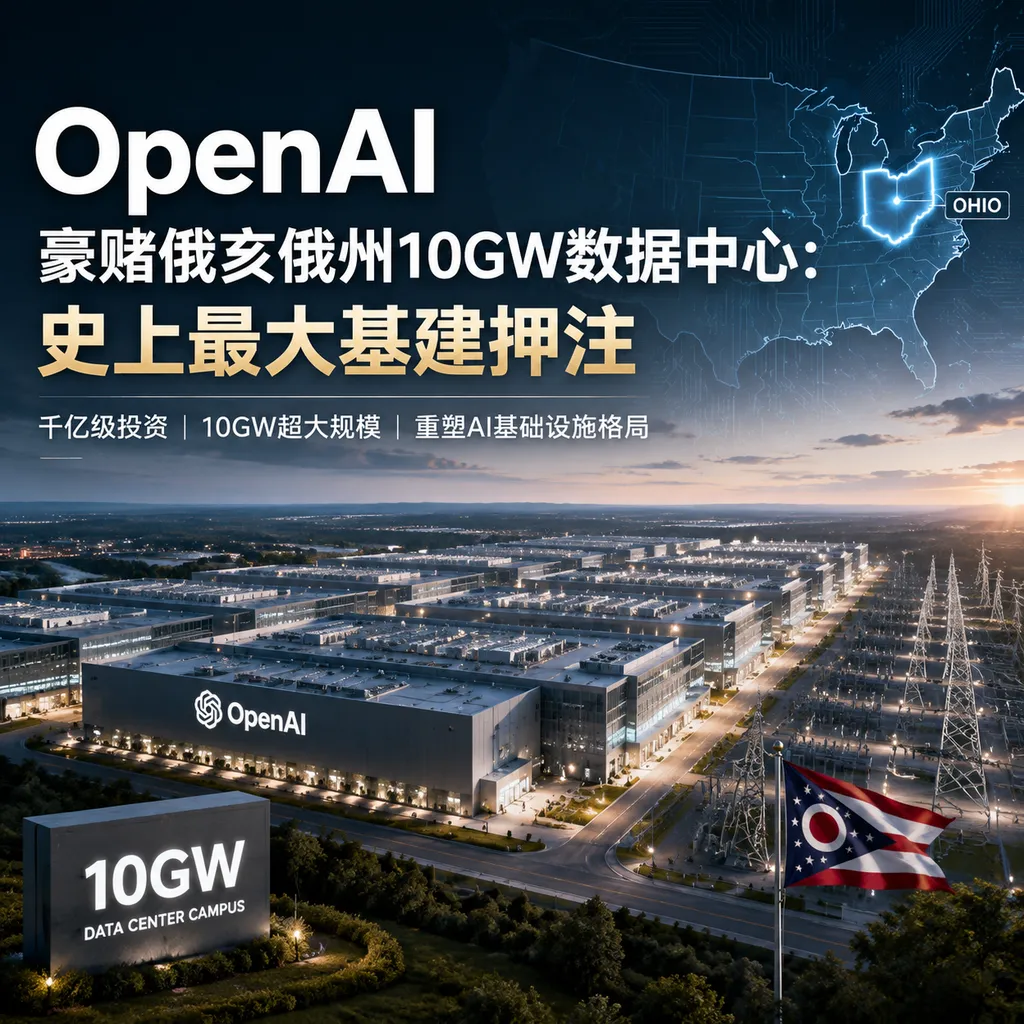
OpenAI is negotiating the lease of a 10GW capacity data center in Ohio, with a contract term of 20 years, which will become its largest infrastructure investment in history. NVIDIA plans to provide credit support.
OpenAI Makes a Big Bet on a 10GW Data Center in Ohio: Largest Infrastructure Wager in History, with NVIDIA Stepping in for Support
News on June 10 — OpenAI is once again pushing the limits of infrastructure. According to multiple media reports citing informed sources, OpenAI is negotiating to lease a 10 gigawatt (GW) capacity data center in Ohio, with a 20-year lease term—this would be the largest-ever infrastructure investment in the company’s history. What’s even more intriguing is that NVIDIA has been in talks to provide credit support for the project.
What does 10GW mean? It’s roughly equivalent to the full output of 10 standard nuclear power units—enough electricity to power an entire medium-sized city. And OpenAI plans to use all that energy to feed GPUs.
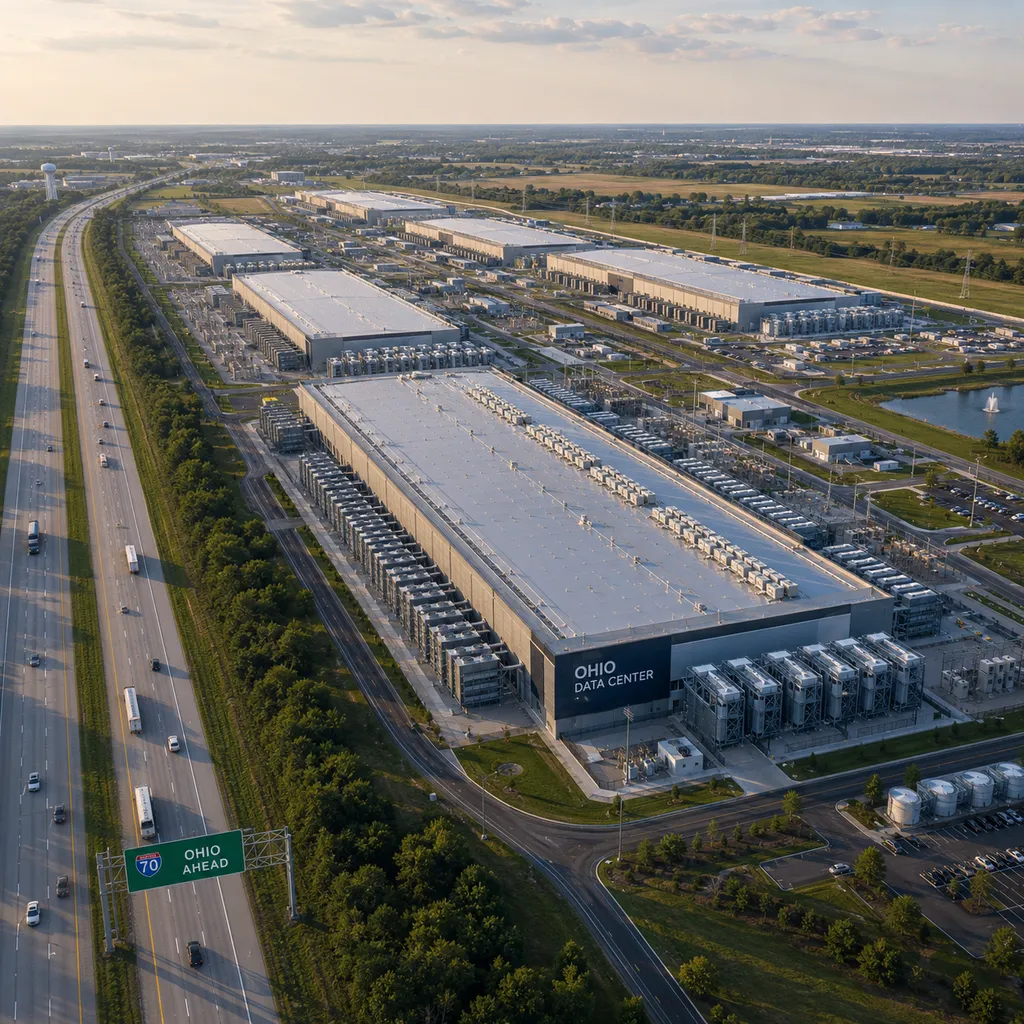
1. Why Ohio, and Why Now
Over the past two years, the logic behind siting ultra-large-scale data centers in the U.S. has undergone a complete shift. The once-concentrated “data center corridor” of Northern Virginia is now facing electric grid capacity nearing its limit, with local governments starting to impose restrictive measures—substation queues in Loudoun County are already backed up beyond 2030.
Ohio has caught the flow at this juncture:
- Ample power supply. The area relies on the PJM grid, coupled with recent shale gas power capacity expansion. Finding another U.S. state capable of absorbing a 10GW load is nearly impossible now.
- Proactive local government. From Intel’s chip plants to Google and Meta campuses, Ohio has woven the "AI infrastructure corridor" into its investment promotion strategy.
- Geographic redundancy. OpenAI is already deeply tied to the Stargate project in Abilene, Texas; opening an eastern node benefits latency-sensitive inference services and disaster recovery.
The target in question is widely rumored to involve developers like Crusoe, Oracle, or Vantage, who are acquiring land and building campuses on a large scale in Ohio. The exact location has yet to be revealed. But the word "lease" itself signals the pace—OpenAI doesn’t intend to own this heavy asset outright; it wants speed, not property rights.
2. 20-Year Lease: Treating Infrastructure Like a Software Subscription
A 20-year lease term is not unusual in the data center industry, but in the AI sector it’s a fairly aggressive signal. Consider that today’s mainstream GPU generational cycle is about 18 months—Blackwell is just rolling out, Rubin is already on the way, and Feynman is expected in 2027. Twenty years means the campus will see over 10 generations of GPU iterations.
OpenAI’s willingness to sign such a lease rests on several judgments:
- The physical shell of server rooms depreciates much slower than chips. Civil works, substations, and liquid cooling pipelines are 20-year assets. A long lease maximizes the amortization of these costs.
- Electric power contracts need long-term locking. A PPA (power purchase agreement) for 10GW cannot be secured short-term; utilities and state regulators need a stable commitment.
- Betting on long-term monotonically increasing inference demand. This is the most critical—only if OpenAI believes it will need this much compute for the next 20 years does the long lease make sense.
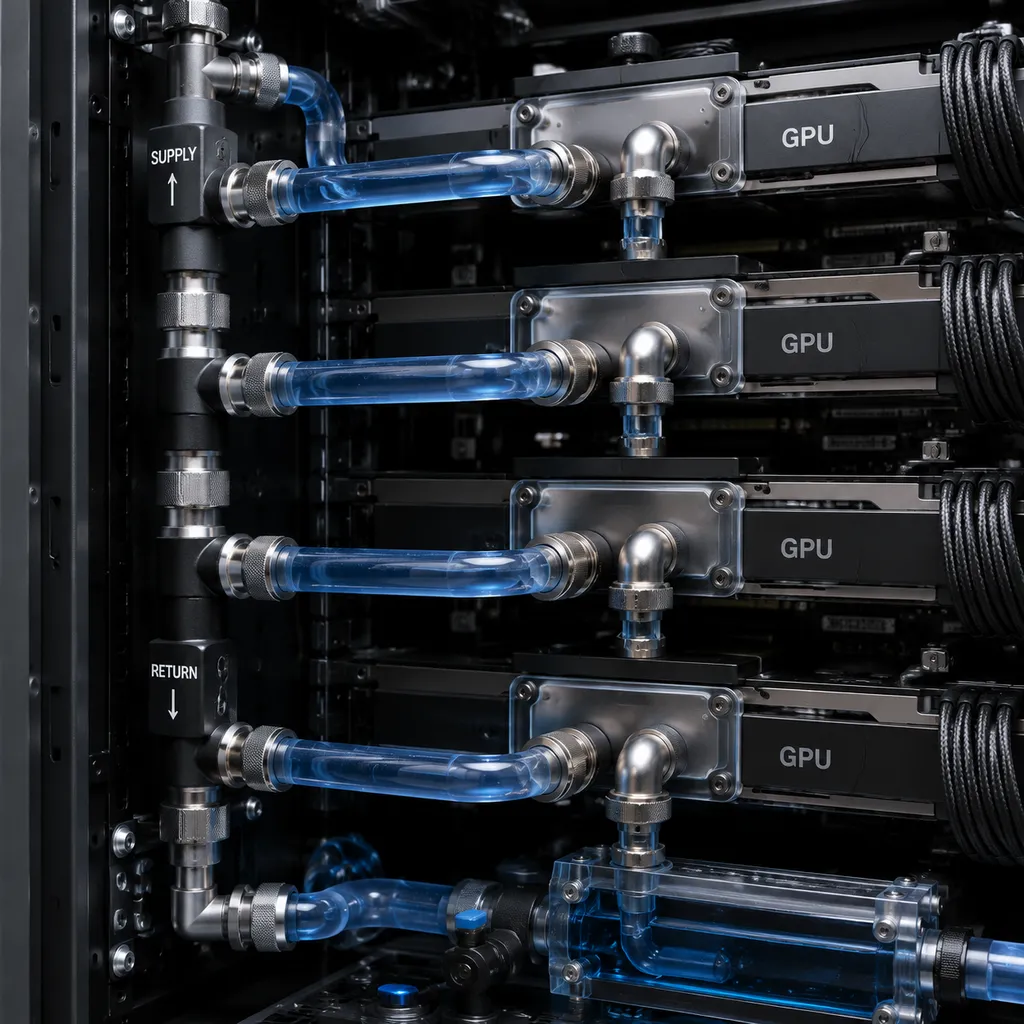
This judgment itself is worth examining. Current per-call costs for GPT-5 series and o-series inference models remain significantly higher than those for traditional chat models; scenarios like agents, video generation, and embodied AI consume orders of magnitude more compute. OpenAI’s answer: rather than patch-scaling capacity each time, break through the ceiling for the next decade in one go.
3. NVIDIA’s Credit Support: Expanding the Loop
The most subtle part of the news is that NVIDIA may provide credit support for this lease.
Let’s recap several key public deals this year:
- NVIDIA previously pledged to invest up to $100 billion in OpenAI
- OpenAI uses this funding/commitment to rent compute from cloud providers like Oracle and CoreWeave
- Cloud providers in turn make large GPU purchases from NVIDIA
- NVIDIA’s revenue grows, valuation rises, enabling more lending
This is a textbook vendor financing loop. It has appeared in the telecom equipment industry (Cisco, Nortel) and in photovoltaics—the upside is mutual upstream-downstream growth; the risk is that if end demand is falsified, the whole chain comes under pressure.
Now, with a data center operator stepping in as a safety net, the chain is further extended. From a risk control perspective, NVIDIA’s involvement in credit support means it’s willing to “endorse” OpenAI’s long-term compute demand; from a signaling perspective, this is Jensen Huang’s most forceful statement yet on the commercialization pace of generative AI.
4. What 10GW Means in Compute Terms
Given the current Blackwell B200’s ~1.2kW per card power consumption, and GB200 NVL72 rack systems at about 120kW, a fully loaded 10GW can support roughly 6 to 8 million GPUs running concurrently (factoring in PUE and ancillary load).
Horizontal comparisons:
| Project | Capacity | Status | |------|------|------| | Stargate (Abilene, Texas) | Starting at 1.2GW, planned 5GW+ | Phase 1 under construction | | xAI Colossus (Memphis) | Expanded to ~1.2GW | Operational | | Meta Louisiana Campus | 2GW | Under construction | | Google Ohio New Albany | Several hundred MW | Operational | | OpenAI Ohio Lease | 10GW | In negotiations |
A single 10GW project sets a new world record. Even just looking at OpenAI’s own portfolio, combined with the planned Stargate sites, by 2028 its total compute commitments could exceed 20GW—doubling the current total power demand of the U.S. AI industry.
5. Where Will the Power Come From? The Real Bottleneck
While 10GW sounds like data center capacity, it’s fundamentally a power issue.
In Ohio’s current power mix, natural gas generation accounts for ~50%, nuclear about 15%, with the rest from coal, wind, and small solar. To absorb 10GW of new load in the short term, possible paths include:
- Building nearby gas turbine plants. This is the fastest option; Crusoe has proven in Texas it can bring up a GW-scale campus within 18 months.
- Signing PPAs to lock nuclear power share. Microsoft rebooted the Three Mile Island reactor—OpenAI could replicate the playbook.
- Small modular reactors (SMR). This takes longer, but the 20-year lease window fits SMR commercialization timelines.
Industry voices are already raising a sharp question: AI data center power demand is locking up all planned generation expansion in the U.S.. A project of 10GW capacity, once landed, effectively books all of Ohio’s planned added generation for the next five years. Costs for other industrial and residential users will inevitably rise. How local government and regulators respond is the biggest uncertainty.
6. What It Means for Developers
From a developer perspective, near-term direct impacts are limited—campuses take at least 24 months from land acquisition to power-on; actual inference traffic won’t be handled until around 2028. But mid- and long-term signals deserve attention:
- Downward pressure on API pricing is locked in. Once compute supply doubles, OpenAI has both the incentive and justification to continue price wars, pushing GPT series token costs down another notch.
- Inference models will see greater investment. The o-series’ "thinking time for quality" paradigm essentially consumes compute. With capacity boost, model teams will dare to extend chain-of-thought processing.
- Agent scenarios will be prioritized. Multi-step reasoning, long-term memory, multimodal generation—these demand compute throughput over 10 times higher than chat; the new campus is clearly prepared for this.
For API users, whether they can stably and with low latency access GPT-5, o-series, and future GPT-6 ultimately ties back to such infrastructure-level supply guarantees. By the way, OpenAI Hub (openai-hub.com) already supports direct domestic connections to all OpenAI models, compatible with OpenAI format—one key can call GPT, Claude, Gemini, and DeepSeek without separately maintaining accounts and keys for each.
7. A Few Closing Observations
If this deal is finalized, it’s essentially OpenAI delivering a 20-year commitment to both capital and compute markets: we believe AGI’s compute demand will rise monotonically; we believe inference cost reductions won’t outpace demand growth; we believe electricity will be the new oil of our era.
And NVIDIA’s willingness to provide credit support means Jensen Huang is betting on the same thing. Sam Altman noted last month in an interview: "We are building not a product, but an infrastructure"—this 10GW in Ohio is the embodiment of that statement.
Two uncertainties remain: where the power will come from, and where the money will come from.
References
- Reddit - r/singularity discussion on OpenAI data center expansion: Real-time overseas community discussion of OpenAI’s infrastructure strategy
- Stack Overflow - GPU computing and AI engineering topics: Engineering practice discussions related to compute power
- Zhihu - AI infrastructure topics: Chinese community analysis on AI data center trends


