
OpenAI Suite Lands on Oracle Cloud — Enterprise Cloud Budgets Can Finally Afford GPT

OpenAI models and Codex are now officially integrated into Oracle Cloud, allowing enterprises to directly use their existing Oracle Cloud commitment to access GPT and Codex, while benefiting from OCI’s native security and governance capabilities. Combined with the earlier hybrid cloud collaboration with Dell, OpenAI’s enterprise channel footprint is rapidly expanding.
OpenAI has integrated its models and Codex into Oracle Cloud. Starting today, enterprise customers can use their existing Oracle Cloud consumption commitments (Universal Credits) to directly access the GPT series and Codex—no need for separate procurement contracts or additional budget approvals.
While this may look like just a shift in procurement channel, for large enterprises whose CFOs are pressing them to “use up cloud spend,” it’s significant—previously, buying OpenAI meant adding new AI expenditure; now it means making better use of already-paid cloud resources.
In a sentence: what happened
Oracle and OpenAI have moved their collaboration from the infrastructure layer (OCI providing compute power to OpenAI) to the application layer. Specifically, enterprises can now:
- Access OpenAI’s latest cutting-edge models, including the GPT‑5.5 series, through Oracle Cloud Infrastructure (OCI)
- Deploy Codex directly on OCI for code generation, code review, and agent workflows
- Use OCI’s existing identity, network, key management, and audit logging systems for security governance
- Billed via Oracle’s Universal Credits without creating a separate account
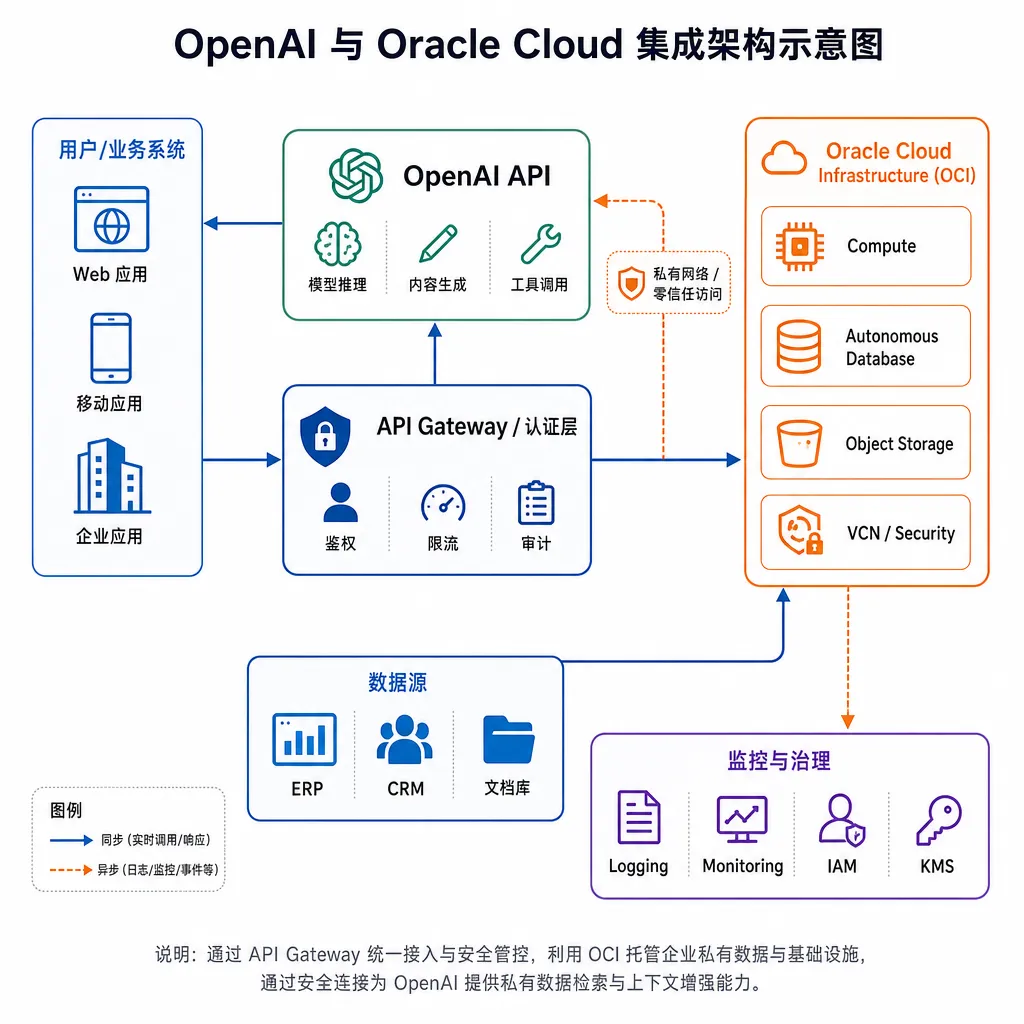
This approach is not isolated. Looking back over the past six months of OpenAI enterprise channel moves: In May, they partnered with Dell to bring Codex to hybrid cloud and on‑premises deployment; earlier, Codex went on Amazon Bedrock; before that, Oracle rolled out GPT‑5 in Database 23ai and Fusion Cloud Applications. This direct access via Oracle Cloud fills the last puzzle piece—the “I want to write my own app to call the model” scenario.
Why Oracle’s channel is worth highlighting
In developer circles, AI deployment discussions usually focus on Azure OpenAI and AWS Bedrock. Oracle has always been a “present in enterprises but rarely mentioned by developers” type of presence. But a glance at how many Fortune 500 companies run ERP, HCM, and databases on Oracle shows that this channel reaches a completely different customer base.
Oracle Cloud’s presence is primarily supported by two types of customers:
First type: traditional large enterprises (banks, telecom, retail, manufacturing) whose core systems run on Oracle Database and Oracle Applications. Their data and business logic are deeply tied to Oracle and won’t migrate easily. Letting GPT and Codex directly access data on OCI means “bringing AI next to the data” rather than the other way around.
Second type: AI training customers OCI has attracted in the past two years by offering inexpensive GPU capacity. OpenAI itself is one of these—that’s why Oracle can now turn around and sell OpenAI models as managed services to other customers: the underlying compute is already running.
These two groups don’t overlap much, but both benefit from the update.
The financial significance of “buying AI with cloud budget”
Let’s get practical. Large enterprises buy cloud under multi‑year committed spend contracts—anywhere from tens to hundreds of millions of dollars. This budget is essentially “use it or lose it.”
Previously: The CIO signs a three‑year $50M cloud contract with Oracle, then a business unit brings a PoC saying they need GPT. The finance department has to separately go through OpenAI’s procurement process, legal, security audit, privacy review—by the time it’s approved, six months have passed.
Now: Calling GPT directly consumes from that $50M Oracle quota. Legal and compliance checks were already done when signing the Oracle contract; all that’s left is technical integration.
This is no small change. It turns AI procurement from “new SaaS subscription” into “part of cloud consumption,” bypassing the hardest internal budget processes in large enterprises. Microsoft exploded Azure OpenAI sales using the same play. Oracle is essentially copying that playbook.
Enterprise governance: what Oracle adds to OpenAI
OpenAI has been rapidly enhancing its own enterprise controls over the past year. In Gartner’s recent report naming Codex a leader in the enterprise programming agents Magic Quadrant, Gartner highlighted several Codex capabilities:
- Approval gates
- Role‑based access control (RBAC)
- Customizable policies
- OS‑level sandbox isolation
- Auditable workspace governance
These are OpenAI’s own features. In the Oracle Cloud context, enterprises gain an additional layer:
Identity layer — Direct integration with OCI IAM, reusing existing SSO, MFA, and Federation configurations. No need to create a separate user system for OpenAI.
Network layer — Place it in a VCN (virtual cloud network) and access models through private endpoints; traffic stays on Oracle’s backbone. For finance and government customers insisting on “data stays in cloud,” this is a hard requirement.
Key layer — API keys and secrets can be stored in OCI Vault, managed by HSM, with automatic rotation.
Audit layer — All calls go into OCI Audit Service, viewed alongside database and application audit logs, making compliance with SOC 2, HIPAA, GDPR easier.
Sovereignty layer — OCI has dozens of regions worldwide, including sovereign clouds for the EU, Japan, UAE, and UK government. Enterprises decide in which region OpenAI models run and which jurisdiction data resides.
In short, OpenAI provides the model capabilities; Oracle provides the “enterprise IT glue.” This glue means little to small developers but is essential for large enterprises undergoing dozens of compliance audits each year.
How Codex is actually used in enterprises
Codex is a key part of this update. OpenAI’s disclosed numbers: Over 4 million developers use Codex weekly, and it’s becoming OpenAI’s fastest‑growing enterprise product.
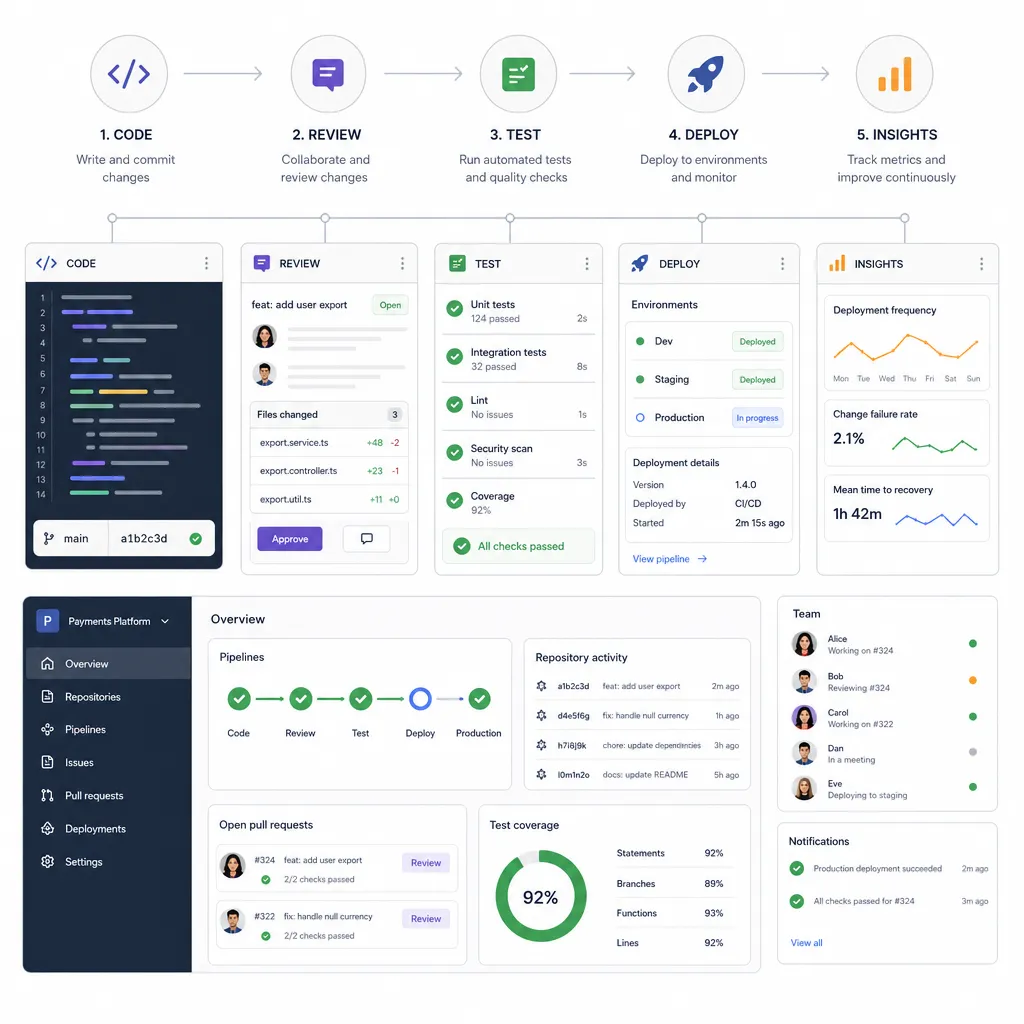
Cisco is frequently cited as a case: they used Codex to build much of their AI Defense security platform, compressing delivery cycles from “several quarters” to “a few weeks.” This figure should be viewed critically—security platforms are highly template‑driven, so AI gains are significant; not all projects can replicate this. Even halving the effect is enough to tempt CTOs.
Codex’s enterprise use cases go beyond “writing code”:
- Code review and test coverage analysis
- Cross‑file reasoning within large codebases (find bugs, trace dependencies)
- Incident response — Codex Agent receives alerts, checks logs, locates issues
- Business system integration — prepare reports, triage product feedback, follow sales leads
The fourth point shows Codex quietly becoming a “general enterprise Agent.” It’s no longer just a co‑pilot in IDEs; it’s running in the background, connecting CRM, Jira, Slack, and internal knowledge bases. That’s why enterprise infrastructure vendors like Oracle and Dell want deep integration with OpenAI—Codex’s move in this direction increases dependence on “enterprise data + system connection.”
Oracle vs AWS vs Azure: OpenAI’s three channels
OpenAI now has official channels on the three major clouds, but with distinct positioning:
| Channel | Launch time | Main customer profile | Core selling point | | --- | --- | --- | --- | | Azure OpenAI | Earliest, 2023 | Microsoft‑aligned enterprises, heavy Office 365 users | Deep integration with Copilot, Fabric, Power Platform | | Amazon Bedrock | 1H 2026 | AWS‑native enterprises, startups | Mix with other Bedrock models, unified Agent frameworks | | Oracle Cloud | June 2026 | Oracle ERP/Database customers, traditional large enterprises | Buy with committed cloud spend, bind to business data |
Interestingly, all three are not exclusive relationships at the infrastructure level. OpenAI has made its multi‑cloud strategy clear—use compute wherever it’s cheap and compliant, and open channels wherever customers can be reached. This benefits OpenAI but means no cloud vendor can monopolize the rewards like Azure once did.
What it means for developers
If you’re an individual developer, this news doesn’t affect you much—Oracle Cloud is not your typical environment.
But if you’re working in a large company on AI application integration, pay attention to a few things:
- Procurement processes may simplify — Next time you request GPT, first ask IT “How many Oracle Universal Credits do we have left.” That may be faster than going through a new vendor approval.
- Multi‑cloud model routing practices need updating — If your app already has cross‑model/cross‑cloud routing logic, OCI’s channel is a new endpoint; latency and rate‑limit strategies need re‑testing.
- More Codex deployment options — Bedrock, OCI, Dell on‑prem, Azure—in enterprises, which Codex runs where will become an architecture decision. General principle: “Keep agents close to the data,” so wherever core data sits, Codex will likely be deployed there.
For teams wanting to quickly validate multi‑model combinations, OpenAI Hub (openai‑hub.com) remains an efficient path—one key connects to GPT, Claude, Gemini, DeepSeek, compatible with OpenAI format, directly accessible in China, and avoids opening accounts on every cloud for prototypes and comparison testing. Once ready for enterprise‑level deployment, decide on Azure, Bedrock, or OCI.
A trend worth watching
In recent years, AI infrastructure has converged into a clear two‑layer structure:
- Lower layer: cloud providers (AWS / Azure / GCP / Oracle) + server vendors (Dell / HPE / Supermicro)
- Upper layer: model providers (OpenAI / Anthropic / Google)
Previously, many believed model vendors would move downward into compute and cloud. In reality, the opposite happened—model vendors found they couldn’t handle enterprise IT complexity, so they made their models into modules that “can run in any enterprise environment,” letting cloud and hardware vendors handle sales, governance, and compliance.
OpenAI’s moves over the past six months—Bedrock, Dell, Oracle—are all essentially the same play: bring the model to where enterprise data resides and let others handle the last mile.
Gartner noted this in its Magic Quadrant: Enterprises now ask not “Can AI write good code?” but “How can we safely deploy agent systems at scale, making them a new operational layer for the business?” OpenAI clearly understands this question and is answering it through channel partnerships.
Oracle’s step is an important part of that answer, but not the last. The next to watch may be when Google Cloud opens up—Gemini’s stronghold won’t easily allow GPT deep entry, but enterprise demand for multi‑model setups is there, and action will come eventually.
References
No official domains accessible directly from mainland China; it’s recommended to follow OpenAI’s official blog and Oracle Cloud’s official announcements for primary information.


