
OpenAI Brewing Large Token Price Cut, Cornered by Anthropic and DeepSeek

On June 11, it was reported that OpenAI is considering a significant reduction in token fees to respond to Anthropic’s anticipated price cuts. Behind this move is DeepSeek-V4-Pro driving prices down to one-tenth of GPT-5.5’s, reshaping the entire API market’s pricing logic.
OpenAI Is Going to Cut Prices – This Time, It’s Being Forced
On June 11, Cailian Press quoted sources reporting that OpenAI is internally discussing a substantial token price reduction, with a clear target rival — Anthropic. Rumor has it Anthropic is also preparing its own price cut, but OpenAI wants to act first to lock in users and developers.
The subtext of this story is more interesting than the news itself. Over the past two years, OpenAI has never been the kind of company that competes on price. When GPT-4 launched, input cost was $60 per million tokens — they could set that price because there was no substitute. Now they’re seriously considering a price war, which means the market structure has changed.
The core signals of this change are twofold:
- Anthropic has pushed Claude Code to the top spot in coding use cases, with enterprise token consumption shifting toward Anthropic.
- DeepSeek-V4-Pro’s permanent price cut at the end of May has lowered the anchor price across the API market by an order of magnitude. For OpenAI to maintain market share, model capabilities alone are no longer enough.
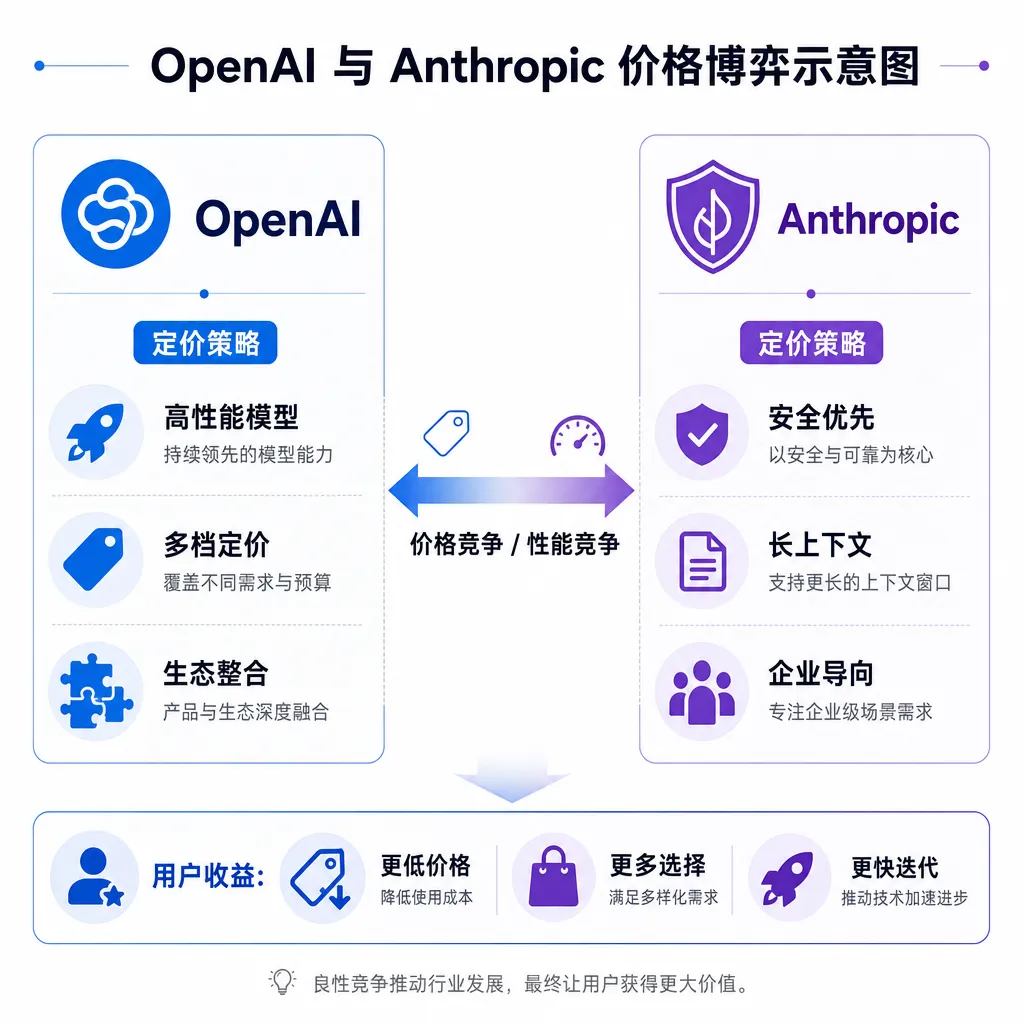
Price Table Comparison: Gap So Big It Barely Looks Like the Same Industry
Let’s lay out the current situation. As of this week, mainstream closed-source models use the following standard rates (USD per million tokens):
| Model | Input Price | Output Price | Cached Input | |-------|-------------|--------------|--------------| | GPT-5.5 | 5.00 | 30.00 | 1.25 | | Claude Opus 4.7 | 5.00 | 25.00 | 0.50 | | DeepSeek-V4-Pro | 0.435 | 0.87 | 0.003625 |
On the input side, GPT-5.5 is 11.5x DeepSeek’s price; on output, the gap widens to 34.5x. This isn’t a premium — it’s a generational gap.
More critically, DeepSeek-V4-Pro is directly API-format compatible with OpenAI and Anthropic. This means migration costs for developers are almost zero — just replace base_url and key, and the existing code doesn’t need to change. This “painless switching” strategy is far more damaging than pure price cuts.
If OpenAI doesn’t respond, it’s essentially handing over all price-sensitive workloads — log analysis, batch processing, long-context RAG, Agent loop calls — to others. These scenarios burn billions of tokens daily; whoever is cheaper wins.
Anthropic’s "Hidden Price Hike" vs OpenAI’s "Visible Price Increase"
Anthropic has been making subtle pricing moves over the past year. On paper, Claude Opus 4.7’s nominal price hasn’t changed, but in May they introduced a new tokenizer. The same Chinese text can produce up to 35% more tokens than before. Meaning: nominal prices stay, actual bills rise by about one-third.
This “hidden hike” trick is common in SaaS — keep the SKU, shrink the quota. But in the LLM API field, developers can spot this just by checking their invoices. That’s why complaints about Claude’s new tokenizer have been growing in tech communities over the past two weeks.
OpenAI’s approach is different. In April, Codex changed from “billing per message” to “billing per token”, narrowing subscription discounts; at the same time, a $100 Pro tier was launched to push some high-end users from the $200 tier downwards. Ostensibly, this is “lowering the barrier for high-end services”, but in practice it’s “raising ARPU” — charging heavy users per token instead of giving them message-based discounts.
The combined conclusion is: the era of monthly subscription discounts is basically over, back to pay-per-use. This is good for developers — but only if the per-use unit price makes sense. OpenAI’s move to actively cut prices is an admission that the current unit price doesn’t make sense.
Compute Economics: How Much Room Is There to Cut Prices?
People want to know how much OpenAI can cut. Here are two constraints:
First, inference cost. Since early this year, OpenAI has been gradually moving inference workloads to its in-house Stargate cluster and Broadcom custom chips. According to SemiAnalysis, per-token costs in power + hardware depreciation are about 40% lower than pure H100 clusters. This saving could, in theory, be fully reflected in prices.
Second, cash flow. OpenAI’s 2024 capital expenditure is expected to exceed $40 billion — data center builds and long-term compute commitments are a bottomless pit. Unlike DeepSeek — backed by private funds from High-Flyer Capital and restrained expansion — OpenAI can’t drop prices to the floor. Every cent cut must fit the model ROI curve.
Likely scenario:
- Main models (GPT-5.5, GPT-5.5-mini) input price cut by 30%-50%
- Output prices cut more aggressively — possibly halved
- Cached input further optimized — pricing extremely low for high-reuse scenarios
- Flagship inference models (o series) stay high-priced for “pro” enterprise customers
Meaning: catch everyday workloads, keep high margins on advanced inference. The fight with Anthropic is in the middle ground — coding, agents, long-document processing.
What This Means for Developers
Price cuts are welcome news to developers, but pay attention to these details:
1. Watch out for tokenizer tricks. Anthropic’s 35% token increase is a cautionary tale. If OpenAI announces a price cut but quietly changes tokenizers, bills may not drop. Before switching model versions, run real samples from your workload through tiktoken and the target model’s tokenizer, and see how many tokens per thousand words you get.
2. Cache hit rate determines real cost. Mainstream API cached input prices are generally 1/4 to 1/100 of standard input. If your prompt structure is stable (e.g., fixed system prompt + tool description + user input), hit rates above 80% can make actual prices far lower than the published rates. After a price cut, this gap could widen.
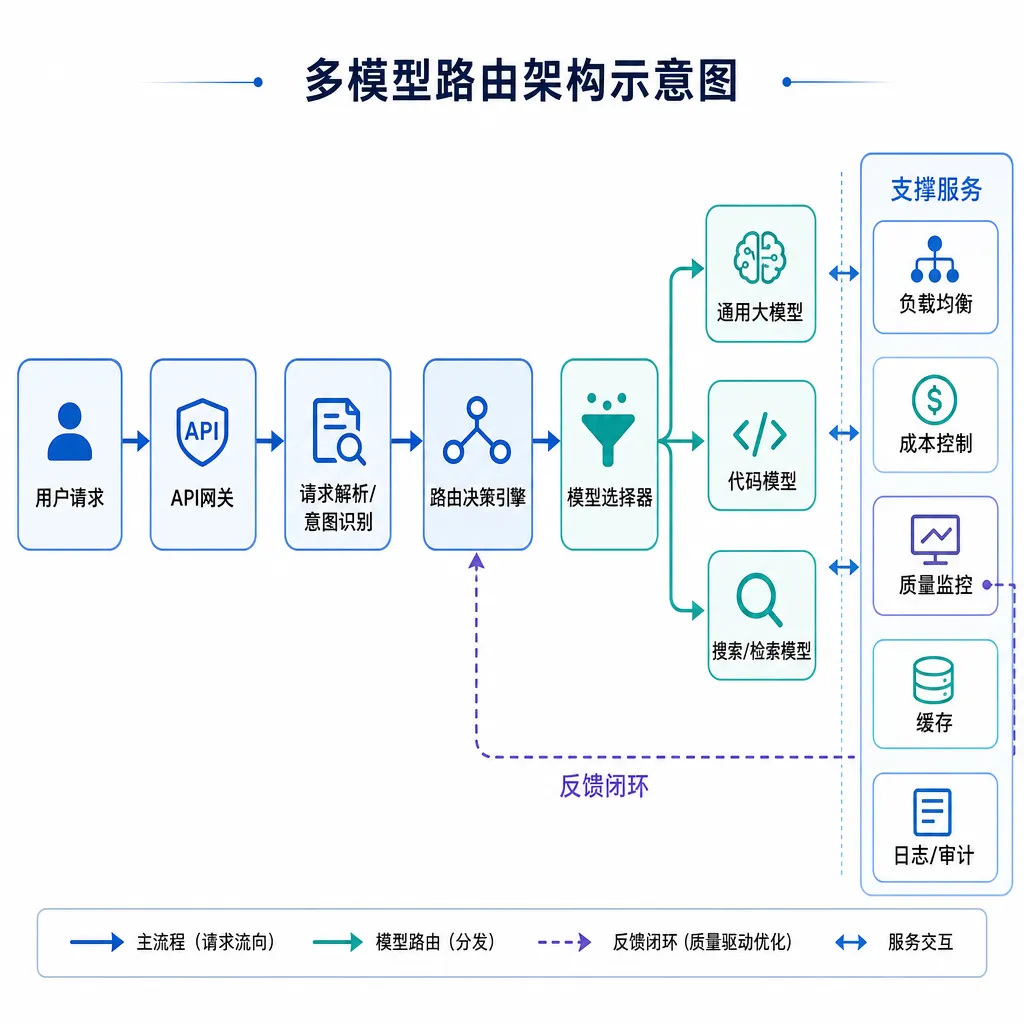
3. Multi-model routing will become standard. When price differences grow from 2x to 10x, single-model architectures no longer hold economically. Simple tasks might run on DeepSeek or GPT-5.5-mini, complex reasoning on Claude Opus or the o series — this is already default for mature teams over the past six months. If OpenAI’s price cut lands, “GPT as fallback” will become viable again.
Platform Reactions
This kind of price shake-up benefits aggregation platforms. Platforms like OpenAI Hub (openai-hub.com), which connect GPT, Claude, Gemini, and DeepSeek under a single key, essentially let developers enjoy “model arbitrage” — pick the cheapest or best, unify OpenAI format, and connect domestically without proxy hassle.
If OpenAI’s price cut goes through, routing layers on these platforms get interesting: the same gpt-5.5 request can automatically select the optimal supplier based on real-time price and latency, with the developer seeing only one endpoint. Last year this looked ahead of its time; this year, it’s a necessity.
Who Will Break First
Looking 6 months ahead, the hardest hit won’t be OpenAI or Anthropic — but the second-tier closed-source models squeezed in between. Cohere, Mistral’s closed-source flagships, AI21 — their pricing is only slightly lower than OpenAI’s but capabilities trail. With DeepSeek’s high-performance open-source models rising from below and OpenAI/Anthropic pressing from above, their survival space is shrinking.
Google Gemini is special — its TPU cost structure and Google Cloud bundling let it hold longer in price wars. But Gemini 2.5/3.0 still hasn’t fully won over coding and agent use cases, with enterprise token consumption mainly in OpenAI and Anthropic.
As for Chinese top-tier models (Qwen, GLM, Doubao, Kimi), prices were already low. After DeepSeek’s cuts, they’ll likely follow suit. Developers are already feeling that marginal API costs for domestic models are approaching zero fast.
Final Note
The signal from OpenAI considering big price cuts is more important than the cut itself: LLM APIs are shifting from “exclusive technology premium” to “commoditized compute service”. Capability gaps remain — but not enough to justify 10x price differences.
This is good for the developer ecosystem. When a GPT call drops from the price of a coffee to the price of a candy, many scenarios abandoned for cost reasons will come alive again — bulk content审核, full log analysis, AI-driven BI, long-cycle agent tasks. These have lived in “demo mode” for two years not because tech failed, but because the unit economics didn’t work.
The watch point for late 2026 is OpenAI’s cut magnitude and pace:
If it’s a symbolic 20% drop, Anthropic won’t follow; if it’s a real 40%-50% slash, the entire industry’s price tables will update within two weeks.
Now it’s just a matter of how anxious Altman really is.
References
- OpenAI Visible Increase, Anthropic Hidden Hike: No More Monthly Discounts - Zhihu Column — Analysis of Anthropic’s hidden price hike via new tokenizer, and OpenAI Codex’s shift from per-message to per-token billing.


