
OpenAI Acquires Ona: Codex Tackles the Tough Challenge of Enterprise-Level Applications
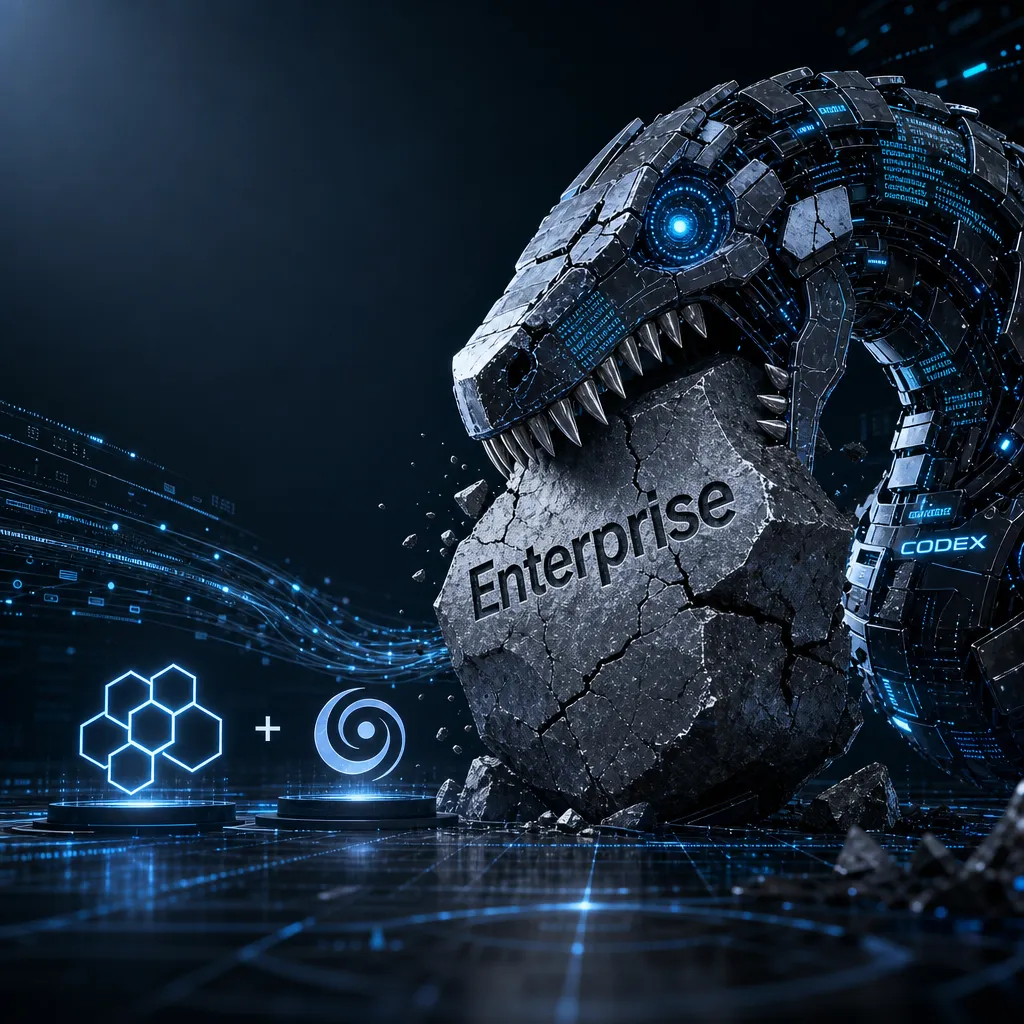
Yesterday, OpenAI announced the acquisition of Ona, a startup that provides secure cloud environments for AI agents. The team will be fully integrated into Codex. This is a key move for OpenAI to complete the final piece of the puzzle for enterprise deployment—having the model alone is not enough; Codex must be able to run within the secure boundaries of enterprises for extended periods.
Yesterday (June 11), OpenAI announced the acquisition of startup Ona, with the entire team joining Codex. The transaction amount was not disclosed, but the timing and strategic direction are more noteworthy than the figure itself—this is the third major move by OpenAI in less than a month aimed at “getting AI agents truly running in enterprise production environments.”
The first two were: the mid-May launch of the OpenAI Deployment Company (starting with $4 billion, directly targeting the Palantir model), and the simultaneous release of the cybersecurity product Daybreak. Now, what Ona fills in is the most challenging missing piece: how to get Agents like Codex to run long tasks and work with real enterprise data within a secure perimeter—without keeping the CIO awake at night.
Who is Ona and what problem does it solve
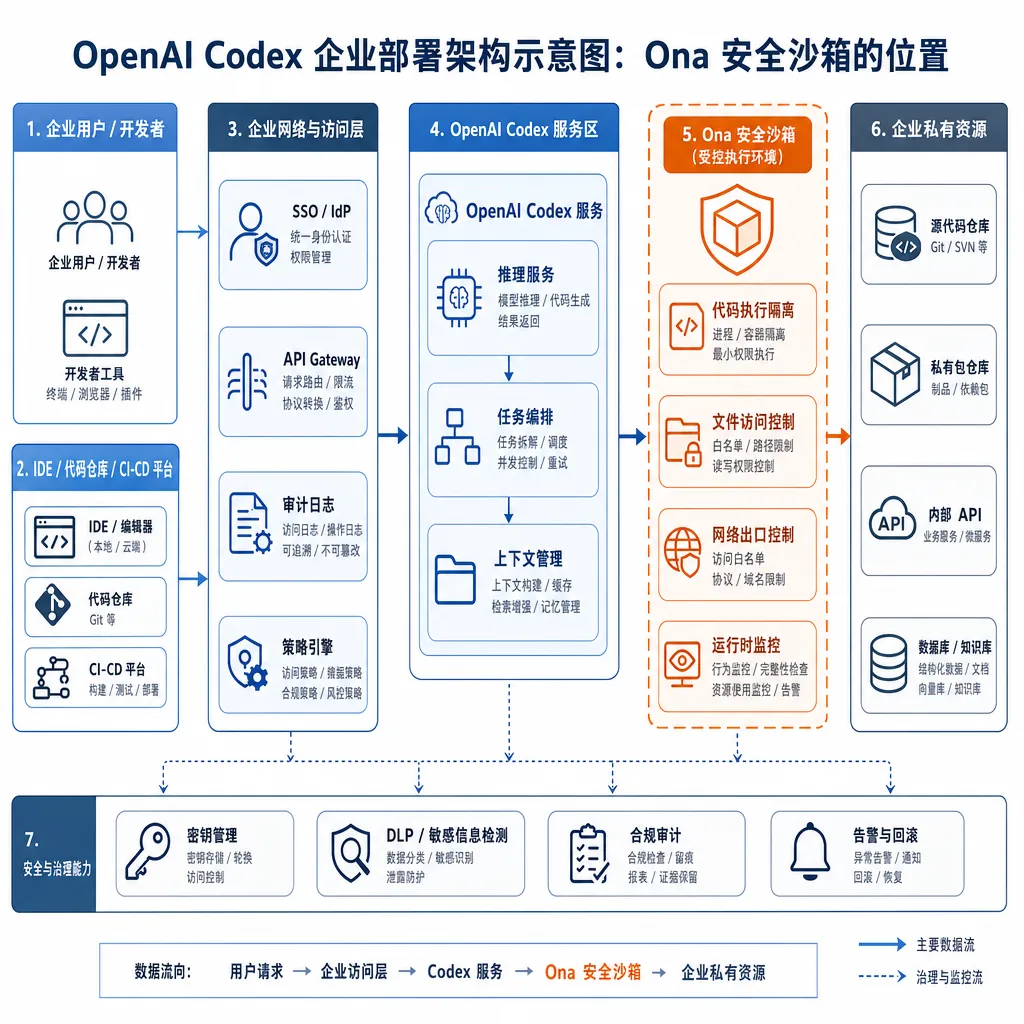
Ona isn’t widely known in China, but its work is highly technical: providing AI agents with a “secure, pre-configured cloud environment” so they can access the necessary tools, systems, and context without crossing boundaries.
In simpler terms—it prepares an “isolated workstation” for the agent.
The difficulty isn’t about flashy technology, but about the abundance of intricate engineering details. A Codex agent running a cross-service refactoring task might need to access a code repository, CI system, internal docs, database schema, and secrets management service simultaneously—each involving permissions, auditing, and network isolation. The enterprise IT department’s biggest fear isn’t the agent being slow—it’s the agent being too fast. An uncontrolled loop could corrupt a production database in five minutes.
Ona’s value lies in standardizing and productizing this “workstation setup” process. OpenAI’s official statement says Ona’s technology will allow Codex to “execute longer-duration tasks” and “help more organizations deploy agents into production environments.” Translated: first, it solves state persistence and environment consistency for long tasks; second, it bridges the last mile from demo to production.
Why now
Looking at Codex’s product trajectory over the past two years, adding Ona seems almost inevitable.
Timeline:
- September 2025: Released GPT-5-Codex, optimized for agent programming, supporting dynamic compute budgets
- September 2025: Acquired Alex Codes to bolster Xcode/macOS ecosystem
- October 2025: Launched Codex Alpha early access
- March 2026: Acquired Astral (Charlie Marsh’s team, makers of ruff, uv, and other Python tools)
- April 2026: Named “Leader” in Gartner’s Magic Quadrant for enterprise AI programming agents
- May 2026: Partnered with Dell to bring Codex to hybrid cloud and on-premises; also announced Deployment Company and acquired UK consultancy Tomoro
- June 11, 2026: Acquired Ona
The pattern is clear. The first half was about strengthening models and toolchains—building a solid “brain” and “limbs” for Codex. The second half focuses on deployment and enterprise integration—breaking “embedding Codex into enterprises” into three parallel lines: infrastructure, consulting services, and secure sandbox.
Codex now has over 4 million weekly active users (up from 2 million at the start of the year, doubling in six months). Cisco, Datadog, Dell, and NVIDIA are reference customers. Cisco built its AI Defense platform with Codex, cutting delivery cycles from quarters to weeks—cases like this spur more enterprises to ask: “I want to do this, but my code can’t leave the intranet. What do I do?”
Ona is part of the answer.
Compared to competitors, what is OpenAI after
This year, the AI programming landscape is no longer about “whose model is stronger,” but “who looks more like the enterprise’s preferred vendor.”
Anthropic’s Claude Code has won hardcore developers with its model quality and CLI experience, but enterprise-grade deployment has been its weak spot—they lean toward API + developer community. Cursor’s valuation has soared but remains essentially an IDE shell, relying on underlying model providers for agent and enterprise capabilities. GitHub Copilot benefits from Microsoft’s channels but lags noticeably in agent functionality.
OpenAI’s combination—Codex core (product) + Astral (toolchain) + Ona (runtime environment) + Dell partnership (infrastructure) + Deployment Company (implementation) + Daybreak (security)—is no longer just a coding assistant; it’s building an “enterprise AI R&D stack.”
This approach recalls how Palantir once captured defense and intelligence budgets: models/algorithms were the ticket in, but real money came from embedding systems into clients’ core workflows by dispatching engineers onsite. OpenAI Deployment Company absorbed 150 “Frontier Deployment Engineers” (FDE) from Tomoro with this goal in mind.
What does Ona bring technically
The official release is reserved, but based on Ona’s public product direction, the picture looks like this:
1. Recoverable execution environments for long tasks
One major pain point for Codex agents doing long tasks is “environment drift”—container restarts, network hiccups, or tool version changes can ruin hours of work. Ona’s pre-configured environment is essentially a “declarative agent workstation” with serializable and recoverable state. This is a necessary step from “toy demo” to “production worker.”
2. Fine-grained capability boundaries
Enterprises care less about “what an agent can do” than “what it cannot do.” Ona’s sandbox mechanism, combined with Codex’s existing RBAC, approval gates, and auditable workspace governance (highlighted in Gartner reports), yields a fairly complete capability boundary control. Rough analogy: like Kubernetes’ NetworkPolicy + PodSecurityPolicy, but for agents.
3. Deployment shapes where data stays in-domain
This ties directly to the Dell partnership in May. Ona’s environment abstraction layer theoretically lets Codex run in a client’s own VPC, private cloud, or even on-premises, while Codex’s control plane and model inference are still provided by OpenAI or partners. For regulated industries (finance, healthcare, government), this is a shift from “completely unusable” to “negotiable.”
As a side note, Codex has recently added HIPAA compliance support and deployment options on Amazon Bedrock—every step pointing in the same direction.
What does this mean for developers
In the short term, not much direct change. Integrating Ona’s capabilities into Codex will likely take months, and ordinary developers probably won’t notice “oh, this is Ona’s feature.”
In the midterm, a few things will happen:
- The scope of tasks Codex can run will significantly expand. A 15-minute refactoring today could become a full-day codebase migration.
- The feature gap between enterprise and personal editions of Codex will widen. Sandbox, auditing, and private deployment are core reasons enterprises pay.
- Life will get harder for third-party agent platforms. When leading model providers build the “secure runtime environment” layer themselves, the middle tier’s room to survive shrinks.
In the long term, this is key infrastructure for “AI agents as productivity.” Model capability has been sufficient for some time; what has blocked large-scale adoption is engineering boundaries. Ona fills that gap.
A sober assessment
Acquisition press releases sound great, but integration always comes with friction. After joining Codex, whether the Ona team can secure resources within OpenAI, avoid being turned into “just another internal tool,” and keep pace with Codex’s weekly product updates—all remain unknowns.
Looking at Alex Codes’ acquisition, the product experience in the macOS/Xcode direction hasn’t improved as much as expected. Integration is slow work.
Another point of interest: OpenAI’s acquisition pace now borders on “shopping spree”—Promptfoo, Astral, Tomoro, Ona, plus earlier io and Torch. Such pace reflects ample cash and clear strategic intent, but can also cause integration fatigue. Whether the organization can digest this is another story.
For enterprise customers, however, this sends a clear signal: on the coding track, OpenAI has shifted from “selling a good assistant” to “building a complete R&D platform.” If your company is evaluating enterprise AI coding solutions, Codex is worth another look—it’s not the Codex of last year anymore.
By the way, OpenAI Hub now supports invoking the GPT-5 series models behind Codex, and domestic developers can access them directly through a unified key without network wrangling.
Final thoughts
If 2025’s AI programming competition was “whose model is smartest,” 2026’s theme has become “who can make AI actually work.” The price of the Ona acquisition wasn’t disclosed, but its place in OpenAI’s overall strategy is clear—it’s not a flashy piece, but a crucial one filling the gap at the core.
No matter how powerful a model is, if it can’t run in enterprise production environments, it’s just an expensive toy. OpenAI clearly doesn’t want Codex stuck in toy mode.
References
- ITHome: OpenAI acquires startup Ona to strengthen Codex programming assistant - One of the earliest Chinese reports on the acquisition, containing key information from the official release and a summary of Codex’s recent key milestones


