
SK Hynix is also going to use ChatGPT and Copilot
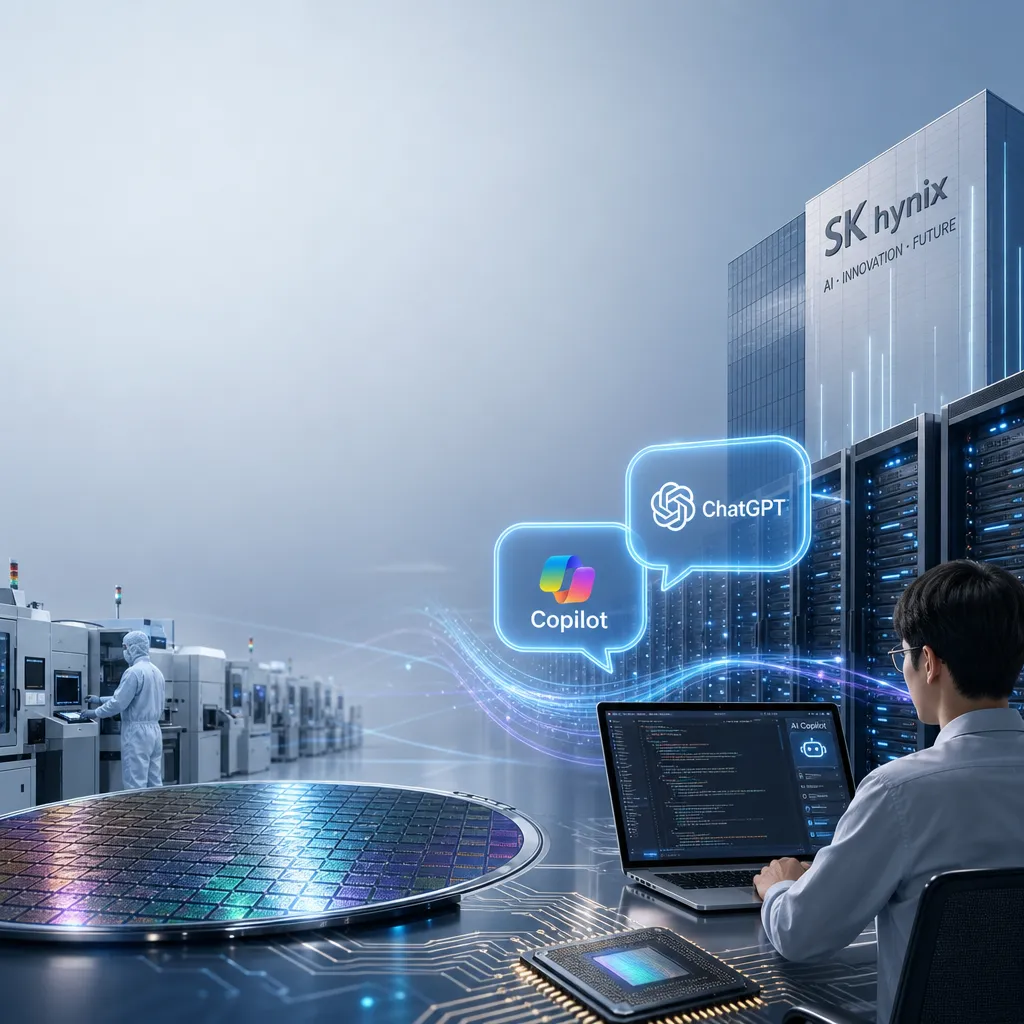
Following Samsung, SK Hynix CEO Kwak Noh-Jung confirmed that they are evaluating the introduction of external generative AI services such as Microsoft 365, Copilot, and ChatGPT, starting from non-core business areas to drive workflow transformation.
SK Hynix Speaks Up: Bringing ChatGPT and Copilot Into the Company
Following Samsung Electronics, the other pillar of South Korea’s semiconductor industry—SK Hynix—is also preparing to open the door to external generative AI.
On June 12, according to Yonhap News citing industry sources, SK Hynix CEO Kwak Noh-jung made it clear in an internal meeting the day before: the company is evaluating the introduction of Microsoft 365 and Copilot, and is also assessing the feasibility of deploying ChatGPT internally from the perspectives of security and system architecture. Kwak’s exact words were—"We need to find a balance between protecting industrial technology and expanding AI applications."
This may sound like diplomatic rhetoric, but for a memory giant that holds about 58% of the global HBM market share and has just signed a long-term deep strategic cooperation deal with NVIDIA, every word is worth dissecting.
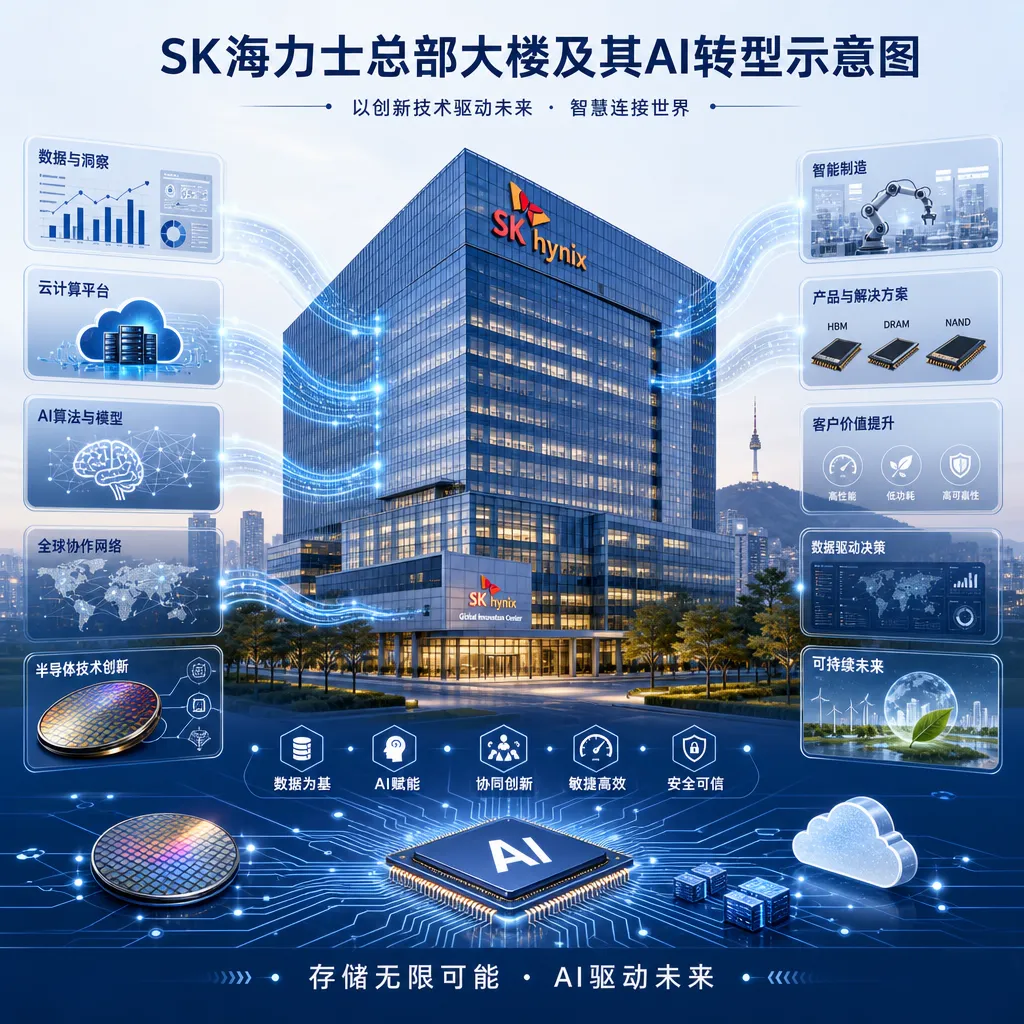
Why Is an HBM Leader Moving Only Now?
The question is not why they are moving now, but why they waited this long to move.
Over the past two years, South Korean conglomerates have generally been conservative toward external large models like ChatGPT. The 2023 internal code leak incident at Samsung Electronics—where an engineer fed chip source code into ChatGPT for debugging, and the data was sent back to OpenAI for training—basically served as a lesson for the entire South Korean semiconductor sector. Since then, Samsung, SK, and LG have almost entirely blocked public versions of ChatGPT internally, instead building internal AI assistants based on open-source models.
SK Hynix was no exception. The report particularly mentioned that the company already has an internal AI service based on open-source solutions, covering part of employees’ routine document work, code assistance, and data analysis needs. However, the ceiling of open-source solutions has become more apparent in recent years: model iteration speed cannot keep up with GPT‑5, Claude 4.5, etc., multimodal capabilities lag behind, and in Office document scenarios, Copilot’s integration depth is not something in-house tools can easily replicate.
Simply put, employees want more effective tools, and HR and legal departments cannot stop the trend.
"Deploy in Non-Core Areas First" Is a Smart Move
Kwak Noh-jung’s path is very clear: first introduce external AI services in areas unrelated to core technology, then gradually expand applications over time.
This approach is actually the standard template for large manufacturing enterprises bringing in generative AI over the past two years. But SK Hynix’s uniqueness lies in how sensitive the boundaries of its “core technology” are—HBM stacking processes, TSV drilling, heat management solutions; any leaked detail could save Samsung or Micron engineers six months of R&D work. So drawing the line between “non-core” and “core” is the real skill.
From industry practice, the most likely early scenarios to be implemented are:
- Administration & HR: meeting minutes, email drafting, recruitment JD writing, internal training material generation
- Legal & Compliance: contract pre-checks, patent literature searches, regulation comparisons
- Marketing & External Communications: business translation among English/Korean/Chinese, press releases, IR materials
- General Code Scenarios: IT system development unrelated to manufacturing processes, internal tool scripts
- Data Visualization: processing desensitized structured data such as financial reports and sales analysis
The real restricted zones—fab process parameters, specs for customer-customized HBM, joint R&D materials related to NVIDIA’s Vera Rubin—will most likely remain locked within internal models.
Is This Related to the NVIDIA Deal?
The timing is subtle.
Just four days earlier, on June 8, Jensen Huang flew to Seoul and, along with SK Group Chairman Chey Tae-won and Kwak Noh-jung, announced a long-term deep technical strategic cooperation. SK Hynix not only secured priority production capacity for NVIDIA’s HBM4 over the next five years, but also announced full adoption of the CUDA‑X library, the PhysicsNeMo physical simulation framework, the Omniverse digital twin library, and the cuOpt decision optimization engine—integrating fab operations from process simulation to computational lithography and on to plant robotics scheduling into NVIDIA’s AI technology stack.
In other words, SK Hynix has already fully embraced AI on the production side; if the office side doesn’t follow suit, it will seem disconnected. A company using Omniverse to build a digital twin of its fab while making employees type minutes manually in Word—this internal experience gap will sooner or later become a management issue.
From this perspective, introducing Microsoft 365 Copilot looks more like the final piece of the “all-staff AI” grand puzzle—tying production to NVIDIA, office operations to Microsoft, keeping ChatGPT as a general backup model, and stacking a self-developed open-source internal model to guard core secrets. If this four-layer architecture is implemented, it will be even more aggressive than Samsung’s current “self-developed Gauss + restricted Copilot” combination.
How to Solve the Security Equation
Kwak Noh-jung specifically mentioned “evaluating ChatGPT from the perspectives of security and system architecture”—this statement carries more weight than it appears.
For semiconductor companies, introducing ChatGPT is far more than “opening an enterprise account.” At minimum, three things need resolving:
First, data residency. OpenAI may offer ChatGPT Enterprise, promising data won’t be used for training, but physically, where the data flows—whether there is a compliant node in South Korea—is a legal red line that must be enforced.
Second, DLP integration. To plug ChatGPT into employees’ daily workflows, it must be paired with enterprise-grade Data Loss Prevention systems capable of automatically detecting and blocking sensitive content such as process parameters, customer lists, or unpublished financial data before the prompt is sent. Samsung’s past incident happened precisely because there was no such safety net.
Third, audit traceability. Every employee’s every conversation must be logged, traceable back to the person, the specific prompt, and the exact output. This imposes high system architecture demands and explains why Kwak lists "system architecture" alongside "security."
Building this infrastructure will probably not be quick. Industry insiders estimate it will take at least 12–18 months from evaluation to organization-wide availability.
Samsung Leads, But the Advantage Isn’t Vast
Outsiders tend to see SK Hynix as “following Samsung.” But in reality, while Samsung Electronics started AI internalization early, its path is not particularly impressive.
Samsung’s self-developed Gauss large model began internal testing in late 2023 and expanded to all staff in 2024, but employee feedback suggests code generation quality is noticeably behind GitHub Copilot, and document handling is less smooth than Microsoft 365 Copilot. So Samsung later began introducing external tools to a limited extent, forming a “self-developed primary, external secondary” hybrid architecture.
SK Hynix’s current approach is more straightforward—since self-development can’t keep up with the cutting edge, skip the “must self-develop” phase altogether. Use open-source models to safeguard the baseline, and external commercial models to raise productivity limits. This is more pragmatic and fits the resource allocation logic of a company focused on storage rather than general AI.
What This Means for Developers
From the perspective of AI developers and enterprise IT decision-makers, SK Hynix’s move sends several notable signals:
- South Korean conglomerates’ ChatGPT blockade is loosening. This means the B2B market window is reopening for OpenAI, Anthropic, and Microsoft in Korea; clients that were off-limits over the past year can now be approached again.
- Multi-model coexistence is becoming the standard architecture for large manufacturing. No company will put all its eggs in one model basket—open-source for baseline, commercial models to raise efficiency, and custom models for specific scenarios.
- The competition point for enterprise AI is shifting from the model itself to compliance and integration. Copilot winning a client like SK Hynix is not about GPT‑4o’s capabilities alone, but about Microsoft 365’s deep integration in Word, Excel, Teams, along with compliance toolchains like Purview and Defender.
For domestic developers, if you want to build enterprise AI Agents or workflow integrations, the ability to connect via a single key to GPT, Claude, Gemini, DeepSeek, and other models will become increasingly important—this is exactly what OpenAI Hub (openai-hub.com) is doing: domestic direct connection, compatible with OpenAI formats, eliminating the trouble of multi-platform accounts and compliance integration. Of course, that’s another topic we won’t expand on here.
What to Watch Next
In the short term, pay attention to these milestones:
- When SK Hynix officially announces the deployment scope and schedule for Microsoft 365 Copilot
- Whether it will disclose the specific cooperation architecture with Microsoft on Azure OpenAI Service
- The routing strategy between internal open-source models and external commercial models—this is the most technically interesting part
- Union and employee reactions to AI replacing certain roles; South Korean conglomerates have always been cautious in this matter
If everything follows the pace that Kwak Noh-jung has outlined, SK Hynix should, by 2027, become a hybrid—production running on NVIDIA’s full stack, office operating on Microsoft’s full stack, core secrets locked in self-developed models.
It may not be the most elegant architecture, but it could be the most realistic one for now.
References
- SK Hynix considers introducing Copilot, ChatGPT and other third-party AI services to promote workflow transformation – IT Home – Yonhap News source in Chinese, including Kwak Noh-jung’s original meeting remarks


