
$0.005 per second, Avataar used a distilled model to make video generation like India’s hydroelectric power.

Indian AI company Avataar has launched a distilled video generation model for the domestic market, priced as low as $0.005 per second, focusing on cultural adaptation and e-commerce scenarios, aiming to carve out a localized path outside the major US and China camps.
India Finally Has Its Own Video Model, Priced Ridiculously Low
On June 11, Indian AI company Avataar, funded by Peak XV and Tiger Global, launched a video generation model for the domestic market, priced at $0.005 per second — meaning a 15-second video costs only about $0.07, roughly 0.50 RMB.
This price, in the context of the 2026 global video generation race, is essentially hitting rock bottom. For comparison, after ByteDance’s Seedance 2.0 price adjustment earlier this year, generating a 15-second video through Volcano Engine’s API costs about 15 RMB — roughly 1 RMB per second — nearly 30 times higher than Avataar’s new model. Even accounting for differences in quality, duration, and multimodal capabilities, the magnitude of the price gap is striking.

Distillation Route: Stuffing the Elephant into India’s Bandwidth
Avataar has taken the model distillation route. This isn’t a new technique — compressing the knowledge of a larger, more capable teacher model into a lightweight student model has been standard practice for cost reduction over the past two years. But Avataar has pushed this approach to the extreme: abandoning the “all-powerful” narrative for general scenarios and focusing on stripping down capabilities to suit high-frequency demands in the Indian market.
The reasoning is pragmatic: Do Indian e-commerce sellers, short video creators, and small advertisers really need capabilities like Keling 3.0 Omni’s 4K output, cinematic transitions, and perfect audio-video sync? Most of the time, they don’t. What they need is to feed in a product link and get a video in a few seconds that can be posted directly on Meesho or Flipkart. Avataar’s earlier Velocity tool was built exactly for this — input the product URL, get an automatic video.
Distillation does come with side effects:
- The upper limit of image quality is locked; say goodbye to complex cinematography and long-shot storytelling
- Physical consistency and character consistency inevitably lag behind top-tier models
- The style leans toward “template-based production” rather than “creative tool”
But for the Indian market, this trade-off clearly makes sense. The Avataar team puts it bluntly: they’re not trying to compete with Seedance or Keling for leaderboard rankings — they’re targeting the long-tail users who will never pay for high-priced models.
Cultural Adaptation: Harder Than Cutting Prices
More noteworthy than pricing is the “culturally aware” label.
Anyone who has worked in India knows it isn’t one market — it’s twenty-plus markets. There are 22 official languages, and differences in religion, skin tone, clothing, festivals, and family structures are far more complex than simply “swapping in a Western face.” A video model trained in the West is likely to produce an “Indian wedding” that’s just a Bollywood stereotype collage; try to generate a Diwali scene and it might give you Christmas lights.
This problem showed up last year when Chinese AI video tools went overseas: Keling and Seedance did fine in Western markets, but local teams in South and Southeast Asia often complained they were “not quite right.” The missing “bit” was usually the thinness of cultural training data.
Avataar’s solution is to shift the training data focus to Indian domestic e-commerce materials, commercials, and festival videos. This means it should perform more consistently in scenarios like “Indian woman making chai in the kitchen” — provided their data collection and cleaning is truly solid. For now, we only have their word; more real-world samples are needed to confirm.
This Path Has Been Tried by Chinese Players
This brings us to an inevitable comparison: India’s Avataar versus China’s Keling, Seedance, and Alibaba’s HappyHorse — essentially two versions of the same narrative.
Over the past two years, Chinese players have taken over the global video generation race. On Artificial Analysis’s leaderboard, Alibaba’s HappyHorse 1.0 tops text-to-video, Seedance 2.0 follows right behind; ByteDance holds the top two, with Google in between. OpenAI’s Sora officially shut down in March 2026 — a 25-month lifespan, $5.4 billion annual cost, $2.1 million total revenue — a set of figures Forbes has pinned to the shame column of AI video commercialization.
Chinese players won thanks to two things: the world’s largest short video dataset, and the most aggressive commercialization pace. Keling hit $150 million ARR in 2025, reaching $300 million annualized revenue by January 2026; such cash flows can feed compute costs without relying solely on funding.
Avataar is now applying the same logic to India:
- Data side: betting on Indian domestic e-commerce, short drama, and advertising datasets
- Cost side: using distillation to push unit costs to the extreme
- Scenario side: starting from product videos, the most essential e-commerce entry point
The difference is that India lacks a short video ecosystem the size of Kuaishou behind Keling, and doesn’t have ByteDance’s world-class engineering chops. Avataar is disadvantaged in compute, data, and talent simultaneously. Its only winning logic is “Chinese and American models in the Indian market are both too expensive and insufficiently localized” — and this window may close faster than expected.
Pricing Strategy Against the Price Hike Trend
It’s worth noting the timing of Avataar’s new model launch.
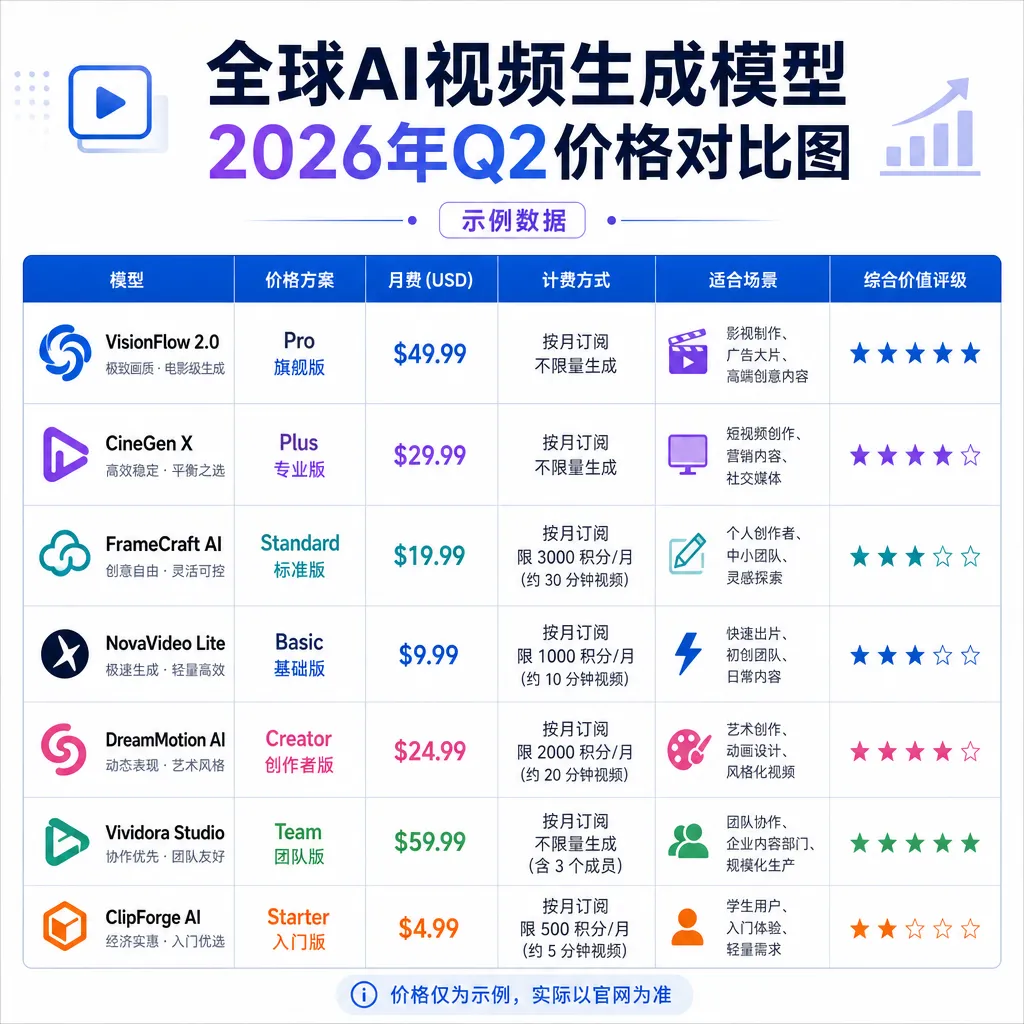
Since Q1 2026, global video generation models have almost universally raised prices. ByteDance’s Seedance 2.0 API price is 4.6x higher than 1.0 Pro; IDMeng adjusted its points rules three times in April, sparking user backlash; Keling 3.0’s 4K output has also moved to a premium pricing route. The underlying logic is consistent: after the demo phase burns through cash, it’s time to make money.
Avataar, against this trend, has set pricing at $0.005 per second — a textbook “volume-for-price” strategy. In the current phase of divergence in the AI video race, this makes sense — the top markets are locked down by Chinese players, and India’s local small creator market is its stronghold. But if the distilled model’s quality and capabilities can’t withstand competition, low prices could backfire: users try it once, find it lacking, and turn back to Seedance or Keling’s free quota.
The Other Shoe of Regulation
A side note on compliance issues Avataar can’t avoid.
As of June 2026, Article 50 of the EU’s AI Act mandates prominent labeling of all AI-generated content; China’s “Measures for Marking AI-Generated Synthetic Content” has likewise taken effect; India is accelerating its own AI regulatory framework.
Low-cost, consumer-facing video generation tools are the easiest breeding grounds for deepfakes and misinformation. If Avataar wants to scale, it can’t ignore watermarking, metadata labels, and content review. These are costs — and ones distillation can’t cut.
One-Sentence Judgment
Avataar’s launch brings no groundbreaking technical innovation — distillation is standard practice by 2026. But in India, a market long neglected by US and Chinese AI giants, building a “good-enough, cheap, India-savvy” video model is in itself a worthwhile business.
It won’t fight for a top-five spot on Artificial Analysis’s leaderboard — and doesn’t need to. Surviving in Meesho sellers’ workflows, becoming one of the underlying production tools for Indian short dramas going global, will be enough for Avataar.
As for how global developers will use these increasingly diverse video generation models — Keling, Seedance, HappyHorse, and future regional players like Avataar — aggregation platforms such as OpenAI Hub (openai-hub.com), which let you run all major models with a single key, still look like the easiest path. Domestic connectivity and OpenAI-format compatibility mean you don’t have to integrate each API separately.
The next points to watch: when Avataar releases real-world samples, and how deeply it integrates with India’s domestic e-commerce platforms. If both go through, India’s AI video race will finally have its own player.
References
This article synthesizes multiple public reports, with accessible domain reference links as follows:
Note: The core information sources (TechCrunch’s report on Avataar, Yiou’s analysis of Chinese AI video tools going overseas, Xinhua and Wall Street Journal Chinese Edition reports on the global video model landscape) are subject to access restrictions, and have been cited by source and date in the main text. Readers can search for the corresponding titles on the original media platforms for full details.


