
Referee sells tickets after the match: Arena quietly beta-testing relay API
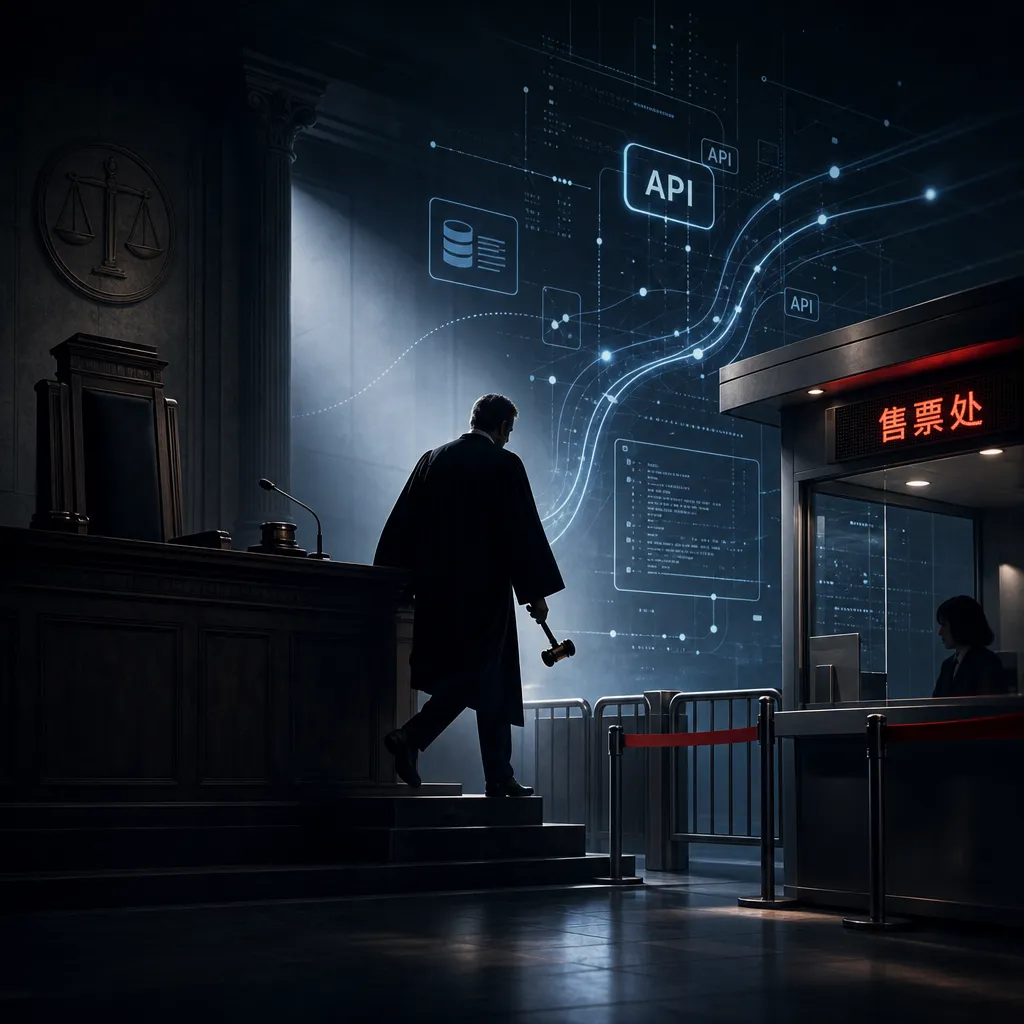
The former large model judge Arena (formerly LMArena) has quietly launched the Arena API, featuring auto intelligent routing, officially joining the model relay business. When scoring and selling tickets at the same time becomes reality, can that golden reputation brought from Berkeley still hold up?
Arena Has Also Started Doing Model Relaying
In the past couple of days, an interesting bit of news has been making the rounds: the model competition platform Arena (formerly LMArena), famous for deciding winners through human voting, quietly launched a product called Arena API, which is currently in a restricted-registration research preview phase.
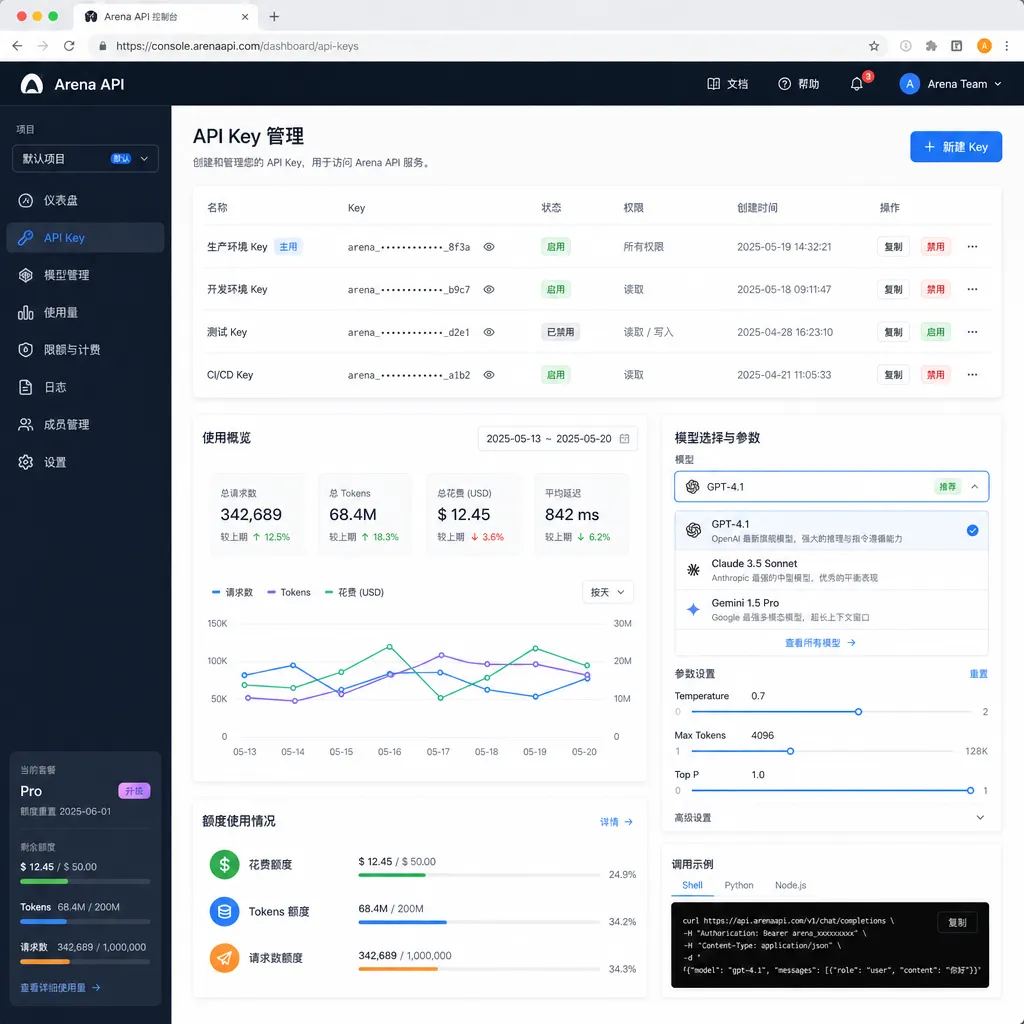
Opening portal.api.preview.arena.ai, you see a recipe so familiar it’s almost funny—OpenAI-compatible chat completions, Anthropic-style Messages interface, unified API key, token-based billing. The model name field can even be set directly to auto, allowing Arena to route your request to the “currently strongest” model based on its own leaderboard.
This business model is one that folks who work on API aggregation could recite in their sleep. The formal term is “intelligent routing + relay,” informally—middleman.
From “Weapon Ranking” to “Peddler”
To understand the subtlety of this move, you have to recall Arena’s background.
It originated as UC Berkeley’s academic project Chatbot Arena, accumulating preference data through blind testing and voting, long serving as a “weapon ranking” that model vendors both loved and feared. Whenever GPT, Claude, or Gemini released a new version, the first thing CEOs tweeted was their Arena rankings. How much is that brand worth? The capital markets have given it two price tags:
- May 2025: ~$100 million seed round, led by a16z and UC Investments, valuation ~$600 million
- Jan 2026: $150 million Series B, valuation surging to $1.7 billion
The valuation nearly tripled in six months, making it one of the most sought-after AI infrastructure companies of late 2025. But being a judge has an old problem: it doesn’t make money.
The website is free, voting is free, direct chat is free, even the Arena-Hard-Auto evaluation tool was open-sourced on GitHub. Bills aren’t free, and investor patience isn’t infinite. After two rounds of funding and a $1.7 billion valuation, you need a monetization story for the LPs.
The answer is now clear—turn the leaderboard itself into a product.
Auto Mode: Monetizing “The Most Model-Savvy on the Internet” Into Token Revenue
The core selling point of Arena API is what it calls “auto routing.”
The logic is straightforward: when users don’t specify a model, Arena dynamically picks the strongest model from its real-time leaderboard (segmented by task type, language, code/creative/reasoning categories) to respond. In other words, Arena is directly monetizing its identity as “the most model-savvy on the internet” into token revenue.
Around this core, it conveniently supports almost all mainstream clients: Lobster (desktop clients like Cherry Studio), Claude Code, Codex, Pi (not Inflection AI’s Pi, but another code agent) and so on—all can connect with one click. This shows it’s not targeting developers calling SDKs directly, but rather those already using third-party clients and accustomed to querying models through aggregator APIs—essentially OpenRouter’s existing market.
From a product standpoint, this is a standard relay aggregation service, with no fundamental difference from OpenRouter, various “Rabbit sites,” or domestic clones of OpenAI.
But Arena Is Not OpenRouter
This is where the issue lies.
When OpenRouter sells relay access, no one cares—it’s openly a middleman, profiting from price differences and convenience fees. Arena is different—it holds the referee’s whistle.
It scores models, then allocates real traffic based on those scores. If auto routing favors a certain model, that model gets more from this new traffic pool. Rankings now affect not just bragging rights, but actual revenue. This structural interest linkage is something OpenRouter will never have.
More awkwardly, Arena’s impartiality has already been questioned before:
- In early 2025, researchers from Cohere and others published a fiery-paper titled The Leaderboard Illusion, accusing Chatbot Arena of giving big vendors a backdoor—allowing them to privately test multiple variants and pick the best for the leaderboard, while smaller models were judged in a single shot.
- The leaderboard controversy during Llama 4’s release, suspicions about Wenxin Yiyan gaming the rankings—all still remembered.
- Even now, when unknown models suddenly climb the leaderboard, insiders wonder if they’ve gotten a tip.
Back then, this could be dismissed as “an academic project with imperfect mechanisms.” Now that the referee is selling tickets, those suspicions go from “possible” to “blatant.”
The Official Documentation’s Disclaimer Is Quite Frank
Interestingly, Arena’s own documentation takes a very humble stance:
- Product is in research preview stage, with no SLA or uptime guarantees
- Auto mode does not guarantee the selected model supports function calling
- Routing quality “will improve over time”
Translated into plain language:
Get running first; the money can’t wait. If routing is diluted, don’t say we didn’t warn you.
This is basically the same tone as OpenAI adding “may hallucinate” notes to GPT-4—covering all potential product flaws with “early preview.” Arena’s situation is more delicate, though: as the referee, humility can’t erase doubts about fairness.
What This Means for Developers
Setting aside the optics, Arena API does offer some value:
- Routing isn’t just talk. Most “intelligent routing” services rely on either offline benchmark scores or live A/B testing of prompts. Arena has a unique asset—real-time human preference data. Theoretically, its judgment of “which model best pleases users for this prompt” is closer to true user experience than any benchmark.
- Could work wonders for long-tail tasks. For rare language translation or specific writing styles, Arena’s detailed segmented rankings theoretically improve hit rates compared to OpenRouter’s simpler “price + speed” routing.
- But you can’t bet on consistency. Auto mode means the same call today and tomorrow might hit entirely different models; function calling, structured output, context length—all variables. Using it as the main production route is unrealistic; better for chat scenarios or one-off tasks.
A practical usage pattern might be:
- Chat scenarios: go auto, no hassle
- Agent/tool integrations: explicitly specify the model, don’t let the referee choose
- Evaluation/comparison: use stable endpoints, e.g., direct to vendors or aggregator layers like OpenAI Hub that support OpenAI format and a single key for GPT/Claude/Gemini/DeepSeek, to avoid excessive variable noise
Industry Landscape: Aggregation Layer Moving From “Convenience” to “Main Battlefield”
Taking a step back, one of the key trends in early 2026 is the model aggregation/relay layer shifting from a niche business to a main AI infrastructure battlefield.
- OpenRouter is firmly at the top, reportedly doing over $100 million monthly revenue
- Numerous niche aggregators are appearing—some focusing on code models, others on role-playing
- Domestic compliance channels are packaging GPT, Claude, Gemini into locally callable formats
- Now even “upstream referees” like Arena are joining in
The logic is simple: no single model is the best for all tasks. GPT excels at code, Claude at long-form writing, Gemini has long context, DeepSeek offers great value, Grok has strong real-time capabilities. For developers, betting on only one is foolish—aggregation is a natural necessity.
But the aggregation layer’s moat is thin—everyone connects to the same upstream APIs, competing on stability, price, client compatibility, and a bit of routing cleverness. Arena’s move is essentially an attempt to use “referee data” to build a moat others lack.
Whether that moat holds depends on whether users buy in—and whether scored model vendors are willing to keep submitting their latest versions to an arena that’s now both referee and middleman.
Epilogue
The ultimate fate of the universe is bureaucracy, the ultimate fate of the internet is hawking goods, and the ultimate fate of AI entrepreneurship—for now—is middlemanship.
OpenRouter has already paved the way; Arena is now stepping in with its referee credentials, carrying a whiff of “I run the casino, and also place bets.” No one knows how this will end. But it’s certain that Arena’s gold-plated brand from Berkeley needs to be re-evaluated from today.
If a16z ever starts investing in its own model, and Arena routes it into the auto pool—the plot will be complete.
References
- The Ultimate Fate of the Universe Is Being a Middleman? Arena Has Started Doing Model Relaying Too - linux.do: Original discussion thread, first revealing Arena API preview details
- lmarena/arena-hard-auto - GitHub: Arena’s automatic evaluation benchmark, background material


