
Chang'an launches "Tianshu Navigation": embeds VLM into assisted driving, Qiyuan Q06 to be released in September
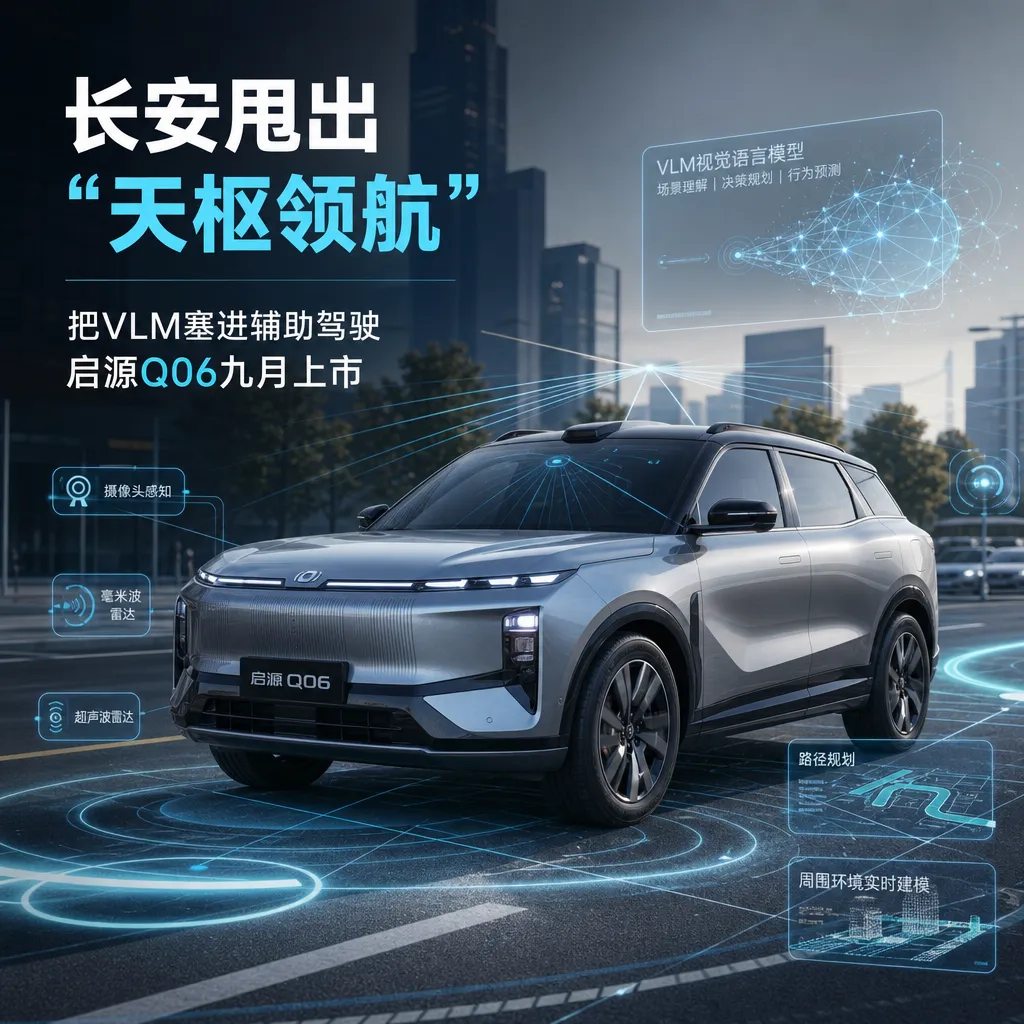
At the Chongqing Auto Show, Changan unveiled its self-developed assisted driving system "Tianshu Navigation," available in Pro/Max/Ultra versions. The Ultra version is equipped with a VLM vision-language large model enabling interactive driving. The first model, Qiyuan Q06, will be launched in September this year.
Chang’an Launches “Tianshu Navigation”: Embedding VLM into Assisted Driving, Qiyuan Q06 to Launch in September
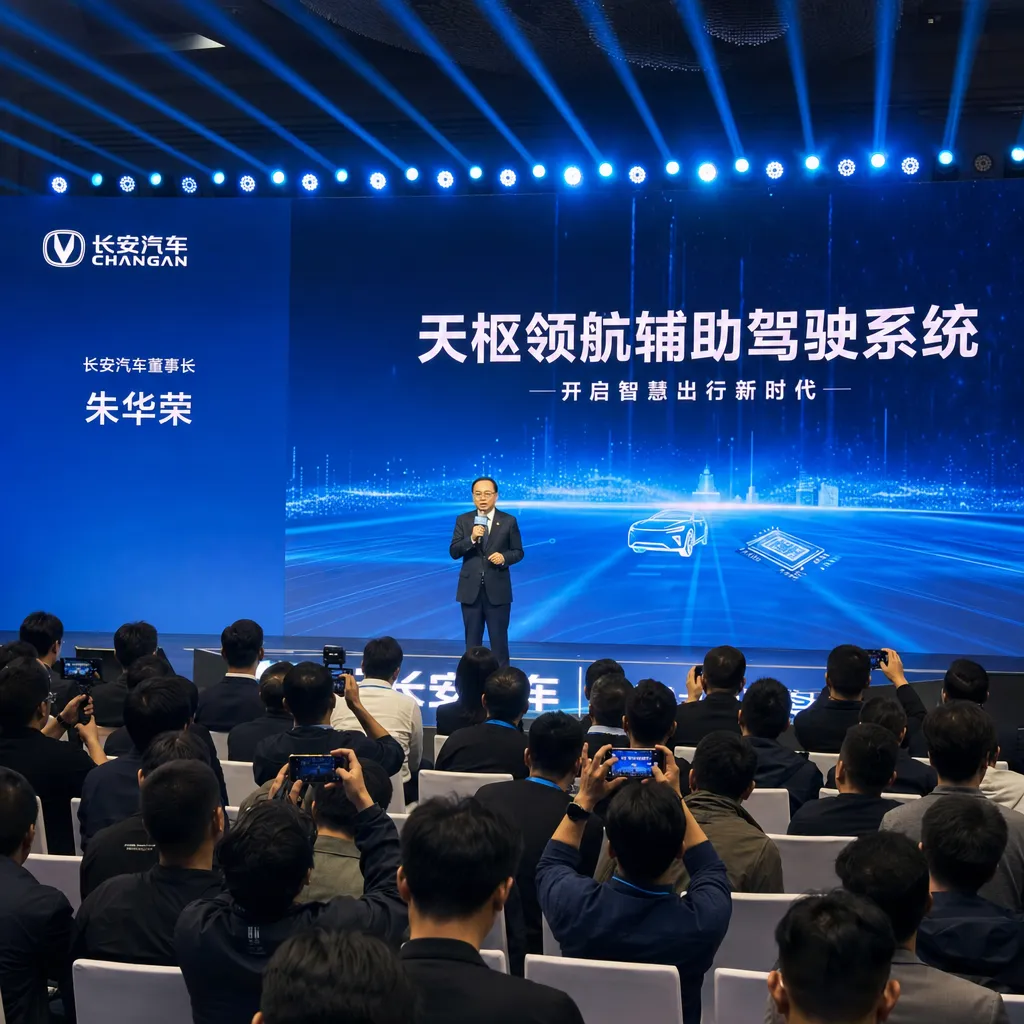
On June 13, the opening day of the Chongqing Auto Show, Chang’an Automobile unveiled its self-developed assisted driving system “Tianshu Navigation.” It comes in three versions — Pro, Max, and Ultra — corresponding to different hardware and algorithm capabilities. The highlight is the Ultra version — yet another domestic OEM openly integrating VLM (Vision-Language Model) into a mass-produced assisted driving system. The first model equipped will be the Chang’an Qiyuan Q06, launching in September, with all versions standard.
The timing is no accident. In the first half of this year, Li Auto’s VLA, Xpeng’s World Model, and Huawei’s Qiankun ADS 4.0 have all been making waves, and “end-to-end + large model” has virtually become the entry ticket for the assisted driving track in 2026. Chang’an’s rollout of “Tianshu Navigation” is not just a tech launch — it’s more like a repositioning, signaling to the market that Chang’an, a central SOE, is also at the table.
Three Configurations: Clear Layering of Hardware and Algorithms
Let’s first lay out the basics. “Tianshu Navigation” comes in three tiers. The differences are not just simple “feature cuts” but systematic layering from perception hardware down to model capability.
Pro version follows a “safety-first” path. It features lidar as standard — a solid choice, considering many EV startups are pushing “vision-only” concepts and making lidar optional. Chang’an directly makes lidar standard for the Pro version, with a key official metric: in low-light scenarios such as nighttime or tunnels, it can detect obstacles 2 seconds ahead of human eyes. What’s the significance of 2 seconds? At an urban road speed of 60 km/h, that’s about an extra 33 meters of reaction distance — enough to save a life in a tunnel blind spot.
More important is the underlying architecture. The Pro version is developed on Chang’an’s SDA central ring network architecture, cutting system response speed by 150 milliseconds. Brief explanation — in traditional distributed E/E architecture, sensor data passes serially through multiple ECUs, and longer chains add latency. A central ring network consolidates core computing and links functional domains via a ring bus — essentially upgrading the data roads from rural routes to a ring expressway. 150 ms might sound small, but for millisecond-level decision scenarios like AEB (Automatic Emergency Braking), every frame counts.
Max version focuses on data. Officially: “trained on over 20 million high-quality human driving data slices,” claiming a 20% improvement in commuting efficiency in high-frequency scenarios. This type of claim is common in the end-to-end era — competing on data scale and scenario coverage. What is the scale of 20 million slices? Public info suggests Tesla’s FSD training video frames are in the tens of millions to hundreds of millions; domestic leaders range from millions to tens of millions. Whether Chang’an’s number is competitive depends on its “high quality” standard — more slices are not always better; excessive irrelevant scenes dilute model capability.
A 20% improvement in commuting efficiency is a pragmatic metric — meaning the car moves when it should at intersections and changes lanes without hesitation. Today’s assisted driving often suffers less from “can it drive” than from “does it drive like a seasoned driver” — too much sudden braking or yielding makes passengers more tired than drivers. If Chang’an really nails this, repeat purchases could see tangible gains.
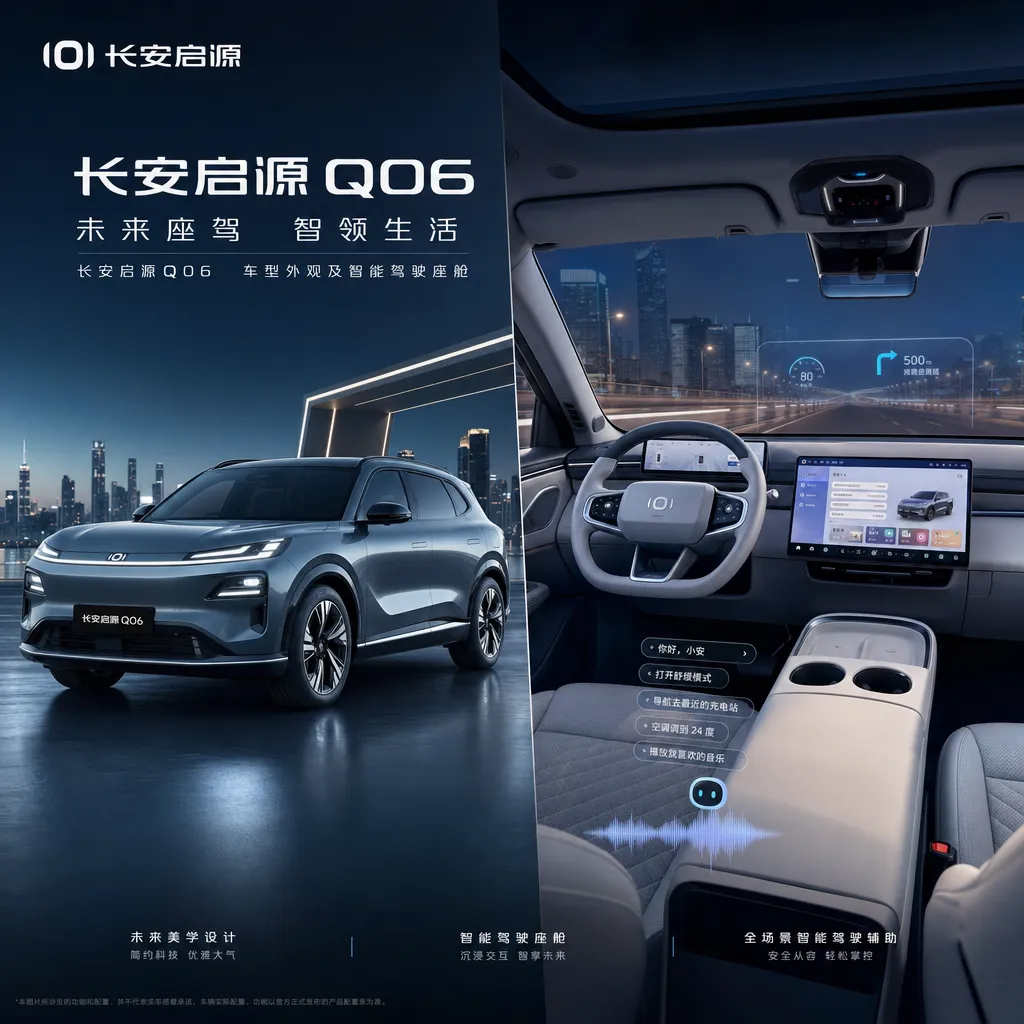
Ultra version is the main star this time, equipped with a VLM vision-language large model.
What Changes When VLM Enters Assisted Driving Systems
Let’s go deeper here.
The traditional assisted driving perception-decision pipeline is “object detection → behavior prediction → path planning,” essentially breaking the world into geometric objects (cars, people, lane lines). This paradigm works well on structured roads, but in scenarios like “construction ahead, temporary detour to opposing lane” or “a pedestrian waves you to go first,” it becomes clumsy — because the system doesn’t understand what is happening; it only sees boxes.
VLM upgrades “visual understanding” from recognizing objects to understanding scenes. A trained VLM seeing cones + reflective vests + direction signs can output the semantic understanding “construction ahead, detour required,” instead of just “N cones ahead.” Combining this with text recognition, it can read road signs, temporary traffic signs, and message boards — giving the regulation/control phase richer inputs.
Chang’an describes it as an “interactive assisted driving system” — interesting because interactive means users can give natural language commands: “Overtake the white SUV ahead,” “Turn right at the next intersection to get to that gas station,” “Pull over so I can grab a coffee.” This is the same direction promoted last year by Li Auto’s VLA and Xpeng’s XNGP, shifting the core interaction paradigm from “buttons + steering wheel” to “voice + intent.”
A real question arises: with VLM onboard, how do you solve compute and latency?
Running a decent multimodal model on the vehicle means hundreds of millions to billions of parameters. Cloud inference risks latency and disconnection; on-board inference requires strong SoC power and memory bandwidth. Chang’an hasn’t disclosed the specific SoC for Ultra, but given the SDA central ring network, it’s likely a hybrid of local inference + cloud collaboration. Whether this yields smooth-feeling interactions will only be known after the car ships.
Another noteworthy detail: “Future launch of driver incapacitation protection.” This connects DMS (Driver Monitoring System) directly with assisted driving decisions — if the driver is incapacitated (medical emergency, severe drowsiness), the vehicle takes over to pull over and alert authorities. This is already mandatory under new EU regs; domestically it’s optional, so Chang’an’s early move is sensible.
Zhu Huarong’s Stance: Assisted Driving Is Not Autonomous Driving
At the launch, Zhu Huarong made two notable statements.
First, on safety boundaries: “Assisted driving is not autonomous driving; drivers must still take on full real-time monitoring and readiness to take over.” This is frank, and the logic is clear — several accidents and regulatory actions in 2025 taught automakers that capability descriptions for L2+ must avoid implying L3. Chang’an directly put this safety disclaimer into its official release — an experienced move.
Second, on strategy: “Chang’an always regards intelligence as the core engine for transformation,” aiming to “rank among the global top 10 automakers by 2030.” This continues Chang’an’s “1445” global strategy. Organizationally, Chang’an formed its intelligent R&D team back in 2009, now has over 2,000 engineers, 5 million km of road testing, and 400,000 virtual simulation scenarios — the numbers showing this is not a last-minute endeavor.
Qiyuan Q06 Standard Across All Models — Pricing Is Key
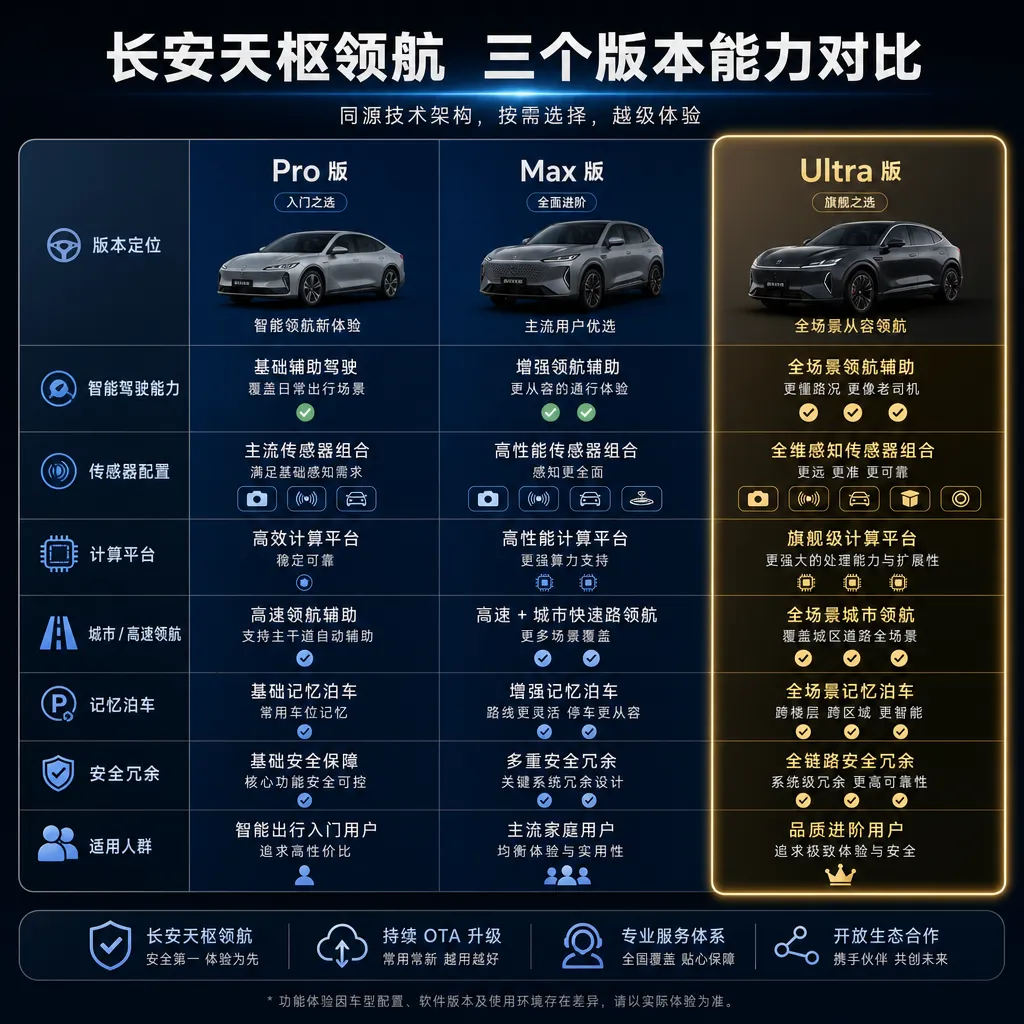
The first model is the Chang’an Qiyuan Q06, launching in September, with “Tianshu Navigation” standard across the lineup.
This choice is strategic. Qiyuan is Chang’an’s main NEV brand, targeting the mainstream home market, positioned against bestsellers like BYD Song PLUS and Geely Galaxy L7 in the 120,000–180,000 yuan range. Offering “full lineup assisted driving + lidar” in this segment signals price war intent.
This year, cars just over 150,000 yuan with lidar are no longer rare, but claiming “full lineup + optional VLM large model” is less common. If Chang’an prices it in the 140,000–180,000 yuan range, combined with Qiyuan’s channels and pricing system, it could pressure Geely, Chery, and BYD in the same bracket.
Variables to watch:
- Will Ultra be available across all trims? Normally, high-end features like VLM are tied to top hardware — if only top trims run it, the “full lineup Tianshu Navigation” claim is less potent.
- OTA schedule: Which version — Pro, Max, Ultra — will be available at delivery in September? Large model features are often delayed; the market’s patience will depend on delay length.
- Data loop efficiency: The 20 million slices are from the launch — whether it can continuously iterate post-production depends on fleet scale and return efficiency.
In the Wider Market
In assisted driving’s 2026 landscape, nearly all top players are betting on “end-to-end + large model.” Li Auto uses VLA (Vision-Language-Action) for unified architecture; Xpeng pushes its World Model; Huawei’s ADS 4.0 strengthens scenario generalization; BYD’s “God’s Eye” drops to 100,000 yuan level; Chang’an’s Tianshu Navigation Ultra shares this line of thinking.
Differences:
- Li Auto and Xpeng excel in algorithm iteration speed and accumulated user reputation
- Huawei excels in ecosystem and high-end brand premium
- BYD excels in scale and cost control
- Chang’an’s strengths are SOE-level resource integration, SDA architecture’s engineering foundation, and channel penetration at mainstream price points
In short, this is a “no one can rest, but no one can win fast” situation. Whether Chang’an can move from tier two to tier one depends less on this launch and more on the next 12–18 months of OTA pace and user feedback.
Developer Observations
For AI infrastructure and model application engineers, this launch sends signals worth noting:
-
VLM onboard has moved from demo to mass production. This means demand for low-latency, low-power multimodal inference will keep growing; next-gen vehicle SoCs (Horizon, Nvidia Thor, Huawei MDC) will heavily optimize for this scenario.
-
Multimodal driving scene data is becoming a scarce asset. Unlike generic internet image-text data, high-quality driving-data with semantic labels needs fleet collection + manual labeling, deepening the data moat.
-
VLM and VLA technical paths will diverge further. VLM outputs semantic understanding then feeds conventional planning/control; VLA outputs action directly. Both have pros/cons — by 2026–2027, clearer winners may emerge.
As a side note, domestic developers wanting quick prototypes for multimodal vision understanding can use aggregation platforms like OpenAI Hub (openai-hub.com) to connect GPT, Claude, Gemini etc. with one key — avoiding multiple account setups — handy in PoC stages.
Final Thoughts
The “Tianshu Navigation” launch feels “engineer-driven” — concrete metrics (2 seconds, 150 ms, 20%), clear architecture (SDA central ring network + VLM), defined safety boundaries. No over-marketing, no mysticism.
The rest is up to the market. When Qiyuan Q06 launches in September, pricing, configuration, and Ultra’s real-world experience will matter more than today’s PPT.
References
- Chang’an Automobile launches “Tianshu Navigation” self-developed assisted driving system: Chang’an Qiyuan Q06 to feature across lineup, launching in September - IT Home — Core info from launch and spec data for all three versions


