
Claude Agent SDK will be billed separately starting the day after tomorrow, and the subscription quota will be cut in half.
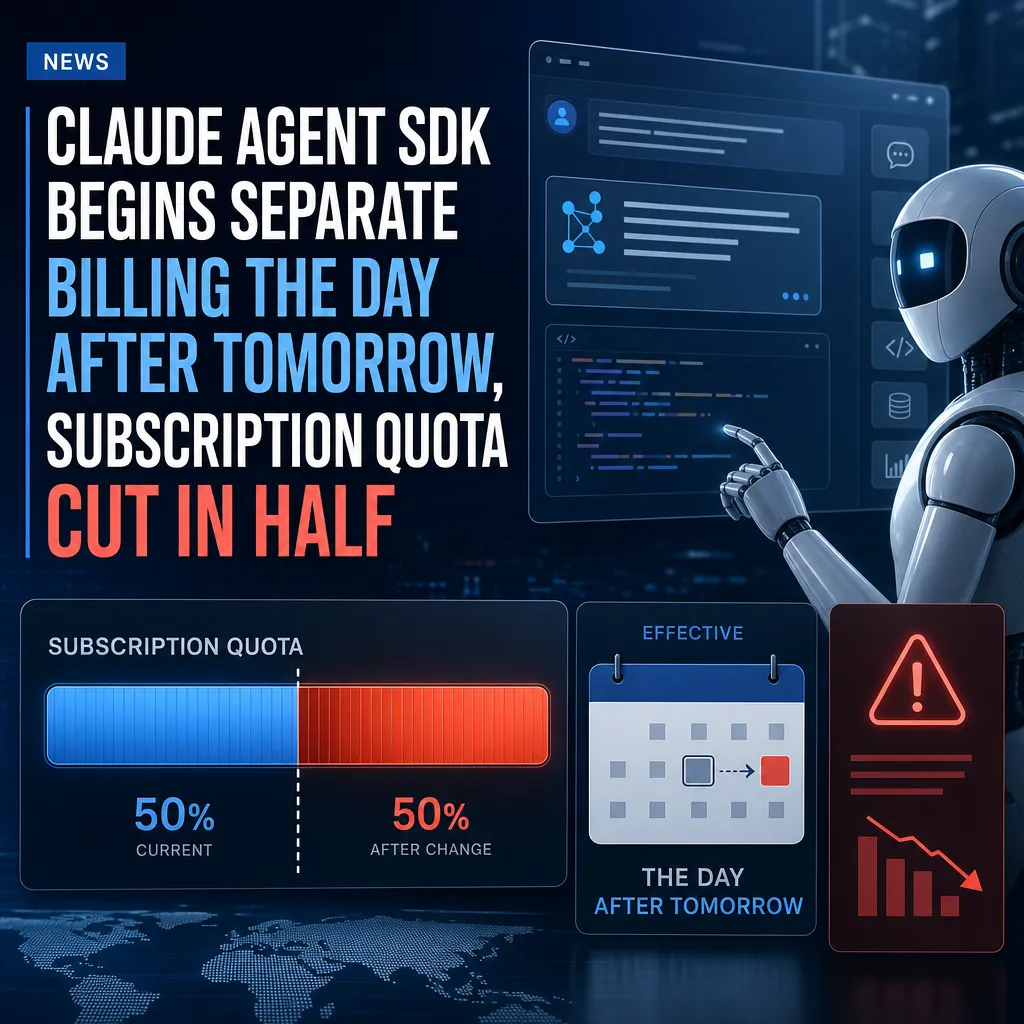
Anthropic has separated programmatic calls from subscription quotas, effective June 15. Pro offers $20 in monthly credit, Max 20x provides $200, and any overages will be billed at API rates — this change targets relay stations running Agents on Max and heavy automation users.
Effective the Day After Tomorrow: Claude Cuts Subscription Quotas in Half
Anthropic acted extremely quickly this time—email notice sent on June 8, implemented on June 15, leaving developers less than a week to respond.
The rule itself can be summed up in one sentence: Starting June 15, 2026, the Claude Agent SDK, non-interactive mode of the claude -p CLI, Claude Code GitHub Actions, and any third-party applications based on the Agent SDK (such as Conductor) will no longer share your subscription plan’s conversation quota. These “programmatic usage” calls are now allocated to a separate monthly credit pool, while the original subscription quota is reserved for Claude.ai web conversations, interactive Claude Code, and Claude Cowork.
It may sound like an extra budget, but a quick calculation shows this is a real price hike—especially for those who heavily leverage Max as a productivity tool.
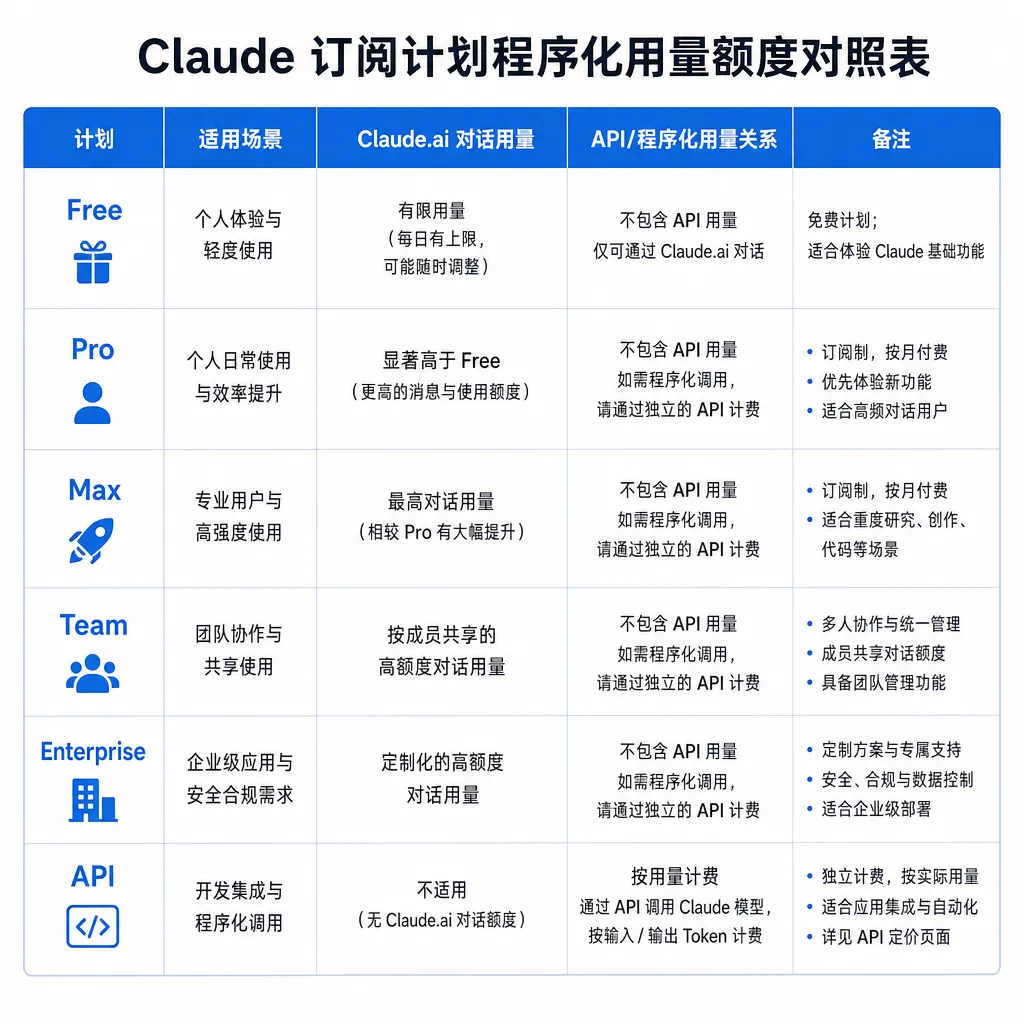
How the New Rules Allocate Quotas: One Table to Understand
Monthly programmatic credits for each plan:
- Pro ($20/month): $20 programmatic credit
- Max 5x ($100/month): $100 programmatic credit
- Max 20x ($200/month): $200 programmatic credit
- Team Standard: $20 per seat
- Team Premium: $100 per seat
- Enterprise: depends on seat type
Key details not to miss:
- Credits reset with the billing cycle and do not roll over. Unused credits expire monthly, unlike prepaid balances with cloud providers.
- Overages require manually enabling the “Extra Usage” switch; otherwise, Agent SDK requests are suspended until the next reset.
- Overages are charged at full API rates—the standard Sonnet/Opus token prices, with no subscription discount.
- Developers using the Claude Developer Platform (API Key) do not receive these credits; pay-as-you-go usage remains unchanged.
In other words, subscription users in programmatic scenarios now essentially get an equivalent-value API voucher, rather than the old “Max 20x can run Agents nonstop” experience.
Why Change: Anthropic Couldn’t Hold Out
The background is straightforward. Over the past year, the Agent SDK ecosystem has exploded—Conductor, various automation frameworks, CI/CD integrations, plus numerous relay and reverse-proxy projects using Max subscriptions as API endpoints—creating a severe “low-price, high-volume” loophole in Anthropic’s unified pricing model.
A $200/month Max 20x account could theoretically run batch jobs via Agents 24/7, burning through the subscription fee in a week at Opus’s real token cost. Anthropic previously tried to cope with rate limit increases and 5-hour windows, but Agent workloads are continuous high throughput; traditional “window throttling” can’t stop them.
This adjustment essentially separates the books: conversations are conversations, automation is automation. Chatting with Claude Code in Cursor to tweak code? Subscription usage. Plugging Claude into a self-looping Agent or GitHub Actions to run on every PR? Programmatic usage, billed strictly at API rates.
Anthropic admits this frankly in the announcement—this isn’t about raising interactive limits, it’s about completely separating two usage scenarios in accounting.
Who Will Hurt: Relays, Heavy Agent Users, Third-Party Tool Makers
The hardest-hit groups, ranked:
1. Relays Selling Max Subscriptions as APIs
The loudest blow. Operators making money from arbitrage between “subscription price / API price” via Max 20x pools for reverse proxies or shared Key services will now see Agent SDK calls deduct from that $200 programmatic credit pool, with overages billed at full API rates. Arbitrage disappears instantly.
Forum operators already ask: “Does this affect relays using Max subscriptions?” Answer: Yes, significantly. User-side official Keys and API-based reverse proxies are unaffected, but subscription-based relays’ business model has been slashed.
2. Individual Heavy Agent Players
If you previously paid $100 for Max 5x, interactive coding with Claude Code was fine—but write an Agent script to run tests, modify code, and submit PRs, and token consumption grows geometrically. $100 programmatic credit may not sustain an active Agent loop for a week. Reddit advice: “$20 Pro can’t run a real Agent loop; Max 5x ($100) is the minimum for active developers; Max 20x ($200) suits tool publishers.”
3. Third-Party Vendors Using Agent SDK to Build Products
Tools like Conductor are explicitly named—they can still pair with Claude subscriptions, but user calls consume the user’s programmatic credit pool. The “free trial” window for third-party tools narrows, and users will care more about token efficiency. For vendors, this is a hard test of prompt optimization and context management skills.
How Enterprise Teams Should Respond
If you’re a tech lead, this isn’t just a “subscription price hike”; it reminds you of a fundamental truth: Agents are no longer toys; they are cost centers, and budgets must be separately accounted.
Actions I recommend doing immediately:
- Audit your current Agent toolchain. Ask every direct report what Claude-based automation they use or are building. Chances are non-zero.
- Move shared automation workloads to the API. Batch jobs, CI integrations, internal Agent services shouldn’t run on an employee’s personal subscription. Open a Claude Developer Platform account; moderate usage budgets of $500–$2000/month are normal tech spend.
- Upgrade individuals to the right tier. $20 Pro’s programmatic credit can’t sustain serious Agents; active users need at least Max 5x.
- Set limits before enabling “Extra Usage”. Runaway Agents burning tokens is a real risk; set billing alerts and hard caps early.
An Unspoken Judgment
My take after reading this: Anthropic is using a relatively polite way to push subscription-based Agent users toward the API.
No direct subscription price hikes, no changes to interactive quotas, so conversational users feel nothing. But if you use Agents seriously, the new rules force you to calculate—does your actual token usage justify Max 20x? Most serious users will conclude: either switch to API pay-per-use or abandon some Agent workloads. For Anthropic, this is a win-win—predictable revenue and better load planning.
Side note: OpenAI Hub’s API calls for Claude models have always been billed at official rates, compatible with OpenAI format—one Key can call GPT, Claude, Gemini, DeepSeek alike. If you’re considering migrating your team’s Agent workloads off subscriptions, aggregated APIs mean you don’t open separate accounts or set up separate billing for each model.
Points to Watch Next
- Will the relay market reshuffle after June 15?
- Will third-party Agent tools start competing on prompt efficiency?
- Will Anthropic adjust Pro tier quotas (since $20 is too limited for Agents)?
- Will other model providers copy this “conversation pool / programmatic pool” billing split?
This change may look like a one-line announcement, but it actually reorganizes all “grey area” plays in Claude’s subscription ecosystem. We’ll see the real impact the day after tomorrow.
References
- linux.do community discussion: Agent SDK excluded from subscription quota as of June 15 — Impact analysis for relay operators regarding official Key and reverse proxy usage
- Reddit r/ClaudeAI: Agent SDK billing changes June 15—what it means for marketing teams — Practical response suggestions, including audits, tier upgrades, and API migration steps
- Zhihu column: New Claude policy abandons loyal Agent users — Chinese summary of quotas for Pro/Max/Team/Enterprise tiers


