
Apple wants Siri to operate apps for you, but it’s not ready yet.
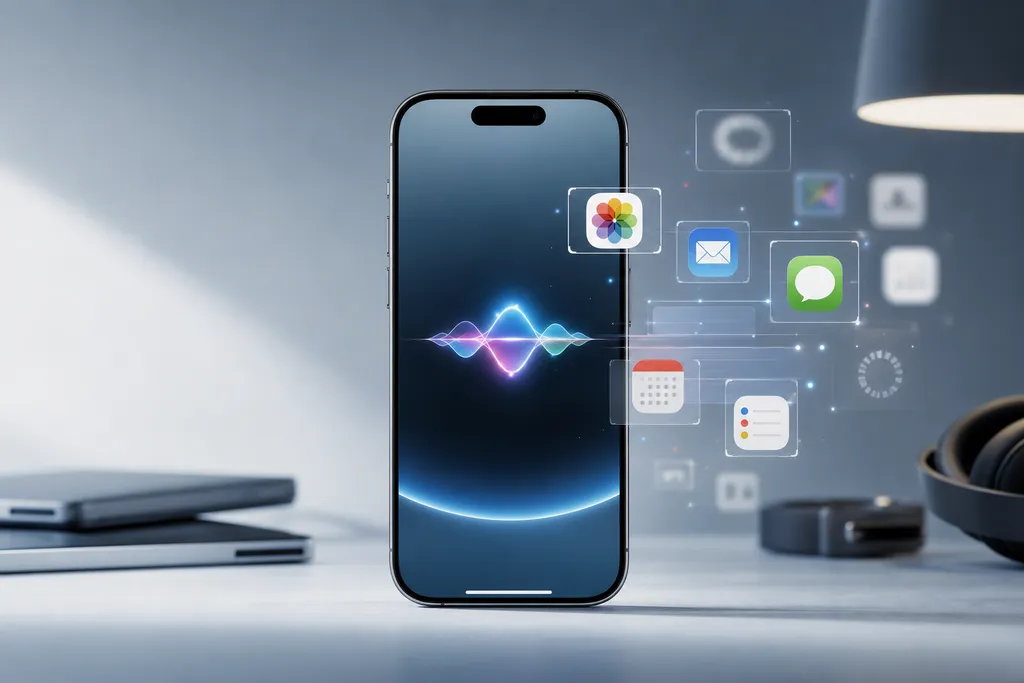
Gurman revealed that Apple is working on an intelligent agent system that would allow Siri to fully handle app operations on iPhone, iPad, and Mac. Siri engineering head Rockwell signaled after WWDC26 that the new Siri’s underlying architecture has reserved space for this, but Federighi remained cautious, admitting that this track is still in the experimental stage.
Apple's Agent Finally Let Slip
After last week’s WWDC26 keynote, Bloomberg’s Mark Gurman made a prediction in his Power On column: Apple will eventually launch an intelligent Agent AI system capable of autonomously operating various software on iPhone, iPad, and Mac on behalf of the user. In other words, it’s aimed at the same class of things as OpenAI Operator and Anthropic Computer Use—except Apple will build it into its own operating systems.
The trigger for this was something Siri engineering head Mike Rockwell (yes, the same guy transferred from Vision Pro to clean up Siri’s mess) said after the keynote ended. Gurman found his wording intriguing because Rockwell essentially admitted—publicly—that Siri is still just a “passive response” assistant for now, but the underlying infrastructure already leaves room for “active execution.”
What Exactly Did Rockwell Say
Translated roughly, here’s what he said:
The operational logic of an intelligent agent is to continually receive information, make judgments, execute actions, and form a loop. Our Siri still mainly relies on users proactively initiating commands to run. However, the underlying architecture supporting Siri is now a brand-new, modern architecture, so we have plenty of room to expand related capabilities in the future.
It sounds like PR-speak, but in Apple’s usual communication style, this is already a pretty big statement. In the past, when Apple talked about Siri, it was either “more natural conversation” or “deeper app integration”—never terms like “continually receive information, make judgments, execute actions” with a loop logic. This phrasing is basically the standard definition in the Agent field—perceive, reason, act—and then form a closed loop.
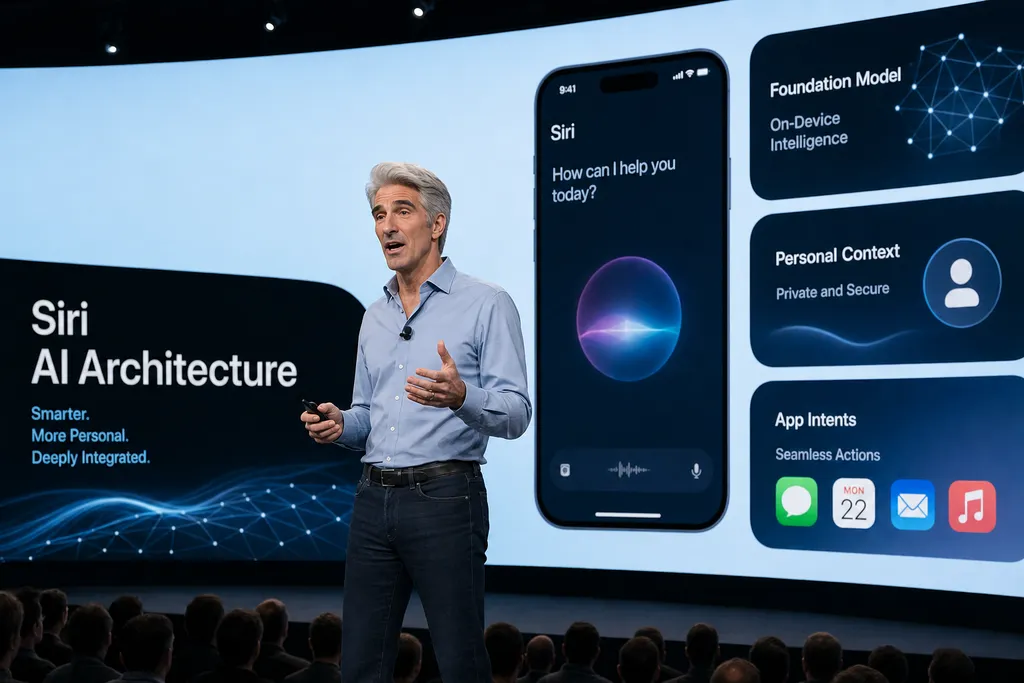
Apple’s SVP of Software Engineering Craig Federighi was much more tight-lipped. He acknowledged that Agent is an emerging track, but used very conservative wording: “This field is still in an experimental stage, and crafting a suitable user experience is still the main priority.” Translation: we’re watching, but won’t jump in right away; when we do, it’ll be worth it—just don’t rush us.
Why Only Say It Now
To understand Apple’s nuanced statement this time, you first have to look back at the pitfalls they’ve hit with AI over the past two years.
At WWDC 2024, Apple unveiled Apple Intelligence, claiming “personalized Siri” would arrive with iOS 18.4 in 2025—only to delay it repeatedly until now. At this year’s WWDC26, Apple rebranded it as “Siri AI,” claiming it had been rebuilt from the ground up with large language models. But truth be told, the Siri AI demos at the keynote still focused on “user-initiated commands”:
- Recognizing items in the Camera app and providing nutritional info
- Answering questions based on on-screen content
- Searching photos, emails, and messages across apps
- Suggesting replies in the Messages app
These are all “You ask, I answer” or “You tap, I do”—still not crossing into “I decide what to do for you” territory that defines an Agent. That’s why Gurman said Apple will eventually launch an intelligent agent—meaning this version of Siri AI doesn’t count yet.
The Difficulty of Cross-Platform Agents
If Apple really wants to build an Agent across iPhone, iPad, and Mac, the technical hurdles are much higher than for a standalone browser Agent.
Hurdle 1: Permission model. Anthropic’s Computer Use and OpenAI’s Operator mainly run in a sandbox, essentially “simulating user clicks.” But if Apple wants Siri to directly control system-level apps, it can’t avoid permission prompts, privacy authorization, and Keychain access. Apple’s own privacy rules might end up blocking its own way.
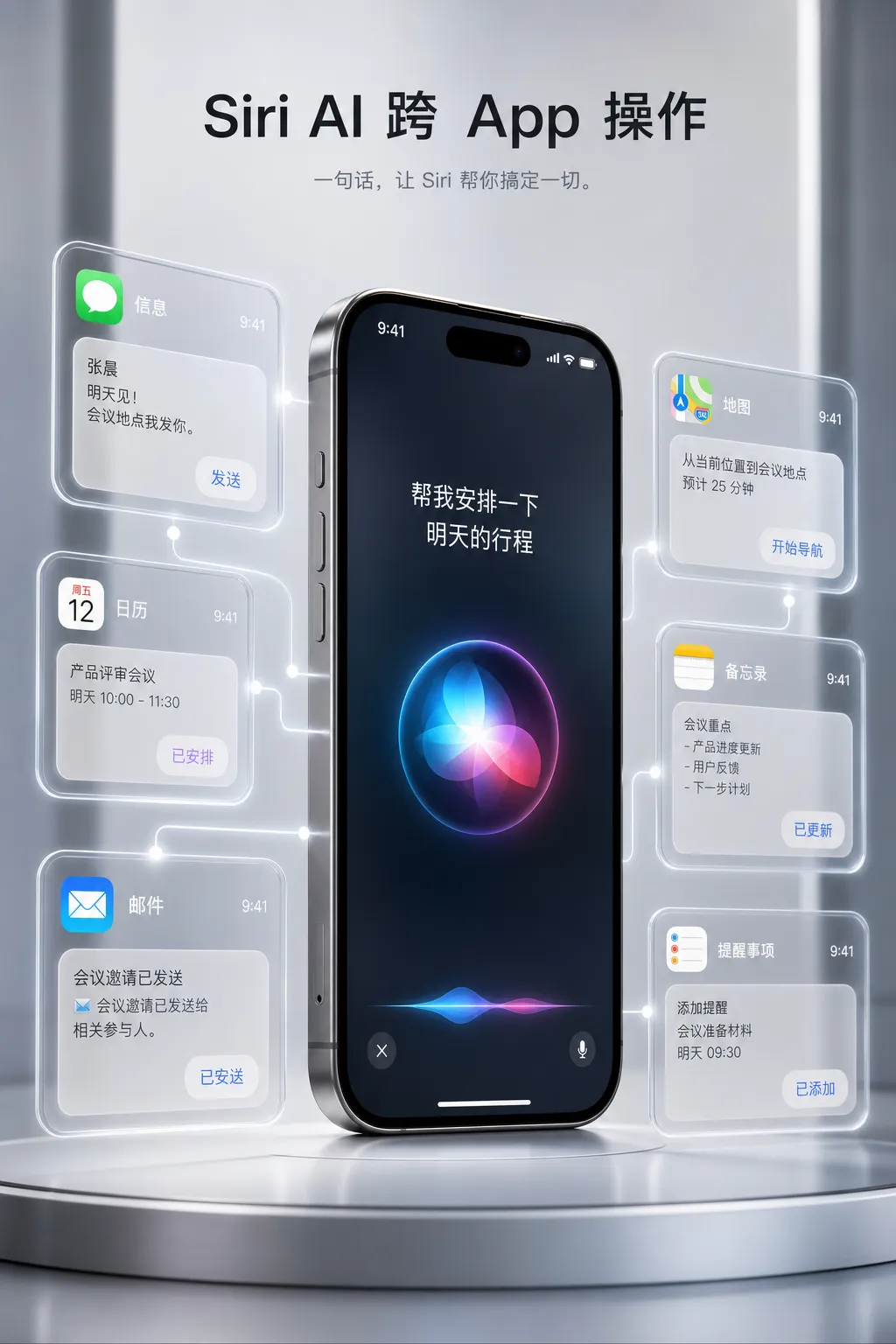
Hurdle 2: App Intents coverage. As far back as iOS 16, Apple launched the App Intents framework so third-party apps could expose functions for system-level AI calls. The problem is that developer adoption over the past three years has been low—most popular apps haven’t bothered to adapt. Siri wants to choreograph tasks across apps, but if the apps don’t give it “handles,” Siri will just spin between Apple’s own apps.
Hurdle 3: Knowing when to stop. The essence of an Agent is a loop—perceive, judge, execute, perceive again. But what if the loop spins out of control? Accidentally deleting emails, sending messages, or buying things—who’s responsible? That’s why Federighi emphasizes “user experience”—Apple’s product philosophy doesn’t tolerate a Siri that’s “useful most of the time but occasionally botches things.”
Where Apple Stands Compared to Competitors
A horizontal look at the current Agent track:
- OpenAI Operator: Based on Computer Use Agent, runs best in the browser; can book flights, order food, fill forms—but limited to the web.
- Anthropic Claude Computer Use: Open to developers via API, can operate the whole desktop, but stability and speed are still iterating.
- Google Project Mariner / Gemini Agent: Deeply integrated into Chrome and Android, focusing on multi-step tasks in the browser and Workspace.
- Microsoft Copilot Vision + Actions: Betting on Windows-level integration, already running in Edge and Office.
Apple’s position is unique. It doesn’t have Google’s end-to-end search + browser data, nor Microsoft’s productivity suite like Office for a closed loop. But its advantage is—almost all user actions on iPhone happen in Apple’s own operating system. Theoretically, when Siri Agent is done, it’ll be the closest Agent to the user—bar none.
The problem is in those two words—“done.” Gurman used “eventually,” hinting this might not be a 2026 thing, maybe not even iOS 27.
Rockwell’s Engineering Logic
It’s worth noting why Rockwell made these comments after the keynote. He was moved from the Vision Pro team to fix Siri, with a background in hardware + system architecture—not traditional AI research. He chose “architecture” as his entry point to talk about Agents, which actually reveals Apple’s internal engineering cadence:
- First replace the foundation with an LLM-driven modern architecture (this step was completed at WWDC26)
- On the new architecture, build a “passive response” Siri AI (this is coming this year)
- Then, add “active loops” on top of passive response—making it an Agent (next step)
This route makes sense: first solidify the foundation, then build upwards. Compared to OpenAI’s “release first, figure it out later” approach, Apple’s rhythm is slower but less prone to mistakes. Of course, the cost is—the market won’t wait.
What It Means for Developers
If Apple really goes down the Agent path, developers actually have quite a few things to prepare:
- App Intents adaptation will become mandatory. Before, you could skip it—Siri couldn’t call you anyway. In the Agent era, any app without exposed Intents is a blind spot to Siri, meaning users will automatically bypass you when using Siri to get things done.
- Deep Link and Universal Link design needs to be more precise. Agents need clear entry points and parameters; fuzzy navigation logic will cause Agents to stall.
- State observability. Agents need to know “Did I finish?” “What’s the status?”—so apps must provide clearer state callbacks.
These aren’t unique to Apple’s Agent—Google, Microsoft, and OpenAI are pushing similar standards. Fundamentally, the whole ecosystem is shifting from “person operates app” to “AI agent operates app,” and apps must be redesigned to be machine-readable and machine-callable.
A Bit of Judgment
Apple’s message this time feels more like setting market expectations than actually delivering soon. From Rockwell’s wording and Federighi’s caution, it’s highly likely that a complete Agent version of Siri won’t appear in 2026. The good news is Apple finally admits it has to do this—over the past two years, it almost avoided using the word “Agent” entirely.
By the way, if you want to try Agent capabilities in your own app now, Claude’s Computer Use and GPT’s Operator APIs in OpenAI Hub can be called directly—switch with a single key—saving you from applying here and there. Much faster than waiting for Apple.
As for when the Siri Agent itself will arrive—judging by Apple Intelligence’s past delays, it’s wise to set expectations for iOS 28 or later.
References
- Gurman: Apple Is Likely to Launch AI Agent Allowing Siri to Autonomously Operate iPhone and Mac Software - ITHome — Bloomberg’s Mark Gurman’s latest column mentioning Rockwell’s comments on Agent architecture
- Discussion of Apple Blaming EU Rules for Siri AI Delay - Reddit — Community discussion on Apple Intelligence delays and Apple’s cooperation strategy with third-party models


