
CMB puts 1.8 billion Tokens into credit cards: China's first AI benefits card launched
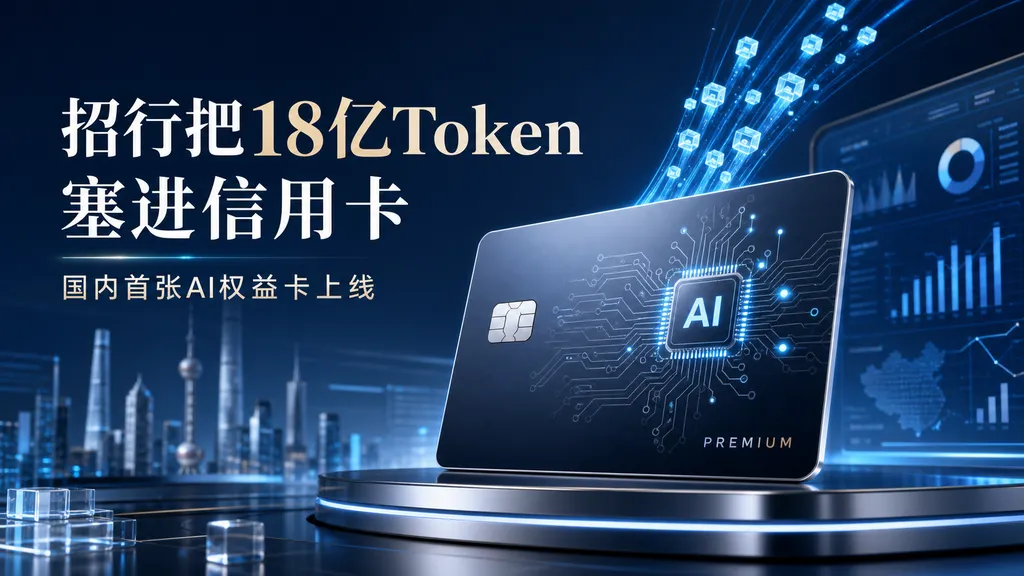
China Merchants Bank has launched exclusive AI benefits for its American Express Engineer Credit Card. New customers who meet the requirements can receive up to 1.8 billion Tokens of MiniMax-M3 usage in a single month. This is the first time in China that token quotas have been incorporated into a credit card benefits pool. On the same day, the Kimi Credit Card also announced its reservation opening.
China Merchants Bank Moves Tokens into Credit Card Benefits Pool
On June 12, China Merchants Bank quietly refreshed the benefits of its “Amex Engineer Credit Card” aimed at tech users — new customers who meet the criteria for their first participation in an event can enjoy up to 1.8 billion Tokens of MiniMax-M3 usage per month, which can be directly used for multi-modal calls involving documents, images, audio, and video, as well as scenarios like MaxClaw lobster deployment. On the same day, Kimi also announced that the “world’s first AI-native credit card” had opened for reservations. The coincidence of these two events turned what was originally an ordinary Friday into a buzzworthy topic in both the credit card and AI circles.
According to CMB, this is the “first domestic credit card equipped with Token benefits.” This sounds like marketing copy, but looking back from mid-2026, it’s actually an interesting signal: the “hard currency” of credit card benefits is slowly shifting from Starbucks buy-one-get-one and airport lounges toward Token balance and Agent concurrency limits.
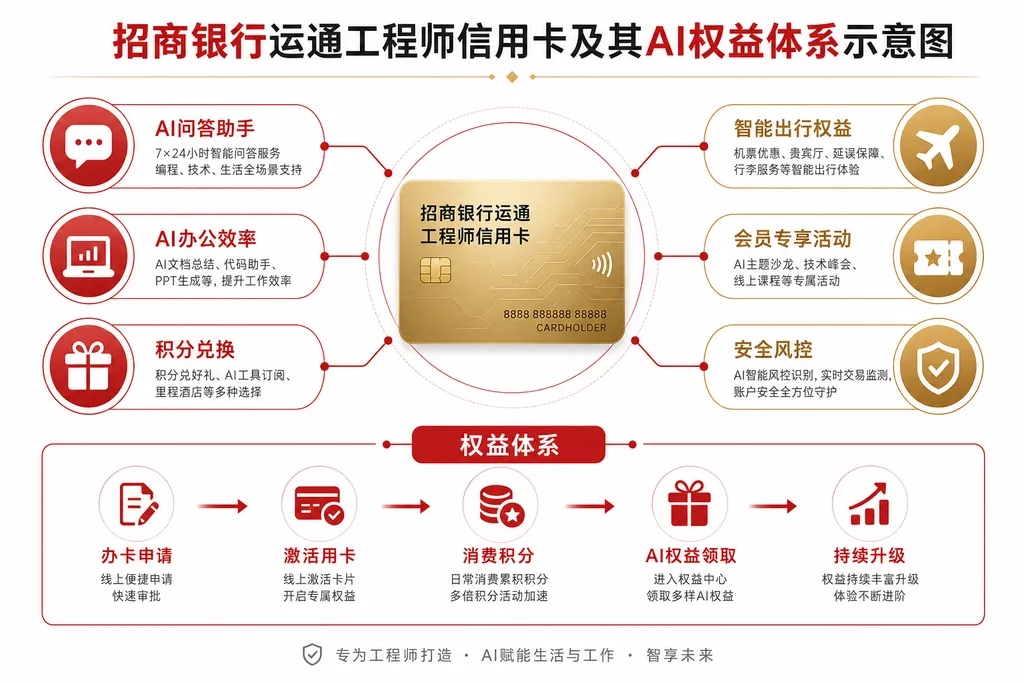
Three Benefit Levels: Max, Plus, Plus+MaxClaw
This time, the AI benefits of the Engineer Card are not one-size-fits-all but come in three levels, catering to different intensities of AI usage. Let’s first map out the official benefit table:
- Heavy Player Tier: 1 month of MiniMax Token Plan Max, 1.8 billion Tokens of M3 usage per month, supporting 4–5 concurrent Agents. Obviously designed for professional developers who use Cursor daily, run Agent workflows, and have a one-stop code-to-test pipeline.
- Daily Work Tier: 2 months of MiniMax Token Plan Plus, 600 million Tokens of M3 usage per month, supporting 3–4 concurrent Agents. This is a longer period (two months) but with smaller quotas, suitable for individual developers for assorted daily tasks — researching, writing documents, modifying PPTs, compiling meeting notes.
- Hybrid Tier: 1 month of MiniMax Token Plan Plus + 1 month of MaxClaw Basic Edition. In addition to Plus, it adds a 24/7 online cloud MaxClaw instance with priority usage during peak hours. This is for those who need to run long-duration Agents — e.g., monitoring public sentiment around the clock, running data collection, performing long pipeline tasks.
What’s the concept of 1.8 billion Tokens? M3 is MiniMax’s flagship multi-modal model this year. Its unit price has already been slashed several times by channel partners like Tencent Cloud (just this Wednesday, Tencent Cloud lowered prices for MiniMax-M3 and Hy-MT2-Pro), but even then, the market value of 1.8 billion Tokens is in the high hundreds to over a thousand RMB range. Giving this level of benefit as a new cardholder gift surpasses the traditional “free Luckin Coffee coupons” feeling.
An interesting aspect is “4–5 concurrent Agents.” In the past, you’d never see “concurrency” in credit card benefit descriptions — it’s essentially importing cloud service SLA language into consumer products. Behind it is MiniMax’s account tiering — Token Plan Max/Plus were already subscription tiers for developers, and CMB simply packaged them as benefits.
Why CMB, and Why Now
Looking at the newly released “Overall Operation Situation of the Payment System in 2025” by the central bank: By the end of 2025, there were 696 million credit cards and combined credit/debit cards nationwide, down by about 31 million cards compared to the end of 2024. The number of cards has fallen for three consecutive years, down 111 million from the historical peak at the end of Q3 2022, hitting a multi-year low.
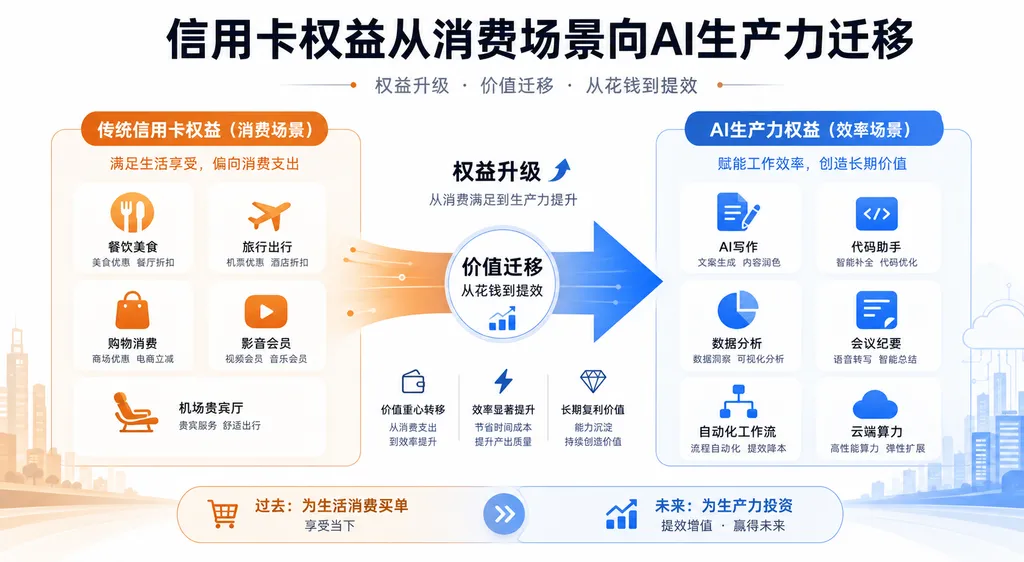
This is a straightforward backdrop. The credit card benefit system propped up in the past decade by consumption scenarios — dining, travel, entertainment, points — has increasingly looked like an outdated menu after mobile payments replaced the middle link entirely. Young people aren’t applying for cards, old users aren’t activating them, and issuers need new stories.
AI is a ready-made story. For a bank like CMB, already under the “AI First” banner, tying benefits to Tokens offers several advantages:
- Highly precise target audience. The Amex Engineer Card brand is aimed at tech and internet professionals, and giving developers Tokens is far more accurate than giving them golf experience vouchers.
- Controllable costs. Token benefits are wholesale quotas negotiated with MiniMax, with unit costs much lower than retail. But for cardholders, what they perceive is “up to 1.8 billion Tokens” — an impressive-sounding number.
- Easy renewal story to tell. Once developers run Agent workflows on M3, Token consumption in subsequent months will be real — and your card can stack various AI service subscription cashback offers. Credit cards have found a new “repeat consumption category.”
This is actually more important than the 1.8 billion Tokens themselves. In recent years, credit card issuers have been troubled by a problem: users activate cards but don’t use them. Binding strong-periodicity charges like Agent subscriptions, API bills, and cloud services to credit cards is a more solid retention hook than milk tea coupons.
Kimi Card on the Same Day: A Different Approach
On the other side, Moonshot AI is taking it further. The Kimi Credit Card follows an “AI-native” narrative — cardholders can directly exchange consumption points for Kimi compute quotas, such as Agent usage quotas and premium feature permissions. Add to that priority internal testing of Kimi’s latest models and invitations to closed-door AI industry salons. This approach differs fundamentally from CMB’s:
- CMB is bank-led, stuffing AI resources into the welcome gift.
- Kimi is AI-company-led, aiming for a new financial paradigm where “Tokens and points circulate.”
In plain terms, AI is one highlight among many on CMB’s card — the card is still primarily a credit card; on Kimi’s card, the credit card is more like a vessel for a membership system. It’s hard to say which will succeed, but the difference in approach is telling — traditional institutions are adding AI, AI companies are testing finance.
The Kimi Card is expected to officially launch in July. Likely more AI companies will follow suit, making this a lively niche by late 2026.
Practical Assessment for Developers
Leaving aside marketing talk, from a developer’s perspective— is this card worth getting? My judgment:
Worth it for:
- Those already running production tasks on MiniMax-M3. 1.8 billion Tokens in one month is enough to cover the early trial-and-error costs of a small-to-medium Agent application, basically a free month of production environment.
- Those wanting to experience MaxClaw’s cloud persistent Agent. MaxClaw Basic Edition requires paid activation, so getting a one-month trial to test stability is good value.
- Developers who frequently travel and need a business travel card anyway. AI benefits are an extra perk; the main functionality is still worthwhile.
Not worth it for:
- Those deeply tied to Claude / GPT / Gemini ecosystems — switching to M3 for 1.8 billion Tokens isn’t worth the migration and mental costs, and M3’s code performance still doesn’t surpass top closed models across the board.
- Those just running demos — after one month, renewal costs revert to market rates, making it not very meaningful.
- Those who dislike managing credit cards — for a month’s Tokens, adding another card means factoring in billing and annual fee costs.
One more reminder: M3 is an open-source multi-modal model with weights available on Hugging Face. Self-hosting by enterprises is an option. If your team already has surplus compute capacity, the marginal cost could be lower than this benefit. Token benefits are friendlier for individual developers and not necessarily optimal for medium/large teams.
If you find a single model insufficient and want to call GPT, Claude, Gemini, DeepSeek, and MiniMax all under one Key, OpenAI Hub (openai-hub.com) has integrated M3, supports domestic connections, and is compatible with OpenAI format — a complementary option for developers doing model comparison and fallback routing.
A Bigger Trend: Tokens Becoming “Quasi-Currency”
Zooming out, Tokens, as the “electricity” of the AI era, are being packaged, sold, and point-ified at a rapid pace. From being bundled by cloud vendors, to being added to telecom packages, to now becoming bank credit card benefits — the circulation paths of Tokens are increasingly like traditional phone minutes and data.
Potential impacts include:
- Price systems getting more complex. The same M3 call may cost vastly different amounts via MiniMax official site, Tencent Cloud, CMB benefits, or aggregator platforms, creating arbitrage opportunities.
- Possible emergence of Token secondary markets. Kimi’s “points-for-Tokens” experiment is one sprout — when Tokens can be exchanged across platforms, financial attributes appear.
- Changes in enterprise procurement models. Previously, cloud services were purchased as compute resources; now, AI services are purchased as Token quotas, requiring adjustments to finance categories and compliance rules.
CMB’s card is just a start. Expect more banks, telcos, and even e-commerce platforms in the next six months to stuff Tokens into their membership benefit systems. The endgame for this is still unclear, but at least credit cards — an industry that hasn’t had a fresh story in over a decade — have now found a topic with novelty.
References
- IT Home: China Merchants Bank launches “Amex Engineer Credit Card,” new users offered “exclusive AI benefits” with up to 1.8 billion Tokens M3 usage in a single month — Official introduction and details of CMB Engineer Card AI benefits with three-tier plans


