
WeChat Pay to Issue Cards for AI: First Step in Implementing Agent-Based Payments
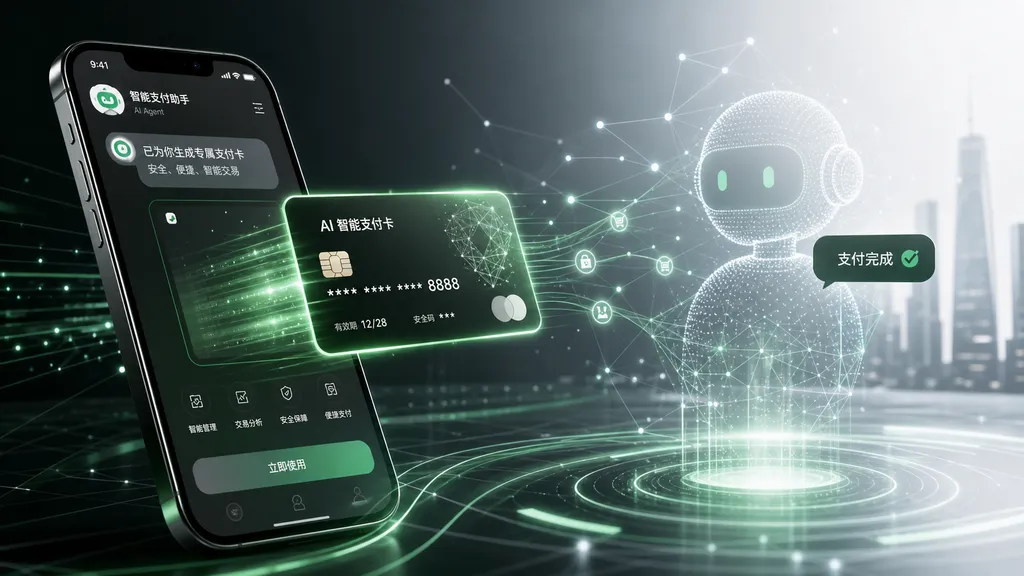
WeChat Pay has teamed up with Tencent's intelligent agent WorkBuddy to beta test the “AI Exclusive Card,” which may launch as soon as this week. This is the first-ever payment channel in China truly designed for agents to make autonomous purchases. The spending limit is determined by user top-ups, and each payment still requires user authentication — marking the boundary for intelligent agent payments.
WeChat Pay to Issue Cards for AI, Could Launch as Soon as This Week
On June 16, CLS reported that WeChat Pay is conducting joint internal testing with Tencent’s own AI product WorkBuddy for a new feature — adding an “AI Exclusive Card” in the WeChat Wallet specifically for AI agents. It could go live as early as this week. As of publication, WeChat Pay’s official response is still absent, but judging from yesterday’s rapid update of the WeChat Pay AI Access Toolbox directly to version 2.0, this is highly likely to happen.
This is not the kind of fake “AI payment” where AI simply recommends products to users — it really connects the path for Agents to place orders autonomously. On one side is China’s most widely used payment account system; on the other side is Tencent’s AI product that has just nailed PMF. This is their first handshake on the most sensitive “money” part — making Tencent the most advanced among domestic payment giants.
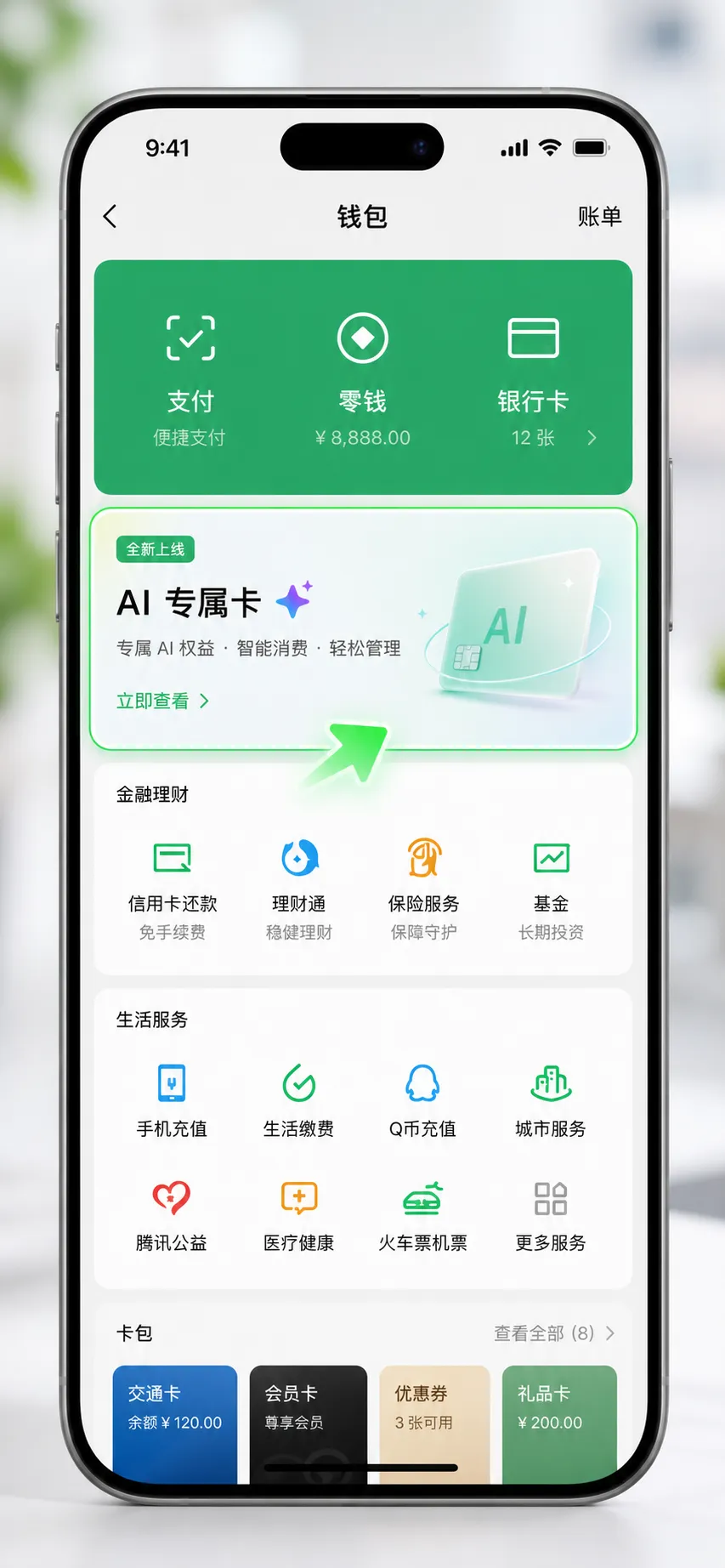
What Exactly is the “Exclusive Card”
Based on current public information, the form of the AI Exclusive Card can be understood like this: it is essentially an independent sub-account in the WeChat Wallet, on the same level as your linked bank cards, balance, and Balance Plus, but with a single purpose — only for AI agents to use.
Key design points:
- Limit determined by user prepayment — The amount you load onto the card is the maximum AI can spend. This is a hard ceiling, isolated from the main account.
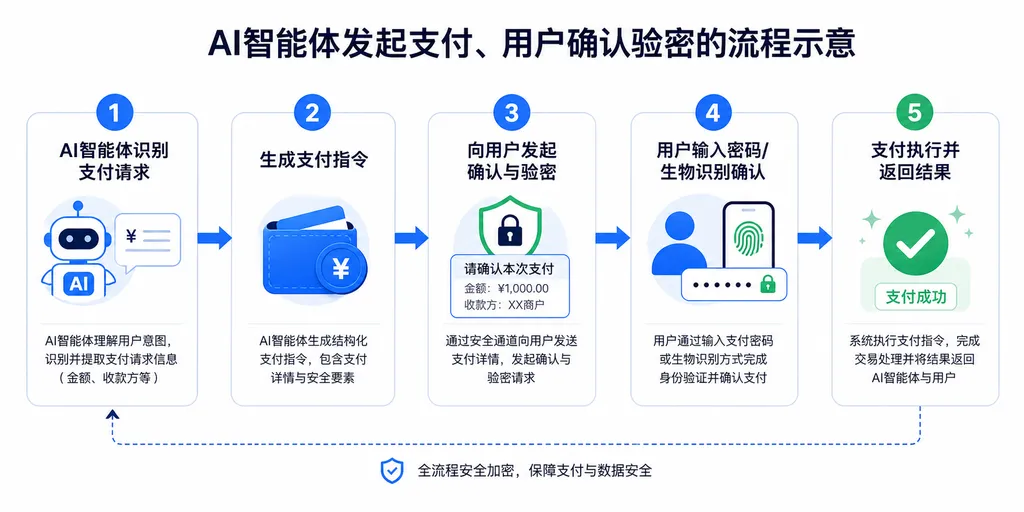
- AI initiates, user confirms — Agents can initiate payment requests, but each one requires user password verification. In other words, AI has “shopping rights” but no “final signature authority.”
- Currently only open to WorkBuddy for internal testing — WorkBuddy is an internally incubated AI product from Tencent focused on office task automation. It is first tested internally within Tencent, then gradually opened up.
The logic of this design is clear: Agents must have the ability to “actually spend money” — otherwise automation breaks at the ordering stage — yet risks must be contained. Prepayment is like giving AI a spending quota, much like giving a child an allowance card.
Why Use WorkBuddy as the Testbed
Choosing WorkBuddy was not random.
What’s the most common need for office AI agents? Booking flights, reserving meeting rooms, buying supplies, renewing SaaS, making reimbursements... all of these end with “payment.” In the past, this step relied on process jumps — AI sends you a link, you click it and pay yourself. This semi-automatic state is an insult to the concept of an “agent.”
In WorkBuddy’s scenario, financial boundaries are already clear: employee budgets, department budgets, project budgets — all have preset limits. This aligns naturally with the “prepaid spending limit” logic of the AI Exclusive Card. Running to-B scenarios first, then moving to more complex to-C scenarios, is a reasonable pace.
A noteworthy detail: Tencent did not choose a third-party Agent framework (e.g., certain open-source Agent projects) for the first trial, but used its own WorkBuddy. This means that payment protocols, risk control rules, and callback processes are customized to Tencent’s own system — whether it will later be open to third-party agents, and to what extent, remains unknown.
Toolbox Just Upgraded to 2.0 Yesterday — Not a Coincidence
On June 15, WeChat Pay AI Access Toolbox reached version 2.0. The next day, news of the AI Exclusive Card broke. This timeline is no coincidence.
Toolbox 1.0’s Skill capabilities only covered “Payments” and “Coupons” in a coarse-grained way. Version 2.0 expands coverage to all product lines and adds two role-based AI capabilities:
Technical Expert
For developers — this assistant covers the entire chain from selecting payment scenarios, interpreting integration processes, to dynamic troubleshooting. Most practical is locking the 【error → locate → fix】 loop directly into the conversation — no need to switch to docs, ticket systems, or search engines. Anyone who has integrated WeChat Pay knows how frustrating its error code system can be — SIGN_ERROR, SYSTEMERROR, and USERPAYING alone can leave beginners lost for an afternoon.
Financial-Grade R&D Expert
This role is tougher — it has built-in code quality review mechanisms from the perspective of financial-grade security standards and best practices. Simply put, it simulates a veteran payment architect reviewing your code before merge. Common blind spots — such as signature verification timing, callback idempotency, hard-coded keys, timestamp handling — which regular lint tools cannot detect, are monitored by this expert.
Viewed together, the logic is evident: Toolbox 2.0 accelerates “human developers integrating with WeChat Pay,” and the AI Exclusive Card enables “AI itself to use WeChat Pay.” One boosts supply-side developer efficiency; the other extends demand-side scenarios — both legs moving simultaneously.
Comparing with Stripe and PayPal
Overseas, Agent payments have been a hot topic this past year.
Last year Stripe launched API keys specifically for Agents, with permission, limit, and validity controls; PayPal is doing similar Agent Commerce interfaces; Visa and Mastercard have released draft Agent Payment protocols aimed at resolving “who authorizes, how to revoke, how to reconcile.”
WeChat Pay’s approach is closer in concept to Stripe’s “restricted token” model, but packaged in a uniquely Chinese way — instead of giving developers a token, it gives users a “card.” This card is visible, tangible, loadable, stoppable. Philosophically, it turns abstract “API authorization” into concrete “account balance,” making it more user-friendly.
The trade-off is flexibility. Overseas Agent payment schemes commonly authorize “by scenario” — e.g., only for travel, only for office supplies — but that is not yet seen in the AI Exclusive Card. Prepayment is a coarse-grained spending control; “fine-grained strategy” is still a ways off, likely to come in versions 2.0 or 3.0.
Password Verification — The Bottom Line and the Ceiling
“Agent-initiated payment must be confirmed with user password” — this is the most critical red line in this scheme.
Why a bottom line? Without this, the system couldn’t pass regulatory checks. China’s payment regulations are cautious about “senseless payment.” Password-free payments require separate agreements and limits — let alone letting AI decide for users. Password verification locks the legally valid “final expression of intent” into the user.
Why also a ceiling? Because with this step, Agents can never perform fully unattended operations. If you tell AI to grab concert tickets at midnight, it has to wake you for payment. If you have AI manage subscription renewals long-term, each one must be confirmed.
This is a typical Chinese trade-off: give AI 80% automation, keep 20% of key decisions firmly in human hands. In the short term, it’s a compliance requirement; in the long term, it may evolve into tiered authorization — small payments password-free, large payments require password, specific merchant whitelists, etc. But that’s for later.
What This Means for Developers
If you’re developing Agent-type products, this news has several direct implications:
-
Domestic Agents finally have “legs to spend money.” Previously, intelligent apps had to jump to H5 or mini programs for payment, breaking the experience. If WeChat Pay opens AI Exclusive Card integration, Agents could order within their own conversation flows.
-
Risk control and compliance burden will shift to the platform. Prepayment limits and password confirmations are handled by WeChat Pay, so developers don’t need to design their own “prevent AI overspending” logic.
-
When non-WorkBuddy Agents can use it is the key variable. If only Tencent products are allowed, it remains internal capability; if opened to third-party Agents, it becomes infrastructure.
-
Integration complexity will likely drop. Paired with Toolbox 2.0’s AI integration assistant, payment integration that used to take a week of documentation may shrink to a few hours — a boon for small teams.
AI Calling Multiple Models — One Key via OpenAI Hub
As an aside, for those building Agent products struggling with multi-model integration, OpenAI Hub (openai-hub.com) offers AI API aggregation — one key to call GPT, Claude, Gemini, DeepSeek, etc., directly in China with OpenAI-compatible format, eliminating the trouble of maintaining multiple SDKs. For Agent scenarios like WorkBuddy requiring complex planning + tool usage, dynamic multi-model switching is actually essential.
What This Step Represents
From a broader perspective: the AI Exclusive Card is not an isolated product feature — it represents the payment industry’s formal stance on “AI as a payment actor.”
For the past 30 years, payment actors have been human — from cash to bank cards, bank cards to QR codes, QR codes to facial recognition — only the interface changed between humans and machines. The “decision-maker” has always been human.
The AI Exclusive Card gives part of decision-making to AI — choosing what to buy and when — with humans retaining final confirmation rights. This is the first structural adjustment of payment products in the era of large models.
WeChat Pay has paced well: limited scenarios (WorkBuddy first), account isolation (exclusive card), decision retention (password verification). These three gates control risk; now it’s about market response, regulatory attitude, and scenario richness.
If successful, next steps will likely be: third-party Agent access, Agent-friendly merchant interfaces, cross-Agent payment routing protocols. If unsuccessful, it’s a matter of waiting one or two years for market maturity.
Regardless, on the day this week when the “AI Exclusive Card” actually appears in the WeChat Wallet, a new stage will have begun.
References
- ITHome: Reports say WeChat is testing AI payment features; “AI Exclusive Card” could go live this week — CLS exclusive source report, includes details of WeChat Pay AI Toolbox 2.0 update
- ITHome Blog Aggregation — Related news aggregation page


