
Inverse Matrix releases Physis-v0.1: World model jumps from “predicting the next frame” to “predicting the next physical state”
Inverse Matrix Technology, in collaboration with Zhiyuan Research Institute, has released the world’s first universal world foundation model, Physis-v0.1, focusing on physical accuracy, action causality, long-range consistency, and generalization. At the same time, they officially announced a seed++ round of financing exceeding USD 100 million. Founder Chen Boyuan believes the window of opportunity has been compressed from 36 months to 18 months.
The World Model Track Enters the “Next Physical State Prediction” Stage
At the Zhiyuan Conference on June 12, MatrixInverse Technologies (Physis), together with the Beijing Academy of Artificial Intelligence, unveiled Wujie·Physis-v0.1, claiming it to be the world’s first general-purpose world foundation model. Two days later, 36Kr revealed that MatrixInverse had completed a seed ++ round financing exceeding 100 million USD, less than three months after its previous first round of over 10 million USD. Investors included Matrix Partners China, 5Y Capital, and Photon Capital, with Ant Group’s Strategic Investment, Hillhouse, and Yan Yuan continuing to add to their stakes.
The pace is unusually fast, but it also reveals a fact: in the primary market, bets on world models have shifted from “casting a wide net” to “concentrating on the leaders.” MatrixInverse founder Chen Boyuan put it more bluntly in an interview—the window for general world foundation models has been compressed from 36 months to 18 months. In plain terms: if you enter the market two quarters later, you can basically count yourself out.
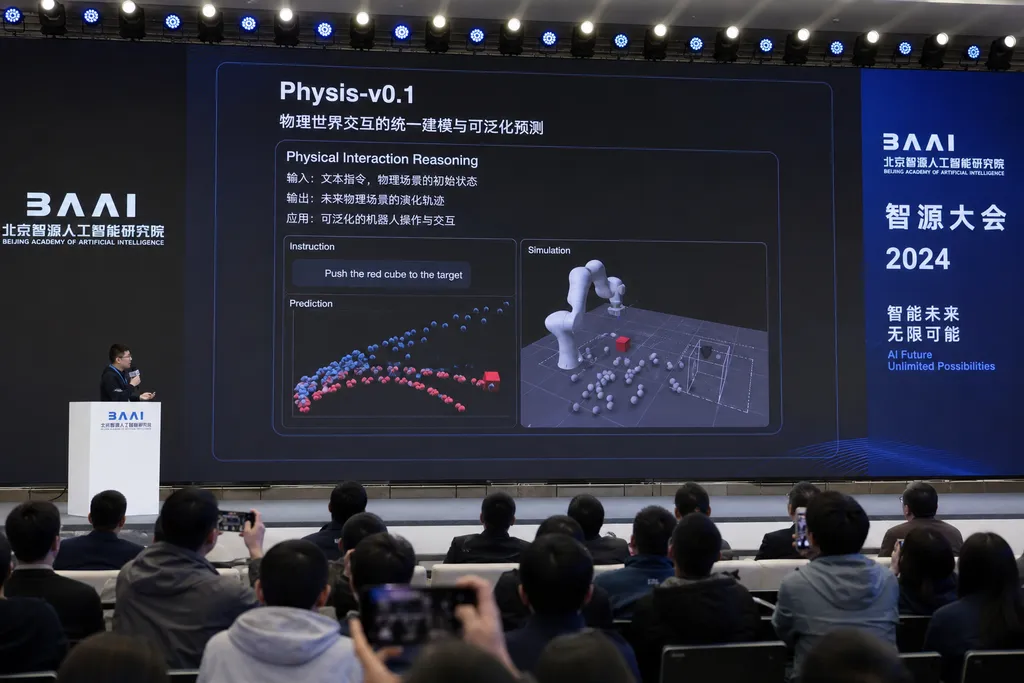
What Exactly Is Physis-v0.1
To understand where this model fits, you first need to clarify the four mainstream approaches to world models today. At the launch event, Zhiyuan’s director Wang Zhongyuan laid them out clearly:
- Language-centric: VLM / VLA models that learn a “world described by language”
- Pixel-centric: Video generation models (like the Sora family), learning frame-to-frame visual evolution
- 3D structure-centric: Reconstruction models that learn geometry
- Visual representation-centric: JEPA series, the latent space prediction approach championed by LeCun
Each of these four paths has its own problems. Most critically—they either only understand the “world” described in language, or only the “appearance” at the pixel level. None have truly learned the laws of physics themselves. On stage, Wang Zhongyuan gave a pointed example: video models can generate pigs flying in the sky—fun in a digital world but an accident in the physical world.
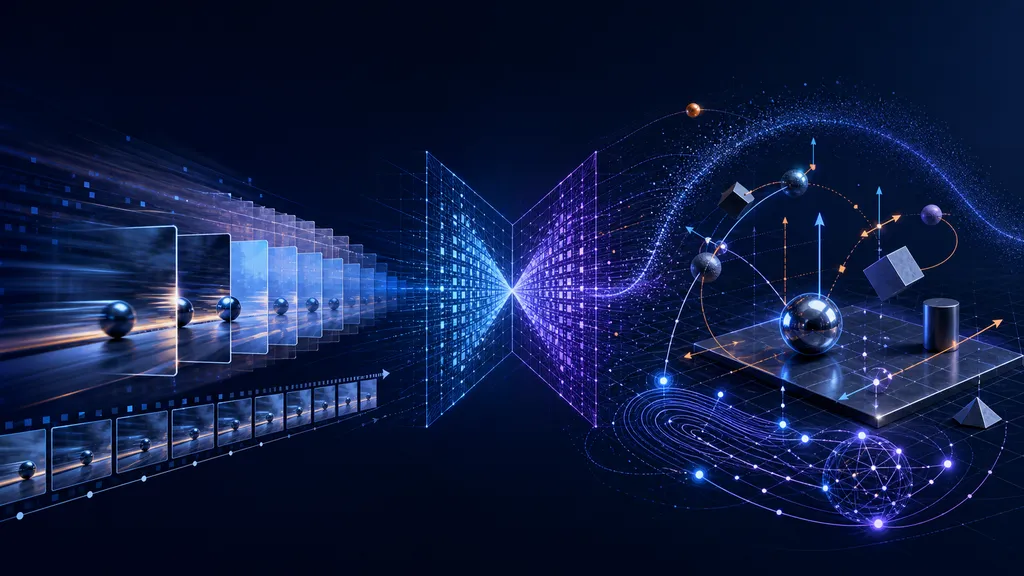
Physis-v0.1 takes a different route—it predicts neither the next token nor the next pixel frame, but rather the next physical state.
The technical key is the introduction of a dedicated physical state encoder, unifying heterogeneous modalities like video, depth RGB, 3D point clouds, and force/torque feedback into a standardized physical latent space. In other words, the model stops worrying about “what the scene looks like” and instead predicts evolution directly at the level of “object position, velocity, forces, contact states.” This is a different paradigm from pixel-centric video models.
The official four core capabilities are:
- Physically correct: Basic rules like rigid body dynamics, fluid dynamics, contact, and friction can’t be guessed
- Action–cause traceability: Given an action input, it can trace the causal chain of each state change
- Long-range consistency: Avoids sudden “drifting” or model penetration after a few seconds
- Generalization: One pretraining covers scenarios from embodied AI, industrial simulation, and game physics to scientific prediction
Currently, v0.1 already supports long-range reasoning in over fifty complex physical scenarios.
Why This Matters More Than You Think
You can break the last decade of AI progress into three paradigm shifts:
| Stage | Prediction target | Representative | |-------|--------------------------|--------------------------| | 1.0 | Next token | GPT series | | 2.0 | Next pixel frame | Sora / Video generation | | 3.0 | Next physical state | Physis-v0.1 / RoboBrain Orca |
The first two paradigm shifts each gave rise to a set of platform-level companies. Chen Boyuan frankly stated in the interview: “This matches closely the path from GPT-3 to ChatGPT.” The reason investors are willing to invest twice within two months is essentially betting that—the “ChatGPT moment” for world models will arrive within 18 to 24 months.
This isn’t just hype. Fields like embodied intelligence, autonomous driving, industrial simulation, and drug discovery all face the same bottleneck: current large models don’t understand the laws of physics. Outputs make sense in virtual space but fail in the real world. A robot drops a cup if its grip is slightly off; autonomous driving becomes unpredictable in extreme conditions—these all stem from the same gap.
Once a general world foundation model is achieved, it provides a unified base for all downstream tasks requiring physical interaction—which would essentially absorb today’s scattered middleware in RL, simulation, SLAM, control, and CV.
RoboBrain Orca Released in Parallel
Zhiyuan launched Physis-v0.1 as the base, alongside a companion product: Wujie·RoboBrain Orca, an embodied brain—also centered on “next physical state prediction” but closer to real-world application. It integrates “thinking, seeing, and acting” to enable robots to perform long-term autonomous tasks in real scenarios like logistics and hotel services.
Think of it this way: Physis is for understanding how the world evolves; RoboBrain Orca is for enabling a specific robot to operate within that world. This “foundation + embodied brain” dual-layer architecture is clearly different from the end-to-end VLA route taken by Figure and 1X a year ago—the former bets on a general base, the latter on a single-machine closed loop.
Team and Roadmap
MatrixInverse’s team-building approach is somewhat unconventional. Chen Boyuan and Ji Jiaming are young scholars from Peking University; half the team are academics (including Olympiad gold medalists, provincial top scorers, first authors at top conferences) and half are veteran engineers from top tech companies. The organization has no hierarchy, no quarterly KPIs; in Chen Boyuan’s words, “direction is aligned by technical judgment, not administrative orders”—more like early OpenAI or DeepMind.
The roadmap pace is as follows:
- Mid-2026: Release Physis-v0.1, the first public slice of the general base
- End of 2026: Release the flagship model, with open-source slices and technical reports along the way
- Funding use: Pretraining R&D, large-scale training system development
One detail worth noting—the team explicitly says it will open-source slices. In the world model track, there are currently no truly usable open-source foundations in China. If by year-end they actually release a reproducible training stack and weights, it would be a major variable for the entire embodied intelligence community.
A Few Candid Judgments
Setting aside the hype around the financing amount, here are some cooler takes:
First, the phrase “world’s first general-purpose world foundation model” should be taken with a grain of salt. Google DeepMind’s Genie, NVIDIA’s Cosmos, and World Labs are all doing similar work—though with different technical paths. Physis’s differentiation lies in a physical latent space rather than a pixel latent space; that’s a technical choice, but “first” is more marketing than fact.
Second, v0.1 is still a way from being truly usable. Long-range reasoning in 50+ scenarios sounds like a lot, but corner cases in the physical world are infinite—beyond rigid bodies, fluids, deformable objects, cloth, particles—each is a hard nut to crack. Whether the flagship at year-end can cover these will be the real test.
Third, I tend to agree with the 18-month window judgment. The biggest difference between world models and language models is that world model data modalities are highly diverse, and evaluation systems aren’t standardized. The first team to produce a widely recognized benchmark + foundation will command most of the discourse power. Same logic as ChatGPT: first mover advantage.
Fourth, the most practical impact for domestic developers: once the open-source slice arrives at year’s end, embodied intelligence training costs could drop significantly—you won’t need to build the entire physics simulation + visual representation + action prediction pipeline from scratch, just fine-tune the base.
In this world model race, China hasn’t fallen behind this time. Whether Physis-v0.1 is the endgame remains to be seen, but the “next physical state prediction” paradigm has been established. Next, it’s all about who gets it to the ChatGPT tipping point first.
References
- Zhihu: How to view the Beijing Academy of AI’s release of the general-purpose world foundation model Physis-v0.1 — Community discussions on Physis-v0.1’s technical path and comparisons with JEPA and Genie
- Hugging Face Models — Follow updates on the release of open-source slices and weights


