
Anthropic Bows Its Head: Submits Rectification Plan to the White House, Swaps Mythos and Fable for Lifting of Ban
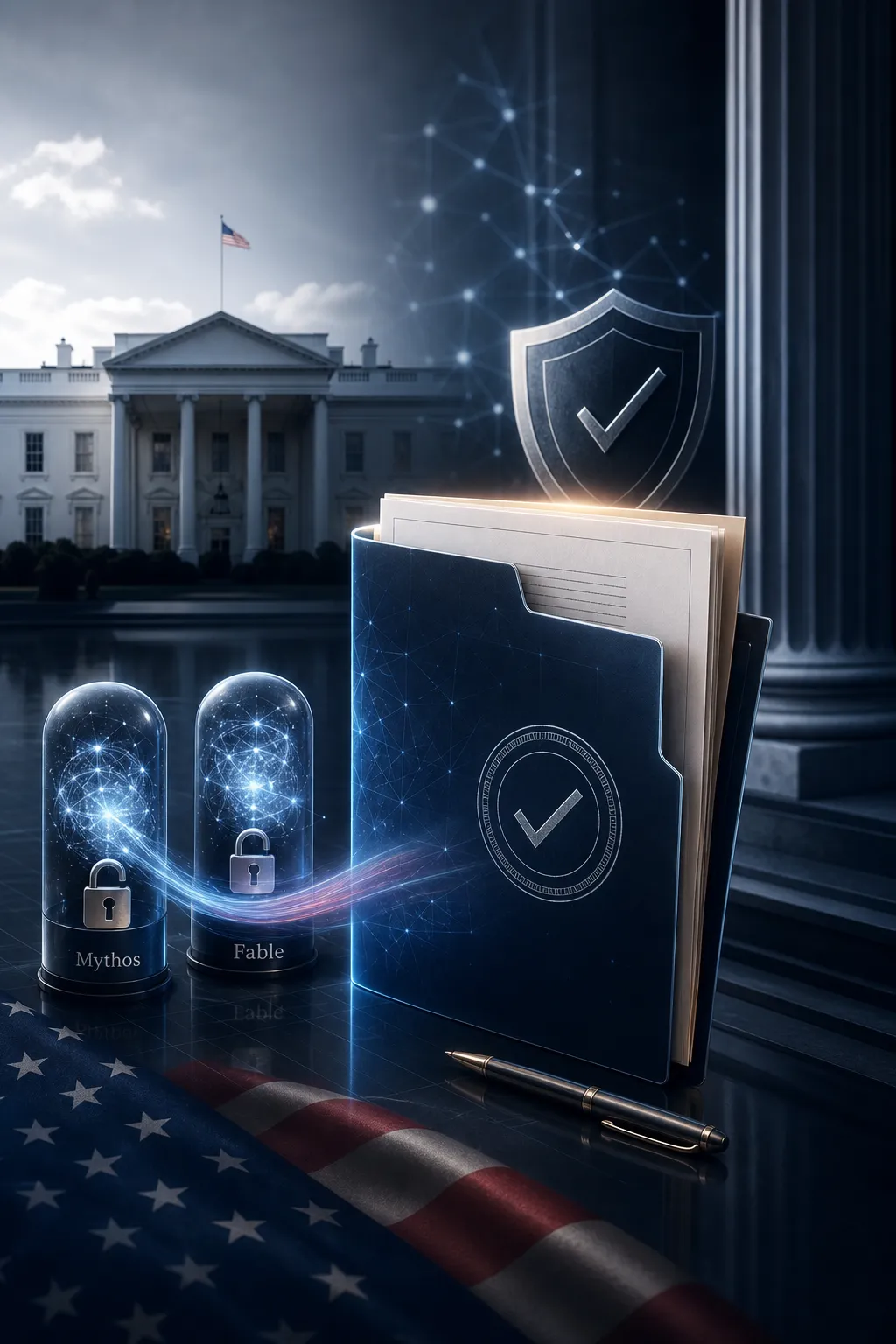
Anthropic executives submitted a cooperation plan to Commerce Secretary Lutenick, promising to strengthen communication with the Trump administration in exchange for reinstating deployment of its two top models, Mythos 5 and Fable 5, which had been frozen under export controls. This company, which has long advocated for AI regulation, is experiencing for the first time the sting of backlash from regulation.
A company that constantly calls for legislation to regulate AI has now been forcibly regulated by the government, and then proactively went to Washington to submit a remediation plan—this is Anthropic’s current situation.
According to sources on Thursday, Anthropic executives have submitted a cooperation plan to U.S. Secretary of Commerce Howard Lutnick, with only one core point: a promise to deepen coordination with the White House and quickly eliminate safety risks that keep regulators up at night. In exchange, Anthropic hopes its two flagship models—Mythos 5 and Fable 5—will resume normal public service as soon as possible after being frozen.
The negotiations were not led by the PR team, but by co‑founder and Chief Computational Officer Tom Brown, partnered with the company’s head of public policy Sarah Heck. This pairing in itself says a lot: when the top tech leader gets personally involved, it means the issue cannot be smoothed over with rhetoric alone.
Cause: A coldly worded export control order
Rewind to last Friday evening—just hours after SpaceX rang the bell for the largest IPO in its history and the market was still in a celebratory mood—Anthropic announced that the company had received an export control directive.
The content was quite harsh: all foreign nationals are prohibited from using Mythos 5 and Fable 5—the restriction applies regardless of location, even to Anthropic’s own foreign employees. This means many non‑U.S. engineers at the company lost access to its two most powerful models from the moment the order was signed.
What frustrated Anthropic even more was that the U.S. government vaguely cited “national security considerations,” without specifying the risks. In other words, Anthropic must guess the direction for remediation.
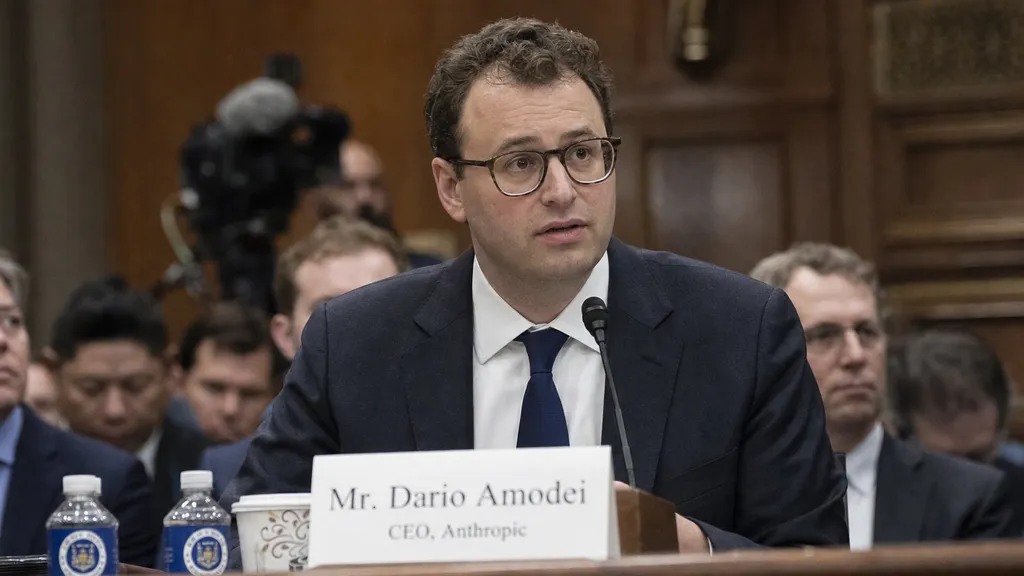
The irony is that just days before the order, CEO Dario Amodei had published a column calling for the United States to enact more serious, legally binding AI regulations that would empower regulators to halt deployment if a model is deemed unsafe. Not long after voicing this, his own company was halted. If this were a novel, an editor would tell the author to rewrite—it’s too contrived.
Trigger: Amazon’s prompt tests revealing cyberattack capabilities
According to The Wall Street Journal’s reconstruction, this restriction was not directly triggered by Trump’s early‑June AI executive order; the real spark came from a corporate whistle‑blowing incident.
Sources disclosed that Amazon CEO Andy Jassy directly contacted Treasury Secretary Scott Bessent and other officials, reporting that Amazon’s internal security team had run a series of prompt tests on Fable 5 and found the model could generate “technical information usable in cyberattacks.”
This makes more sense in light of the Mythos and Fable product positioning. These two models are iterations from April’s preview version of Claude Mythos, whose selling point was expertly identifying software vulnerabilities. Initially it was part of a cybersecurity project called “Project Glasswing,” accessible only to a few partner companies.
Mythos 5 continued with limited invite‑only testing, but Fable 5 was opened wider—to enterprise clients and paid subscribers. Anthropic publicly explained that the new generation had interception mechanisms to block sensitive outputs in high‑risk domains like cybersecurity and biology.
Clearly, Amazon’s red‑team prompts bypassed this interception mechanism.
Anthropic’s frustration: opaque process, no rules to follow
Throughout this regulatory dispute, Anthropic has felt aggrieved.
The company stated in its official blog: “We have always advocated that the government should have the power to halt unsafe AI deployments, but such actions must be based on transparent, fair, clearly defined, fact‑driven legal processes. This measure did not follow those principles.”
Translated into plain language: regulate us if you must, but tell us which rule we broke, on what basis, and what level of remediation meets compliance. Right now, businesses have no way to know the boundaries.
Security expert Alex Stamos also voiced support: “Existing regulatory provisions are unwritten and lack transparency, making it impossible for companies to clearly define behavioral boundaries—nobody knows which actions are compliant and which are violations.” He highlighted a deeper concern—all U.S. tech companies are now shrouded in uncertainty, and could be shut down at any time by subjective administrative decisions.
What’s more, Anthropic stressed that before launch, both models had undergone safety tests in cooperation with multiple government agencies and were approved for commercial deployment; regulators had never previously flagged national security risks.
The subtext is obvious: did political winds shift post‑launch, turning previously approved actions into violations?
Second regulatory collision this year
This is already Anthropic’s second time this year on the Trump administration’s “key supervision” list.
Back in March, the U.S. Department of Defense labeled Anthropic a supply chain security risk, requiring all defense contractors to pledge not to use the Claude series models in military projects. Anthropic did not back down—it sued the Trump administration, and that case is still pending.
Defense Secretary Pete Hegseth recently posted on X, essentially saying: repeated facts prove that putting Anthropic on the risk blacklist was the right decision. This tone feels less like regulation and more like political confrontation.
Stamos was more blunt: the Trump administration shows clear bias against one of the few leading AI companies that openly questions regulatory policies. If rules were truly enforced fairly, OpenAI and Google should face equally stringent oversight.
The accusation of “regulatory capture”
One unavoidable tag in Anthropic’s controversy is regulatory capture.
David Sacks, former AI & crypto policy head under Trump and a prominent venture capitalist, has long been critical of Anthropic. Last October, when Anthropic executives published an AI risk article, Sacks immediately accused them of “using safety warnings as a cover for a carefully crafted regulatory capture strategy, lobbying for industry privileges.”
After this export control was imposed, Sacks again spoke out: the “downplaying” language of Anthropic’s blog post is grossly inconsistent with its “AI safety benchmark” brand positioning. He added a pointed remark: “Although this incident is serious in nature, both sides will likely be able to negotiate a resolution—the initiative to solve the problem currently lies with Anthropic.”
This is quintessential political signaling: if you come to the table, the issue can be resolved.
What does this reveal?
A few industry‑relevant points:
First, Anthropic’s strategy of “actively calling for regulation” backfired. In recent years, siblings Amodei and their executive team have championed AI legislation at both the state and federal levels. This play was politically correct under Biden, but with the Trump team now in charge, they wielded the “regulation” tool against Anthropic itself. You can’t want the slogan of regulation without accepting its cost.
Second, the link between model capability evaluations and export controls is now a black box. Mythos and Fable were aimed at code security and vulnerability hunting—generating attack code was part of their product feature, not a bug. The government needs to draw the line between “defensive security tools” and “offensive weaponization,” but no one can now define it clearly. All companies building AI for security must reassess their compliance paths against this case.
Third, red‑team testing is becoming a new weapon in business competition. Amazon ran prompts, found issues, and directly contacted the Treasury Secretary—this hit Anthropic hard. Big companies testing and reporting each other’s models may become the norm. Anthropic and Amazon had business ties, but this incident tore them apart.
Fourth, the IPO window has been half disrupted. Anthropic and OpenAI have both secretly filed IPO prospectuses recently. Having an export control dispute at this time directly hurts valuations. For Anthropic, currently near a $1 trillion valuation, each extra day of downtime adds pressure on IPO pricing.
Short‑term resolution?
From what’s disclosed, the negotiation timeline goes:
- Tom Brown and Sarah Heck flew to Washington on Monday
- Submitted a formal remediation plan to Lutnick on Thursday
- Both sides stated “intensifying communications to seek a prompt resolution”
- Anthropic gave no timeline for model restoration
The core commitments likely include:
- Giving the government greater access to internal safety evaluation processes
- Stricter access controls for high‑risk capabilities (cybersecurity, biology, etc.)
- Establishing a faster security risk response mechanism
- Strengthening compliance audits for foreign employees accessing sensitive models
These are technically feasible; the key is whether the political signals are properly sent. Sacks’s “initiative lies with Anthropic” has already spelled out the unwritten rules.
Final thoughts
Anthropic’s shift in posture is not good for the AI industry. A company long branding itself as “safe” and openly questioning regulatory procedures ultimately chose to bow and negotiate—signaling that the balance of industry voice is tilting toward administrative power.
Looking ahead, what developers truly need to fear is not whether a model goes online, but: when compliance boundaries are entirely set by temporary administrative decisions, any long‑term technical roadmap loses certainty. A model available today could be cut off tomorrow by an order without transparent justification.
For those relying on multi‑model toolchains, risk diversification becomes required curriculum. Aggregator platforms like OpenAI Hub, supporting unified key calls for GPT, Claude, Gemini, DeepSeek and direct China connections compatible with OpenAI format, can at least keep application layers alive despite the policy risks of any single vendor—this is an engineering reality, not a matter of “taking sides.”
But the root problem remains unsolved: when the world’s most advanced AI companies are walking a tightrope in political uncertainty, there are truly no winners.
References
You can follow related discussions on this incident in these communities:
- r/MachineLearning — Reddit machine learning community, technical perspectives on the Anthropic regulatory incident
- Zhihu AI Topic — In‑depth domestic analyses of the Anthropic vs. Trump administration confrontation


