
Anthropic releases Mythos series: Claude enters the "mythic-level" programming era
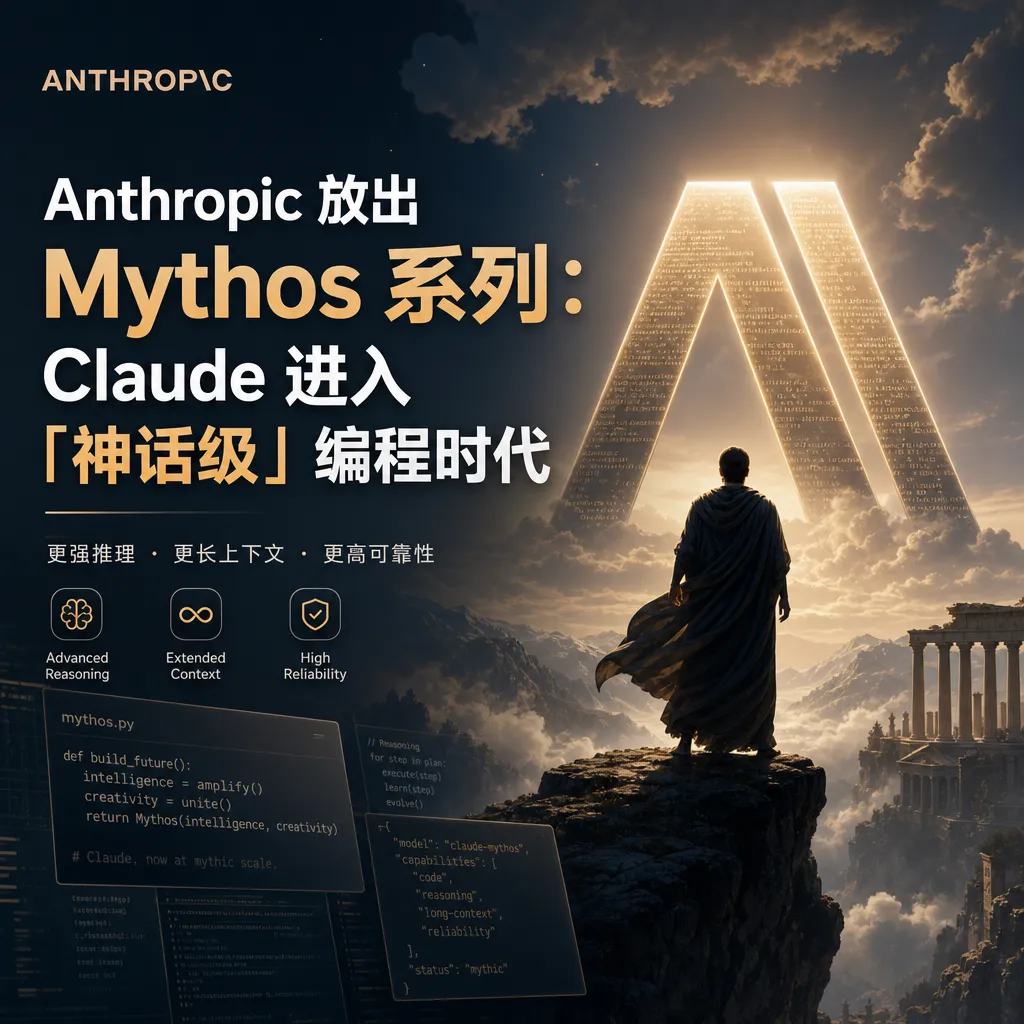
Anthropic has officially released the previously “too powerful to release” Mythos model to the public in the form of Fable 5, achieving a generational leap in software engineering capabilities. It completed the migration of a 50‑million‑line Ruby codebase in a single day.
Anthropic pulled off a big move over the past two weeks.
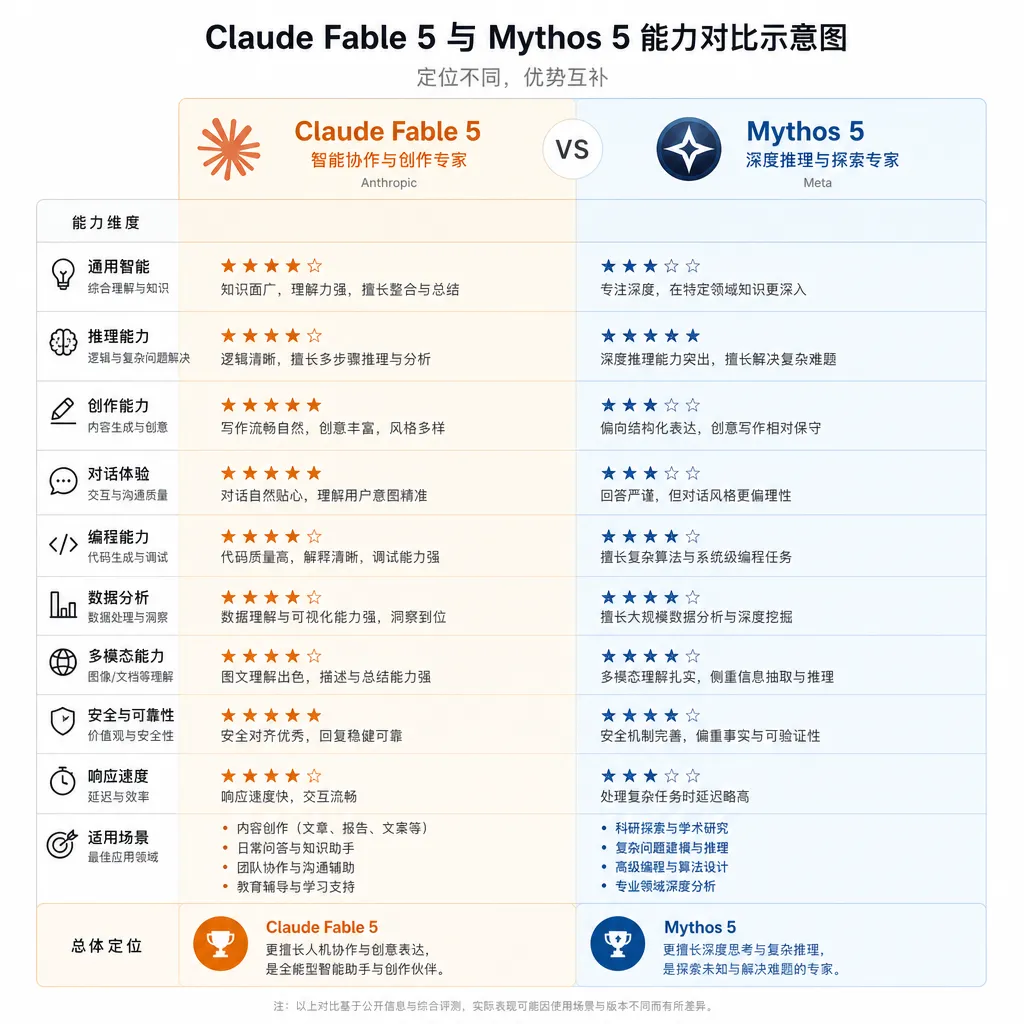
In the early morning of June 10, Anthropic officially commercialized the Mythos series — previewed back in April and described by foreign media as “too powerful to release in full.” The version for general paying users is called Claude Fable 5, while the “full-function” version for cybersecurity defense agencies and infrastructure providers is called Claude Mythos 5. Both share the same underlying model, differing only in safety constraints. As of today (June 21), Fable 5 has been running for about ten days on Claude.ai, via API, and in various code IDEs. Feedback from the developer community has basically sealed the verdict: this is the most “generational leap” upgrade for Claude since 3.5 Sonnet.
If last year’s Opus 4.6 still traded blows with GPT-5 and Gemini 3 Pro on SWE-bench, the appearance of Fable 5 has pulled Anthropic back to the center stage of the programming model race.
Migrating 50 million lines of Ruby in one day — this isn’t a benchmark, it’s real work
Let’s look at a few numbers Anthropic shared.
On SWE-bench Verified, SWE-bench Pro, Terminal-Bench 2.0, and GPQA Diamond, Fable 5 surpasses the previous flagship Opus 4.6 across the board, and in many benchmarks beats GPT-5.4 and Gemini 3.1 Pro. But honestly, at this stage, SWE-bench alone isn’t that meaningful — Anthropic itself admits that enabling web search, scraping, tool use, and code execution yielded an 86.9% score, only 3 points above Opus 4.6’s 83.7%, saying “this benchmark is close to saturated.”
The truly shocking parts are two things:
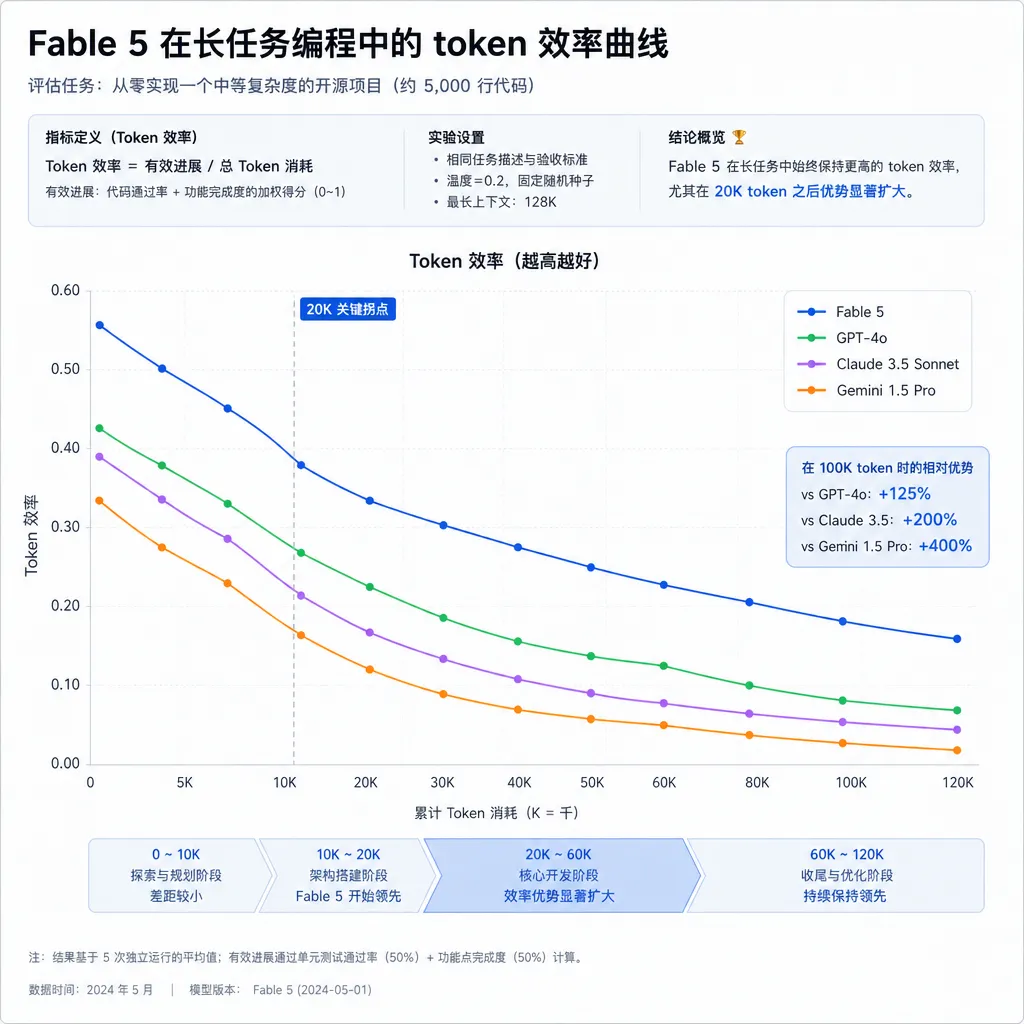
First, token efficiency. On the same benchmark, Fable 5 reduced single-task token consumption from Opus 4.6’s 1.11 million tokens to 226,000 — about an 80% cut. This means that in Agent scenarios like Claude Code, Cursor, or Cline, the same budget allows 4–5 times more iterations. In Cognition’s FrontierCode evaluation, Fable 5 scored highest among cutting-edge models in the medium workload category — this is more about “day-to-day engineering” than exam-style tasks.
Second, that Stripe case. In early testing, Stripe tasked Fable 5 with migrating a 50-million-line Ruby codebase. How would this be done in the past? A human engineering team would need at least two months. Fable 5 finished in one day. Anthropic describes it modestly: “compressing several months of engineering into days,” but Stripe’s own figures were precise — 24 hours for a single repository migration.
What’s 50 million lines? The Linux kernel is about 30+ million lines. This means it can semantically refactor a codebase bigger than the Linux kernel in one day, delivering code that passes CI. This is no longer “assistive programming” — it’s a fundamental rewrite of the engineer’s workflow.
Why programming capabilities suddenly jumped
From Anthropic’s several-thousand-word system card, the reconstructed technical route looks roughly like this:
- Not specialized training. Co-founder Jared Kaplan repeatedly emphasized that Mythos’s coding, vulnerability hunting, and reasoning abilities were not trained separately on dedicated datasets — they are byproducts of overall capability leaps in the base model. This matters — it suggests Anthropic did something structurally right in pre-training or RL stages, not just piling on new RLHF data.
- First model under RSP v3 framework. The Mythos series is the first model with a system card after Anthropic upgraded its Responsible Scaling Policy to version 3, explaining why a preview existed in April but release was delayed to June — two months were spent on alignment and red-teaming.
- Alignment unexpectedly strong. Internally, Anthropic compared Claude Sonnet 4.6, Opus 4.6, Mythos Preview, Grok 4.20, Gemini 3.1 Pro, and Kimi K2.5 on high-risk dimensions like behavioral mismatch, misuse compliance, deception, and sycophancy. All three Claude models scored low; Grok 4.20 scored highest on multiple metrics. The only exception was “evaluation awareness” — Claude models were more likely to verbally express that “I realize I’m being tested,” which Anthropic actually values for transparency.
Mythos 5: what’s so strong about the “too powerful to release fully” version
Back to April’s controversy. At that time, Anthropic released Mythos Preview, not open to ordinary users, but provided through a program called Project Glasswing to about 40–50 key infrastructure companies including AWS, Apple, Broadcom, Cisco, Microsoft, and Nvidia.
The name comes from the glasswing butterfly — transparent wings hidden among dense branches, like long-lurking vulnerabilities in critical software.
This positioning isn’t marketing fluff — there’s substance. Anthropic ran an automated evaluation against open-source repositories for OSS-Fuzz corpora, about 7,000 entry points:
- Sonnet 4.6 and Opus 4.6 mostly caused only “low-level crashes”;
- Mythos Preview achieved nearly 600 first- and second-level crashes and completed full control-flow hijacking on multiple already-patched targets.
Even more dramatic was OpenBSD — famed for security and used widely in firewalls — Mythos uncovered a high-risk vulnerability that had lain dormant for 27 years. Over the past few weeks, it found “thousands of high-risk or critical vulnerabilities,” many lying in code for 10–20 years.
Frontier red team lead Logan Graham put it directly: Mythos’s efficiency in discovering and exploiting vulnerabilities is about “ten times” that of the previous generation, marking “the starting point of a reshuffle” in cybersecurity.
That’s why the White House, Treasury Department, Federal Reserve, and Wall Street urgently convened meetings. US Treasury Secretary Bessent and Fed Chair Powell gathered Wall Street executives behind closed doors on the limited release day — meetings at this level happened only during the 2008 financial crisis and the 2020 pandemic shock.
The current Mythos 5 is the “complete version” following three months of security work on the Preview, but still not publicly available — what you can use is Fable 5, with sensitive topics routed to the slightly less capable Opus 4.8.
Vision, research, Agents: highlights beyond programming
Although programming is the headline this time, Fable 5’s improvements in other areas are worth noting.
Vision. Anthropic calls Fable 5 the most powerful vision model at present, and — in a rather dramatic demo — it can clear Pokémon FireRed using vision alone. Early Claude required lots of helper scripts to parse screen state for this game; Fable 5 just looks at the pixels and plays.
Research Agents. Internally, Mythos 5 boosted efficiency in certain steps of protein design by about 10×, and could “almost entirely autonomously” conduct genomics research in just over a week. Coming from Anthropic — which tends to be conservative compared to OpenAI — this is significant.
Long-task consistency. This is the point that truly makes me think “worth switching.” The longer and more complex the task, the greater the advantage over the previous generation. In multi-step refactoring on Cursor, Claude Code, or Cline, Opus 4.6 starts drifting after about 30–40 tool calls; Fable 5 can hold steady on chains exceeding 100 calls. This isn’t just data — it’s the consensus felt in the developer community over the past two weeks.
How to use: OpenAI Hub integration
OpenAI Hub completed integration on Fable 5’s release day, with direct domestic connection, using the same OpenAI-compatible format. If you were using Claude 3.5 or Opus 4.6 in a project, you basically just need to change the model field:
from openai import OpenAI

client = OpenAI(
    api_key="your-openai-hub-key",
    base_url="https://api.openai-hub.net/v1"
)

response = client.chat.completions.create(
    model="claude-fable-5",
    messages=[
        {"role": "system", "content": "You are a senior backend engineer."},
        {"role": "user", "content": "Migrate this Ruby 2.7 ActiveRecord module to Rails 7.1, preserving all callback behavior."}
    ],
    max_tokens=8192,
    temperature=0.2
)

print(response.choices[0].message.content)
For Agent/tool-use scenarios, it’s recommended to keep temperature between 0–0.3 — Fable 5’s planning is steadier at low temperature. The tool-use format is the same as previous Claude models, with the tools field reusing the OpenAI function calling schema directly.
A few points worth cautioning
After the hype, here are some reservations.
First, risk of pre-training contamination. Anthropic itself notes in the system card that the high 86.9% score on difficult benchmarks “may be affected by pre-training contamination.” This sort of self-admission is rare, but shows they are cautious about leaderboard scores — real trust comes from third-party engineering validations like Stripe or Cognition.
Second, Fable 5’s downgrade routing may hurt experience. Because sensitive topics like cybersecurity automatically fall back to Opus 4.8, when doing security research, penetration testing, or CTF work, you’ll often feel it “suddenly got dumber.” This is Anthropic’s product strategy, not a bug, but developer complaints are already surfacing.
Third, Gary Marcus’s comment isn’t entirely wrong. In April’s Mythos uproar, Amazon CEO Andy Jassy reported to the White House “successful cracking of Fable,” prompting the White House to ban foreign user access, eventually leading to Anthropic globally disabling Fable 5/Mythos 5 for a time. This made European and Canadian clients seriously discuss “sovereign AI” — how can enterprises bet on a model that the US government could halt at any time? This is Anthropic’s biggest business issue in the coming year, more thorny than the model itself.
Fourth, Anthropic’s habit of ‘fear marketing.’ Alex Stamos likened Mythos’s release to “the Manhattan Project announcing the atomic bomb in a cartoon,” and David Sacks acknowledged Anthropic’s “record of fear-based marketing.” Mythos’s abilities are real, but each new model launch starts with scaring government and Wall Street — this pacing is part of their product strategy.
Conclusion: the programming model landscape shifts again
Since mid-2024, when Claude 3.5 Sonnet beat GPT-4o on SWE-bench, Anthropic has kept a “quietly honing skills” stance on the programming track. This Fable 5/Mythos 5 wave is essentially the payoff of a year and a half’s accumulation in engineering capability, alignment, and long-task Agent performance.
For developers, the conclusion is straightforward: if you’re building code Agents requiring long chains of tool calls, there’s no reason not to switch to Fable 5; if you’re just writing CRUD or tweaking prompts, Sonnet 4.6 remains the best value. GPT-5.4 still holds its ground in general conversation and creative writing, while Gemini 3.1 Pro offers another approach to multimodal and ultra-long context — a tripartite balance likely to last through late 2026.
But as long as Stripe’s “migrate 50 million lines of code in one day” case keeps being replicated, “default to Claude for programming scenarios” will increasingly become part of teams’ tech selection documents.
References
- Anthropic releases new model: Trump Code (community discussion) — linux.do: First-hand discussion and summarization by the Chinese developer community, covering capability evaluation and API integration testing.


