
JPMorgan Bets: Zhipu GLM-5.5 to Launch in August, Parameters May Exceed One Trillion
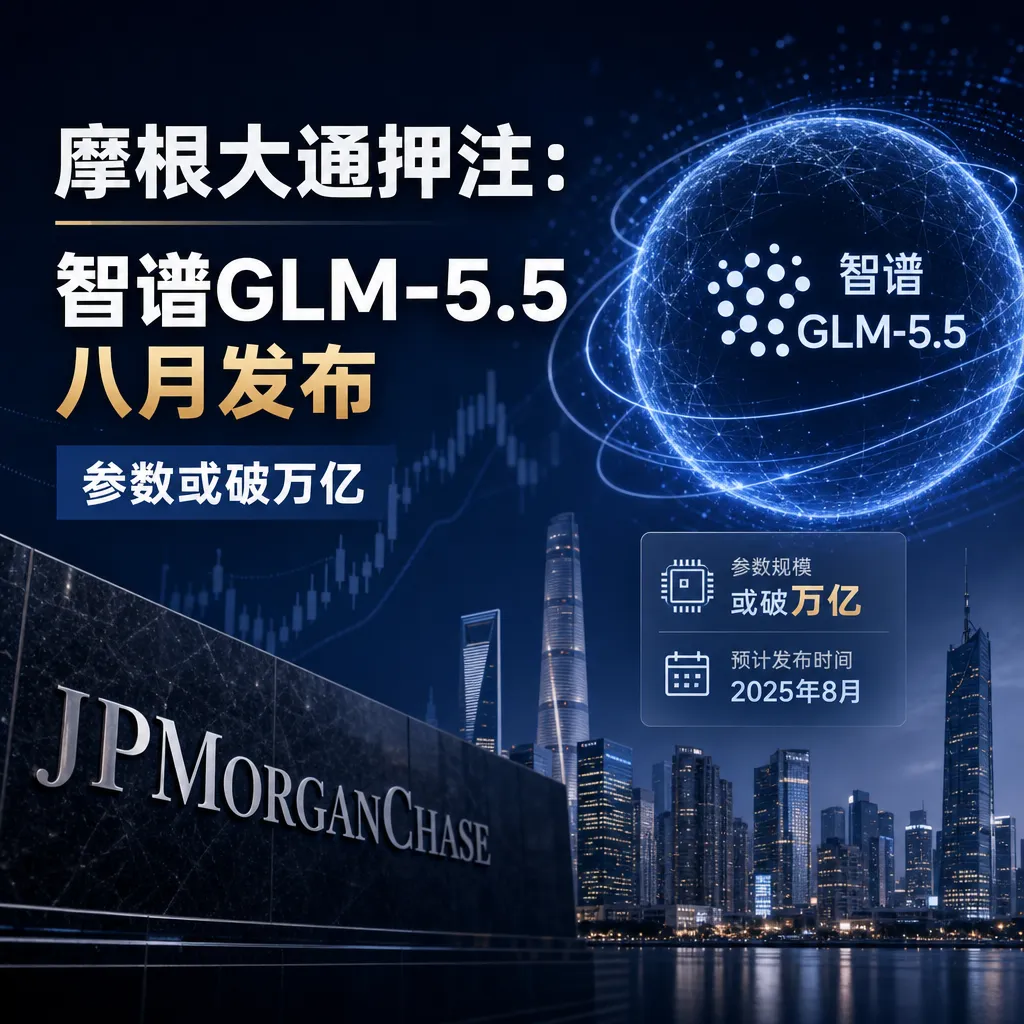
J.P. Morgan's latest research report predicts that Zhipu will release its next-generation flagship model, GLM-5.5, in August 2026, with the parameter count expected to exceed 1 trillion. This will be a decisive battle in determining whether Zhipu’s capability curve can continue to rise.
JPMorgan has just pushed Zhipu into the spotlight. In its latest research report covering Chinese AI companies, JPM clearly laid out the timeline and parameter scale: GLM-5.5 is expected to launch in August 2026, with parameter size possibly exceeding 1 trillion. The exact quote is "This will be the next major test of Zhipu's ability to keep moving up the capability curve" — this is the next big exam for Zhipu to see if it can continue climbing the capability curve.
This sentence is intriguing. Investment bank analysts rarely speak in absolutes, so using a phrase like "next major test" implies: GLM-5 and GLM-5.2 have indeed put Zhipu in a solid position, but to keep climbing, the 1T parameter-level GLM-5.5 must be delivered. If it can’t, the valuation boost gained from GLM-5 would have to be given back.
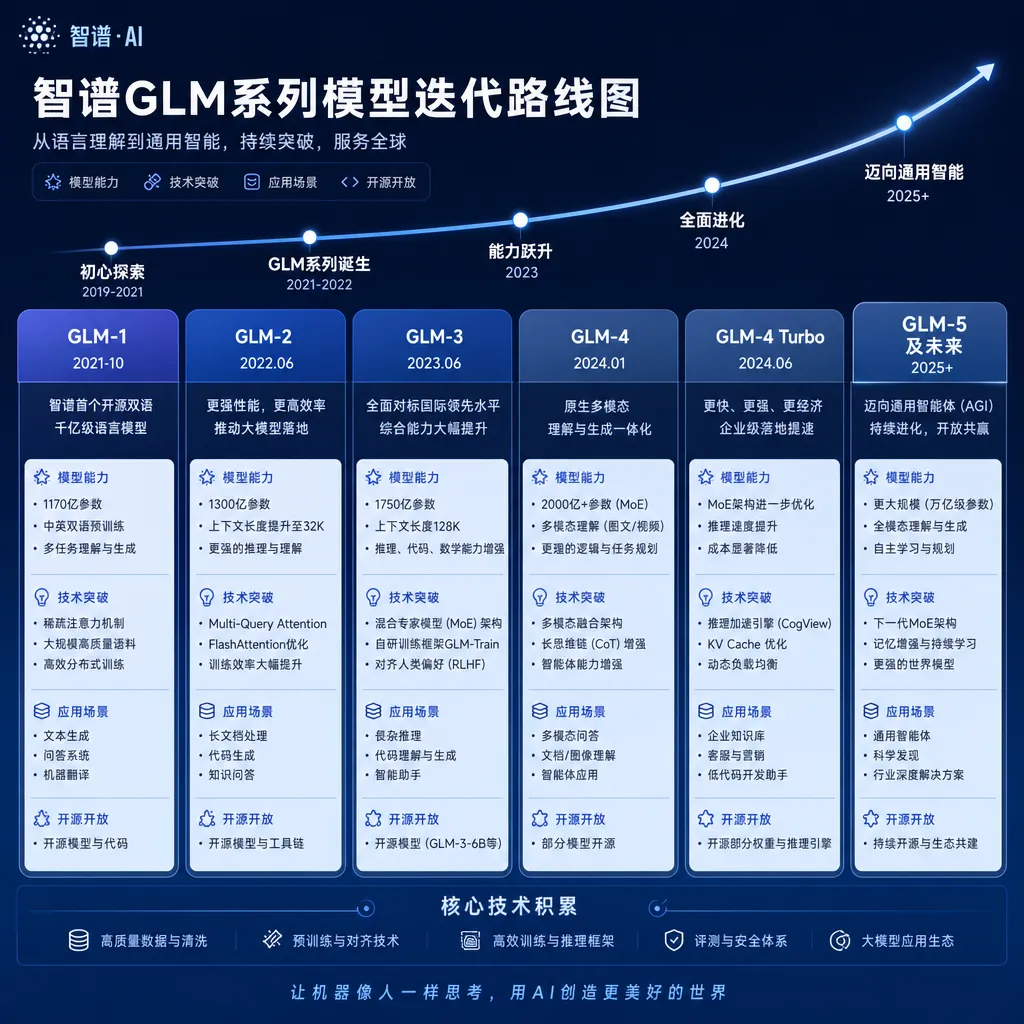
From GLM-5 to GLM-5.5: How fast Zhipu has been running in the past half-year
To understand why GLM-5.5 is being placed on such a high pedestal, we need to review the timeline.
In February 2026, Zhipu released the GLM-5 technical report: 744B parameters, 28.5T training tokens. The core change in this generation was moving its architecture from standard MoE to DSA (DeepSeek Sparse Attention) — dynamically allocating attention resources based on token importance, preserving long-context capabilities while slashing training and inference costs.
With this architecture, Zhipu also rewrote its RL infrastructure: based on the original slime framework’s “training-inference decoupling,” it further achieved “generation-training decoupling,” squeezing GPU utilization to the max. Adding a new asynchronous Agent RL algorithm allowed the model to continually learn during long-term interactions.
The result: GLM-5 achieved open-source SOTA rankings in both text and code on ArtificialAnalysis.ai and LMArena. Overseas developers rated its real-world programming performance as “approaching Claude Opus 4.5,” which is high praise in the open-source community.
Even more noteworthy was the commercial feedback. GLM Coding Plan sold out immediately upon launch, forcing Zhipu to gray-release GLM-5 in stages from Max → Pro → Lite. How severe was the supply shortage? Zhipu directly raised prices — 30% in China, more than double overseas. This was the first time a domestic large-model company proactively raised prices; in the past two years, everyone competed to cut prices. Zhipu’s reverse move still sold out, demonstrating the market status of the model.
In April and May, GLM-5.2 was released. JPMorgan stated in another report that GLM-5.2 “improved capabilities and comprehensive pricing,” thus raising revenue forecasts for Zhipu AI. Take note of the wording “comprehensive pricing” — capabilities improved while the per-token price also increased, which is almost unheard of in the open-source model camp. At the same time, JPM adjusted Zhipu’s target price up to HK$1800, with shares surging up to 40% in a single day.
The significance of 1T parameters: Not just a numbers game
So, what does GLM-5.5’s 1T+ parameter size truly mean?
First, let’s be clear — 1T parameters aren’t new. GPT-4 is rumored at 1.8T MoE, Claude Opus is estimated to be trillion-scale, and DeepSeek V3.1 has 671B total parameters. What Zhipu really aims to do is not just “go big,” but to find a new balance point between scale and efficiency under the DSA architecture.
From GLM-5’s 744B to GLM-5.5’s 1T+, parameters increase by around 34%. But parameter count ≠ cost — the core value of sparse attention is decoupling active parameters from total parameters. In other words, even if GLM-5.5 has over 1 trillion total parameters, the actual active parameter count per token will likely remain in the tens of billions. This means inference costs won’t increase proportionally, but the model capacity can accommodate more complex capability distributions.
This route aligns with Kimi K2 and DeepSeek-V3’s thinking: use sparsity to go for scale, use scale to unlock higher ceilings. Zhipu’s distinguishing feature is its dedicated Agent-focused reinforcement learning. GLM-5’s asynchronous Agent RL algorithm already outperformed supervised training in long-term interactions; if GLM-5.5 takes it further, its lead in coding agents and engineering tasks may widen.
August launch window: Positioning against rivals
JPMorgan didn’t pick “August” randomly. Lining up competitors’ schedules makes it clear:
- Kimi K3: Industry expects Q3 2026 launch, DarkSide focuses on multimodal reasoning this generation
- DeepSeek V4.1: Tech circles expect release around July–August, with V4 already out in June
- Qwen Gen 4: Rumored schedule also in Q3 for Alibaba Tongyi
In other words, August could be the most crowded release window for open-source models in the second half of 2026. Zhipu’s choice to launch then is to address the core question: When multiple trillion-scale open-source models hit the market simultaneously, why would users keep buying the GLM Coding Plan instead of switching?
The JPM report lays it out plainly — “In the short term, watch for GLM-5.2 demand resilience, and track competitors like Kimi K3 and DeepSeek V4.1 model iteration progress.” Analysts are helping you think through worst-case scenarios: if Kimi K3 or DeepSeek V4.1 seize SOTA first, the Coding Plan’s price increase will fail, and subscription retention could suffer.
So GLM-5.5 is not just a tech release, but a commercial positioning move. Zhipu is betting “I’ll get to market in August first and lock down enterprise budgets.”
Valuation view: The next stop for Hong Kong’s top AI stock
Zhipu is one of the most pure AI plays on the Hong Kong market. From its IPO in January to now, a span of five months, its stock price has risen over 500% at one point. This is rare for Hong Kong tech stocks, as most AI concept stocks there follow U.S. NVIDIA’s movements, lacking independent catalysts. Zhipu is different — it has its own product rhythm, with each model release sparking its own share price surge.
JPM’s latest research is essentially managing market expectations:
- Short term: Watch GLM-5.2’s demand resilience and Coding Plan renewal rate
- Medium term: August GLM-5.5 launch — breaking 1T parameters is baseline
- Long term: Zhipu needs to prove it can consistently outperform top Chinese and U.S. players on the capability curve
One detail worth mentioning: GLM-5 natively supported seven domestic GPU platforms — Huawei Ascend, Moore Threads, Hygon, Cambricon, Kunlunxin, Tianzhixin, and Biren. This move will likely be retained or even deepened in GLM-5.5. In today’s geopolitical climate, this is a unique position for Zhipu compared to pure internet-based firms — it’s both a foundational model company and a deep collaborator in the domestic compute ecosystem. If a trillion-parameter model can run inference on domestic GPUs, its strategic value goes far beyond the model itself.
Developer view: Is it worth the wait?
From a developer’s perspective, if GLM-5.5 launches as expected, its impact varies by user type.
Coding Agent builders: The most direct beneficiaries. GLM-5’s real-world software engineering performance has already raised the open-source ceiling. If GLM-5.5 doubles down on asynchronous Agent RL algorithms, teams building IDE plugins, code review tools, and automated PR systems will have a new baseline model. Claude Sonnet series may be good, but API costs and access restrictions are barriers; GLM-5.5’s open-source + domestic direct-access combo is friendlier for engineering deployment.
Long-context application developers: DSA’s cost advantage in long-context scenarios will be further magnified. If GLM-5.5 pushes context length beyond the million-token mark while maintaining sparse attention efficiency, developers doing RAG, codebase analysis, and document processing won’t need to worry about costs.
Multimodal developers: This remains a relative weakness for the GLM series. JPM’s report didn’t mention multimodal expansion for GLM-5.5, suggesting this generation will focus on text and code. VLM app developers may still want to wait for Qwen-VL or GPT-4o.
Consumer app developers: Zhipu’s price increase strategy shows its current priority is enterprise markets. Consumer-facing developers might not feel much change in the short term, but long-term, if GLM-5.5 continues lowering inference costs and prices drop below a certain threshold, C-end usability could see a leap.
A key question nobody mentions
Finally, one thing JPM’s report didn’t spell out: Who can run a 1T parameter open-source model locally?
The answer: almost nobody. This means even if GLM-5.5 is open source, most developers will still have to use its API. This completes Zhipu’s business model loop — open-source for reputation, ecosystem, and large enterprise privatization deals; API for monetizing from individual developers and SMEs.
If GLM-5.5 follows this script successfully, it could become a landmark example of domestic open-source model commercialization.
By the way, OpenAI Hub now supports unified calling of the GLM series models, alongside GPT, Claude, Gemini, and DeepSeek via the same OpenAI-compatible interface. Once GLM-5.5 is officially released, it will be integrated immediately, so developers wanting to do multi-model A/B testing can save on adaptation efforts.
Less than two months remain until August — we’ll see how Zhipu performs in this big exam.
References
- linux.do - JPMorgan predicts GLM-5.5 will launch in August: Screenshots of JPM’s research report and community discussion, including JPM’s core judgment of GLM-5.5’s parameter scale and release timing window.


