
Doubao Seed 2.1 Appears on the Arena Frontend Leaderboard, Ties with Opus 4.6
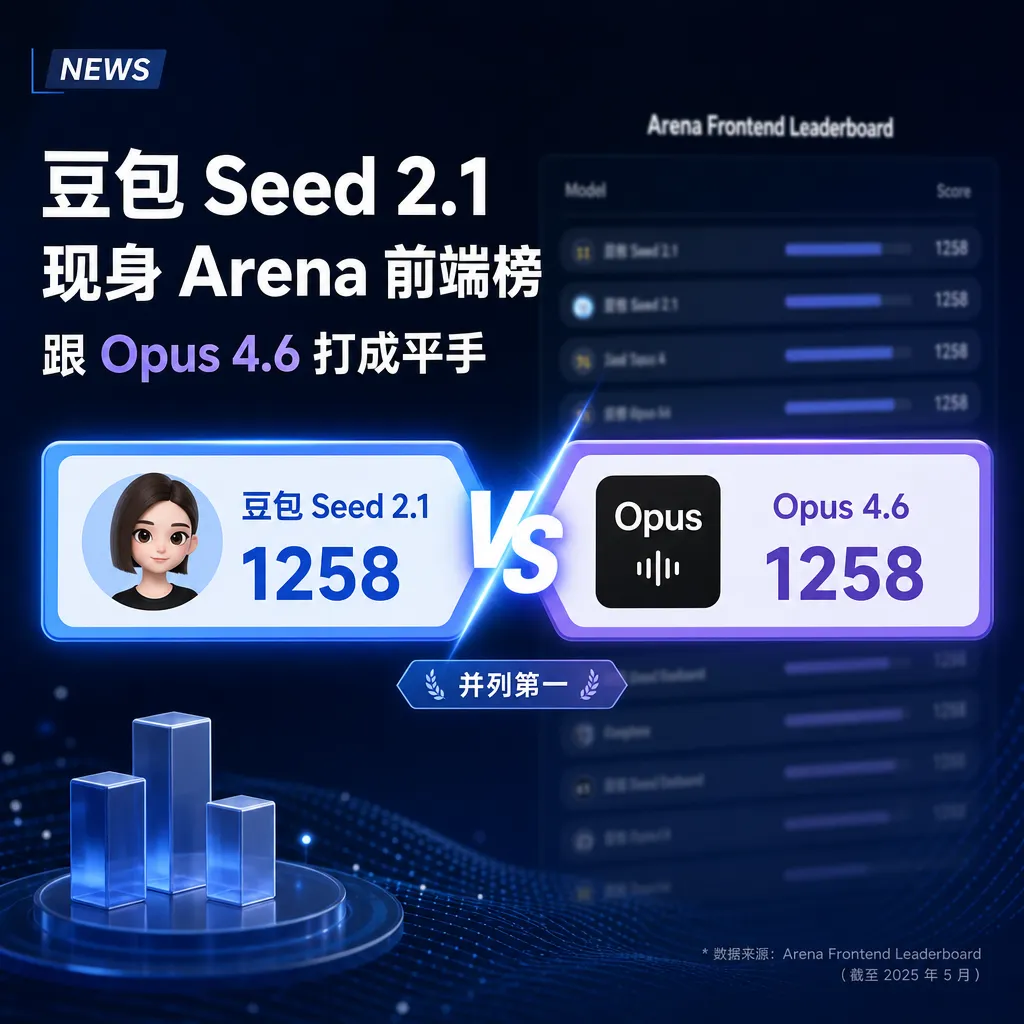
Byte Doubao Seed 2.1 Pro Preview appeared on the LMArena frontend code leaderboard, with a score on par with Claude Opus 4.6. It has not yet shown up on the text leaderboard, suggesting it may have been released to the code track first. Along with the anticipated launch of Seedance 2.1, Byte’s June push clearly seems aimed at code-related scenarios.
Doubao quietly joins the Arena, scores neck and neck with Opus 4.6
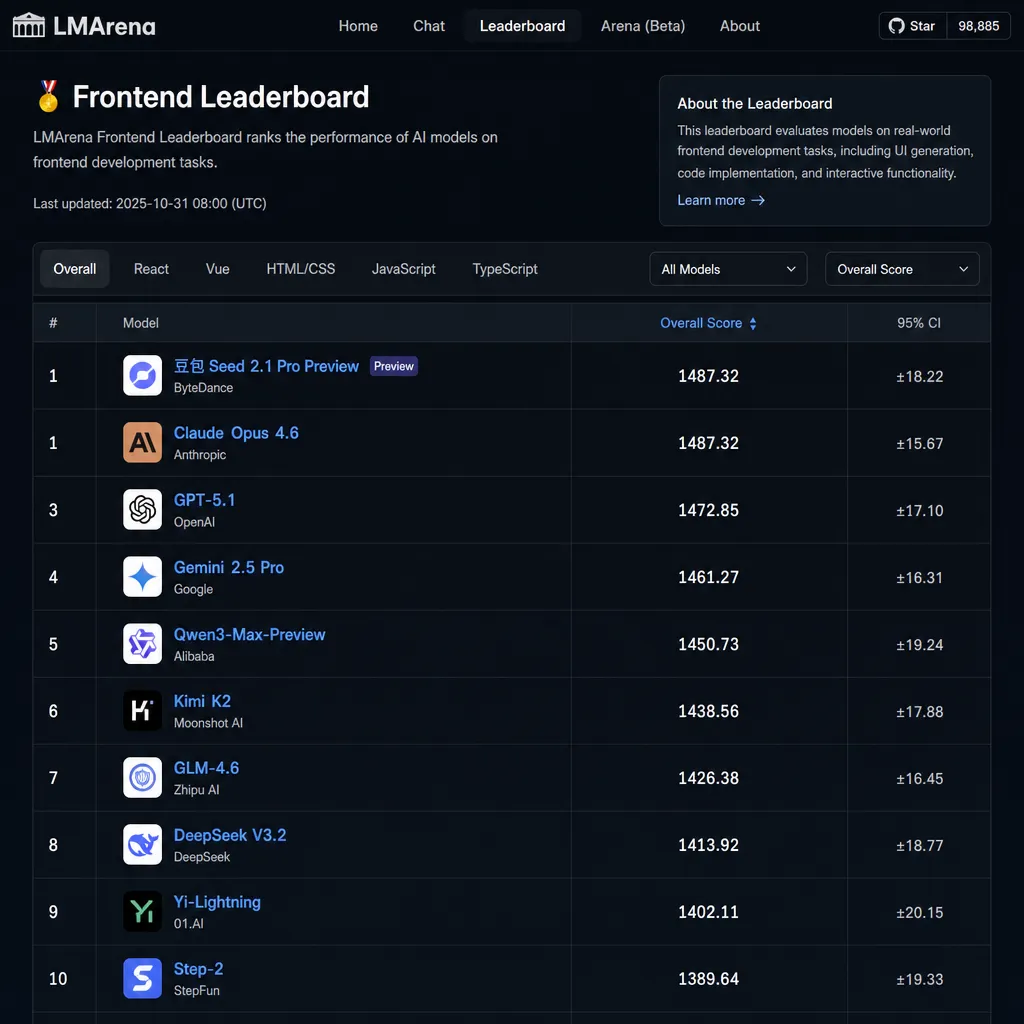
In the past couple of days, a new name has appeared on LMArena’s frontend code leaderboard: doubao-seed-2.1-pro-preview. No official announcement, no launch event — ByteDance just tossed the model into the arena. Even more interesting are the scores — in the frontend code category, it’s basically tied with Claude Opus 4.6, trading wins and losses within the margin of error.
This is the 4.6 version still present after Anthropic pushed Opus 4.7 up last month. For a domestic model to catch up to Opus 4.6 in the frontend code track — which Claude has long dominated — is no small feat. Note that Seed 2.0 Pro made it to second place globally in overall score on SuperCLUE, but in code generation it has always been behind Claude by more than ten points — the SuperCLUE report clearly stated: 2.0 Pro scored 48.77 in code, Opus 4.6 scored 59.91 — the gap was obvious.
Now 2.1 has directly filled that shortcoming.
Why it only appears on the code leaderboard
Someone on linux.do checked the Arena text leaderboard and didn’t find Doubao’s name. Combined with previously leaked information — ByteDance’s June focus was originally on Seed 2.1 specializing in code, with Seedance 2.1 also expected — the move to “only show up in the code category” makes sense.
This is a typical ByteDance product rhythm: play the cards you want to play first, without rushing to hold a launch event — put it on a third-party leaderboard for blind testing by users, and once the numbers are stable, officially release. Claude’s Sonnet 3.5 New followed a similar path, though Anthropic at least tweeted about it.
From clues in proxy traffic, the current access point for this version is the think channel of Doubao’s office task model, meaning internally it’s being used as a dedicated model for “deep-thinking code/office scenarios” in a grey rollout. Judging from product form, 2.1 Pro Preview is most likely a thinking version with long-chain reasoning enabled, rather than a normal chat mode.
This also explains why it has suddenly jumped so much in frontend code. Frontend scenarios are perfect for thinking models — change a component’s props and you need to look at the parent component, styles, interaction logic; without long-chain reasoning you can’t write it smoothly. Opus 4.6’s strength lies exactly here, and 2.1 clearly aims to align to this standard.
ByteDance’s year-long code track finally clicks
Looking at the timeline makes things clearer.
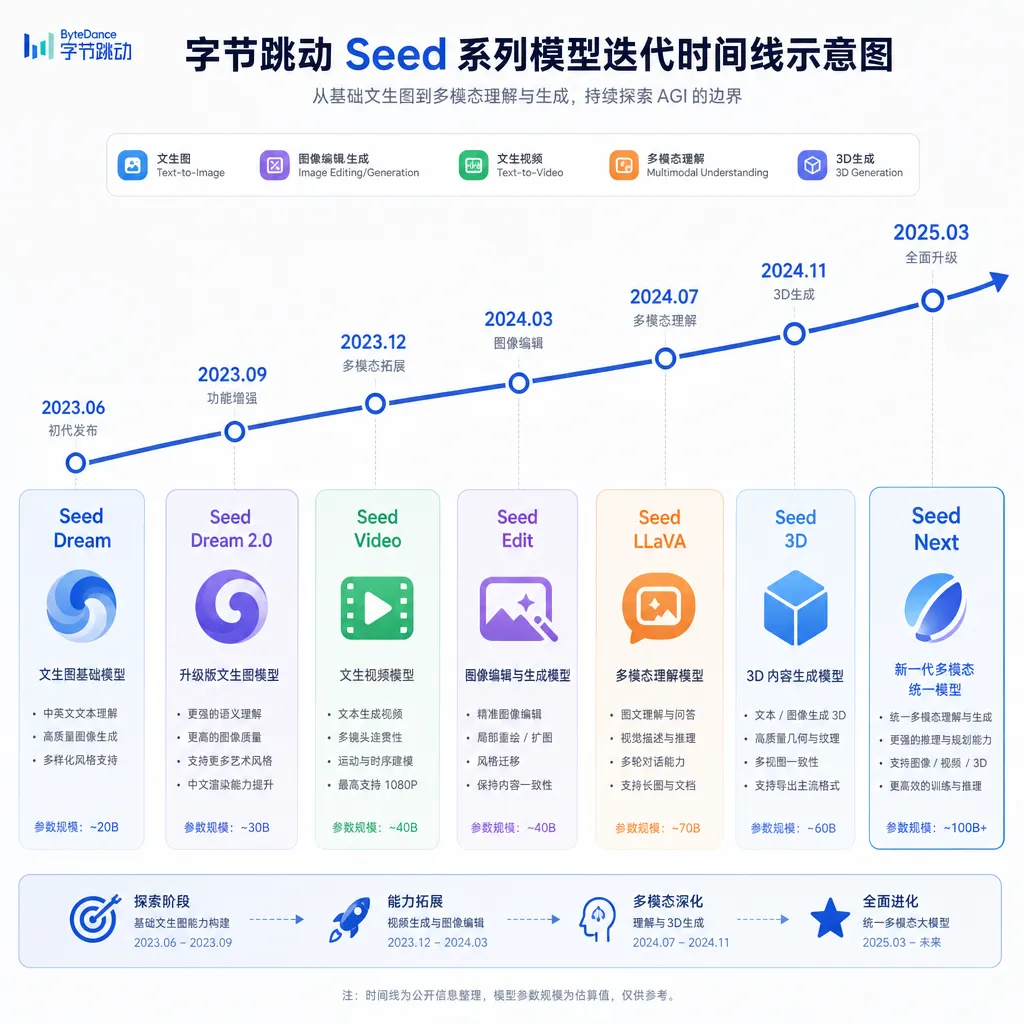
- Late 2025: Doubao-Seed-1.8 Thinking released, code score 40.33, far from Claude’s level;
- February 2026: Seed 2.0 Pro released, code score up to 48.77 — clear improvement but still at the lower end of the top ranks;
- June 2026: Seed 2.1 Pro Preview reaches Opus 4.6’s tier.
In half a year, code generation has moved from “usable” to “competitive.” Comparing to DeepSeek’s iteration curve from V2 to V3.2, it’s roughly similar. Domestic closed-source models are catching up on the code track faster than many would expect.
But a note of caution: Arena’s frontend code leaderboard is based on human voting, not hard metrics like SWE-bench. Voting preferences and actual engineering capability can differ. Slick React components and smooth animations on Arena can wow users into giving high scores, but whether it can handle multi-file refactoring in a 100,000-line codebase is another question.
Claude Opus 4.6 (and newer 4.7) safeguard their lead through agentic coding — stable multi-file long-range editing, tool usage, and self-correction — this is why developers use Claude Code daily. Doubao needs to prove itself in SWE-bench Verified, Aider Polyglot, and other harder benchmarks to claim that territory.
Seedance 2.1 is coming too — ByteDance has something up its sleeve for June
According to leaked internal timelines, Seedance 2.1 will also be updated. Seedance 1.5 Pro is already in the top tier of domestic video generation (exceeding Veo 3 in some scenarios), and 2.1 is expected to push consistency in long videos, motion logic, and audio-visual sync further.
ByteDance’s approach is becoming clearer:
- Base models (Seed) for general-purpose + code + multimodal fusion, aimed at GPT / Claude;
- Image generation (Seedream) and video generation (Seedance) on separate tracks, aimed at Midjourney / Veo;
- Doubao App as the front-end distribution, bundling all capabilities for consumers;
- Volcano Engine as the API outlet, targeting enterprise markets.
This is a complete “model factory + distribution channels + monetization pipeline” loop. OpenAI also has this structure now, Anthropic lacks consumer end, Google lacks consumer mindshare. If ByteDance’s system runs smoothly, it might be the closest domestic player to the “full-stack AI company” model.
Developer hands-on: Can the Preview version be used?
As usual, Pro Preview typically goes through 2–4 weeks of grey rollout before official API launch. If you want to try it now, possible paths include:
- Doubao App office task mode: currently the most stable access; think mode will auto-route to 2.1;
- Volcano Engine console: may have invite-only preview channels — keep an eye on the Ark platform’s model list;
- Aggregated API platforms: after official launch, OpenAI Hub and similar platforms will usually integrate it immediately, letting you switch Claude / GPT / Doubao with the same key for horizontal comparisons, which is handy for code scenario evaluations.
For teams already using Claude for coding, one worthwhile test after 2.1’s official launch is: run the same prompt through Opus 4.6/4.7 and Seed 2.1 — check differences in actual generated code quality, token usage, and response latency. If the price spread can be 2–3x and quality remains acceptable, this could be significant for SaaS products embedding AI functionality.
Based on Seed 2.0 Pro’s price of ¥9.60 per million tokens, 2.1 will likely be similar. Compared to Opus 4.6’s pricing of around $15 per million input tokens, that’s roughly 10 times cheaper.
# Example code for calling Seed 2.1 via OpenAI Hub after official launch
from openai import OpenAI

client = OpenAI(
    base_url="https://api.openai-hub.net/v1",
    api_key="YOUR_API_KEY"
)

resp = client.chat.completions.create(
    model="doubao-seed-2.1-pro",  # Official name to be confirmed upon release
    messages=[
        {"role": "system", "content": "You are a senior frontend engineer."},
        {"role": "user", "content": "Use React + Tailwind to write a comment list component with virtual scrolling, supporting threaded replies"}
    ],
    temperature=0.3,
)
print(resp.choices[0].message.content)
Using a single key to call Claude, GPT, and Doubao for A/B comparison is currently the easiest way to choose a model.
A few unresolved questions
This anonymous Arena entry gives plenty of information, but also leaves some mysteries:
- When will it appear on the text leaderboard: If Seed 2.1 can also maintain competitiveness on the general conversation leaderboard, it’s even more significant; if it’s slow to appear, it suggests 2.1 is positioned as a “code-specialized version,” similar to GPT-4o → o1 splits.
- Will multimodal upgrade simultaneously: On the BabyVision leaderboard Seed 2.0 Pro is still SOTA (62.60%); if 2.1 keeps visual ability from regressing, it’s complete — if it regresses, ByteDance likely made trade-offs for code.
- Official release date: Based on 2.0 Pro’s roughly 3 weeks from grey rollout to official launch, 2.1 Pro will likely officially go live on Volcano Engine in early July.
- Will there be Lite/Mini versions: From a business perspective, Seed 2.1 Code — a small-sized code-specialized model — is almost certain to appear, aimed at Claude Haiku, GPT-5.2-mini line.
The biggest shift in domestic models over the past two years is that they no longer settle for “scores approaching GPT-4” narratives. Seed 2.1 fights Opus 4.6 to 50/50 on Arena, DeepSeek V4 makes 1M long context mainstream for open source, Qwen3.6 pushes into agentic coding — everyone is competing for real production scenarios, no longer tangled in old leaderboards like MMLU.
This is a good thing. Developers never wanted leaderboard first place — they want “for my current task, which model is cheapest and most effective.”
Seed 2.1’s official release is worth waiting for.
References
- Doujie (seed2.1) appears on ARENA frontend leaderboard, tied with opus4.6 - linux.do - Original linux.do community leak post, with Arena leaderboard screenshot
- ByteDance likely to release seed2.1 focused on code, seedance2.1 may also launch in June - linux.do - Discussion on ByteDance’s June model release rhythm, with proxy traffic verification
- Famous domestic and international large models and applications — model/application dimensions (2026/06/17) - Zhihu - Zhihu column reviewing recent domestic and international large model releases


