
Musk’s Computing Power Empire Expands Again: SpaceX Secures $6.3 Billion AI Order
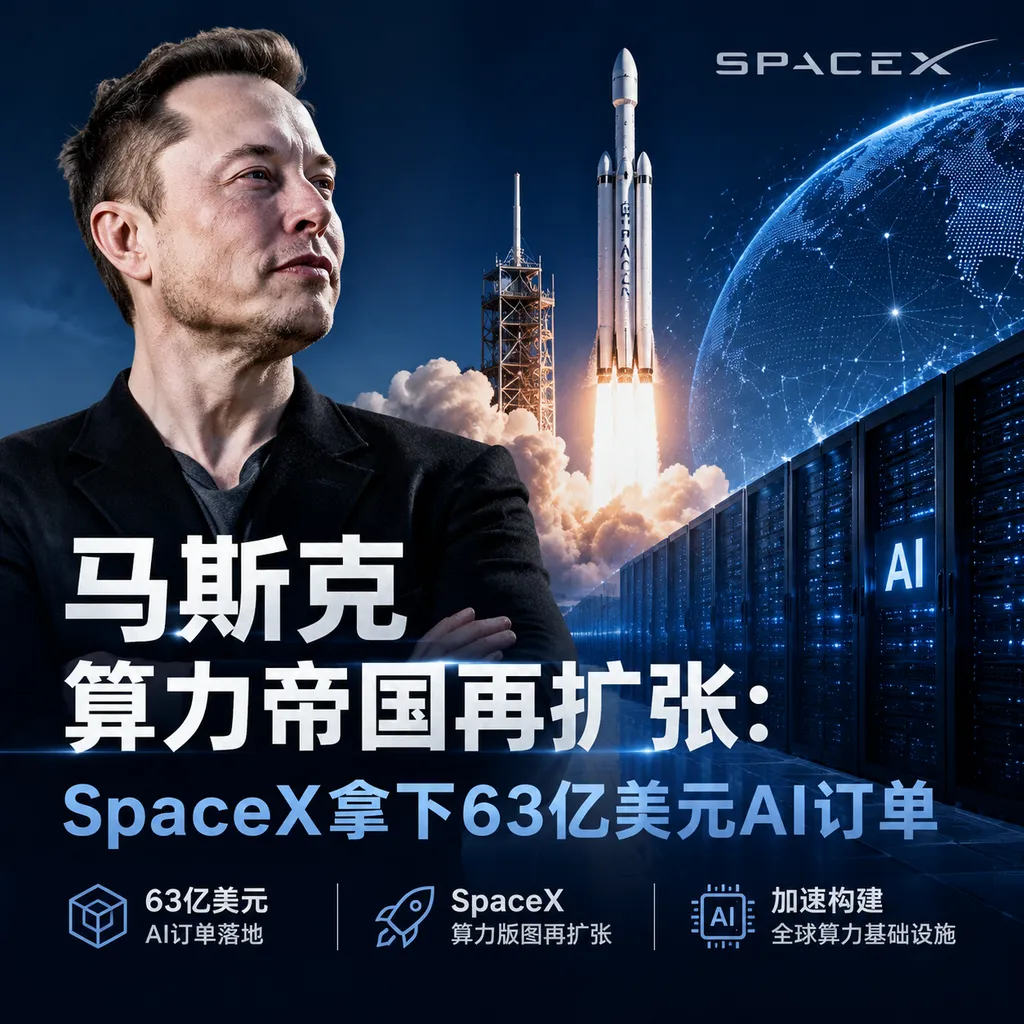
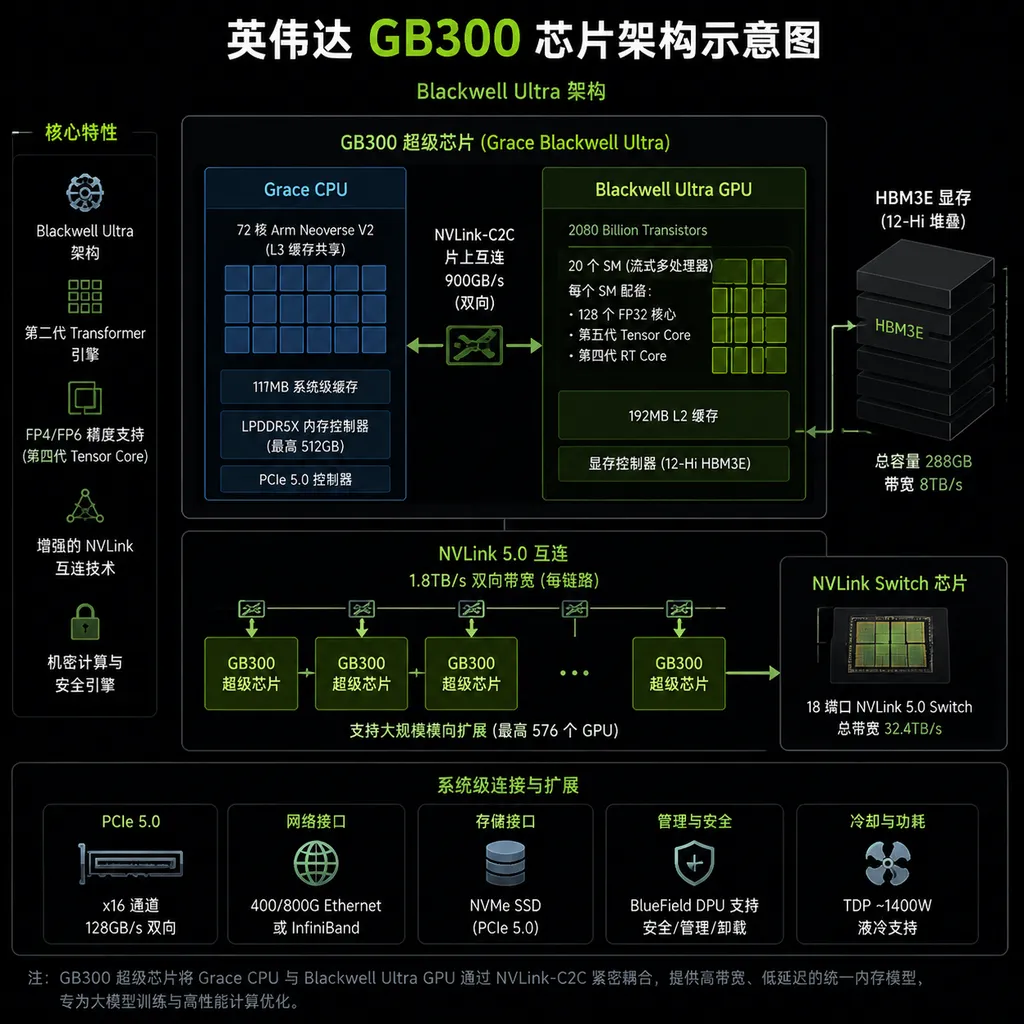
SpaceX and open-source AI startup Reflection have signed a computing power agreement worth up to $6.3 billion, under which the latter will gain access to NVIDIA’s GB300 chips. This is another key move in Elon Musk’s computing power infrastructure strategy and marks the official entry of the open-source AI camp into the top-tier computing power arms race.
Musk’s Computing Power Empire Expands Again: SpaceX Secures $6.3 Billion AI Order
SpaceX has just landed a big deal.
On June 22, SpaceX and open-source AI startup Reflection AI announced a computing power cooperation agreement, with a contract valued at up to $6.3 billion (about 42.7 billion RMB). Under the agreement, starting from July 1, 2026, until the end of 2029, Reflection will pay SpaceX $150 million per month in exchange for access to NVIDIA GB300 chips.
This marks another AI company joining Musk’s computing infrastructure after Anthropic, Google, and Cursor. But this time, the client is a bit different—Reflection is a company focused on open-source models.
Agreement Details: Flexible but Not Cheap
Let’s look at the numbers first.
$6.3 billion is the maximum contract value, assuming the cooperation proceeds smoothly until the end of 2029. At $150 million per month, the total amount for 42 months is exactly $6.3 billion. What does this price signify? It equals an annual computing power expenditure of $1.8 billion—a hefty figure for any AI company’s balance sheet.
For comparison, OpenAI’s computing expenditure this year is expected to be in the $7–8 billion range, while Anthropic’s annual budget for computing is around $4 billion. Reflection, as a startup, has locked in nearly half the computing scale of top-tier players.
Another noteworthy clause in the agreement: Three months after the contract takes effect, either party may terminate the cooperation with 90 days’ prior notice.
This exit mechanism is quite flexible. For Reflection, if funding issues arise or their technical path needs adjustment, they won’t be trapped in a long-term contract. For SpaceX, if a higher-paying client appears, there’s room to maneuver. Of course, given current supply-demand dynamics in the computing market, the likelihood of SpaceX terminating unilaterally is very low.
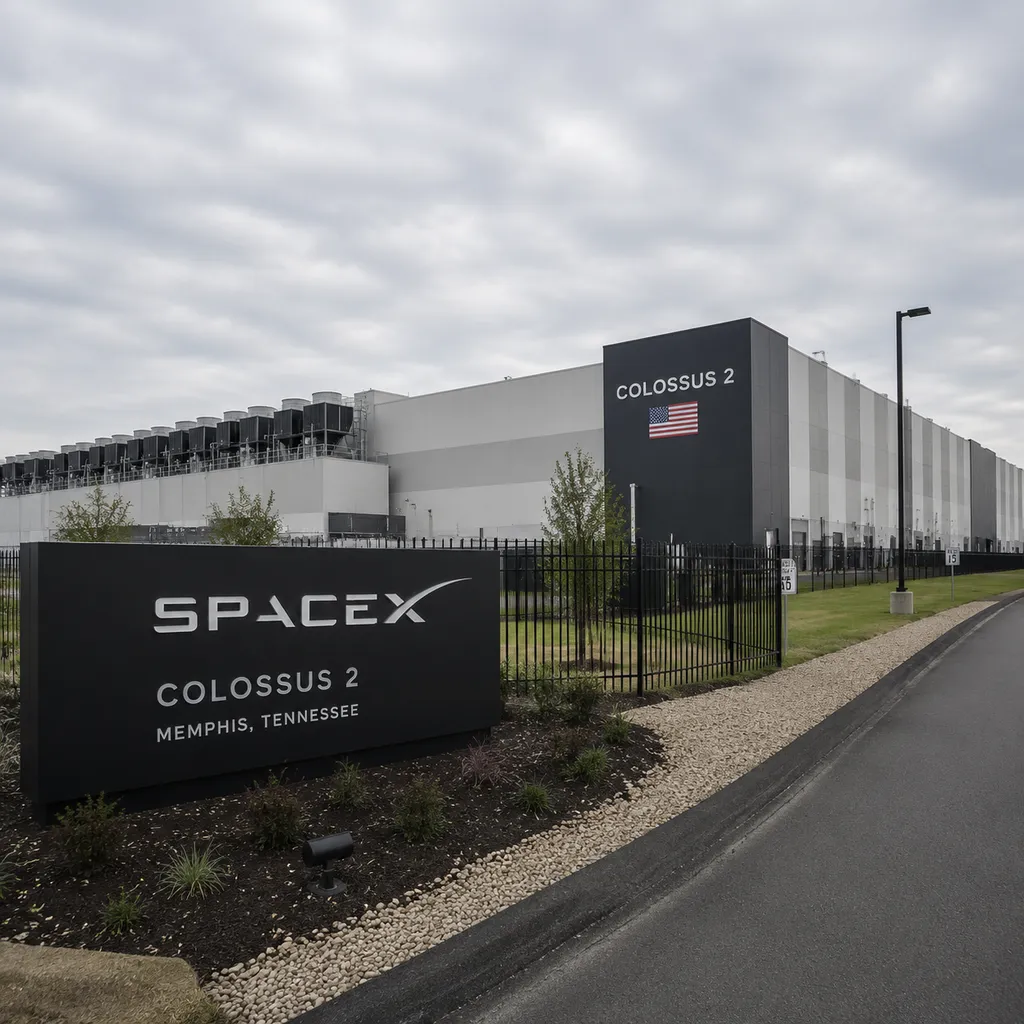
Where will the computing power come from? From SpaceX’s Colossus 2 data center near Memphis, Tennessee. This is one of Musk’s core assets in AI infrastructure, equipped with NVIDIA’s latest GB300 chips—the top-tier hardware for training and running cutting-edge large models.
Who Is Reflection?
This company keeps a low profile—so low that many industry insiders may have first heard the name because of this deal.
But several details are worth noting:
First, they have secured investment from NVIDIA. In today’s tight computing power market, companies backed by NVIDIA generally enjoy better priority for chip supply. That Reflection chooses to rent computing power from SpaceX rather than directly source from NVIDIA shows that even with investor ties, acquiring large-scale computing resources remains difficult.
Second, they have already established cooperation with the U.S. government. Reports say Reflection is participating in the U.S. Department of Energy’s “Genesis Mission” and is involved in broader AI projects for the Pentagon. Companies winning such government contracts typically must pass strict security reviews.
Third, they are committed to the open-source path. This is the main difference between Reflection and other SpaceX computing clients—Anthropic is closed-source, Google is closed-source, Cursor operates at the tools layer. Reflection is positioned as an open-source model developer.
However, Reflection has yet to publicly release frontier-level open-source models. In other words, this is a company with government backing, top-notch investment, and a clear technological direction—but without a signature product yet.
The $6.3 billion in computing power is intended to change that.
Musk’s Computing Business: From Self-Use to Rental
The other key player in this deal is SpaceX—or more precisely, Musk’s growing computing power empire.
Let’s rewind to 2024. Musk’s xAI launched an ambitious plan: build a massive-scale data center in Memphis, Tennessee, codenamed Colossus. From groundbreaking to partial operation took less than four months—unheard of in the data center industry.
At the time, the prevailing view was that Musk built this data center to provide training compute for xAI’s Grok model. That was indeed the case—but the story didn’t end there.
In 2025, SpaceX began renting Colossus’s computing resources externally. The first batch of clients included Anthropic and Google—both direct competitors to xAI. Musk’s stance was straightforward: business is business, competition is competition. If you can pay, you can use the compute.
By 2026, the client list continued to expand. Cursor signed on, and reports suggested Musk’s company was advancing plans to acquire Cursor. Now Reflection has joined.
A clear business model emerges: SpaceX is becoming the “Compute AWS” of the AI era.
This positioning is intriguing. Amazon AWS grew from cloud computing, essentially renting out surplus server resources. SpaceX’s compute business follows similar logic—unused compute from xAI is better monetized than left idle. But the difference is that SpaceX’s clients aren’t ordinary enterprises—they are the most advanced AI labs in the world.
Why would these companies rent compute from an affiliate of their competitor? The simple answer: No other choice.
NVIDIA’s top-tier chip capacity is limited. Large-scale supply channels are few. Microsoft has them, but needs them for its own use and to support OpenAI. Google has them, but its TPU ecosystem is relatively closed. Amazon has them, but AWS’s AI chips (Trainium) are still catching up to NVIDIA.
Musk holds NVIDIA’s latest chips, operates ready-built data centers, and has mature operational teams. For AI companies in urgent need of computing power, this is the most practical choice.
The Computing Power Dilemma of Open-Source AI
This deal also carries industry-wide significance: The open-source AI camp has officially entered the top-tier compute arms race.
Over the past few years, the gap between open-source and closed-source models has gone through several stages:
- 2022–2023: ChatGPT ignited the market; closed-source models far ahead; open-source community still chasing GPT-3.5’s level
- 2024: Open-source models like Llama 3, Qwen 2, and Mistral advanced rapidly, reaching or approaching GPT-4 level in some tasks
- 2025: Gap shrinks further, but closed-source models remain superior in reasoning ability and long context handling
The core cause of this gap is not algorithms—it’s computing power.
Meta can build Llama well because they have enough GPUs. Alibaba can build Qwen well because Alibaba Cloud has sufficient compute reserves. Mistral’s leading position partly stems from securing Microsoft’s investment and computing support.
But most open-source AI companies lack such capabilities. They may have excellent research teams and innovative technical ideas, but lack the vast compute needed to train frontier models.
Reflection’s deal demonstrates that an open-source AI startup can obtain top-tier compute resources through a commercial agreement.
Of course, the premise is having money. $150 million a month is no small figure—Reflection must have either secured large-scale funding or have government contract cash flow. For other open-source AI companies, whether this path is viable will depend on whether they can tell a story investors are willing to buy.
The Geopolitical Undercurrent
One line in the report is worth noting: “At a time when governments and enterprises around the world are reassessing their dependence on closed AI systems, this is an AI company focused on open-source models.”
The backdrop is that in the past two years, AI sovereignty has become a key agenda item for governments worldwide.
The EU worries excessive reliance on U.S. AI companies could pose data security and strategic autonomy risks. Middle Eastern nations are seeking to build domestic AI capabilities. Japan, South Korea, and India are advancing national AI strategies. Even within the U.S., there are voices concerned about over-concentration in a few closed-source companies.
Open-source models become more attractive in this context. If a nation or enterprise can build its AI systems on open-source models, they need not fear supplier policy changes or geopolitical risks.
Reflection’s government ties and open-source positioning give them unique value in this narrative. In some sense, this may be one reason they landed the $6.3 billion compute contract—not just for technical potential but also for strategic significance.
What SpaceX’s Client List Signifies
Looking at SpaceX’s known compute clients reveals an interesting mix:
| Client | Type | Model Strategy | Background | |--------|------|----------------|------------| | Anthropic | AI Lab | Closed-source | Founded by ex-OpenAI core team; backed by Amazon | | Google | Tech giant | Primarily closed-source | Own TPU capacity but still needs NVIDIA compute | | Cursor | Dev tool | Application layer | AI code editor; rumored Musk company acquisition | | Reflection | AI startup | Open-source | Backed by NVIDIA; U.S. government cooperation |
Closed-source, open-source, giants, startups, application-layer, model-layer.
This client structure shows SpaceX’s compute business is not betting on one technical path—it’s building a platform. Whoever needs compute and can pay, SpaceX will do business with them. Whether clients compete with each other doesn’t matter.
This aligns with Musk’s usual business style. Tesla opened its patents, SpaceX launches rockets for competitors (like NASA), and Starlink sells to any paying customer. In Musk’s philosophy, market share and ecosystem control outweigh short-term exclusivity.
What Does $6.3 Billion Buy?
Let’s return to the core question: What exactly is Reflection buying with $6.3 billion?
From a hardware perspective: access to NVIDIA GB300 chips. GB300 is currently the top choice for training large models, with significant improvements in performance and efficiency over the previous generation. But this is not exclusive—SpaceX’s other clients use the same chips.
From a time perspective: three and a half years of guaranteed compute. In AI, three and a half years is a long cycle. ChatGPT was released in late 2022—less than four years ago—and the industry has transformed. Reflection locking in compute for this period means they can focus on model development without worrying about supply disruptions.
From a strategic perspective: an entry ticket. Without compute at this level, there’s no qualification to compete in frontier models. OpenAI’s lead, Anthropic’s ability to follow, Meta’s continued Llama iteration—all rest on massive compute backing. Reflection’s $6.3 billion buys them a seat at the table.
But a ticket doesn’t guarantee a win.
Reflection must still prove they can turn this compute into competitive models. The open-source community already has mature players like Llama, Qwen, Mistral, and DeepSeek. As a newcomer, Reflection must produce sufficiently differentiated products to establish themselves.
Interestingly, the exit clause provides both sides with an out. If Reflection finds after three months that their technical path needs adjustment or funds run short, they can terminate. If SpaceX finds a better client, they can renegotiate.
The compute arms race continues. $6.3 billion is just the entry fee—the real contest is only beginning.
Editor’s note: For developers, whether the model is closed-source or open-source, stability in calling it is the real key. OpenAI Hub now supports GPT, Claude, Gemini, DeepSeek, and other mainstream models—one key for all, direct connection in China.
References
- ITHome: Contract worth up to $6.3 billion—SpaceX signs computing power cooperation agreement with open-source AI startup Reflection — Chinese report on agreement details and clauses


