
ByteDance’s mysterious codename “groudon” appears in Arena, escalating the covert battle of programming models

LMSys Arena has quietly launched ByteDance’s mysterious model “groudon,” targeting programming scenarios, yet no such name can be found through official channels. Considering ByteDance’s recent intensive model release pace, this might be a beta version of the Doubao Code series or an exploration of an entirely new architecture.
ByteDance's Mysterious Codename "groudon" Appears in Arena, Programming Model Arms Race Intensifies
No teaser, no press conference—ByteDance is up to something again.
Yesterday, a developer discovered a never-before-seen model name on LMSys Chatbot Arena: groudon. The submitter was listed as ByteDance, and the tag was "code"—meaning programming-related scenarios. Strangely, searches through ByteDance's official documentation, Volcano Engine console, and Doubao API list turned up nothing on this name.
A big company's model quietly appearing on the most authoritative blind testing platform without any official endorsement usually means one of two things: either an internal test version is being released early for “temperature testing,” or ByteDance is preparing a major reveal.
What's the story behind "groudon"?
First, let’s talk about the name itself. Groudon is a legendary Pokémon, master of earth and land. ByteDance had previously used a “seed” naming convention for model codenames, such as the Doubao-Seed series. This sudden switch to a Pokémon name marks a distinct change in style.
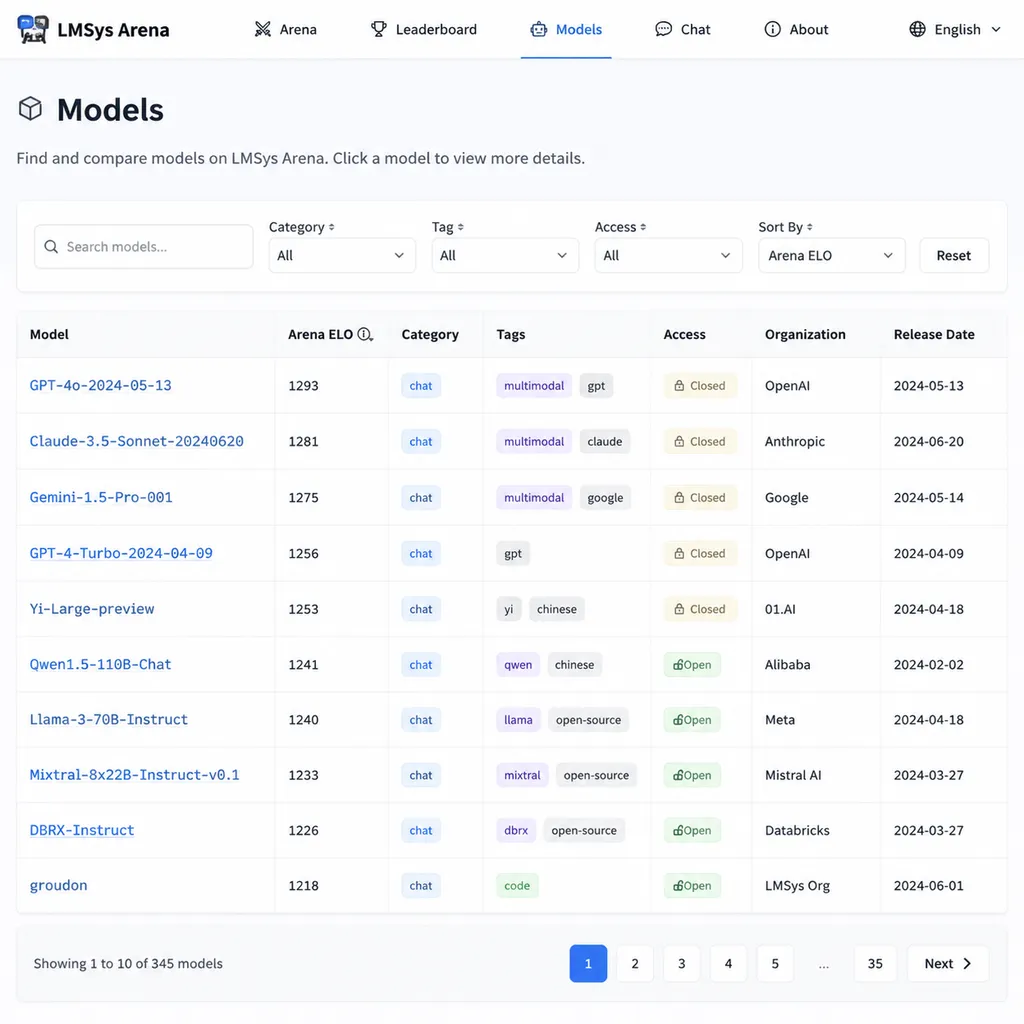
The developer who first spotted this in the community mentioned that they regularly track ByteDance’s new models using keywords like “seed” and “dola,” but this time they were completely caught off guard—ByteDance chose a codename with no apparent connection. Such “stealth” strategies are not uncommon in Arena’s history. Many companies will anonymously or under code names upload models to Arena before official release to gather unbiased user preference data, then decide on product strategy accordingly.
But the question remains: What exactly is groudon?
Possibility 1: Iteration of Doubao 2.0 Code
During the Lunar New Year holiday this year, ByteDance released Doubao 2.0, which included a version specifically optimized for programming scenarios—Doubao-Seed-2.0-Code. Officially, the model was said to enhance codebase interpretation, improve application generation and error correction abilities in Agent workflows, and integrate with TRAE (ByteDance’s AI programming product).
From its positioning, groudon’s “code” label matches Doubao 2.0 Code closely. If this is correct, groudon could be a further tuned iteration of 2.0 Code, or a special “competition version” prepared specifically for Arena evaluation.
After all, Arena’s Elo rankings directly affect developer model selection decisions. Companies take this leaderboard much more seriously than many realize.
Possibility 2: A brand new programming model architecture
Another possibility is that groudon is not an extension of the existing product line at all, but rather ByteDance exploring a new technical path.
Over the past year, competition in programming models has shifted from “who can write correct code” to “who can complete complex multi-step development tasks.” Claude, with its outstanding long-context understanding and instruction-following ability, has an excellent reputation among developers; OpenAI’s Codex, after evolving into GPT-4, has been pushing hard into agent-based programming.
If ByteDance wants to claim a position in this race, incremental improvements to Doubao 2.0 Code might not be enough. A model designed from scratch specifically for programming scenarios could offer greater potential.
Just how aggressive is ByteDance's "model arms race"?
Understanding groudon’s significance requires looking at ByteDance’s recent pace in model development.
Lunar New Year “bombardment release”
Around Lunar New Year 2026, ByteDance was dropping major news almost daily:
- Seedance 2.0: Video generation model supporting text and image input, producing multi-shot videos up to 60 seconds long; debuted in CCTV Spring Festival Gala’s “Celebrating the Flower God” segment
- Doubao 2.0: General-purpose versions Pro, Lite, Mini, plus the Code version dedicated to programming
- Seedream 4.5 / 5.0: Continuous updates to image generation models
- Seed3D 2.0: 3D generation model
This pace is virtually unmatched among Chinese tech firms. Zhipu’s GLM-5, MiniMAX’s 2.5, DeepSeek’s V4 also launched updates in the same period, but ByteDance’s product coverage is broader—from text to images to video to 3D, advancing across nearly all modalities simultaneously.
The “silent war” in programming
Among these releases, programming models have been the most low-profile. Doubao 2.0 Code’s announcement comprised just a few lines, mainly promoting its better integration with TRAE, with none of the big benchmark score showcases seen in the Pro version.
But low-profile doesn’t mean unimportant.
Programming models are among the most mature AI application scenarios today. GitHub Copilot showed developers are willing to pay for productivity gains, and Cursor proved AI IDEs can reshape the development workflow. For ByteDance, TRAE is their core product in this domain, and TRAE’s competitiveness ultimately depends on the underlying model’s capabilities.
Groudon’s appearance suggests ByteDance’s investment in programming models may be far greater than outsiders suspect.
The “unwritten rules” of Arena evaluation
Why do companies like to release “mystery models” on Arena?
LMSys Chatbot Arena is widely recognized as one of the most impartial model evaluation platforms in the industry. Its core mechanism is “blind testing”—users don’t know which model they’re interacting with and can only choose the better response. The final Elo rankings reflect real user preferences in real scenarios, not vendor-chosen benchmark scores.
For companies, this mechanism is both an opportunity and a risk.
Opportunity: If a model scores well on Arena, this carries far more weight than any proprietary benchmark. Developers believe “this model is truly useful in real scenarios.”
Risk: Arena evaluations are public—everyone can see the results. If an officially released product performs poorly on Arena, the brand takes tangible damage.
Thus, many companies use “codenames” or “anonymous” listings to run the model on Arena for a while, see real-world performance, then decide whether to promote it. A strong result can be trumpeted; mediocre results can be quietly withdrawn with little notice.
Groudon is very likely born of this strategy.
Where is the next battleground for programming models?
Setting groudon aside, ByteDance’s increased focus on programming scenarios is a smart move.
Currently, programming model competition is centered on several dimensions:
1. Accuracy and completeness in code generation
The basic ability is: given a requirement description, can it produce correct code? Most major models now do this fairly well, with shrinking gaps.
But harder is completeness—can it finish the entire function in one go, including edge case handling, error handling, and test cases? Or does the user have to keep prompting, supplementing, and fixing?
Doubao 2.0 Code emphasized “application generation ability” at launch to address this. The official example was developing a “Spring Festival Town” interactive project using TRAE + Doubao 2.0 Code in just 5 prompt rounds. Such end-to-end generation capability is one of the core competitive strengths of programming models.
2. Codebase understanding and context length
Real development scenarios involve modifying, adding features to, or debugging existing projects. Models must “read” the available codebase, understand architecture, dependencies, and coding style.
This demands extensive context length and strong long-text comprehension. Doubao 2.0’s supported context window specifics aren’t published, but based on pricing (tiered billing by input length, with 32k tokens as one tier) it likely supports at least beyond 32k tokens.
By comparison, Claude 3 supports 200k context, GPT-4 Turbo supports 128k. If groudon achieves a breakthrough here, it would be a major selling point.
3. Agent workflows and multi-step tasks
The ultimate form of a programming model isn’t as a “code completion tool,” but as an “AI programmer” capable of independently finishing development tasks. This means the model should:
- Understand high-level requirements
- Break them down into concrete development steps
- Write code, run tests, fix bugs
- Call external tools when needed (reading documentation, searching StackOverflow, running shell commands)
This is the so-called “Agent” transformation. Doubao 2.0 Code’s “improved error correction in Agent workflows” points in this direction.
Currently, Anthropic’s Claude and Cognition’s Devin (though the latter is controversial) are furthest along in this field. For ByteDance to position itself in agent-based programming, it will need not only enhanced model capacity but also integration with toolchains—TRAE, as the IDE layer product, fills this role.
What developers should pay attention to
For the average developer, groudon is still just a “rumor-level” entity—no official documentation, API, pricing, and even uncertainty over whether it’s a standalone product.
But a few signals are worth watching:
1. Subsequent performance on Arena
If groudon continues to score highly on Arena’s code tasks, it shows ByteDance truly has strong capabilities in programming models. Keep an eye on lmsys.org rankings.
2. TRAE’s feature updates
ByteDance’s programming models mainly reach users through TRAE. If TRAE undergoes major feature updates soon, or adds new “expert mode” or “advanced reasoning,” this could be a sign of groudon or its derivative going live.
3. Volcano Engine API updates
APIs for enterprises and developers are ByteDance’s main commercialization channel. If groudon is eventually officially released, it will likely launch as a Volcano Engine API. Watch for updates to Volcano Engine’s model list.
The collective charge of domestic programming models
Taking a wider view, groudon’s appearance is just one sign of the collective push by domestic programming model players.
Over the past year, more entrants have joined this race:
- Zhipu GLM-5: 745 billion parameters, stronger multi-token prediction and agent workflows, positioned as a “top-tier dialogue and programming agent model”
- DeepSeek V4: Supports million-token contexts, offering unique advantages in understanding ultra-large codebases
- MiniMAX 2.5: Focused on improving programming ability and agent interactions, now in overseas beta
- Alibaba Tongyi Lingma: Based on Tongyi Qianwen, tailored for VS Code and JetBrains plugin ecosystems
- Baidu Wenxin Quick Code: Powered by Wenxin model, deeply integrated with Baidu Cloud developer ecosystem
These models differ in focus but share one direction: Programming is among the fastest-deploying AI scenarios with the strongest willingness to pay. Whoever gains an advantage here can secure a favorable position in AI commercialization.
ByteDance’s sneaky Arena release of groudon shows they’re accelerating too. Programming model evaluations are relatively objective—code either runs or doesn’t; the issues solved are easier to quantify than chat tasks.
In this race, there’s no “brand halo” to rely on—only raw capability matters.
Final thoughts
The name groudon might soon get an official explanation—or it may remain forever in the realm of community speculation.
But its appearance reveals an intriguing reality: competition between large models has shifted from “who releases first” to “who wins in real-world evaluations.” Third-party platforms like Arena are becoming the “judge’s bench” for model abilities—while companies are learning to use anonymity, codenames, and phased testing to “check the temperature” before official release.
For developers, this is beneficial. You don’t have to rely solely on vendor-issued benchmarks; you can refer to Arena’s blind test results to make selection decisions based on more objective data.
As for groudon’s true nature—let’s wait for ByteDance to reveal the answer.
References
- Arena Suddenly Launches Mysterious ByteDance Model “groudon” Tagged as Code - Linux.do community discussion post, earliest source reporting the model’s discovery


