
DeepMind invests $75 million to partner with A24 — Is AI about to take over Hollywood?
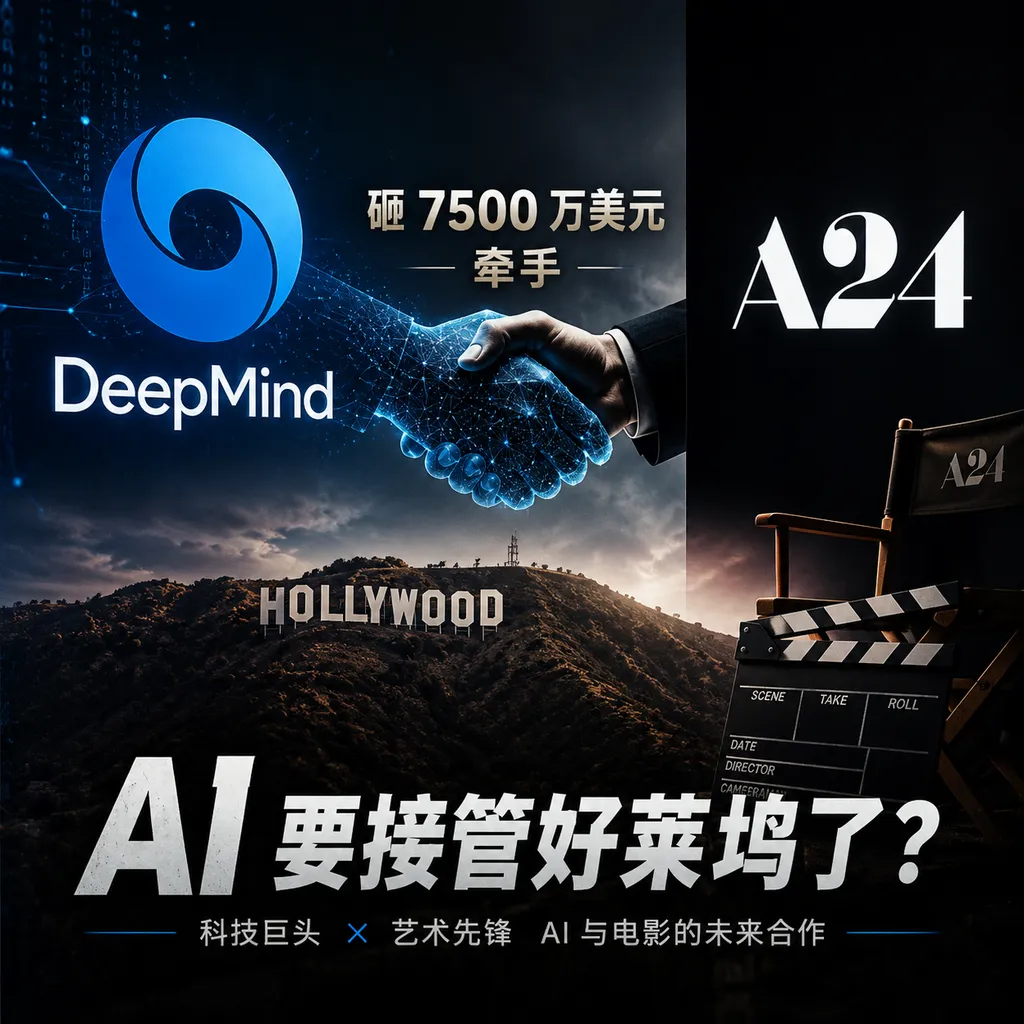
Google DeepMind announced a strategic partnership with independent film company A24, investing about $75 million to carry out a multi-year research project. The core goal is to have real filmmakers participate in designing AI creative tools, rather than simply generating videos from text. What’s special about this deal is that A24’s film library will not be used for training.
DeepMind invests $75 million to partner with A24—Is AI about to take over Hollywood?
The deal was officially announced today: Google DeepMind is investing about $75 million in independent film company A24 to launch a multi-year research collaboration.
Calling it an “investment” is somewhat misleading—this isn’t a typical financial investment. DeepMind isn’t buying equity for returns; it’s buying a ticket into the creative core of Hollywood—inviting people who have actually made films to tell AI researchers exactly what kinds of tools creators really need.
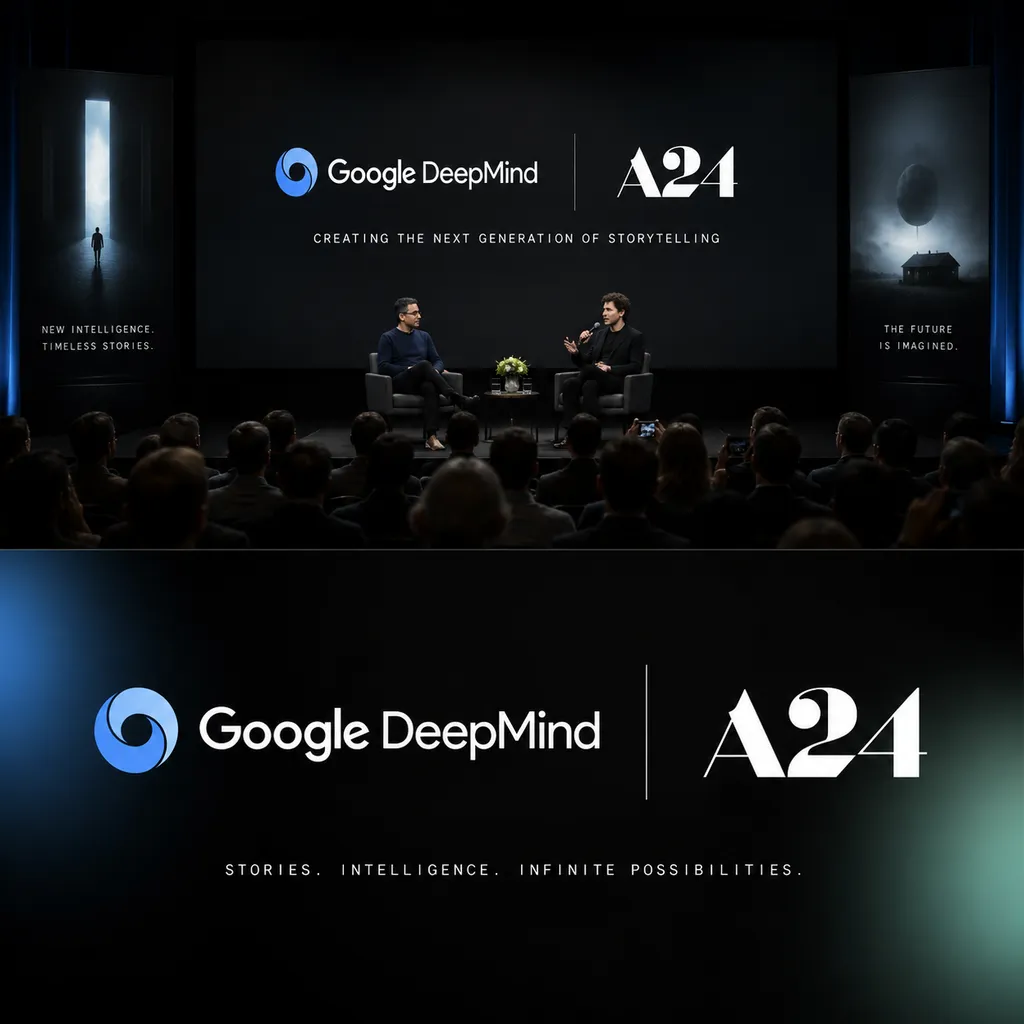
1. The essence of the deal: What is DeepMind buying?
First, let’s clarify the basic framework of this partnership:
- Investment size: about $75 million
- Form of collaboration: non-exclusive research collaboration—A24 can continue working with other AI companies
- Film library ownership: clearly agreed—A24’s film library will not be opened to Google for training
- Core objective: jointly develop AI filmmaking tools aimed at creators
Several notable points here:
First, the “non-exclusive” clause matters. A24 isn’t tying itself exclusively to Google. This shows A24 views this partnership as “exploratory” rather than a full bet. For an independent studio known for its artistic focus, keeping options open is a rational move.
Second, not opening the film library for training is smart for both sides. Hollywood is extremely sensitive to copyright issues in AI training. In the 2023 writers’ and actors’ strikes, AI was a core issue. A24’s library includes Oscar-winning films like Everything Everywhere All at Once, Moonlight, and Ex Machina. Using these for training without caution could provoke major controversy. DeepMind clearly doesn’t want to be dragged into a copyright war over training data.
Third, what does $75 million mean to each side? For Google, it’s pocket change—Alphabet’s R&D spending in 2025 exceeded $40 billion. For A24, it’s significant: their annual production budget is roughly $200–300 million, so $75 million equals funding for two or three mid-budget films. This money lets A24 build a dedicated tech team to deeply participate in AI tool development without disrupting their main production work.
2. Why A24?
In Hollywood, A24 is an outlier.
Founded in 2012, it rose from a small distributor to a synonym for independent film through distinctive curation and marketing. They’ve earned seven Best Picture Oscar nominations and three wins. More importantly, A24 stands for a radically different creative philosophy than major studios—director-led, style-first, commercial considerations second.
DeepMind’s choice of A24 over Disney, Warner, or Universal has clear logic.
1. A24’s creator network
Barry Jenkins (Moonlight), Daniel Kwan and Daniel Scheinert (Everything Everywhere All at Once), Ari Aster (Hereditary, Midsommar), Robert Eggers (The Witch, The Lighthouse)… A24’s collaborations are essentially a hall of fame for contemporary auteur cinema.
These directors share two traits: a strong desire for creative control and an openness to new technology. Everything Everywhere All at Once is a prime example—it uses extensive visual effects completely in service of storytelling and emotional expression, not just spectacle.
This is exactly the kind of feedback DeepMind needs. General-purpose AI video tools (like Sora, Runway, or Pika) often produce content with a noticeable “AI flavor”—beautiful visuals but lacking narrative flow, impressive single shots that don’t cut together. To make tools truly usable in professional filmmaking, people fluent in cinematic language must participate deeply.
2. Appropriate scale
A24 is professional but not bloated like the big six studios. Large studios have long decision chains and complex departmental interests—a research collaboration might require a dozen layers of approval. A24’s flatter structure allows core decision-makers to directly converse with DeepMind’s research team.
A key figure mentioned in this collaboration is Scott Belsky. Before joining A24 as Chief Strategy Officer in 2024, he was Adobe’s Chief Product Officer, leading Adobe Creative Cloud’s AI transformation. Belsky understands both creative tools and corporate strategy—an ideal catalyst for cross-industry collaboration.
3. Brand positioning
To be blunt, partnering with A24 benefits DeepMind’s public image. If DeepMind announced collaboration with a blockbuster factory studio, public reaction would likely be “AI will mass-produce more garbage films.” But A24’s artistic halo offers moral endorsement—this isn’t AI replacing creators, but AI serving creators.
Whether this narrative holds up will ultimately depend on the product.
3. What can DeepMind’s AI film tools actually do?
The announcement didn’t reveal much technical detail, but based on DeepMind’s existing capabilities, we can guess the direction.
Veo series: Core video generation ability
DeepMind’s Veo video generation model has reached version 3.1; the latest Veo 3.1 Lite is optimized for lightweight use cases. Public demos show Veo already achieving strong physical consistency and motion coherence.
But “can generate nice-looking videos” is far from “usable in filmmaking.” Filmmaking needs:
- Precise control of cinematic language: dolly, zoom, pan, depth of field, focus shifts
- Performance nuance: AI-generated human expressions and body language often lack subtle emotional layers
- Consistent style: thousands of shots in one film must maintain visual consistency
- Post-production compatibility: generated material needs to integrate into color grading, effects, sound workflows
These problems can’t be solved solely by algorithm iteration—they require experienced filmmakers to define requirements, test output, and provide feedback. That’s A24’s value.
Gemini 3: Multi-modal understanding core
Gemini 3 is currently DeepMind’s most capable multi-modal model, handling text, images, video, audio, and code. In filmmaking, it could be used for:
- Script analysis: break scripts into scene lists, character maps, emotional arcs
- Asset management: intelligently categorize, label, and retrieve filmed material
- Cross-modal conversion: generate storyboard sketches from scripts, match visuals to music tempo/emotion
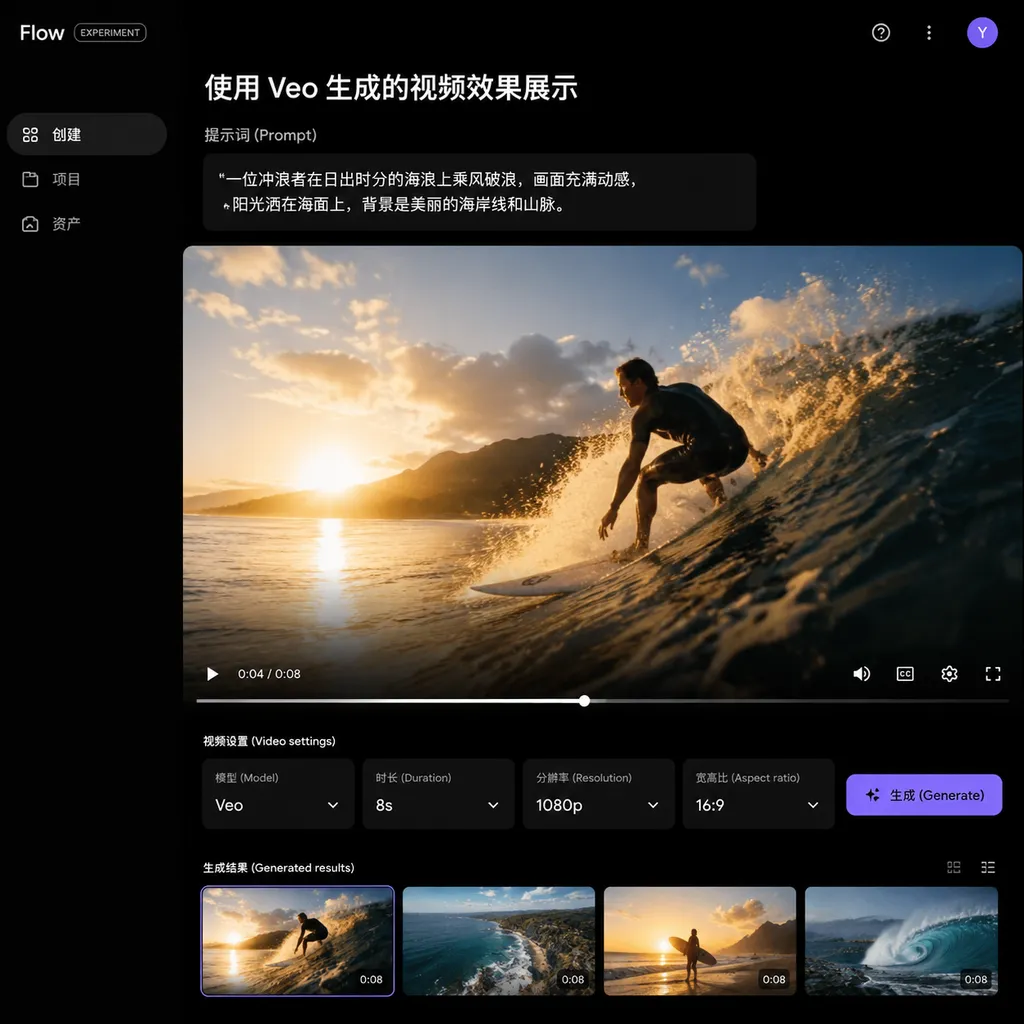
These abilities already appear in Google products—like the Flow tool launched earlier this year, integrating Veo, Imagen, and Gemini for natural language video creation and editing.
But Flow is aimed at general users—simple UI and functions. Professional filmmaking needs very different tools—finer control, specialized interfaces, deep integration with industry-standard software (DaVinci Resolve, Avid, Nuke, etc.).
Other capabilities
Besides video and multi-modal, DeepMind has other tech relevant to film:
- Lyria 3: music generation, already capable of high-quality scoring
- Genie 3: world models simulating physical environments for virtual set construction
- Imagen 3: image generation for concept art, storyboards, digital matte painting
In theory, these could form an AI toolchain covering the entire filmmaking process. But between “theoretical” and “practically usable” lies a long road.
4. Hollywood’s AI anxiety
This partnership comes at a delicate time.
The 2023 Hollywood strikes sounded an alarm. The Writers Guild and Actors Guild made AI a core demand, resulting in clear limitations:
- AI-generated content can’t be labeled as “literary material” (e.g., a script)
- Studios can’t force writers to use AI tools
- Using actor likenesses to train AI requires explicit consent and compensation
These terms may look like a victory, but industry workers know technology won’t stop for a contract. AI’s capabilities will grow as costs drop. The question isn’t if AI will enter filmmaking but how.
DeepMind–A24 represents a milder path: creators shape the tools, instead of tools replacing them. It sounds nice, but reality is often messier.
Can creators really lead?
Tech firms involving creators in design isn’t new—Adobe invites designers and photographers to beta-test tools; Apple hears editors’ feedback for Final Cut Pro. But final product direction rests on the tech company’s strategic judgment.
Creator feedback has value, but how it’s prioritized and adopted depends on DeepMind. A24 can offer expertise, not decision power.
And “creators” are not monolithic—a renowned director and a junior on set may have completely different attitudes toward AI. Which is DeepMind more likely to heed? The answer’s obvious.
The double-edged nature of tools
Any efficiency-boosting tool cuts both ways. Word made writing easier but let publishers lay off typesetters; Excel sped up analysis but let fewer accountants handle more work.
AI film tools can help indie filmmakers achieve complex visuals on tiny budgets—good news for stories previously unfilmable. But they can also let studios produce more content with fewer staff—bad news for workers.
Which way it goes depends not on the tech itself, but on who controls it and the industry’s power dynamics.
5. Competitive landscape: DeepMind is not alone
AI entering filmmaking—DeepMind isn’t the first, won’t be the last.
Video-focused startups
Runway might have the deepest Hollywood penetration—their Gen-3 model was used in multiple films and ads; Everything Everywhere All at Once used Runway for some VFX. Their strengths are focus and speed—they specialize solely in video, refining products more for professional needs than big-company general-purpose tools.
Pika is louder in the consumer market, but weaker in professional circles—aimed more at everyday users than filmmakers.
OpenAI’s Sora isn’t broadly released yet, but leaked demos show strong capabilities. Sora’s problem—OpenAI seems undecided on its commercialization strategy or on handling copyright and safety issues.
Traditional software giants
Adobe has integrated many AI features into Premiere Pro and After Effects—smart masking, noise reduction, auto captions. Adobe’s strategy is to enhance existing tools rather than launch standalone AI products, a cautious path but with limited disruptive innovation.
Autodesk is deeply rooted in 3D and VFX—its Maya and 3ds Max are industry standards. Autodesk is adding AI, but slowly.
DeepMind’s differentiation
Compared to competitors, DeepMind’s advantages:
- Technical depth: world-class foundational model research—Gemini’s multi-modal abilities lead most rivals
- Resource backing: with Google/Alphabet, funding and compute aren’t issues
- Ecosystem synergy: Google Cloud, YouTube, Google Photos etc. can support tool distribution and data
Weaknesses:
- Productization: DeepMind focuses on research breakthroughs, not polishing commercial products. From AlphaGo to AlphaFold, most output stays in papers/demos with few end-user tools
- Industry understanding: filmmaking has its own language, workflows, politics—outsiders take time to grasp them
- Trust issues: Hollywood is wary of tech giants; Google’s past attempts via YouTube in content weren’t very successful
Partnering with A24 aims to offset the last two weaknesses—but execution will decide.
6. What does this mean for ordinary developers?
If you build AI applications, note these points:
1. Vertical domain opportunities
Big model companies are shifting from “general capabilities” to “vertical scenarios.” DeepMind with A24 in film, OpenAI with media in news, Anthropic in enterprise. This means pure capability competition is plateauing—next focus is usable products in specific industries.
For developers, opportunities lie in verticals—rather than making a “everything” AI app, go deep in an industry, understand user pain points, wrap general models into problem-specific tools.
2. Multi-modal is standard
This partnership’s tech—video generation, music generation, multi-modal understanding—all point towards AI moving from text to multi-modal. If you only use text models for apps now, you may be behind.
The good news—leading models are opening multi-modal APIs. Gemini, GPT-4o, Claude 3.5 support image input; video is gradually opening. Learning to use multi-modal is a must.
3. Creator tool design philosophy
DeepMind’s “creator-led design” is a product principle worth emulating. Many AI apps assume users will adapt to AI’s workflow instead of fitting AI into the user’s workflow.
In film, editors work on timelines; colorists use scopes and curves; sound engineers monitor waveforms. A good AI tool should embed into these familiar workflows, offering AI capabilities in existing interfaces.
The principle applies to any vertical—first understand current workflows, then see where AI can help.
7. A sober view: Can this succeed?
Let’s pour some cold water.
Big-company–cultural-institution collaborations fail more often than succeed. Google’s past content partnerships—YouTube Premium Originals, Google Play Movies, Stadia—mostly fizzled.
This partnership’s success hinges on:
Can tech reach professional thresholds? Current AI video generation is still “toy level” to pros. Achieving commercial-grade filmmaking tools may require one to two orders-of-magnitude improvements—uncertain if possible within the partnership timeframe.
How deep is A24’s involvement? If A24 merely sends a few people to meetings to give suggestions, the collaboration’s value is limited. True value comes when A24 directors and producers use these tools in actual projects, driving iteration with real creative needs.
Will the industry accept it? Even if tools work, will Hollywood’s guilds, workers, investors embrace them? AI adoption may face non-technical barriers—regulation, public opinion, industry politics.
No one can answer now. But one thing’s certain: AI+film is inevitable. DeepMind–A24 is just one experiment in this trend—its success uncertain, but similar experiments will multiply.
For developers tracking AI’s evolution, the key observation here is how a top AI research institution collaborates with a vertical industry’s pros, turning general tech into specialized tools. The lessons—successes or failures—will inform AI applications in other industries.
Tech belongs to tech, creation to creation. Whether AI truly serves creators rather than replacing them—this collaboration might give us the answer.
References
(Note: Since original materials are from overseas websites, links are restricted to domestically accessible domains. For more details, please check official sources.)


