
Konjac AI Releases Enterprise-Grade Large Model Gateway: The FinOps Era of Tokens Has Arrived

Konjac AI launches the MAI Gateway enterprise-level large model management platform, integrating 150+ global models and pioneering the FinAPI cost governance framework, claiming it can help enterprises cut 60%-90% of large model call bills.
Konjac AI has recently officially launched its enterprise-level large model management platform, MAI Gateway, and, for the first time in the industry, introduced the concept of "FinAPI" for large model cost governance. The logic behind this move is clear: as large model APIs gradually become as indispensable to enterprises as utilities like water, electricity, and gas, out-of-control bills are becoming a real and urgent problem.
First, the conclusion: What kind of product is this?
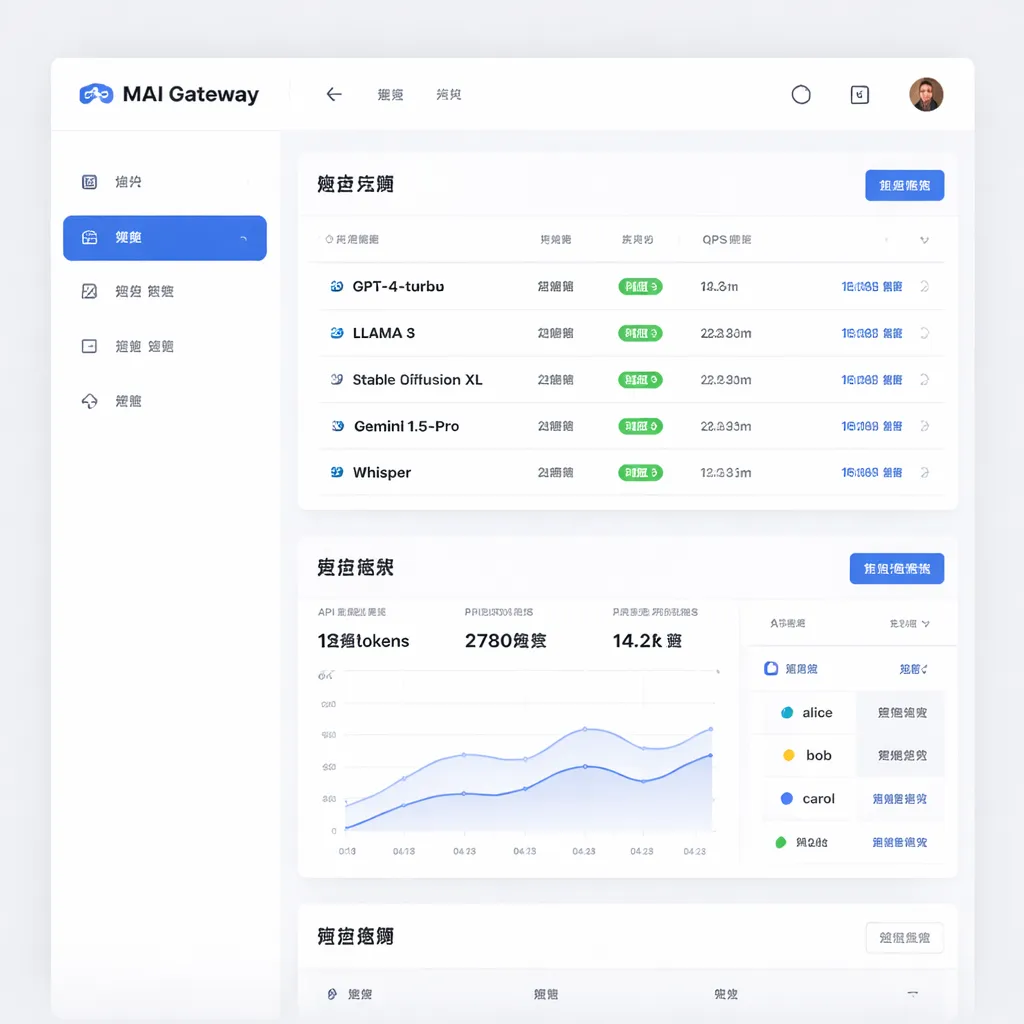
Simply put, MAI Gateway is an enterprise-grade AI gateway that focuses on three core capabilities:
- Model aggregation: Access 150+ global models from a single entry point, including Claude, Gemini, various domestic models, and video generation models like Seedance 2.0.
- Access control: Allocate model usage permissions and budgets at the department, project, and employee level.
- Cost governance: The key differentiator promoted by Konjac AI, and the implementation vehicle for the FinAPI concept.
From a product standpoint, MAI Gateway supports private deployment for enterprises with compliance requirements and cost control needs. A SaaS version is also available for small and medium-sized teams.
Why is FinAPI needed now?
Konjac AI timed the introduction of FinAPI just right.
Over the past year, large models have moved from “experimentation” to “scaled deployment.” Enterprises are no longer letting a few engineers test the waters, but rolling out adoption company-wide — developers use Claude Code to write code, operations teams use GPT to generate content, customer service connects to intelligent agents, and marketing creates AI videos.
This brings up the inevitable question: Where did the money go?
Konjac AI cited several cases in its product launch. While the exact figures may be dramatized, the underlying problems are real:
The Microsoft lesson: Reportedly, a core business unit at Microsoft let thousands of engineers use Claude Code without cost constraints. Within four months, they burned through the year's budget, spending three times more than expected.
Meta’s absurd scenario: Some employees, chasing KPIs, wrote scripts to repeatedly loop calls to intelligent agents, consuming 60.2 trillion tokens in 30 days — resulting in costs over $100 million.
The SaaS trap: A US automation company launched an AI Agent system. Due to ineffective retries and uncompressed context, monthly API costs skyrocketed from $420,000 to $1.56 million — a 271% increase.
These cases reveal a common issue: Enterprises lack fine-grained governance capability for large model calls.
Traditional IT budget controls fail here. You can’t manage tokens the same way you manage servers — billing is per-call, usage is highly elastic, and in the era of Agents, many calls are initiated automatically by machines, without human oversight.
What exactly does FinAPI do?
Konjac AI defines FinAPI as a "large model cost governance framework" built on three capability layers:
1. Quota management and circuit-breaking mechanism
Supports quota settings across multiple dimensions: by department, project, employee, or model. For example, R&D has a monthly budget of 100,000 tokens, product managers can only call GPT-4o-mini, interns cannot use Claude Opus.
It includes dynamic circuit breaking — when call volume nears the limit or abnormal patterns occur (such as a token initiating massive requests in a short time), the system intercepts automatically. The design is inspired by circuit breaker patterns in microservices, applied here to token consumption scenarios.
2. Fine-grained cost attribution
This is what corporate finance cares about most. Traditional API gateways can only tell you “how much was spent in total this month,” but FinAPI can pinpoint:
- Which department spent the money
- Which project spent it
- Which employee spent it
- Which model was called
- The specific purpose of each call
This allows companies to integrate AI spending into their budget management systems, rather than facing incomprehensible bills at year-end.
3. Active cost-reduction technology
This is the most technically complex area. Konjac AI claims to optimize costs through several methods:
Intelligent routing scheduling: Matches models automatically based on request complexity — use cheaper models for simple Q&A, premium models for complex reasoning, avoiding “overkill.”
Three-tier caching system: Caches similar requests to reduce duplicate calls. In enterprise settings, many employee questions are highly repetitive.
Context compression: In Agent scenarios, context is often lengthy and redundant. Compression reduces token consumption while preserving semantic integrity.
Request filtering optimization: Intercepts clearly invalid requests, such as format errors or missing parameters, to prevent waste.
Konjac AI’s data claims that implementing FinAPI fine-grained governance can reduce total large model API bills by 60%–90%. This should be taken with caution — actual savings depend on prior waste levels. But the direction is sound.
Aggregating 150+ models: The value of a single entry point
Beyond cost governance, another core capability of MAI Gateway is model aggregation.
Supported models include:
| Category | Representative models | |----------|------------------------| | Text dialogue | Claude 3.5/4 series, GPT-4o, Gemini 2.5, DeepSeek-R1, Tongyi Qianwen, Wenxin Yiyan | | Image generation | DALL-E 3, Imagen 2, Midjourney API, Stable Diffusion | | Video generation | Seedance 2.0, Runway, Pika | | Code assistance | Claude Code, Cursor engine |
It offers a unified API interface compatible with the OpenAI format, meaning enterprises need only maintain a single codebase to switch between models.
This capability is not new — many API aggregation platforms exist, including OpenAI Hub — but MAI Gateway’s differentiator is that it provides enterprise-level governance at the gateway layer, not just simple proxy forwarding.
For example: you can set “Marketing department can only use domestic models,” “Requests involving customer data cannot be sent to overseas APIs,” and “Token limit per request is 10,000.” Such rules are not achievable on standard aggregation platforms.
Enterprise-level security and compliance: An unavoidable topic
Konjac AI’s investment in security and compliance is noteworthy.
Data isolation: Enterprise data bypasses Konjac AI servers, communicating directly with model providers. In private deployment, all data stays within the enterprise environment.
Audit logs: Every call is fully recorded, with export and integration support for existing SIEM systems.
Compliance certification: Supports Level 3 national information security standards, with public certification available — important for state-owned enterprises, finance, healthcare, and other heavily regulated industries.
Key management: Centralized management of all model providers’ API keys; employees never handle keys directly, reducing leak risks.
These capabilities address the “dare to use” concern. Many companies want to use large models but fear data security issues, compliance risks, and audit challenges. MAI Gateway aims to eliminate these worries.
Visual console: An entry point for non-technical users
In addition to API integration, MAI Gateway offers a web-based visual console.
Functions include:
- Model experience center: Call different models directly from the web without writing code.
- Image/video generation: Upload materials to create commercial product images or short drama videos.
- Usage dashboard: View real-time consumption data by department and project.
- Alert configuration: Set thresholds for overspending notifications.
The design philosophy is to let non-technical staff utilize AI capabilities while giving managers an overall perspective.
Pricing and availability
Konjac AI currently offers two versions:
SaaS version: Pay-per-token usage. New registered users get ¥2 credit (¥10 credit if registered via the Linux.do community). Suitable for individual developers and small teams to trial.
Enterprise version (private deployment): Annual subscription; pricing requires business consultation. Suitable for medium-to-large enterprises with compliance requirements.
Note: The SaaS version currently shows only domestic models by default; overseas models require request approval via the community group. This may be for compliance reasons, but slightly impacts user experience.
Additionally, Konjac AI has launched a Taobao store to facilitate enterprise procurement through official purchasing channels.
Market landscape: Konjac AI’s position
Positioning MAI Gateway in the market:
API aggregation layer: Competitors include OpenAI Hub and various open-source OneAPI/NewAPI projects. MAI Gateway’s differentiation is enterprise-level governance; its model coverage and stability still need time to prove.
Enterprise AI platforms: Competitors include large-scale solutions from 360 Yifang Intelligence, Baidu AI Cloud, and Alibaba Cloud Bailian. MAI Gateway’s advantage is focus and lightweight design without binding to a single cloud provider; its weakness is brand recognition and service capability.
Cost governance layer: The main track Konjac AI is targeting. There are no mature domestic competitors yet, giving FinAPI a first-mover advantage. But enterprise acceptance will require success stories for credibility.
Questions to watch
As a newly launched product, MAI Gateway still has questions that need time to answer:
1. Model availability
Connecting directly to 150+ models sounds great, but is it reliable in practice? During peak periods, will throttling occur? Are response speeds stable? Users will need to test.
2. Actual effectiveness of FinAPI
A cost reduction claim of 60%-90% is significant. Actual savings will depend on usage patterns. Konjac AI needs more real-world cases to prove credibility.
3. Enterprise-level service capability
Private deployment, custom development, 24/7 support — these require strong team capacity. Can Konjac AI, as a startup, meet large client demands?
4. Compliance of overseas models
For calls to overseas models like Claude and GPT, how is cross-border data compliance handled? More clarity is needed.
Final thoughts
Konjac AI made a smart choice in its entry point: instead of competing on model capabilities against big players, it focused on enterprise-level governance capabilities.
As large models evolve from technical toys to production tools, enterprises need not just “API access” but “API control.” Whoever can help companies clarify bills, control permissions, and mitigate risks can secure a foothold in the enterprise market.
The FinAPI concept is well-targeted, addressing a pain point. But turning concept into product, and product into reputation, is a long journey.
For teams evaluating enterprise AI solutions, MAI Gateway is worth attention and trial — especially if you’re struggling with the question of “Where did the money go?”
References
- Konjac AI official launch post - Linux.do — Product launch announcement and promotions
- Konjac AI product introduction - Linux.do — Detailed functional description


