
Fujitsu PHOTON Architecture: The Trade-offs Behind 475x Performance
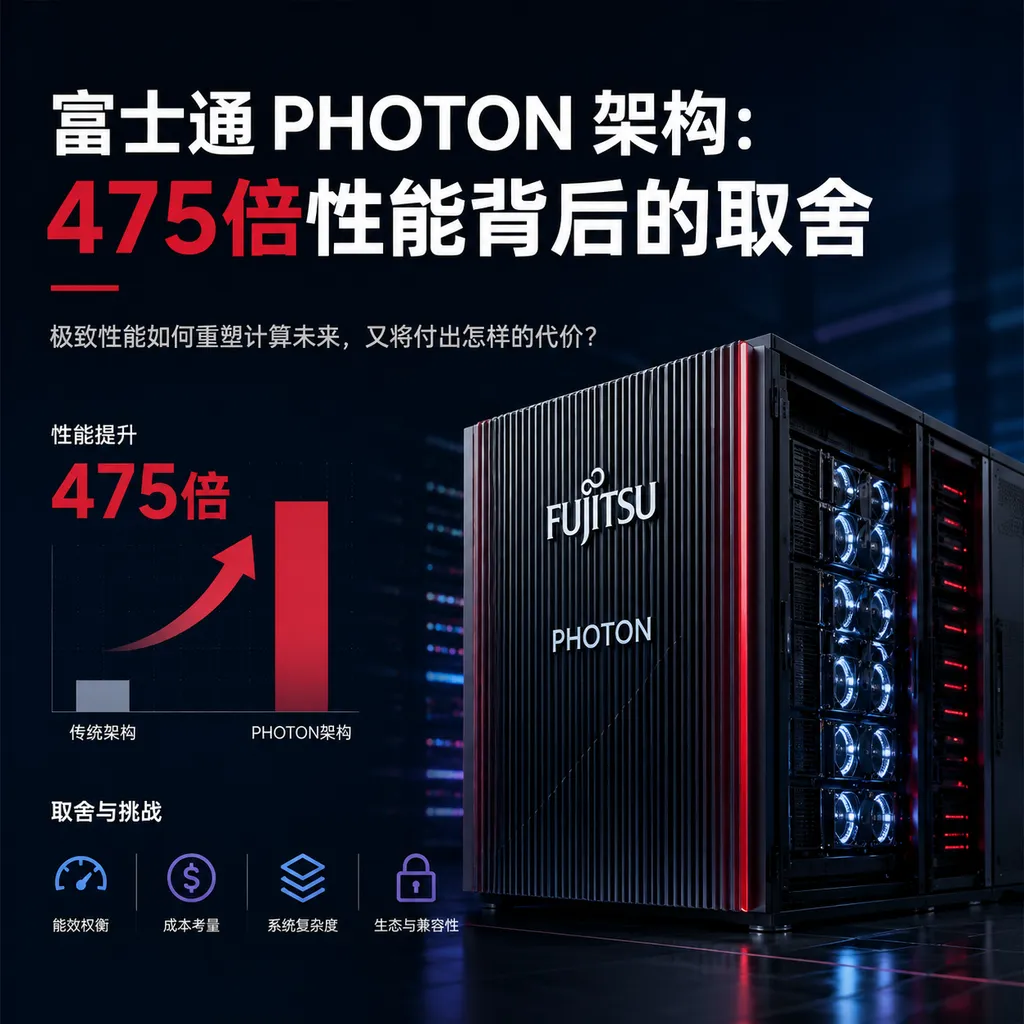
Fujitsu launches PHOTON architecture, achieving 475 times the performance of Transformers in multi-query scenarios with a 1.2B small model, but at the cost of “slightly lower quality.” Is this an efficiency revolution for specific scenarios, or just another benchmarketing game?
Fujitsu PHOTON Architecture: The Trade-offs Behind 475x Performance
Yesterday Fujitsu released the PHOTON (Parallel Hierarchical cOmputation from Top-down Network) architecture, claiming that in multi-query scenarios with a 1.2B parameter model, performance can reach 475 times that of mainstream Transformer architectures. This figure is eye-catching enough, but the line hidden in the PPT — “slightly lower quality” — is the real key. This is not a replacement for the Transformer, but a specialized solution designed for specific scenarios.
The Transformer’s Old Problem: The Memory Wall
Fujitsu is targeting a very real pain point: Transformer models perform massive memory access when handling long contexts and multi-thread processing. Each time a token is generated, the entire KV Cache must be read; the longer the context and the higher the concurrency, the more the memory bandwidth becomes the bottleneck. This isn't a compute issue — it’s that memory access speed can't keep up with compute speed. GPU FLOPs are increasing, but HBM bandwidth growth lags far behind.
This problem is especially obvious in agent systems: a single request may trigger multiple reasoning paths, each maintaining its own KV Cache. Memory usage and access costs grow linearly. In scenarios like Tree-of-Thought or Self-Consistency, which require generating multiple candidate answers and then making decisions, the Transformer’s architectural traits become a direct performance killer.
What PHOTON Does: Semantic Hierarchy + Parallel Decision-Making
The core idea of PHOTON is raising computation granularity from token level to semantic level and reducing complexity through two designs:
1. Semantic-level Segmentation
Transformers split sequences by tokens, with each token attending to all previous tokens — complexity O(n²). PHOTON instead segments by semantic units: first identifying sentences, paragraphs, and other high-level structures, then performing local computation within each layer.
This is like changing document processing from “scanning character-by-character” to “parsing the table of contents first, then processing specific paragraphs.” The advantage is better parallelism — different semantic units can be computed independently without waiting for all preceding tokens; the downside is the extra semantic segmentation module, and incorrect segmentation directly impacts comprehension quality.
2. Parallel Decision-making for Multi-Query
Traditional multi-query processes are serial: generating N candidate answers, then using another model or rule to select the best. PHOTON integrates decision-making into the reasoning process, completing it in a single forward pass via “majority voting” or “best choice” mechanisms.
This design is aggressive. It assumes multiple candidate answers can be generated in parallel and independently, with simple voting or scoring used to decide the output. In certain scenarios (classification tasks, multiple-choice) this works fine, but in open-ended generation tasks, the “best answer” itself requires complex reasoning — replacing it with a simple rule is likely to sacrifice quality.
Where the 475x Comes From: Small Models + Specific Scenarios
Some details from the test results are worth noting:
- Model size: 600M, 900M, 1.2B — all small models. No 7B or 70B data.
- Performance metric: “iteration throughput,” not end-to-end latency or total generation time.
- Quality trade-off: “slightly lower quality,” without specific benchmark scores.
- Scenario limitation: Multi-query scenarios, not single-turn dialogue or long-text generation.
The baseline for the 475x figure matters: is it compared to native Transformer, or to optimized solutions like Flash Attention, PagedAttention, etc.? If it’s the former, the value is much less impressive — Transformer inference systems in the industry are already far from vanilla implementations.
KV Cache optimization is indeed a tangible advantage. PHOTON needs less KV Cache per iteration, meaning longer context or higher concurrency can be supported with the same GPU memory. For agent systems that require large-scale parallel reasoning, this can significantly reduce GPU costs — provided your tasks truly need multi-query and can tolerate quality loss.
This is Not a Transformer Killer
PHOTON’s positioning is clear: it’s not here to replace Transformers, but to offer a higher cost-performance choice in specific scenarios.
Suitable scenarios:
- Multi-path planning in agent systems
- Reasoning tasks requiring Self-Consistency (generate multiple answers and select the most consistent)
- Small model deployment in resource-constrained environments
- High-concurrency, short-context classification or extraction tasks
Unsuitable scenarios:
- High-quality long-text generation
- Tasks with strict accuracy requirements (medical, legal)
- Complex dialogue requiring fine-grained context understanding
- Large model deployment (currently verified only below 1.2B)
From an engineering perspective, PHOTON is more like an optimization for specific workloads than a universal architectural upgrade. Similar thinking appears in linear attention architectures like Mamba, RWKV: trading off some performance in certain tasks for inference efficiency via architectural innovation.
The Old Problem of Semantic Hierarchies
PHOTON’s semantic hierarchy design sounds reasonable, but it’s actually an age-old problem spanning decades. Long before Transformers, NLP had many hierarchical models based on syntax trees and dependency parsing, all eventually replaced by end-to-end deep learning.
The reason is simple: semantic boundaries are hard to define. What counts as a semantic unit — a sentence? a clause? a semantic role? Different tasks and languages have different answers. Rule-based segmentation struggles to generalize; model-based learning adds compute overhead and error propagation.
The Transformer’s success lies in sidestepping this issue: it makes no linguistic assumptions and lets the model learn optimal representations from data. PHOTON’s reintroduction of semantic hierarchy inevitably faces the same unresolved challenges.
Fujitsu’s paper doesn’t detail the semantic segmentation implementation, which is a key omission. If segmentation itself is heavy, the claimed 475x performance boost could be mostly eaten up by preprocessing; if segmentation quality is poor, no matter how fast the subsequent computation is, it’s garbage in, garbage out.
A Springtime for Small Models?
PHOTON has so far been validated only on models under 1.2B parameters, which may not be coincidental. Small models already infer faster, and in multi-query scenarios the bottlenecks are more conspicuously in memory access and concurrency scheduling — exactly where PHOTON optimizes.
This hints at a possible intent: PHOTON might not aim to challenge large models like GPT-4 or Claude 3.5, but instead to find new applications for small models. In edge deployments, embedded systems, and cost-sensitive SaaS, a 1B-level model combined with a specialized architecture could be more practical than a general-purpose 70B model.
OpenAI’s o1 series has proven that inference-time compute can significantly enhance small model capability. If PHOTON can lower the cost of multi-path reasoning to an acceptable range, a 1B model with 100 parallel reasoning paths might outperform a 10B model with 10 reasoning paths.
But there’s a prerequisite: the quality loss must be controllable. Fujitsu only says “slightly lower” without specific data. In practice, a 5% quality drop might be acceptable, but 15% would be unacceptable. Without detailed benchmark comparisons, it’s hard to determine PHOTON’s practical applicability.
The Reality of Engineering Implementation
Even if all of PHOTON’s performance data are accurate, deployment isn’t easy:
Ecosystem adaptation: The entire LLM toolchain is built around Transformers, from training frameworks (PyTorch, JAX) to inference engines (vLLM, TensorRT-LLM) to higher-level applications (LangChain, LlamaIndex). Switching architectures means rewriting a significant amount of infrastructure.
Model training: Fujitsu has not released pre-trained models, only the architecture. This means developers have to train from scratch — a costly and time-consuming process. Without later open-sourced pre-trained weights, building an ecosystem will be difficult.
Hardware adaptation: Can PHOTON’s parallelism make full use of existing GPUs, or does it require specific compiler or kernel optimizations? The paper doesn’t mention these details, but they directly affect real performance.
Quality validation: “Slightly lower quality” needs validation in real tasks. What are the scores on standard benchmarks like MMLU, HumanEval? How does it perform in RAG, agent, code generation applications? Without these results, convincing developers to switch architectures will be difficult.
Innovation or Benchmarketing?
The 475x figure easily brings to mind the industry tradition of “benchmarketing”: picking a favorable scenario, comparing to an unoptimized baseline, and arriving at a stunning multiplier.
This isn’t to say Fujitsu is faking results, but such comparisons need more context:
- What Transformer implementation was compared? Native PyTorch or an optimized inference engine?
- What was the hardware setup? Batch size, concurrency, sequence length settings?
- Is 475x peak or average? Which parameter scale/task achieved it?
- What exactly is the quality loss? Acceptable in which tasks, unacceptable in which?
Without these details, 475x is just a marketing number. Both academia and industry have seen too many such claims, only to find real-world improvements far less dramatic.
As a traditional IT vendor, Fujitsu’s presence in AI is not as strong as stars like OpenAI, Anthropic, Google. Launching an aggressive architecture and an impressive performance figure looks more like grabbing attention than truly driving a technological revolution.
Directions Worth Paying Attention To
Despite the doubts, PHOTON points in the right direction: architectural optimization for specific workloads.
Transformer is a general architecture with good performance across various NLP tasks, which also means it’s not optimal for any single task. In recent years, academia and industry have been exploring specialized architectures for specific scenarios:
- Long context: Linear attention models like Mamba, RWKV
- Inference acceleration: Speculative Decoding, Medusa for multi-token prediction
- Resource constraints: Small model optimizations like MobileLLM, TinyLlama
- Multimodal: Modality fusion architectures like Flamingo, BLIP
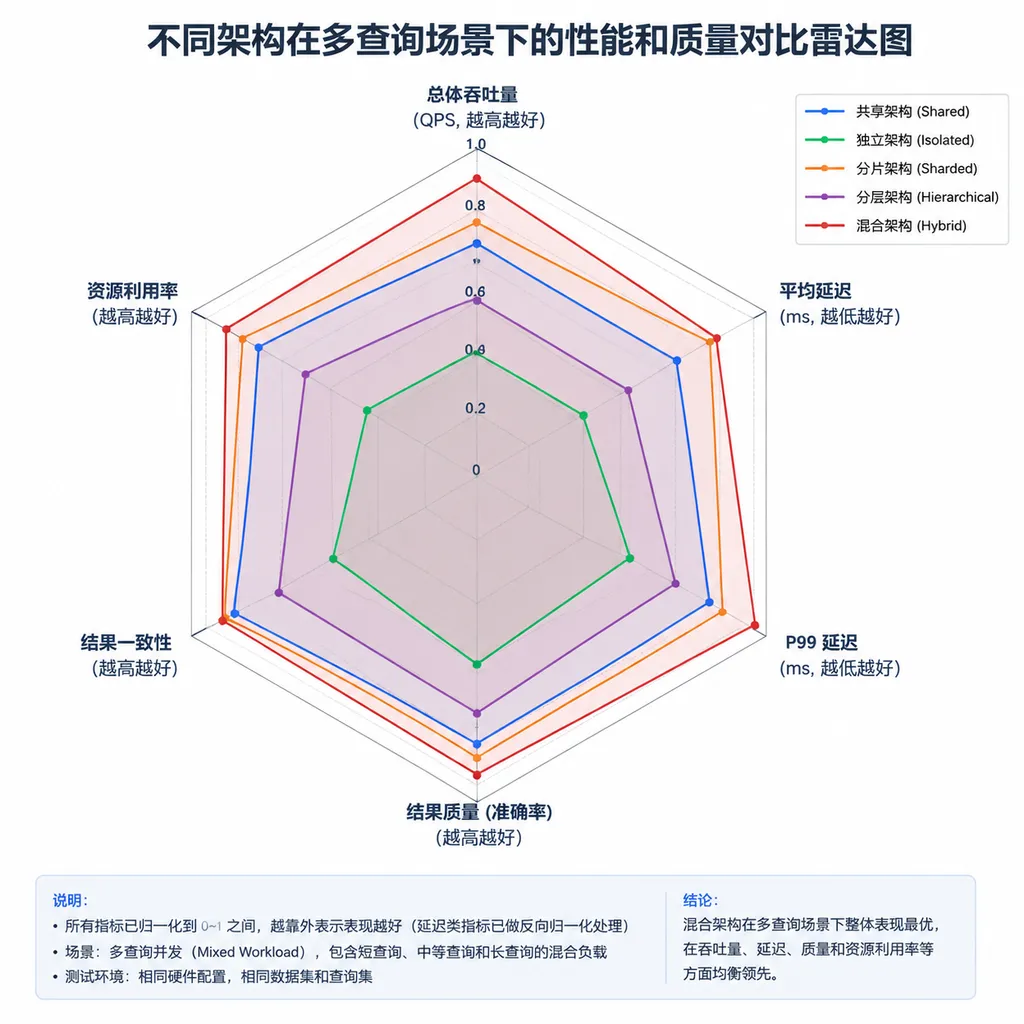
PHOTON can be seen as continuing this trend: using architectural innovation for efficiency gains in specific scenarios. If Fujitsu can open-source models, publish detailed benchmark data, and provide a complete training and deployment toolchain, PHOTON could find applications in niches like agent systems and multi-query reasoning.
But if it’s just a press release and a PPT, then it’s another “revolutionary breakthrough” story — soon forgotten.
Takeaways for Developers
If you are building agent systems or applications requiring large-scale parallel reasoning, PHOTON’s ideas are worth borrowing even if you don’t implement it directly:
- Reexamine your memory access patterns: KV Cache size and access frequency are critical bottlenecks in inference performance. Can you optimize through caching strategy, dynamic pruning, layered storage?
- Architecture design for parallel reasoning: If your task requires generating multiple candidate answers, can you parallelize at the inference framework level instead of serially calling the model N times?
- Small models + inference-time compute: Don’t worship large models. In many scenarios, a 1B model + clever inference may be more effective than a 70B model + simple sampling.
- Scenario-specific optimization: Don’t expect one architecture to solve everything. Choose or customize the most suitable solution according to your workload characteristics (context length, concurrency, quality requirements).
The Transformer era may not end immediately, but its dominance is being challenged. New architectures like PHOTON, Mamba, RWKV, SSM each make a trade-off in some dimension. Future AI systems may not be a single architecture, but hybrids combining multiple architectures tailored to different tasks.
Whether Fujitsu’s PHOTON can become one of them depends on whether they can follow up with more substantive content. The 475x figure is dazzling, but code, models, and real benchmark results are the true standards.
References
- Fujitsu introduces PHOTON framework: 1.2B model multi-query performance 475x that of Transformer - IT Home - Original news report, containing basic architecture information and test data


