
Google Major Restructuring: AI Programming Task Force Upgraded, Two Core Researchers Defect to Anthropic
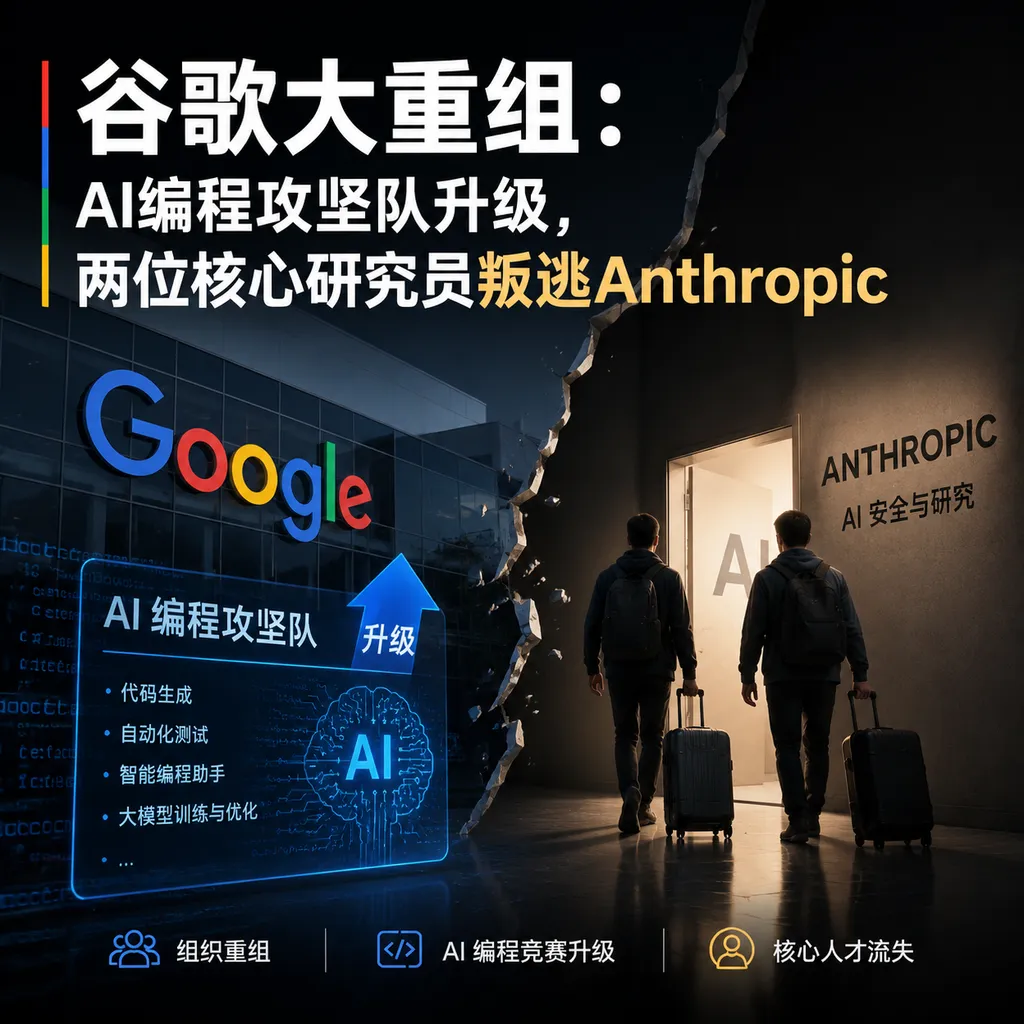
After a series of core researchers left, Google upgraded its temporary AI programming group into a permanent “Mid‑Training Team,” redefining responsibilities across the training pipeline in an attempt to catch up with Anthropic in coding capabilities. However, the shadow of talent loss and model delays still looms.
Google’s Major Restructuring: AI Programming Task Force Upgraded, Two Key Researchers Defect to Anthropic
Google’s anxiety in the AI programming race can no longer be hidden.
According to a report from The Information today, Google is carrying out a major restructuring of its internal AI programming task force. This team, formed just a few months ago, will be upgraded from a temporary project group to a formal division, with its scope expanding from a single focus on code capabilities to multiple application scenarios such as presentation generation.
What’s more notable is the timing—alongside the restructuring news, two core contributors to Gemini, Jonas Adler and Alexander Pritzel, have confirmed they will soon join Anthropic. Combined with the earlier departures of Nobel laureate John Jumper (also to Anthropic) and Gemini co-lead Noam Shazeer (to OpenAI), Google has lost a group of top-level AI research talent in just a few weeks.
This is not a simple organizational adjustment—it’s a strategic response under the dual pressure of a talent crisis and product difficulties.
The Core of the Restructuring: Introducing the Concept of “Mid-training”
The most interesting aspect of this restructuring is not the expansion of the team, but the change in how model training is organized.
Traditionally, large model training has two stages:
- Pre-training: Using massive datasets to build a base model from scratch so it learns the fundamental laws of language
- Post-training: Fine-tuning for specific scenarios to optimize human–machine interaction
Google now wants to insert an additional layer—Mid-training.
According to insiders, the original AI programming task force will be upgraded to a mid-training team, dedicated to enhancing the model’s general capabilities with professional data from industry niche domains. Iterations in code ability, document generation, and data analysis will all be under this team.
The post-training team, meanwhile, will focus on refining human–machine interaction—making responses more natural, reducing hallucinations, and improving dialogue coherence.
The logic here is: building capabilities and optimizing experiences require different specializations.
Previously, all these tasks were lumped together, with unclear responsibilities. Engineers aiming to improve code ability and those seeking to refine dialogue experience competed for the same resources, resulting in poor performance on both fronts.
DeepMind CTO Koray Kavukcuoglu put it bluntly in an internal email: “Our R&D pace continues to accelerate. At this stage, reorganizing the structure and clarifying the responsibility boundaries of each business line is timely.”
Translation: The old organizational style can no longer keep up with the competitive pace.
Code Ability: Google’s Obvious Weakness
Why is Google building a dedicated team to tackle code capability? Because it’s truly their soft spot.
Several project participants told the media that Google, in the early days, did not prioritize specialized R&D for code scenarios. Management had a hypothesis: if you polish the most powerful base model, it will naturally have excellent code ability.
That hypothesis might have been plausible before 2024—but Anthropic proved it wrong in practice.
Code ability requires specialized training data, evaluation benchmarks, and optimization strategies. Anthropic has invested heavily here, with Claude series models consistently leading in code ability. This year’s launch of Claude Code and agent programming functions further raised the bar for AI programming tools.
Market feedback is straightforward. Thanks to its lead in the code domain, Anthropic reached an annualized revenue of $47 billion as of last month—more than triple what it was in February. Code development is currently the most profitable track in the AI services market, bar none.
On the other hand, Google’s newly released Gemini 3.5 Flash model received many negative reviews:
- Overly sycophantic responses
- Pricing higher than the previous Flash version
- First release of the code tool Antigravity plagued by frequent bugs
A developer’s community comment is typical: “Flash used to be the cost-effective choice. Now it’s more expensive, and its code quality isn’t as stable as Claude 3.5 Sonnet.”
More awkward still, their next flagship model, Gemini 3.5 Pro, originally scheduled for release in June, has been delayed to July. Beta testers revealed that its expected performance couldn’t surpass Anthropic’s top model Mythos.
Google is not without effort—but its effort started off aimed in the wrong direction.
Talent Loss: An Even Bigger Concern than the Restructuring
Organizational structures can be adjusted, but once people leave, they’re gone.
In recent weeks, personnel changes in Google’s AI team have been alarmingly frequent:
Departures List
| Name | Role/Contribution | Destination | |------|-------------------|-------------| | Noam Shazeer | Gemini co-lead, co-author of the Transformer paper | OpenAI | | John Jumper | DeepMind VP, Nobel laureate | Anthropic | | Jonas Adler | Core researcher on AI programming project, key Gemini contributor | Anthropic | | Alexander Pritzel | AI systems training expert, key Gemini contributor | Anthropic |
This list is highly valuable.
Noam Shazeer co-authored the 2017 Transformer paper, which laid the technical foundation for the entire generative AI industry. In 2021 he left Google to start a company, and in 2024 Google spent $2.7 billion to bring him back. Less than two years later, he’s gone again—this time to OpenAI.
Insiders revealed that Shazeer left mainly over compute allocation issues. His project’s compute quota was merged into another team’s, making him feel his work was no longer valued. DeepMind’s internal email said his departure was “very sudden.”
John Jumper is even more significant. Alongside DeepMind CEO Demis Hassabis, he won the Nobel Prize in Chemistry for the AlphaFold project, a benchmark in AI for Science. Insiders said Jumper had just been reassigned to the AI programming task force, but announced his move to Anthropic before much work began.
The departure of these core members had immediate impact on stock prices: Alphabet fell 5% on Monday, marking its largest single-day drop in the past year. Although it fell another 1% over the next two days, Alphabet’s stock is still up nearly 30% year-to-date in 2026—investors clearly differentiate between short-term talent loss and long-term fundamentals.
Compute Resources: Internal Resource Conflicts at Google
Behind the talent loss lies a deeper issue: allocation of compute resources within Google.
Google’s strengths and weaknesses stem from the same source—it’s simply too big.
As one of the world’s largest cloud computing providers, Google possesses vast compute resources. But these must simultaneously serve:
- External cloud customers — including Anthropic, its largest customer (yes, Anthropic uses Google Cloud)
- Internal R&D projects — Gemini model training, various AI task force projects
- Existing product lines — AI features for Search, YouTube, Gmail, etc.
Resources are limited, demand is unlimited. Management must make trade-offs when allocating compute—and these trade-offs often upset internal researchers.
Shazeer’s case is typical. He was researching model architectures to surpass Transformers—cutting-edge work requiring substantial compute to validate hypotheses. When his compute quota was reduced, he was essentially told “your research isn’t important enough.”
For top researchers, this is a clear signal: rather than fighting for resources within Google, go to a more focused company—Anthropic or OpenAI—where research directions and resource allocation are more concentrated.
Comparing Strategies with Anthropic and OpenAI
Google’s restructuring direction is essentially following a path already validated by Anthropic and OpenAI.
Anthropic’s Approach
Anthropic made code capability a core differentiator early on, with a clear strategy:
- Dedicated code training data: Invest in collecting and cleaning high-quality code data
- Agent programming capabilities: Enable AI not just to generate code, but to autonomously execute, debug, and test
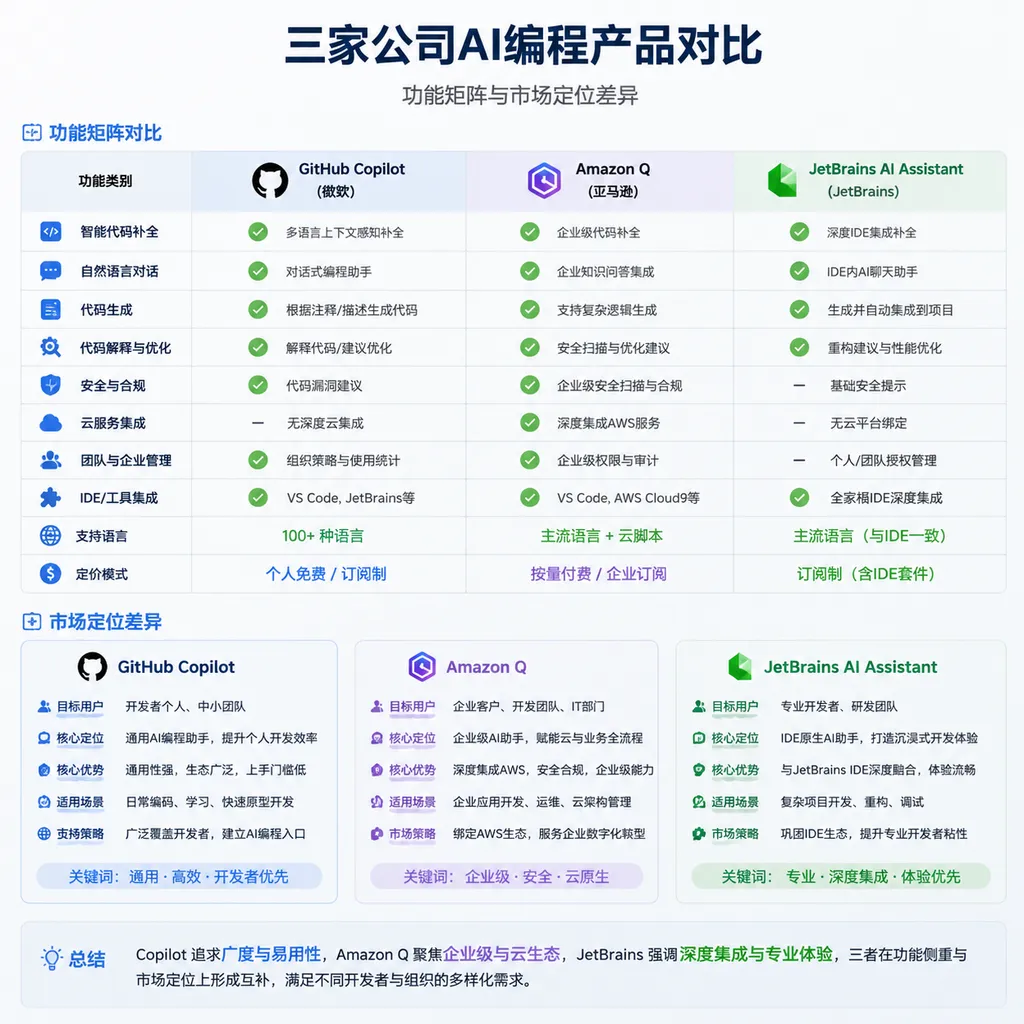
- Enterprise-level productization: Claude Code directly competes with GitHub Copilot, but with greater capabilities
The result is market recognition. $47 billion in annualized revenue shows that enterprise clients are willing to pay for superior code capabilities.
OpenAI’s Approach
OpenAI took another route—through iterative improvements in Codex and GPT models, it targeted both consumer and enterprise markets. ChatGPT’s code capability keeps improving, and enterprise API pricing is aggressive.
More importantly, OpenAI spares no effort in recruitment. Hiring someone like Shazeer—a co-author of the Transformer paper—is both a talent investment and a psychological blow to Google.
Google’s Predicament
In comparison, Google’s issue is that its strategic focus is not concentrated enough.
It has the Gemini model, cloud computing platform, consumer products (Bard/Gemini App), developer tools (Antigravity), and enterprise services… it seems to have everything, but its investment in each direction is not deep enough.
This restructuring at least shows management has realized the problem—though recognizing it and solving it are still far apart.
Gemini 3.5 Pro Delay: Technical Debt is Building Up
The story for late June was supposed to be Gemini 3.5 Pro’s release, giving Google a comeback. Now, with its delay to July, competitors have more time.
Looking back at Google’s statements at the May I/O conference, CEO Sundar Pichai said Gemini 3.5 Pro would be released “next month.” At the time this sounded confident—now it looks more like a promise under pressure.
Beta testers’ feedback is even less optimistic: Gemini 3.5 Pro’s expected performance couldn’t surpass Anthropic’s top model Mythos at the time. If it remains behind at launch, then the delay isn’t “polishing the experience” but “catching up on capabilities.”
Model delays aren’t rare in the AI industry—but for Google they mean two things:
- Trust cost: Developers and enterprise clients will reassess expectations for Gemini
- Lost window: A July release means head-on competition with Anthropic and OpenAI’s next updates
Can This Restructuring Solve the Problems?
Frankly, restructuring is just the first step.
Positives
- Strategic focus: Establishing a dedicated mid-training team shows Google is taking its code capability shortcoming seriously
- Clear responsibilities: The pre-training, mid-training, and post-training three-layer structure is much better than the previous muddled state
- Top-level attention: Co-founder Sergey Brin is personally involved in pushing the project forward, ensuring resource allocation
Remaining Issues
- Talent loss continues: Even the best structure is useless if top talent won’t stay
- Compute resource conflicts unresolved: Without fixing the underlying allocation problem, cases like Shazeer’s will recur
- Catching up vs. leading: The current strategy is to catch up with Anthropic and OpenAI, not to pioneer a new track
An anonymous Google employee’s comment on the internal forum hits the point: “The restructuring email sounds nice, but we all know where the real problem is—it’s priorities.”
What This Means for Developers
If you’re choosing AI programming tools, these changes are worth noting:
Short Term (Next 3–6 Months)
- Gemini 3.5 Pro: After its July release, test it in practice—don’t rely on demo hype
- Gemini 3.5 Flash: Current version has higher pricing and mediocre reviews—not recommended as a primary choice
- Antigravity code tool: The initial version has many issues—wait for a stable release before considering
Medium Term (6–12 Months)
- Observe restructuring effects: Whether the mid-training team can truly enhance Gemini’s code ability will need verification in the next model generation
- Multi-model strategy: Don’t put all eggs in one basket—keep watching Claude and GPT
Selection Advice
The current top tier of AI programming tools remains:
- Claude (Anthropic): Best code ability and agent programming experience
- GPT series (OpenAI): Most complete ecosystem with the richest plugins and integrations
- Gemini (Google): Best integration with the Google ecosystem, but needs to catch up in code ability
If your project heavily relies on code generation and automation, Claude is currently the safer choice. If you need flexibility to switch between models, consider using API aggregation services to reduce switching costs.
Final Thoughts
The signal from Google’s restructuring is clear: AI programming is a battlefield Google cannot afford to lose.
But “not wanting to lose” and “being able to win” are worlds apart. Talent loss, model delays, internal resource conflicts… these problems won’t disappear with one restructuring.
The bigger picture is that competition in AI programming tools is shifting from “who has the smarter model” to “whose product is more usable.” Anthropic’s $47 billion annualized revenue proves enterprise clients are willing to pay for tools that truly solve problems. Google needs not just stronger models, but also more focused product strategies and more efficient execution.
The next checkpoint is the July release of Gemini 3.5 Pro. If this model can match or surpass Claude in code ability, then the restructuring will have shown initial results. If it still lags… Google may need an even bigger transformation.
Competition in the AI industry is entering deep waters. For Google, the second half of 2026 will be a critical catch-up window.
References
- ITHome: After Consecutive Departures of Key Researchers, Report Says Google Restructures AI Programming Team to Try to Catch Up with Anthropic — Primary source of this article’s information, containing restructuring details and personnel changes


