
The "Crash Test Field" for AI Agents Has Arrived

Patronus AI just secured $50 million in funding to perform stress tests on AI agents in the "digital world." When AI agents start carrying out real tasks, who ensures they don’t mess things up? This company is targeting precisely this trillion-dollar pain point.
The "Crash Test Field" for AI Agents Has Arrived: Patronus AI Secures $50M to Build a Digital Stress-Test World
Patronus AI announced today that it has completed a $50 million funding round, aiming to create a “digital world” capable of stress-testing AI agents.
The background of this round is intriguing: 2026 is seen as the inaugural year for large-scale deployment of AI agents. From code assistants to customer service bots, from trading systems to medical diagnostics, agents are taking over more and more critical tasks. But here’s the awkward reality — the way we test these agents is still stuck in a “handcraft workshop” era.
Why Do AI Agents Need “Crash Tests”?
Traditional software testing has a well-established methodology: unit testing, integration testing, end-to-end testing. But AI agents break that paradigm.
Where’s the problem? Agents aren’t deterministic systems. The same input may produce different outputs. Even worse, agents interact with the environment, call tools, and perform multi-step reasoning. A seemingly harmless change in a prompt could lead an agent to make a completely different decision at step 17.
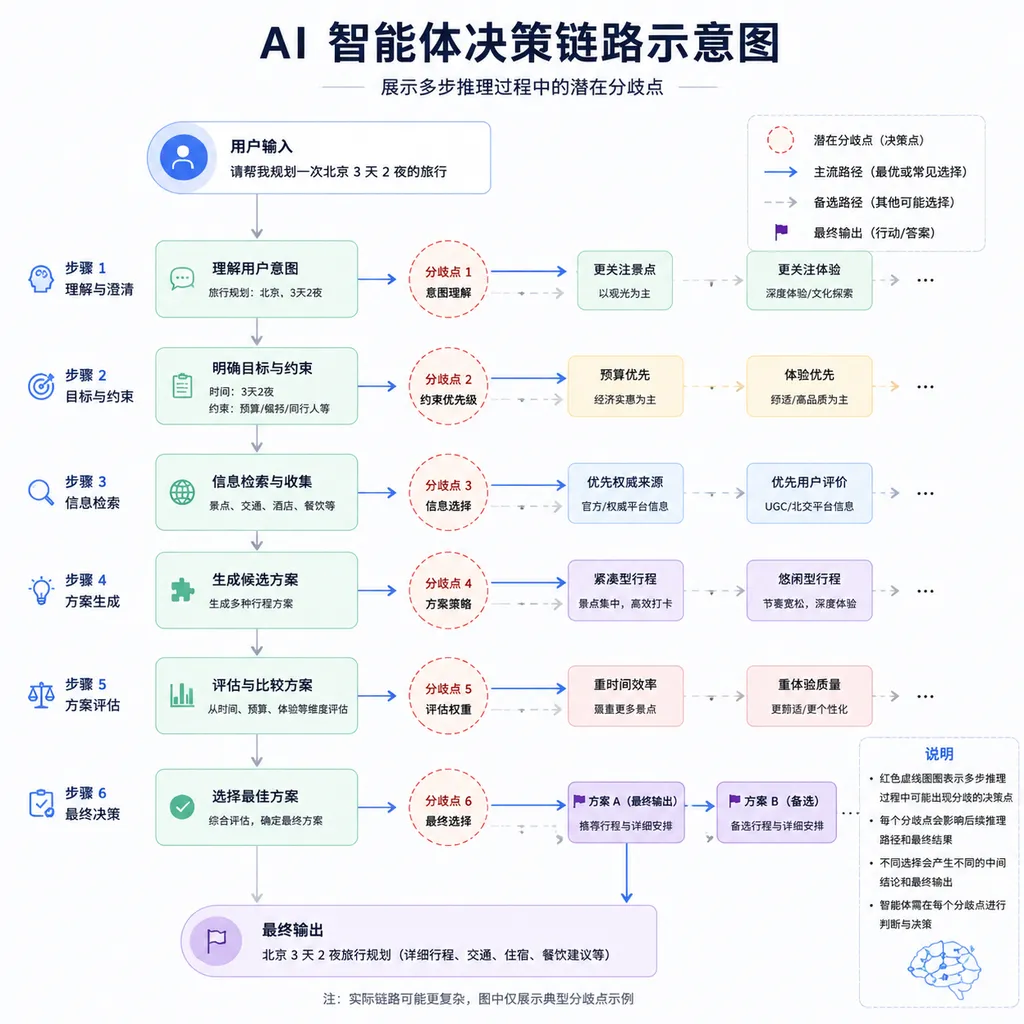
An example from reality: You tell a trading agent to “adopt a conservative strategy when the market fluctuates.” What counts as fluctuation? How conservative is conservative? When the agent faces a sudden crash alone at 3 a.m., its definition of “conservative” may be completely different from yours.
The dilemmas of traditional testing are:
- Coverage Problem: The agent’s state space grows exponentially, and manually written test cases can never catch up
- Authenticity Problem: Static test data can’t simulate the complexity and randomness of the real environment
- Evaluation Standard Problem: Agent outputs often don’t have a single correct answer, and the boundary between right and wrong is blurry
Patronus AI’s investors bluntly state: market demand is “nearly insatiable.” This isn’t just marketing speak — it reflects a real industry pain point.
What Is Patronus AI Doing?
From public information, the core product of Patronus AI is the creation of “digital worlds” — think of it as a sandbox testing environment for agents, but far more complex than traditional sandboxes.
Technical Path Evolution
Patronus AI is not a newcomer. The company was founded by former Meta AI (FAIR) researchers Rebecca and Anand, both of whom were deeply involved in NLP and causal inference research at Meta.
The company’s development path is clear:
| Timeline | Funding Amount | Core Product Direction | |----------|----------------|------------------------| | Early stage (Seed) | $3M | Evaluation and detection of LLM outputs | | 2024 (Series A) | $17M | End-to-end AI system evaluation platform | | June 2026 | $50M | Digital world for agent stress testing |
From solely “evaluating LLM outputs” to “building digital worlds to test agents,” this path reflects the upgrade in industry needs. As AI evolves from “generating text” to “executing tasks,” testing methods must evolve from “checking outputs” to “simulating environments.”
Core Product Capabilities
Based on prior disclosures from Patronus AI, its platform offers several key capabilities:
1. Automated Test Generation
Traditionally, test cases are written manually. Patronus’ idea is “use AI to test AI” — leveraging models to automatically generate massive numbers of edge scenarios and adversarial tests.
This solves a core contradiction: human test engineers can never enumerate all situations an agent might encounter — but another AI can.
2. Multi-Dimensional Evaluation Metrics
Patronus doesn’t just look at “right vs. wrong,” but evaluates across several dimensions:
- Hallucination: Whether the agent fabricates nonexistent information
- Safety: Whether harmful outputs are triggered
- Consistency: Whether behavior is stable in similar scenarios
- Robustness: Performance under adversarial inputs
3. Domain and Model Agnostic
This is critical. Enterprises may use GPT-4o, Claude 4, Gemini Ultra, or their own fine-tuned open-source models. Patronus’ platform is not tied to a specific model, offering a universal evaluation framework.
What Does a “Digital World” Look Like?
The selling point of this funding round is the “digital world,” a concept worth breaking down.
Simply put, Patronus AI wants to build a “crash test field” for agents. The auto industry has standardized crash tests: put the car into a simulated environment, use crash test dummies to test various impact scenarios. Patronus wants to do the AI version — put the agent in a simulated environment, test it in extreme scenarios to see if it “crashes.”
This involves several technical challenges:
Environment Simulation
Agents don’t operate in isolation — they interact with environments. A customer service agent must deal with various types of customers (angry, confused, attempting to extract information); a trading agent must deal with various market states (stable, volatile, liquidity dried up).
The “digital world” needs to faithfully simulate these environments, including:
- User behavior models (different personalities, intentions, and expression styles)
- System state simulation (API latency, service degradation, data anomalies)
- Time series data (market trends, changes in user activity)
- Multi-agent interactions (what happens when multiple AI agents act simultaneously)
Scenario Generation
Static scenarios are far from enough. The real value is in automatically generating scenarios most likely to cause issues. This requires deep understanding of the agent’s behavior patterns, intelligently exploring state space to find boundary conditions and failure modes.
In other words: ordinary testing might “have an agent handle 1,000 random customer inquiries,” while Patronus’ test would “have an agent handle 1,000 carefully designed inquiries most likely to cause errors.”
Automated Evaluation
Agent outputs often don’t have standard answers. The same customer question may have multiple reasonable responses. How can you automatically determine if an agent’s performance is acceptable?
Patronus’ approach is to build a layered evaluation system:
- Hard metrics: whether sensitive information is leaked, whether compliance requirements are violated
- Soft metrics: whether the response is complete, the tone is appropriate, and it solves the user’s problem
- Comparative metrics: differences from how human experts handle the same issue
Industry Landscape: Who’s Doing AI Evaluation?
The agent testing track is heating up rapidly. Patronus AI is not the only player, but its angle is differentiated.
Competitive Landscape
Arena (formerly LMArena): Raised $150M in January 2026 Series A, valued at $1.7B. Core product is a model comparison platform, mainly serving model developers for pre-release evaluations. OpenAI, Google, and xAI are among its clients.
The difference: Arena evaluates “the model itself,” while Patronus evaluates “systems built on top of the model.” These are different layers.
Built-in tools from top cloud vendors: AWS, Azure, Google Cloud all promote their own AI evaluation services, but they are often tied to their proprietary models and have relatively basic functionality.
Open-source evaluation frameworks: Such as Hugging Face’s Evaluate library, EleutherAI’s lm-evaluation-harness. These are free and flexible, but lack enterprise-grade support and agent-specific capabilities.
Patronus’ Positioning
Patronus is targeting the enterprise agent evaluation market — a rapidly expanding need.
Data points backing this:
- In 2026, global Series A funding for AI infrastructure exceeded $1.4B
- Series A funding for AI applications exceeded $2.7B
- A significant proportion was agent-related
With so much money flowing into agent development, testing infrastructure becomes a necessity. Patronus’ positioning is to become “the Moody’s of AI” — an independent, trusted third-party evaluation body.
How Long Will $50M Last?
The scale of this funding round is worth analyzing. $50M isn’t top-tier for the 2026 AI funding market (compare Hark’s $700M, Recursive’s $650M), but for infrastructure companies it’s a healthy number.
Likely uses of funds include:
1. R&D Investment
Building a high-fidelity “digital world” is computationally intensive. Simulating real environments, running large-scale tests, training evaluation models all require substantial GPU resources.
2. Talent Expansion
Patronus’ core competitiveness is its technical team. The founding team is from FAIR and Airbnb, but building a world-class evaluation platform requires more top talent: ML-savvy systems engineers, domain experts, safety and compliance professionals.
3. Market Expansion
Enterprise software sales cycles are long, and customer education is costly. Patronus needs to invest in building a sales team, creating customer case studies, and participating in industry standardization.
Why Is This Happening Now?
Timing matters. Patronus AI was founded in 2023, but this major funding round in 2026 has its reasons.
The Agent Inflection Point
2024–2025 was the transition from proof-of-concept to large-scale deployment of AI agents. By 2026, top companies are running agents in production environments, and problems are surfacing.
A classic example: A financial institution deployed a trading agent that performed flawlessly in testing, but after launch made repeated wrong decisions under certain market conditions, causing tens of millions in losses. Post-mortem analysis revealed the test cases didn’t cover those extreme scenarios.
Such incidents make enterprises realize: agent testing is not “nice to have” — it is “must have.”
Regulatory Pressure
In 2026, global AI regulatory frameworks are coming into effect. The EU AI Act requires high-risk AI systems to undergo compliance evaluations; several U.S. states are introducing AI transparency laws.
Regulators require companies to prove their AI systems have been adequately tested and risks are under control. This directly creates demand for third-party evaluation services.
Technological Maturity
The idea of “using AI to test AI” existed years ago, but technology wasn’t ready. Now foundational models are powerful enough to generate high-quality test scenarios and perform complex behavioral evaluations. Technical feasibility has caught up with market demand.
Challenges and Risks
Patronus AI’s path is not without obstacles. Key challenges include:
1. Subjectivity of Evaluation Standards
What counts as “good” agent behavior? Answers may differ across customers, scenarios, and cultural contexts. Creating universal yet flexible standards is difficult.
2. Competition with Top Vendors
OpenAI, Anthropic, Google all have their own evaluation systems. If these companies decide to push evaluation capabilities down to the platform layer, Patronus’ space could shrink.
3. Speed of Technological Iteration
Models and agent architectures are evolving rapidly. Evaluation methods optimized for GPT-4o today may be outdated in six months. Patronus must maintain technological leadership.
4. Data Security Concerns
An enterprise’s agent may process sensitive data. Putting an agent into a third-party “digital world” for testing raises questions about data security — this will be a standard sales objection.
What Does This Mean for Developers?
If you’re developing AI agents, Patronus AI’s funding round conveys several signals:
1. Testing Is No Longer an Afterthought
Agent development should be “test-driven.” From the design phase, consider testability and define clear success/failure criteria.
2. Synthetic Data and Simulated Environments Are Standard
Real-world data is never enough. Learning to use synthetic data generation tools and build simulated environments will become essential skills for agent developers.
3. Evaluation Toolchains Are Maturing
Whether you use a commercial service like Patronus or open-source tools, the agent evaluation toolchain is rapidly improving. Keep a close eye on this trend.
Coming back to the funding itself: A $50M bet on agent testing reflects an industry consensus — the core word for AI in 2026 is “deployment.”
And deployment rests on trust.
Enterprises need to believe their agents won’t fail at critical moments. Users need to trust AI not to fabricate nonsense. Regulators need to trust the risks are controllable.
Patronus AI is betting that this trust will become increasingly valuable. From current industry trends, the direction of this bet is right. Whether they win depends on execution.


