
Yifei Hongjun 001 deployed on automaker’s production line — industrial multimodal large model gets to work
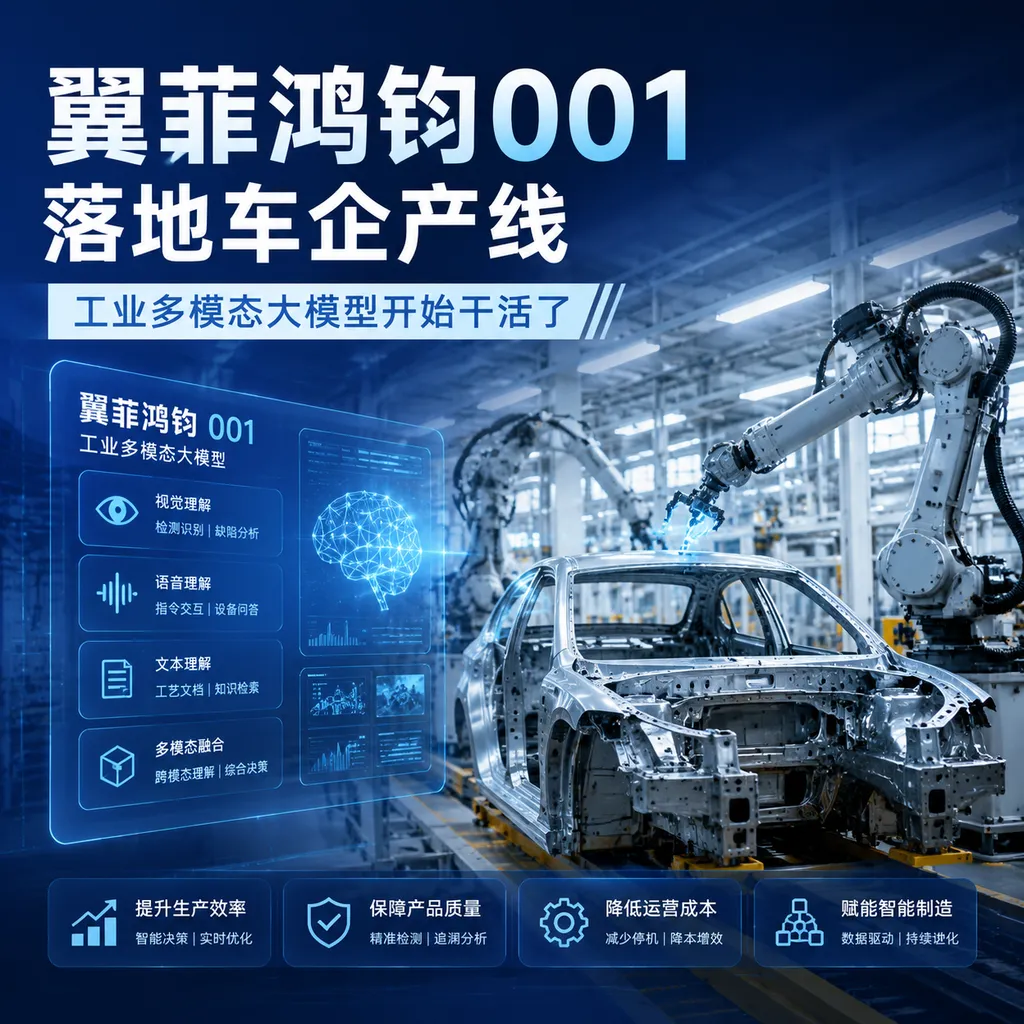
Wingfit Technology's Hongjun 001 humanoid wheeled-arm robot is equipped with the self-developed Yi Brain multi-modal industrial large model, and has passed validation on powertrain production lines of several leading automotive manufacturers. At the same time, the company has reached an exclusive distribution cooperation with South Korea's MiR to accelerate its overseas expansion.
Hongjun 001 by Wingfit Lands in Automaker Production Lines – Industrial Multi-Modal Large Model Starts Working
Wingfit Technology’s Hongjun 001 humanoid wheeled-arm robot has officially begun operating on the powertrain production line of a leading automaker.
On June 25, at Chery Wuhu Ecotech Intelligent Manufacturing Technology Exchange Conference, Wingfit Technology showcased this robot equipped with its self-developed Yi Brain multi-modal industrial large model. According to Wingfit, Hongjun 001 has passed technical verification on powertrain production lines at multiple top-tier automakers—meaning it’s no longer just a lab demo, but a product that can actually work on mass production lines.
At the same event, Wingfit announced a strategic partnership with Korean automation leader MiR: MiR will become the exclusive agent for Wingfit’s parallel and SCARA robots across Korea, fully responsible for brand operations, sales, and after-sales.
With product deployment validation on one hand and overseas channel expansion on the other, this robotics company—newly listed on HKEX this year, with a record-breaking 14,855x oversubscription—is making its “industrial large model + humanoid robot” story increasingly tangible.
Hongjun 001: A Humanoid Robot So Practical It’s Almost “Boring”
If you’re expecting Boston Dynamics-style backflips and parkour, Hongjun 001 may disappoint you.
It has no bipedal legs, using instead a four-steering, four-wheel omnidirectional chassis; it doesn’t chase after a human-like appearance, opting for a lift + wheeled hybrid control design; its aims are modest—screwing bolts, sticking labels, plugging cables, grasping parts in factory workshops.
But it’s precisely this “boring” nature that may be the correct approach to making humanoid robots truly operable in real-world settings.
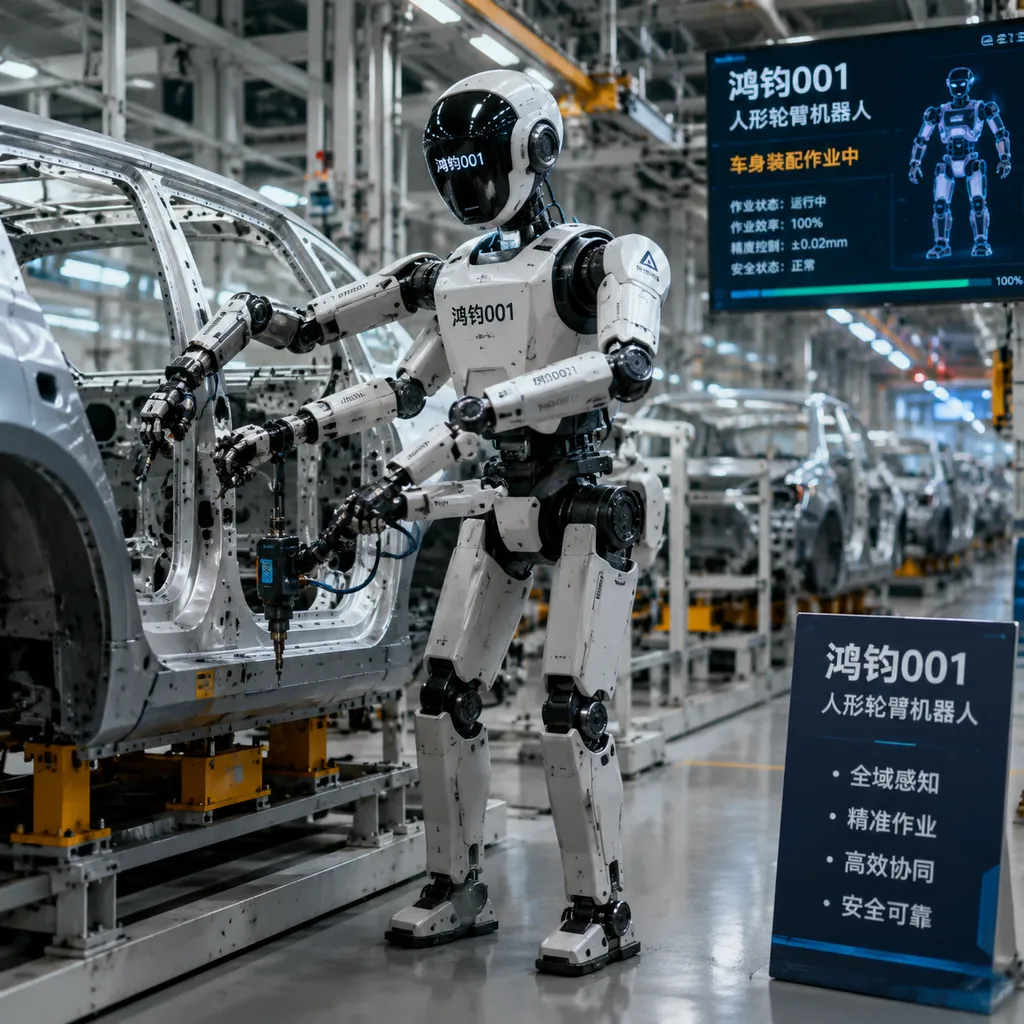
Hardware: Tailored to Factory Environments
Hongjun 001’s core hardware specs exude “practicality”:
Chassis Design
- Modular four-steering, four-wheel omnidirectional chassis, supporting forward/backward, lateral, diagonal, Ackermann steering, and rotation in place
- Travel speed 2 m/s, 360° steering
- Narrowest pass-through: 62 cm — an interesting figure, meaning Hongjun 001 can navigate gaps between equipment in older production lines without special passage retrofits
Lift Mechanism
- Lift speed 0.4 m/s, stroke 0.5 m
- Adjustable height, combining ground mobility for “three-dimensional workspace operations”
- Claimed to cover 95%+ of industrial height requirements
Bionic Arm
- 3-1-3 structure layout (shoulder: 3 DOF, elbow: 1 DOF, wrist: 3 DOF), total 7 DOF per arm
- Arm reach 0.6 m, peak load 5 kg
- End effector repeatability ≤±0.05 mm — sufficiently precise for industrial assembly
- Spherical wrist joint supports 360° rotation, max joint speed 275°/s
Dexterous Wrist
- Compatible with standard electric wrenches, vacuum suction cups, grippers, and other common tools
- Quick-change capability to cover multiple task needs with one device
Every part of this hardware setup points to one goal: adapt to existing factory environments, not force the factory to adapt to it.
Why Not Use Bipedal Legs?
This is a design choice worth unpacking.
In humanoid robotics, there’s a split: one camp insists on bipedal walking to enter human-designed spaces; another advocates wheels/wheel-leg hybrids for greater practicality, at least with current technology.
Hongjun 001 chose the latter, for straightforward reasons:
- Stability: Factory floors (oil stains, debris, unevenness) are less stable for bipeds than wheeled systems
- Speed: 2 m/s travel is difficult for bipedal systems
- Cost: Control complexity and maintenance costs are higher for bipeds
- Actual Needs: 95%+ of factory scenarios don’t require robots to climb stairs or cross obstacles
Sure, this sacrifices some scenario adaptability. But for Wingfit’s target customers—automakers, 3C electronics manufacturers—it’s a reasonable trade-off.
Yi Brain: The Key Leap for Industrial Multi-Modal Large Models
Beyond hardware, Hongjun 001’s real technical barrier lies in its “brain”—the Yi Brain multi-modal industrial large model.
This isn’t simply shoehorning a generic large model into a robot. Yi Brain's goal is specific: how to make robots understand industrial task instructions and translate them into precise action sequences.
From Natural Language to Joint Motion
Yi Brain’s workflow can be understood like this:
Task input (natural language / vision / sensor data)
    ↓
Multi-modal understanding layer (parse task intent)
    ↓
Task planning layer (break down into subtasks)
    ↓
Motion control layer (translate into joint motion commands, torque control signals, navigation commands)
    ↓
Execution feedback layer (real-time correction)
Example: When an operator says “Go to workstation 3 and screw in that red part,” Yi Brain must:
- Understand “that red part”: Use vision recognition to locate target
- Plan path: Compute optimal route to workstation 3
- Select tool: Determine electric wrench is required
- Plan actions: Break down screw-tightening into sequences, set force direction and torque
- Execute & correct: Adjust actions with real-time feedback
The hard part: industrial scenarios require extremely high precision, with minimal tolerance. Torque variance of even a few Nm can cause product defects.
Deep Integration with Lower-Level Control
Wingfit emphasizes Yi Brain’s deep integration with its lower-level control system (“smart cerebellum”).
This deep integration means tight coupling between:
- Yi Brain (brain): High-level decision-making, perception, understanding, planning
- Smart cerebellum: Low-level control, real-time motion, force control, balance
They require millisecond-level communication; any delay impacts accuracy. Wingfit’s method: both systems share a unified state representation to reduce data conversion overhead.
The benefit: brain focuses on “what to do”; cerebellum focuses on “how to do”; each plays its role.
Flexible Mixed-Line Operation: Real Value of the Industrial Large Model
Wingfit stresses that Hongjun 001 can “autonomously adapt to workshop flexible mixed-line operations.” Meaning:
Traditional industrial robots: Programmers precode every trajectory, speed, torque parameter—robot follows precisely. Changing product model? Reprogram. Changing station? Recalibrate.
Large-model-equipped robots: Give it a task description (natural language or structured command), it plans actions itself. Change model? Tell it new assembly requirements. Change station? It repositions itself.
The difference is stark in “flexible mixed-line” setups—where one production line makes multiple product models with frequent model switches.
In traditional setups, each switch means downtime, reprogramming, debugging—costly. A robot that can understand tasks and plan autonomously cuts switch costs drastically.
That’s the real value: not making robots “smarter,” but making them more “flexible.”
Deployment Validation: Powertrain Production Lines at Top Automakers
Wingfit says Hongjun 001 has passed technical verification on “powertrain production lines at multiple top-tier automakers.” While names weren’t disclosed, the Wuhu Chery event makes Chery a likely candidate.
Powertrain lines are among the most technically demanding in auto manufacturing, involving engine and transmission assembly. Choosing this for validation shows confidence in precision and reliability.
Why Powertrain?
Its traits make it a litmus test for humanoid robot capability:
- High precision requirement: Bolt torque must be within specifications, else performance suffers
- Complex processes: Many part types, tools, postures
- Mixed-line production: Multiple displacements/models on same line
- Limited space: Dense equipment, narrow passages
If Hongjun 001 works stably here, other industrial scenarios become easier.
Potential in Retrofitting Old Lines
Wingfit mentions low-cost retrofits for traditional old lines.
The pain: many factory lines are decades old, layout fixed. Bringing automation means either costly large-scale renovation (and downtime) or abandoning it.
Hongjun 001 requires no fixed station or preset track; it can roam like human workers. That means factories don’t need to replan—just “place it in” to use.
Whether this vision materializes depends on more real-world cases. But the principle is right—make robots adapt to factories, not factories to robots.
Overseas Cooperation: Exclusive Korean Agency by MiR
Also at the event, Wingfit announced a strategic partnership with Korean MiR.
MiR is a veteran in Korean automation with nationwide channel coverage. Under this deal, MiR is exclusive agent for Wingfit parallel and SCARA robots in Korea, handling brand operations, sales, and after-sales.
Why Korea?
The world’s highest density of industrial robots, with highly automated manufacturing. Korea’s market appeals to Wingfit because:
- Mature industrial base: Giants like Samsung, LG, Hyundai, with huge needs
- Tech acceptance: Korean clients understand robotics tech, willing to try new products
- Spillover effect: Strong Korean foothold helps open broader East Asia market
Trade-Offs in Exclusive Agency
Choosing exclusive agency over own team reflects Wingfit’s overseas strategy.
Pro: Fast market entry, leveraging MiR’s network and brand trust, lower upfront cost
Con: Cedes some profit margin and market control
For newly listed Wingfit needing to show growth, this pragmatic choice makes sense—build volume first, own channels later.
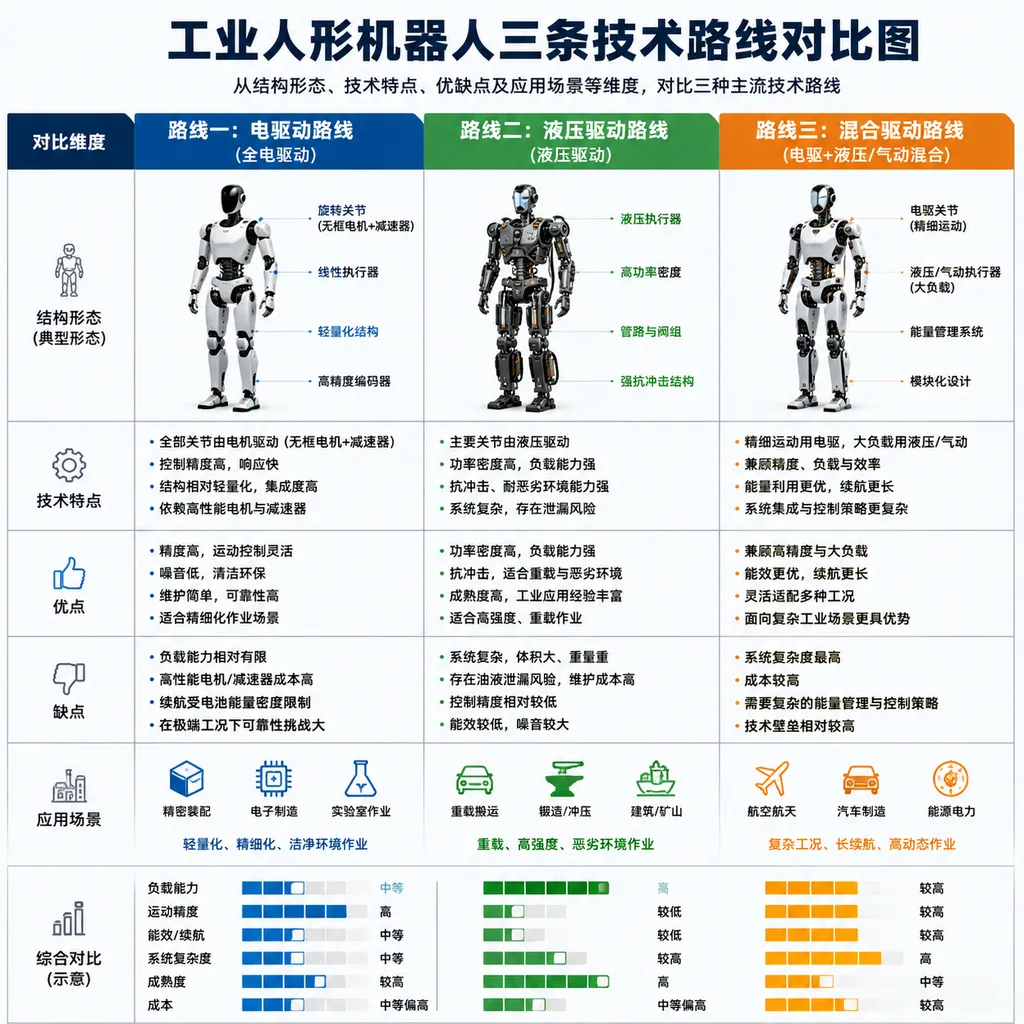
Industry Outlook: Three Routes in Industrial Humanoid Robotics
Hongjun 001’s rollout reflects route divergence in industrial humanoid robotics. Three main routes:
Route 1: General-Purpose Humanoid Robot
Players: Tesla Optimus, Figure AI, 1X Technologies
Design: Closest possible to human form, aiming for universal use—“one robot fits all.”
Pros: Large imagination space, strong versatility
Cons: Extremely difficult technically, costly, slow to deploy at scale
Route 2: Scene-Customized Humanoid Robot
Players: Wingfit Hongjun, some Unitree products
Design: Optimize for specific scenarios (e.g., manufacturing), with trade-offs on form
Pros: Faster deployment, controllable cost, easier customer validation
Cons: Limited generality; new scenarios may require redesign
Route 3: Cobots + Large Model
Players: Some upgraded traditional industrial robot makers
Design: Add large model capabilities to existing cobots, not aiming for human form
Pros: High technical maturity, customer acceptance
Cons: Shape limitations, hard to perform complex combined move+operate tasks
Wingfit chose Route 2, fitting its DNA—starting from parallel and SCARA robots, deep understanding of industrial needs, knowing which features are essential vs. nice-to-have.
Challenges and Questions
Hongjun 001’s story invites scrutiny:
1. Technical Verification ≠ Mass Delivery
“Passing technical verification” is far from “mass delivery.” Verification is in controlled environments, limited time, simple conditions. Mass delivery faces 24/7 operation, variable environments, and long-term stability tests.
Questions for Wingfit: What’s Hongjun 001’s MTBF? Maintenance costs?
2. Yi Brain’s Generalization Ability
Can a model verified in Factory A work in Factory B? Will it correctly handle parts from different brands/models? This hinges on data accumulation and model iteration. Wingfit needs a virtuous cycle: more clients → more data → better model → more clients.
3. Cost Control
Pricing not disclosed; similar products range from tens of thousands to millions RMB. Core client calculus: robot replacing humans—how soon is ROI? Over 3 years and SMEs may hesitate.
In May, Wingfit released an ODM wheeled humanoid chassis, pursuing modularity to cut costs. Good idea, but needs time to prove efficacy.
4. Competitive Landscape
Industrial humanoid robotics is crowded: domestic players include UBTECH, Unitree, cloudminds; abroad—Tesla, Figure AI, etc.
Wingfit’s advantages: industrial robot DNA + large model capability + capital from HK listing. Turning these into orders will require proving value one client at a time.
Conclusion
Hongjun 001’s launch represents a pragmatic direction for industrial humanoid robotics: not chasing sci-fi all-purpose robots, but solving real factory problems.
It won’t backflip, but it can tighten bolts on the line. It’s not bipedal, but it can move through narrow workshops. Yi Brain won’t write poetry, but it can turn vague task instructions into precise assembly actions.
This may be the right way to combine industrial large models and humanoid robots: less showmanship, more actual work.
How far this direction can go will be answered by more orders, more data, and more validation.
References:
(Note: This article is based on publicly available reports; no suitable reference links available.)


