
DeepSeek Image Recognition Mode Officially Launched: From Beta Testing to Full Deployment
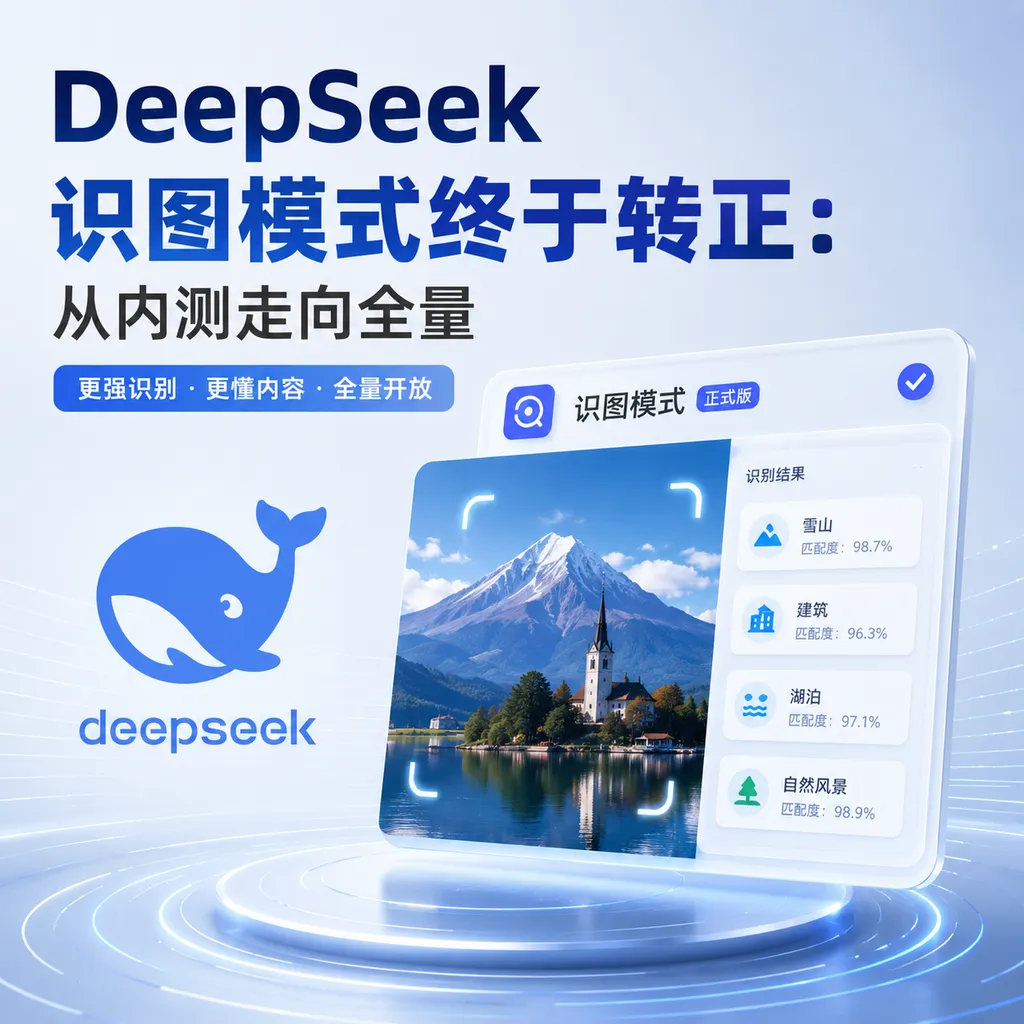
DeepSeek multimodal researcher Xiaokang Chen announced that the image recognition mode has officially launched on both the web and app platforms, alongside the fast mode and expert mode. Behind this is the “thinking in visual primitives” technical framework that was publicly introduced in April.
DeepSeek Image Recognition Mode Finally Goes Live: From Beta to Full Release
On June 18, DeepSeek multimodal researcher Xiaokang Chen dropped a short message on social media: Image Recognition Mode is now officially available on both the web and app. No press conference, no teaser video, not even a proper official blog post — very DeepSeek.
It looks like a small thing, but it’s been dragging for quite some time. Since late last year, some users have sporadically seen a greyed-out beta entry in the app reading “Image Understanding Feature in Beta.” It took over half a year to fully roll it out. IT Home’s test found that the app still displays the “Image Understanding Feature in Beta” prompt, while the web version has removed it — meaning the web version is fully live, but mobile is still partly in beta.
Product Logic with Three Parallel Modes
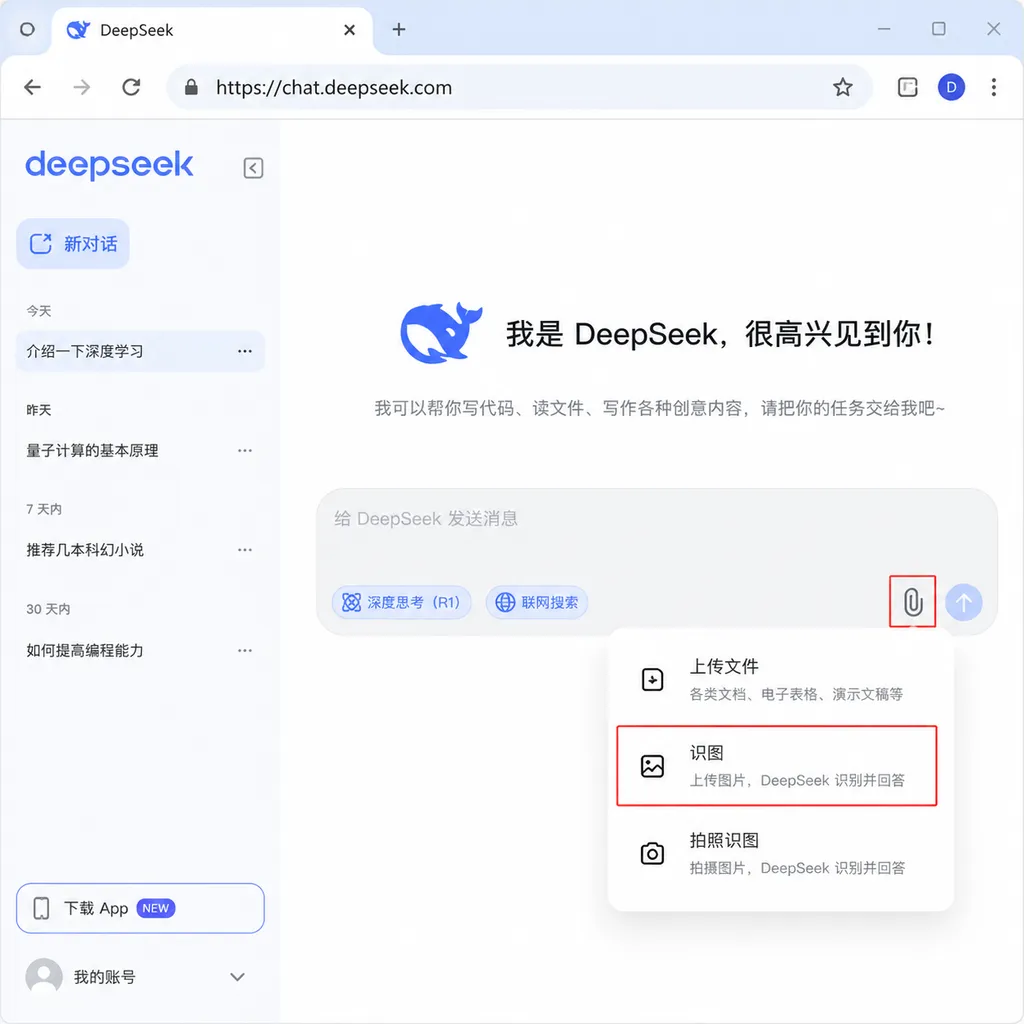
Now in DeepSeek’s dialogue box, “Image Recognition Mode” sits alongside the existing “Quick Mode” and “Expert Mode.” This three-option design is interesting, and differs from the mainstream approach where multimodal abilities are blended into a single chat box.
- Quick Mode: Default lightweight conversation, optimized for response speed
- Expert Mode: Calls deep reasoning abilities, aligned with the R1 product line
- Image Recognition Mode: Separate entry; must be switched on to upload images and trigger multimodal processing
Why separate it out? OpenAI’s GPT-4o, Anthropic’s Claude, and Google’s Gemini have long had vision capabilities enabled by default — users can just drag in an image and ask questions. DeepSeek’s explicit mode-switching is somewhat counter to that trend.
My guess is two reasons. First is compute cost — running a vision encoder is expensive, so requiring the user to actively enable it filters out many requests that don’t need image understanding. Second is model routing — the Image Recognition Mode may be powered by an entirely different multimodal model rather than the same weights, hence the need to clearly distinguish the entry point. This makes engineering cleaner but increases user education costs.
More Than OCR: What “Thinking with Visual Primitives” Means
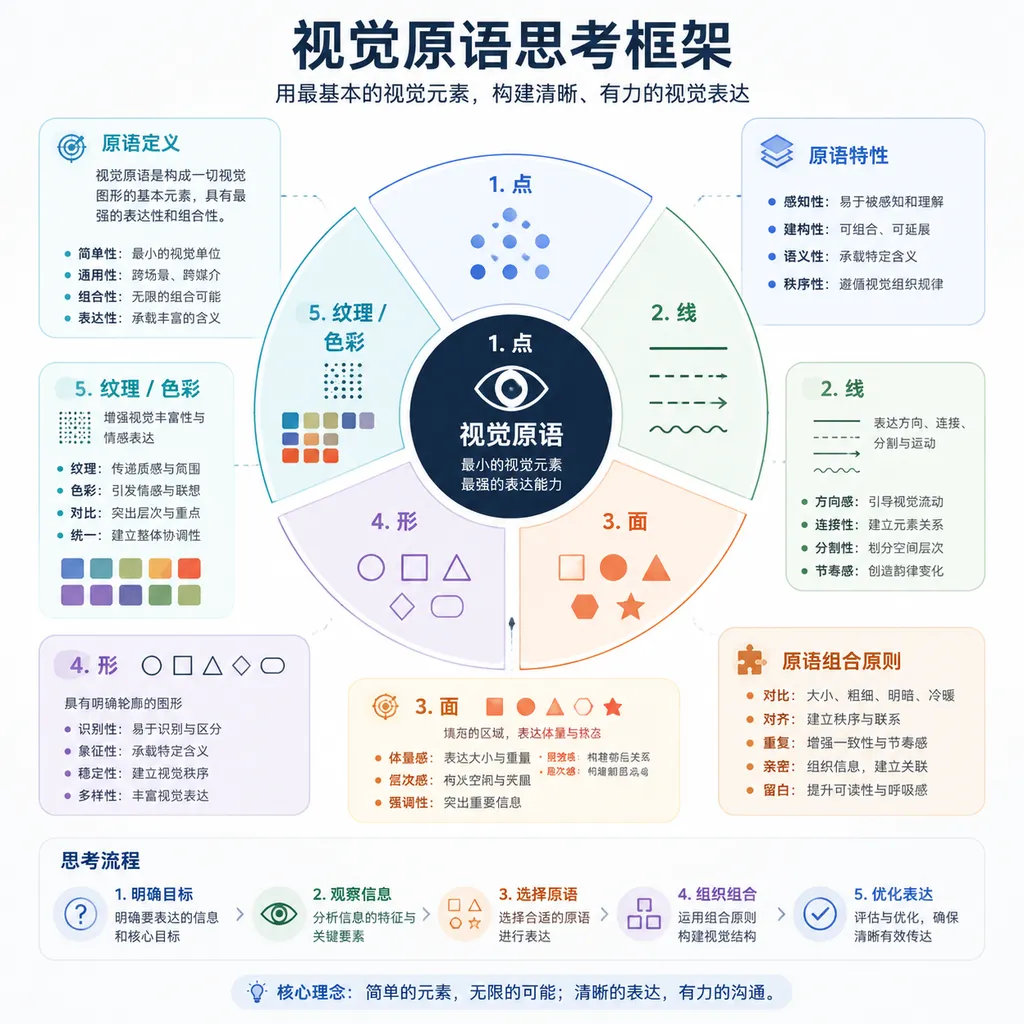
With this launch, it’s worth revisiting the technical details DeepSeek revealed in April this year. They proposed a core framework called Thinking with Visual Primitives.
The name sounds mystical, but it’s actually aimed at solving a concrete issue: most existing vision-language models follow a “look at the image → convert to text description → reason based on text” flow. The problem is that spatial relationships, geometric structures, and pixel-level details in the image are largely lost in the translation. The model sees the image but “thinks” based on a compressed text summary.
The visual primitives approach keeps reasoning directly on visual representations — breaking down the image into fundamental visual units (points, lines, regions, geometric relations), and letting the model combine and reason over these primitives rather than first converting to natural language. Simply put, it’s like humans doing geometry problems by mentally rotating the shapes instead of describing them in words first.
This direction is somewhat analogous to OpenAI’s o3 visual reasoning approach of scaling, rotating, and cropping images before reasoning, but DeepSeek goes deeper — editing at the representation level.
Test Run: What It Can and Can’t Do
I ran some common scenarios on the web version:
Handwritten Notes Recognition: A page of messy meeting notes — OCR accuracy was better than expected, even capturing logical relationships indicated by arrows rather than just stacking characters together.
Chart Understanding: Threw in a line graph and asked about the data trend — could correctly read turning points and approximate values, but precise readings of axis scales were off, which is a common issue for all vision models.
Debugging Screenshots: Tossed in an IDE screenshot showing an error, along with code context — could pinpoint the specific line and general cause. Practical for developers.
Complex Scene Reasoning: Uploaded a physics problem circuit diagram and asked about current flow — clearly performed better than pure OCR, combining relationships between components to give a reasoning path. This is likely where the “visual primitives” framework pays off.
Limitations exist. First is latency — enabling Image Recognition Mode noticeably increases first-token delay compared to pure text dialogue. Second, image generation is completely unsupported — this release focuses only on understanding, not creation. Third, multi-image comparative reasoning is still weak; asking it to find differences between two images yields only average results.
Position in the Domestic Multimodal Landscape
A quick comparison of domestic peers:
- Tongyi Qianwen Qwen-VL series is already on its third generation, with open weights released — currently the domestic benchmark.
- Zhipu GLM-4V specializes in OCR and chart understanding, widely used on the enterprise side.
- Kimi focuses vision capabilities on long document + image mixed understanding.
- Doubao targets all scenarios for consumer users.
DeepSeek’s Image Recognition Mode does not raise the industry’s capability ceiling. Its advantages remain the familiar combo — free, open source (if weights are later released), fresh technical framework. If “Thinking with Visual Primitives” truly works out, its impact on the open-source multimodal community could be greater than the product launch itself.
It’s worth noting that this release updated only the product — the corresponding multimodal model weights have not yet been open-sourced. Given their usual open-source schedule, weights will likely be released later — which is what developers are really waiting for.
What It Means for Developers
In the short term, consumer users gain a free visual understanding tool, able to screenshot questions, solve problems from photos, and let AI interpret UI design drafts — all typical multimodal scenarios.
For developers, the key is when the API will follow suit. Currently, DeepSeek’s open platform API is purely text — no vision call entry. If they later release a vision API, combined with their aggressive pricing, this could put real cost pressure on apps using GPT-4o vision or Claude vision.
The OpenAI Hub is also tracking DeepSeek’s updates, and will integrate the vision API once it’s officially open. Then a single key could switch multimodal calls between GPT, Claude, Gemini, and DeepSeek, avoiding the hassle of applying for multiple keys.
Some Extended Thoughts
DeepSeek’s pace is very “DeepSeek”: a researcher casually announces it, product quietly goes live, technical details were already released months ago. No marketing, no PPT, no fundraising press — an engineer culture that’s refreshing in today’s AI scene.
On the flip side, multimodal competition is now about more than just model capabilities. GPT-4o’s real-time voice/video, Gemini 2.0’s native multimodal generation, Claude’s Computer Use — top players are innovating interaction paradigms. DeepSeek is still catching up on the basic “can see images” capability; pace-wise, that’s slow.
The good news is, their catch-up method isn’t simple copy-paste. If the “visual primitives” narrative really delivers in R2 or the next-gen model, they could leapfrog several intermediate evolution steps. The open-source community sorely needs players willing to innovate at the representation level.
So this Image Recognition Mode launch is less a product milestone and more the start of DeepSeek’s multimodal story. The real show is yet to come.
References
- IT Home - DeepSeek’s Image Recognition Mode Officially Launched on App and Web — First report, including Xiaokang Chen’s original statement and test details


