
Agnes AI Makes Video Creation Completely Free: Pavo Platform Launches — Create a Video in One Sentence
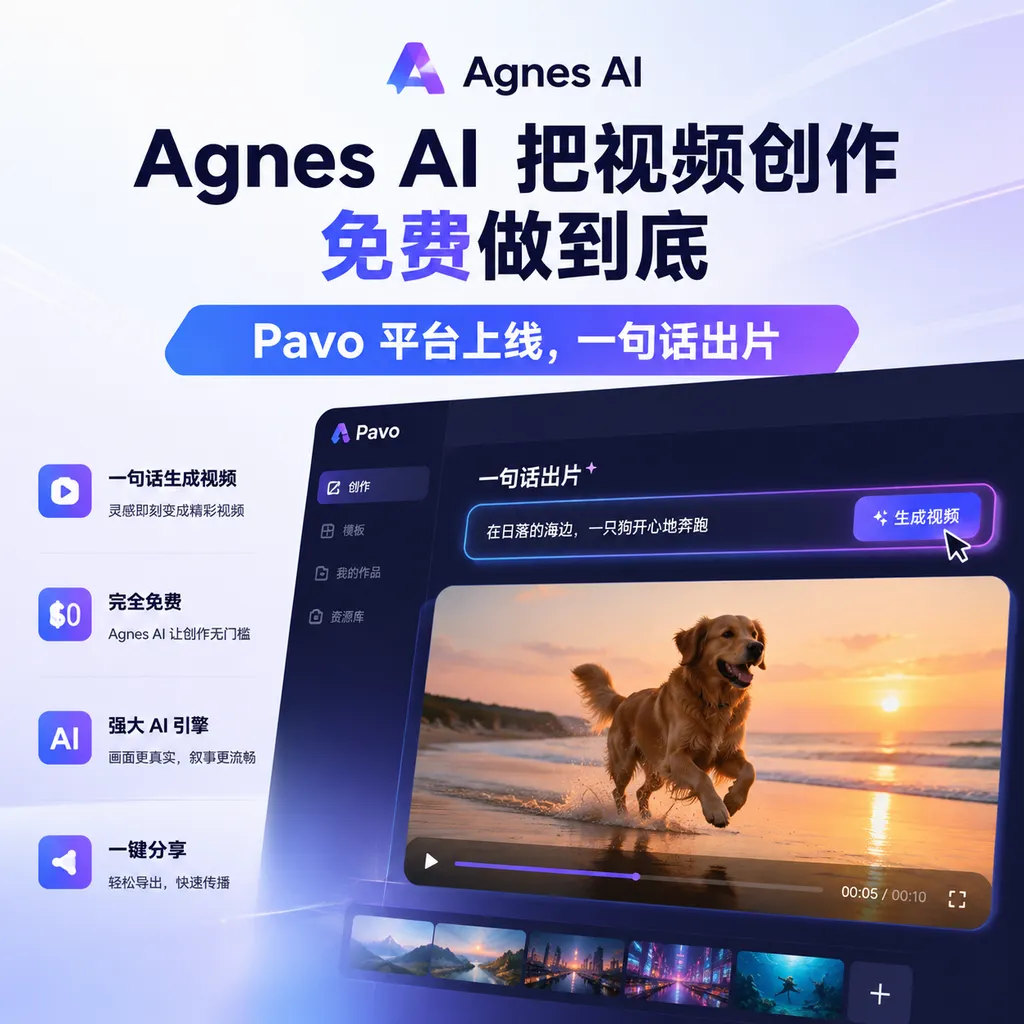
After Sapiens AI’s Singapore AI Lab made its full-modal API free indefinitely on June 1, today it launched another free video creation platform, Pavo, which focuses on fully automating the entire workflow from idea to finished video with just one sentence. The video model Agnes-Video-2.5-Preview will also be launched soon, aiming to match Veo 3.
One-Sentence Full-Process Video Generation — Agnes Has Taken "Zero Billing" to the End
On June 29, Singapore’s AI Lab Sapiens AI launched its free video creation platform Pavo under Agnes AI (experience link: https://app.pavo-ai.work/). Its selling point is simple and direct — one sentence in, a complete video out, all generated free of charge using Agnes’ self-developed models.
To understand this move, we should look back to what the company did on June 1. That day, Agnes AI announced that its three core model APIs for text, image, and video would be open to developers worldwide indefinitely for free. These include Agnes-2.0-Flash (text), Agnes-Image-2.1-Flash (image), and Agnes-Video-V2.0 (video). In 2026, as token costs increasingly trouble startup budgets, this company—currently claiming ninth place among global AI labs—made a bold, counter-trend decision.
Today’s launch of Pavo can be seen as the first consumer-facing implementation of those free APIs — APIs for developers, Pavo for creators, hitting the market from both sides at once.
How Pavo Works: Breaking Video Creation Into Seven Steps
Anyone who has worked on AI video knows that “one-click video generation” is mostly marketing speak. From script to storyboard to keyframes to the final video, any step can fail. Most tools hide these complexities, giving the illusion of simplicity while producing unpredictable outputs.
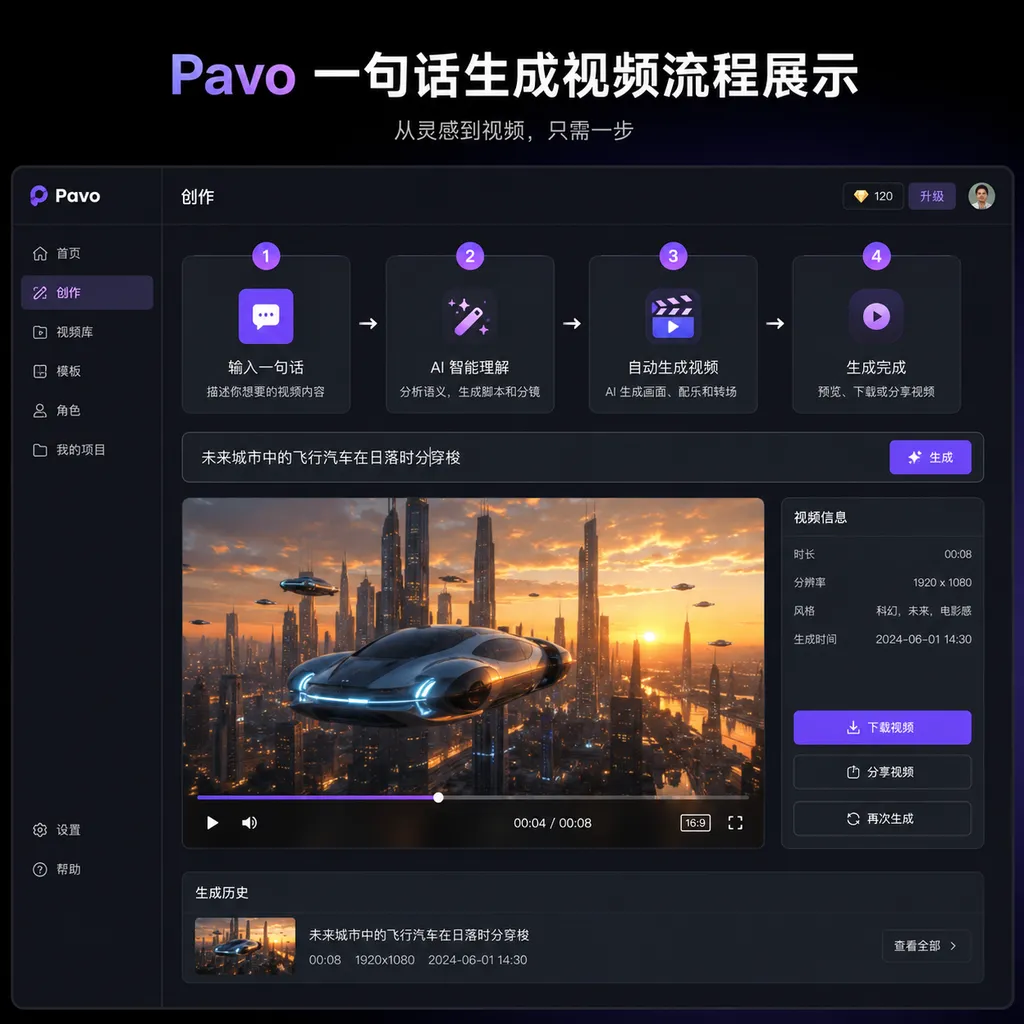
Pavo takes the opposite route — it breaks the process into visible steps, allowing users to participate at each one. Here’s how it works:
- User inputs a one-sentence initial idea
- System generates a full requirements document
- Auto-produces an outline
- Designs characters, scenes, and props
- Generates visual material for those characters, scenes, and props
- Outputs a storyboard
- Generates keyframes
- Compiles everything into a storyboard video
After each generation step, users can check, adjust, and confirm before moving forward. In this way, the product acts more like an AI assistant director, not an “auto video machine.” For creators who need controllable output, this workflow is far more reliable than black-box one-click systems — you know where you can intervene and correct, instead of watching a result fail after ten seconds.
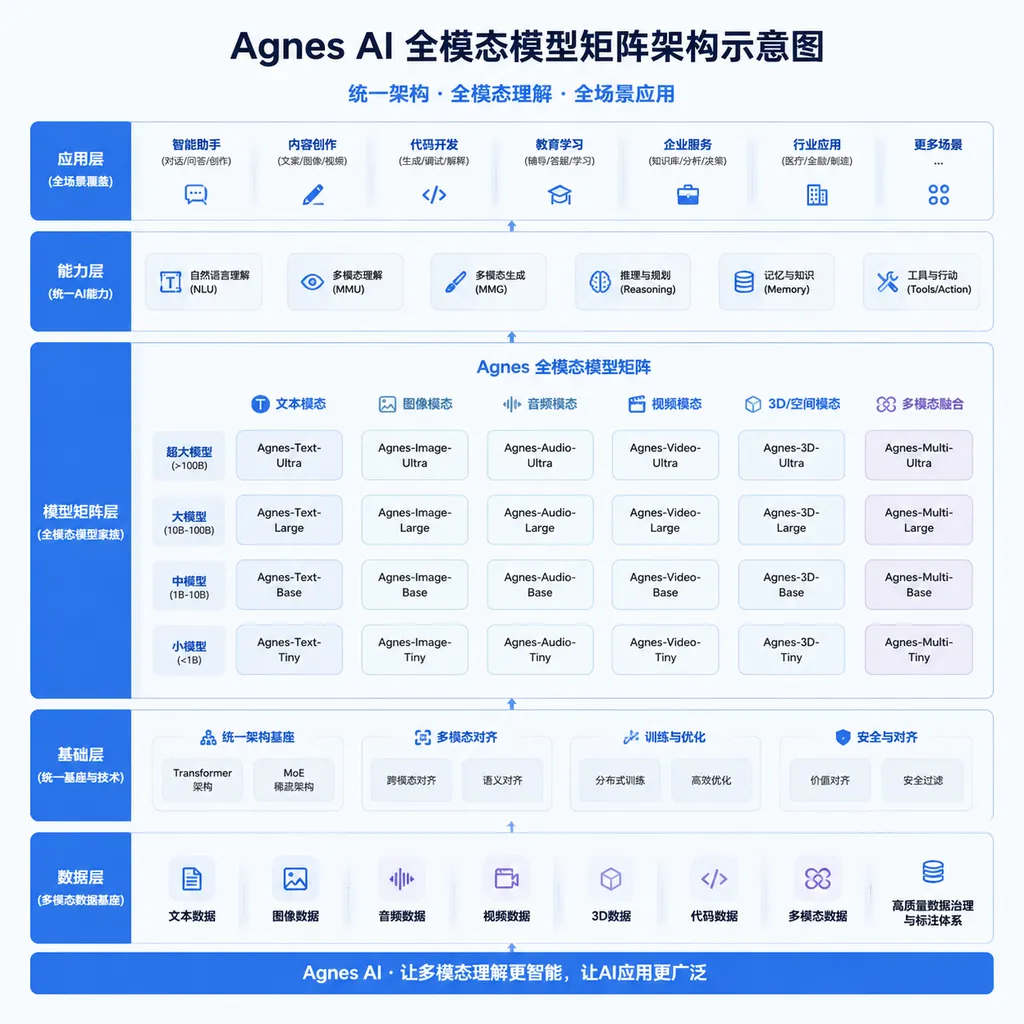
The underlying compute power comes entirely from Agnes’ self-developed multimodal model matrix: the text model handles requirement parsing, outlines, and storyboard writing; the image model produces visual assets; and the video model animates the keyframes. In this chain, the three models don’t work separately — they’re organized into one cohesive workflow. That integration is the real logic behind Agnes’ free strategy.
Agnes-Video-2.5-Preview: Officially Aiming to Catch Up With Veo 3
Also worth noting: along with Pavo’s release, the team revealed that its next-gen video model, Agnes-Video-2.5-Preview, will soon go live.
Internal evaluations show that version 2.5 brings clear improvements over V2.0 in four dimensions:
- Motion continuity: complex actions no longer break between frames
- Character consistency: faces remain stable across long shots
- Camera movement: pans and zooms look more like real cinematography
- Scene stability: backgrounds no longer show “melting” drift
The company claims it is “closer to Veo 3.” That’s a bold statement — Veo 3 is among the best in the industry for video generation, particularly in synchronizing audio and visual performance with cinematic camera language. Agnes’ V2.0 model already ranks on Artificial Analysis’s Image-to-Video (With Audio) list. If 2.5 truly improves motion and camera quality further, pairing “free + tier-one performance” could give it a strong footing.
Of course, comparisons will have to wait until the model officially launches. AI video demos are always beautiful — real-world usage reveals the true failure rate.
Why Agnes: Ranked Ninth, Taking a Different Path
Many may not yet know this company. Agnes AI is the multimodal Lab under Singapore’s Sapiens AI, and its name is an anagram of “Agent” — a clear agent-first mindset.
Here’s where things stand:
- Text model: Agnes-2.0-Flash — listed in the Claw-Eval ranking (real agent task evaluation), supports 1M context and up to 65.5K output tokens
- Image model: Agnes-Image-2.1-Flash — listed in Artificial Analysis image editing rankings, supports 4K output
- Video model: Agnes-Video-V2.0 — listed in Artificial Analysis image-to-video (with audio) rankings
Since the free API release on June 1, Agnes disclosed on LinkedIn that within a week, its text model processed over 1T tokens, generated over 2 million images, and produced more than 2 million seconds of video. That suggests the free strategy truly resonated in the developer community.
Its ability to go free, according to official statements, comes from a “lightweight, high-efficiency” approach — multi-model clustering plus intelligent routing, splitting a task into subtasks handled by specialized small models in parallel, reducing inference costs to 1/10 that of single-model setups. It sounds like “agent-style,” but in essence it’s MoE (Mixture of Experts) engineering at product scale.
What This Means for Developers
If you’re a developer, Pavo itself may not be your focus — you’ll care more about what the underlying APIs can do. According to the disclosed integration details, Agnes APIs follow the OpenAI-compatible format, endpoint at https://apihub.agnes-ai.com/v1, supporting standard chat completions and image generations. Migration cost: nearly zero.
A few practical use cases:
- Agent workflows: 1M context means you can include full tool-call histories, long conversations, or code segments without complex compression logic
- Content generation apps: unified access across text, image, and video with the same key reduces maintenance across multiple vendors
- Prototype testing: being free lets you iterate and experiment before achieving PMF, without worrying about token costs each time you adjust prompts
On the downside, Agnes is not based in China, so direct API calls may face network hurdles for Chinese developers. To make things easier, aggregator platforms like OpenAI Hub already support Agnes model calls, allowing one API key to switch between GPT, Claude, Gemini, DeepSeek, and Agnes — simplifying foreign network and key management.
How Long Can “Free” Last?
It’s the unavoidable question. “Indefinite free access” sounds great, but an AI Lab isn’t a charity.
My assessment covers a few points:
- Agnes is betting on the Agent-era ecosystem. When a workflow involves dozens of model calls, the calling cost scales exponentially. If it can attract developers during the free phase and anchor deep integrations around Agnes models, it can later monetize through enterprise editions, on-prem setups, or paid feature packs — possibly even creator memberships via tools like Pavo.
- Pavo is clearly a consumer-level traffic entry point. A free video creation platform spreads far faster in creator communities than an API doc ever could. With Pavo, Agnes isn’t just a developer-focused lab anymore — it’s building a product matrix, a necessary step toward long-term business sustainability.
- Free video generation is the most expensive burn. Text inference costs are manageable; video compute costs are in another league. Agnes offering indefinite free video implies either genuine architectural cost advantages or substantial funding aimed at user growth. Either way, it’s good news for developers — at least for this window in time, it’s free.
For those building AI applications, instead of worrying how long the company can sustain it, it’s better to use this free window to get your product working. Pavo itself is a useful case study — showing exactly how to assemble a full creative workflow product using multimodal APIs.
Points Worth Watching
- The actual performance of Agnes-Video-2.5-Preview compared to Veo 3, Keling, and Sora after launch
- Pavo’s creator-community retention — can “one-sentence video creation” move beyond the demo stage?
- The long-term sustainability of the free policy, especially for video compute costs
- Whether similar free strategies will emerge in China — token cost anxiety is global, not just overseas
References
- Making Videos For Free — Agnes AI Launches New Free Video Creation Platform Pavo | IT Home: IT Home’s initial coverage of Pavo’s launch
- Starting Today, Unlimited Free Access! The World’s First Full-Modality API Opened by a Top 10 AI Lab | Zhihu: Deep report by QbitAI on Agnes AI’s free API release, including model ranking details


