
OpenAI Halves Inference Costs — How Much Room Is Left for API Price Cuts?

OpenAI engineers internally revealed that, through a series of low-level system optimizations, they reduced model inference costs by more than 50%. The saved computing power can be used either to lower prices or to increase user quotas. At a time when domestic vendors have driven API prices to rock bottom, this efficiency improvement has given OpenAI the confidence to reorganize its pricing strategy.
OpenAI Just Squeezed Another Half Out of Its Compute Bill
According to The Information, OpenAI engineers revealed internally that the company recently reduced AI model inference costs by more than 50% through a series of low-level system optimizations. Note that this is not about training costs, but the GPU time actually burned when models respond to requests online — the most expensive part of OpenAI’s daily operations, and the part that most directly determines gross margin.
More importantly, this cost reduction mainly came from improving utilization of existing server resources, rather than adding more new GPUs. In other words, the same batch of H100/H200s is now producing roughly twice the effective token output. The saved budget can either be used to lower API prices or to loosen rate limits and context allowances for users.
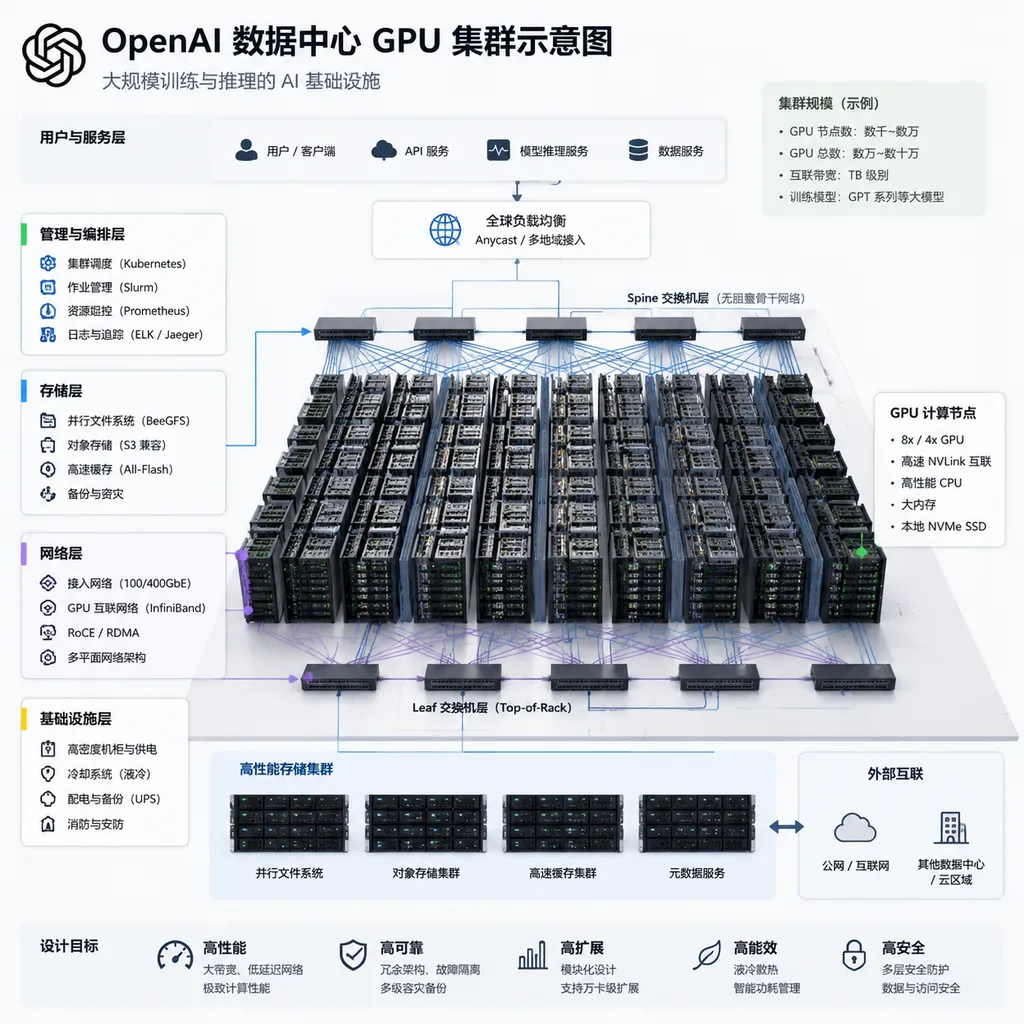
The timing of this news is very interesting. Over the past six months, Chinese players like DeepSeek, Tongyi, Doubao, and Wenxin have pushed API prices down to levels that are uncomfortable for their American counterparts, while OpenAI and Anthropic have also started facing real pressure on the enterprise side as customers migrate to cheaper models — something The Wall Street Journal wrote about recently. OpenAI leaking news that it has “halved inference costs” feels less like pure engineering flexing and more like preparation for another round of price cuts.
Where Did the 50% Savings Come From?
The report did not disclose many technical details, but based on OpenAI’s public moves over the past year and standard industry practices, it’s possible to roughly piece together where that 50% came from.
The first part is more refined KV Cache management. The most expensive part of LLM inference is not computation, but memory bandwidth — every generated token requires moving a huge KV Cache back and forth between memory and compute units. OpenAI has already turned prompt caching into a public-facing feature (cached input tokens cost only 1/2 to 1/4 as much), and its internal caching system is clearly still being optimized. More aggressively reusing high-frequency prefixes, system prompts, and intermediate states from long documents across requests is likely the biggest source of savings.
The second part is smarter batching (continuous batching) and speculative decoding. Traditional batching locks once a batch is formed, meaning short requests must wait for long ones to finish, which hurts GPU utilization badly. Continuous batching allows requests to enter and leave batches dynamically. Combined with memory management approaches like PagedAttention, GPU utilization can increase from just over 40% to around 70%-80%. Speculative decoding uses a smaller model to “guess” several tokens in advance, then has the larger model verify them all at once, effectively turning part of serial decoding into parallel verification — producing immediate gains for long outputs.
The third part is optimization of MoE routing and expert parallelism. The GPT-4 family is widely believed to use an MoE architecture, where activated parameters are far fewer than total parameters. The biggest inference pain point for MoE systems is uneven expert load balancing — some experts become overloaded while others sit idle. OpenAI’s scheduler-level work likely includes dynamic expert migration, replication of hot experts, and more aggressive quantization (FP8 or even lower).
The fourth part is mixed precision and deeper quantization. Compressing model weights and KV Cache from BF16 down to FP8 can theoretically cut memory usage and bandwidth requirements in half, while accuracy loss is nearly imperceptible for most tasks. NVIDIA hardware since the H100 generation already supports this natively, so there is little reason for OpenAI not to use it.
Taken together, these optimizations making overall inference costs drop by 50% is not an exaggerated claim. Anthropic and Google are doing similar things as well; OpenAI is simply the one publicly signaling it this time.
Why Release This News Now?
From a business perspective, OpenAI’s situation is more urgent than outsiders may realize.
On one hand, enterprise customers are consuming more tokens, but ARPU is not increasing in parallel — because everyone has learned the combination strategy of prompt caching, batch APIs, and routing simple tasks to cheaper small models. Sam Altman himself has admitted that ChatGPT Pro subscriptions lose money, and enterprise API margins are also not as comfortable as many imagine.
On the other hand, developer switching costs are getting lower and lower. OpenAI-compatible API formats have effectively become the industry standard. DeepSeek, Qwen, and Claude all offer OpenAI-compatible interfaces, so switching models often requires changing little more than a base_url and model name. In addition, Chinese aggregation platforms (such as services like OpenAI Hub that let one API key access all mainstream models) have reduced the cost of “choosing models task by task” to nearly zero. OpenAI can no longer rely on a moat where developers are locked into its ecosystem alone.
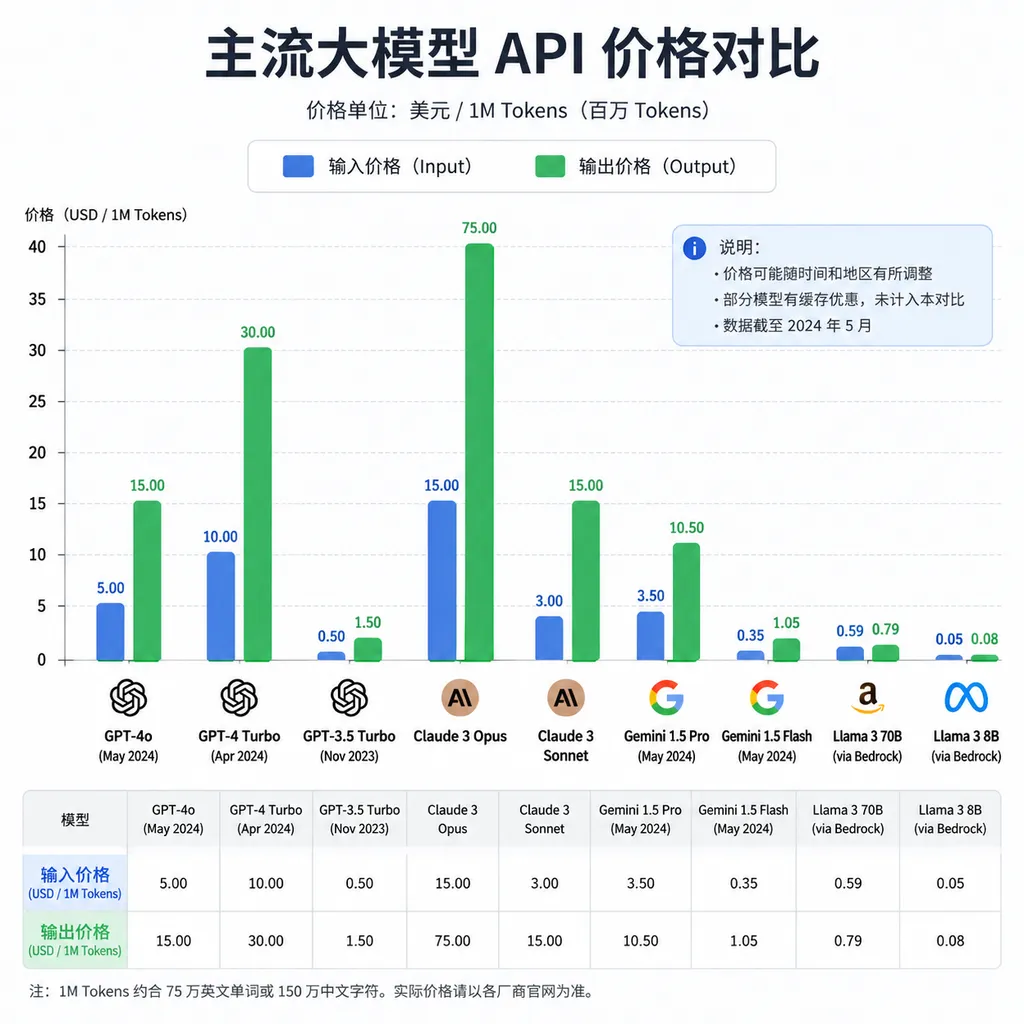
So the more likely scenario behind this halving of inference costs is:
- Another round of price cuts for GPT-5 mini/nano tiers, targeting DeepSeek-V3 and Gemini Flash;
- Deeper batch API discounts, potentially dropping from the current 50% off to 60%-70% off;
- Looser enterprise rate limits and larger context windows, trading capacity for renewals;
- More aggressive default prompt caching, further lowering effective pricing for long system-prompt scenarios.
How Chinese Developers View This
From the perspective of Chinese developers, the impact has two layers.
The first is obvious: if OpenAI really cuts prices again, it directly benefits teams building overseas-facing applications. Models like GPT-4o and GPT-5 still maintain advantages in certain scenarios — especially complex agents, code generation, and multimodal understanding. Another price reduction means products that previously could not scale due to cost constraints can revisit their economics.
The second layer is more subtle: the price war will push the idea that “API = business model” further toward irrelevance. A Huxiu article titled “Let the AI LLM Price War Become Even More Intense” made a sharp point — API billing itself may never have been meant to be the core business of foundation models, just as iOS and Android do not charge for SDK access. That sounded aggressive in 2024, but by 2026 it increasingly looks realistic. OpenAI’s real revenue drivers are ChatGPT subscriptions, enterprise deployments, and future hardware and agent-platform revenue sharing. APIs are more like a developer acquisition channel.
This means that for developers, API prices over the next few years will only get cheaper, not more expensive. Differences in model capability will remain, but per-token pricing gaps will continue to converge. The rational approach is:
- Don’t lock your architecture into a single model provider; preserve the ability to switch quickly;
- Use aggregation platforms (services like OpenAI Hub that provide domestic direct access, OpenAI-compatible formats, and one-key access to GPT, Claude, Gemini, DeepSeek, etc.) to reduce engineering costs for multi-model testing;
- Implement task-based routing — cheap models for simple tasks, flagship models only for complex reasoning. This architecture becomes even more valuable as prices continue to decline.
Another Side Effect Worth Watching
Halving inference costs is not great news for NVIDIA. One sentence in the report was especially subtle: “fewer NVIDIA chips are required to run its AI systems.”
Over the past two years, market expectations for AI compute demand have been built on the assumption that “models keep getting larger, users keep increasing, therefore GPUs will always be undersupplied.” But if major players can cut per-unit inference costs in half every 18 months through software optimization alone (something like Moore’s Law for the AI era, except happening at the software layer), then marginal GPU demand growth may not be as steep as previously forecast.
Of course, Jevons paradox could still apply — lower costs may unlock more demand, causing total compute consumption to continue rising. But at least in the short term, OpenAI publicly signaling “we can do more with fewer GPUs” sends a new message to capital markets and supply chains alike: compute efficiency itself is a competitive advantage, not just a race to accumulate more chips.
Conclusion
Halving inference costs is not a technological revolution, but commercially it marks a clear inflection point. It tells the market two things:
- OpenAI still has significant room for further price cuts, and if the next round of price wars begins, it will not be as passive as many assume;
- The downward trend in AI API pricing is nowhere near finished.
For developers, instead of obsessing over which provider is cheapest, it makes more sense to prepare architectures and workflows in advance — systems that can switch providers at any time, route tasks intelligently, and take advantage of each platform’s batch and caching discounts. The biggest beneficiaries of this price war were always meant to be the application layer built on top of the models.
References
- Reports Say OpenAI Halved AI Model Inference Costs Through Low-Level System Optimization - IT Home — Chinese summary of The Information report, including key details reportedly revealed internally by OpenAI engineers
- Projecting the Collapse Scenario of OpenAI - Zhihu Column — A perspective on OpenAI’s business model and long-term competitive landscape, useful as comparative reading


