
Meta Is Going to Sell Compute Power: Monetizing Idle GPUs, Directly Competing with AWS Bedrock
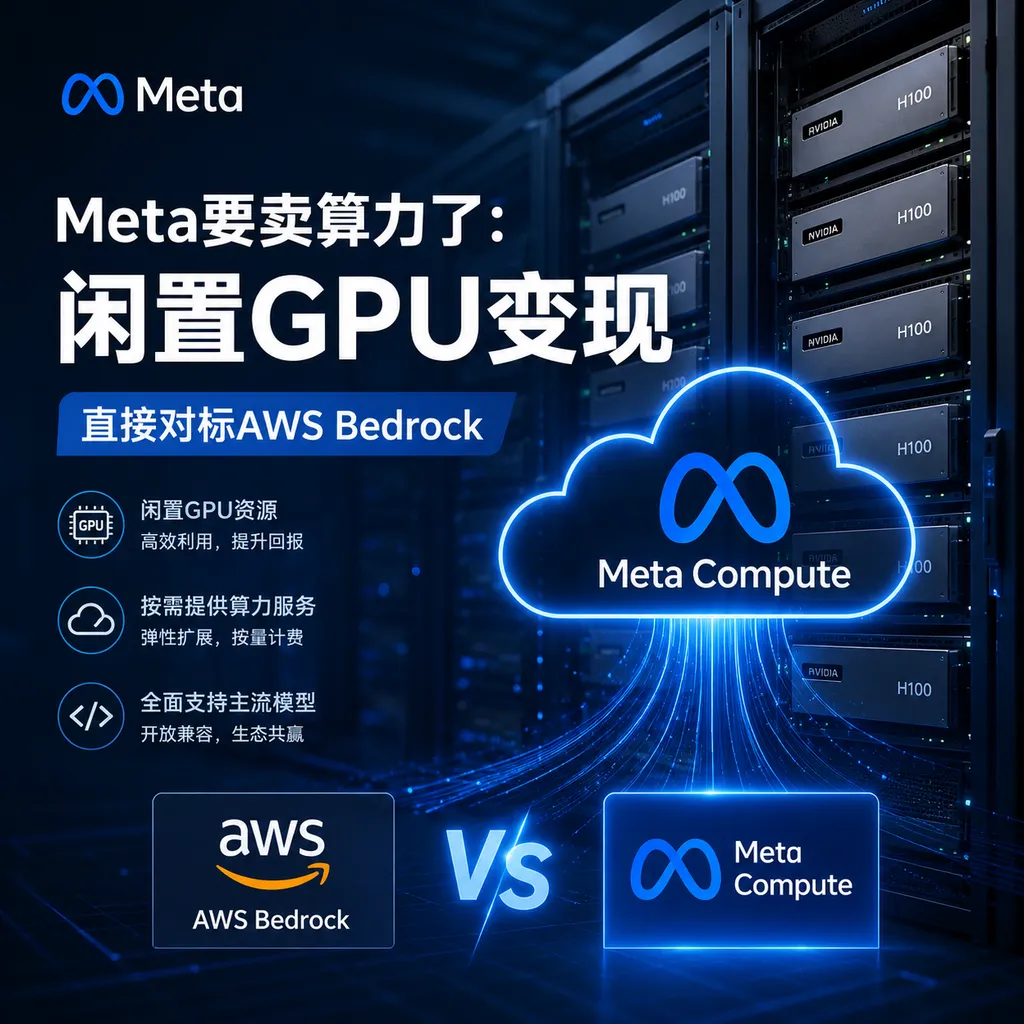
According to the latest report from Bloomberg, Meta is building a cloud infrastructure business, planning to rent out its idle AI computing power and self-developed models, stepping directly into the territory of AWS, Azure, and Google Cloud.
Meta Wants to Sell Compute Power: Monetizing Idle GPUs, Taking Direct Aim at AWS Bedrock
On July 1, Bloomberg broke news that made the entire cloud computing industry pay attention: Meta is building a brand-new cloud infrastructure business, planning to sell its stockpiled AI compute power and models externally. In other words, Zuckerberg is finally stepping onto the same playing field as Bezos, Nadella, and Pichai.
The industry's first reaction was probably: it was only a matter of time. Over the past two years, Meta’s aggressive buying spree of data centers and GPUs had already led many to suspect that the social media giant would eventually look for a new growth path beyond advertising. Now the answer is out in the open: if you’ve accumulated this much compute power, why let it sit idle when you can monetize it?
One New Business Unit, Two Product Lines
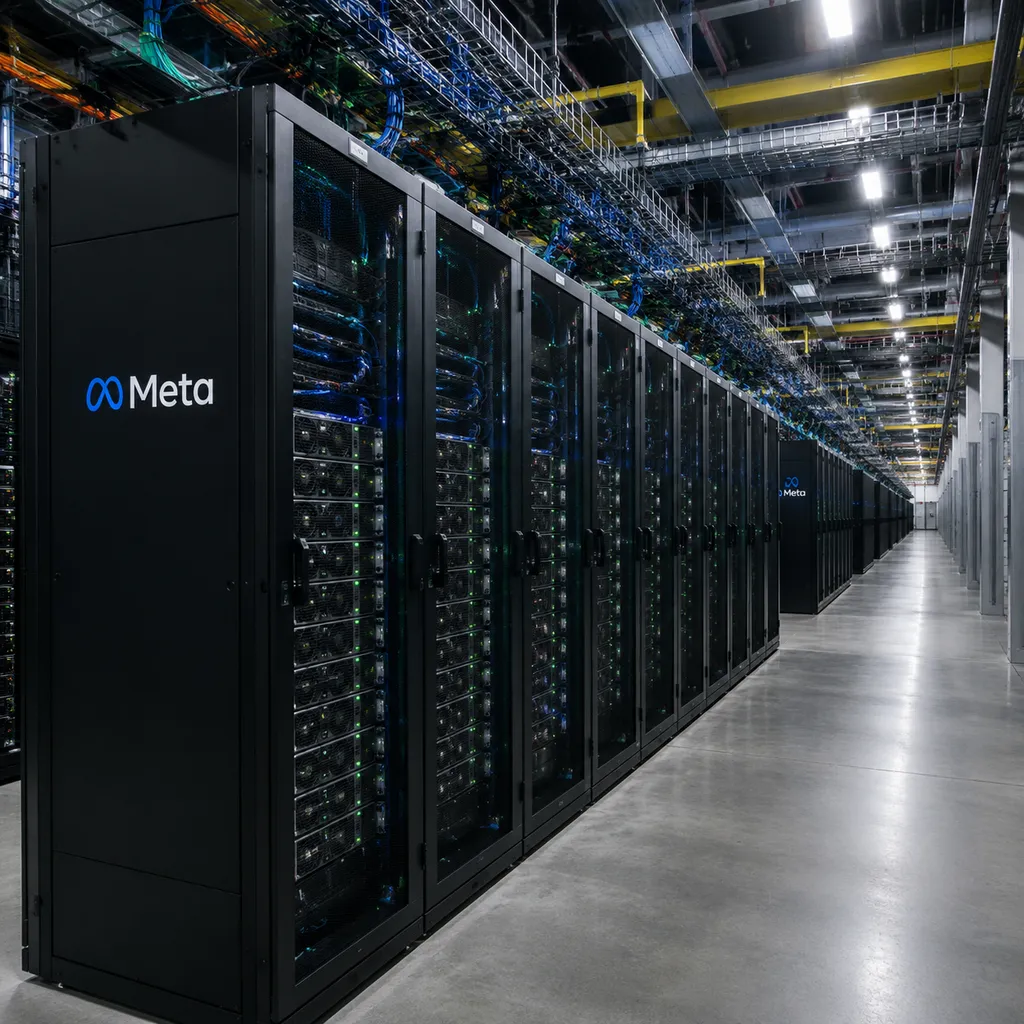
According to sources familiar with the plan, Meta is setting up a dedicated new business division under an internal project code-named Meta Compute. Originally responsible for building and managing Meta’s own AI infrastructure, the project will now also handle external commercialization.
The two product lines are becoming clear:
First: Model-as-a-Service. Meta will provide API access to AI models hosted on its own infrastructure, including internally developed models such as Muse Spark and the Llama series. Developers will pay based on usage, while Meta handles the underlying data centers and chips. Sound familiar? It’s essentially the AWS Bedrock model. You don’t need to care where the GPUs come from, how the clusters are scheduled, or how inference is optimized — just send an API request and you’re done.
Second: Raw compute rental. This is the more aggressive move: directly renting out low-level resources like GPUs and TPUs. Anyone training large models or running long-duration inference workloads can lease a cluster. This is basically the AWS EC2 GPU instance or CoreWeave approach.
Interestingly, SpaceX is doing something similar — commercializing Starlink’s unused computing and networking capacity. TechCrunch directly compared Meta’s move to the SpaceX model: when tech giants accumulate infrastructure far beyond their own consumption needs, it makes more sense to break it up and sell it rather than let it sit on the balance sheet depreciating.
Why Now?
Looking at the timing, this move is actually not surprising at all.
Over the past year, Zuckerberg has repeatedly expressed a clear view publicly: the entire AI industry is facing a compute bottleneck, and Meta should stockpile as much compute as possible first and figure out what to do with it later. It sounds impulsive, but translated into business language, it means: compute is hard currency right now — secure the capacity first.
Meta’s capital expenditures exceeded $70 billion in 2025, mostly poured into data centers and AI chips. The four major North American cloud giants (Amazon, Microsoft, Google, and Meta) collectively guided for over $300 billion in capital expenditures for fiscal year 2025. At that scale of investment, internal consumption alone — feeding recommendation systems, Reels, Meta AI assistants, and Ray-Ban smart glasses — is unlikely to generate matching returns in the short term. Financially, the company needs an outlet.
More realistically: Meta itself doesn’t lack compute power, but its business model (advertising) cannot sustain depreciation pressure on infrastructure at this scale indefinitely. Turning idle capacity into recurring cloud revenue is the most direct way to transform balance sheet pressure into income statement contribution. That was also Amazon’s logic with AWS — infrastructure built to support retail eventually became the company’s most profitable business.
Targeting Bedrock, But the Challenge Is Significant
If Meta wants to compete with AWS Bedrock, it first needs to understand what Bedrock has become.
AWS Bedrock now hosts Anthropic, Meta, Mistral, Cohere, AI21, Amazon’s own Nova models, plus a wave of open-source additions introduced at re:Invent 2025 including Gemma 3, Nemotron, OpenAI open-source models, Qwen3-NEXT, Kimi K2 Thinking, MiniMax M2, and more — serving over 100,000 organizations. Its moat is not a single model, but the combination of multi-model support + enterprise-grade security/compliance + ecosystem integration.
Meta does have the hardware foundation. In April 2026, Meta signed a Graviton5 deployment agreement with AWS to run CPU-intensive agent workloads at scale using ARM CPUs. That suggests Meta’s infrastructure capabilities are already battle-tested. Combined with its self-developed MTIA chips and massive H100/H200/B200 GPU clusters, it’s not lacking on the hardware side.
But cloud services have never been just about selling compute power:
- Enterprise feature stack: Bedrock includes Knowledge Bases, Guardrails, Agents, Prompt Flows, model distillation, intelligent routing, and more. Building that ecosystem from scratch would likely take Meta at least one to two years.
- Compliance and trust: ISO, SOC, HIPAA, GDPR, FedRAMP — each certification requires enormous engineering and legal investment. Meta’s long history of privacy controversies from its social business may actually become a liability.
- Sales and ecosystem: AWS has tens of thousands of ISV partners and a mature enterprise sales organization. Meta mainly serves consumers and essentially starts from zero in B2B channels.
- Multi-model strategy: Bedrock is willing to host Anthropic’s Claude while also offering competitors like Qwen. Will Meta host Claude or GPT? That’s the real question. If not, it can’t truly compete with Bedrock; if yes, it effectively drives traffic to rival models.
Muse Spark Is the Key Variable
The internally developed model mentioned in the report, Muse Spark, deserves special attention. It is likely Meta’s commercialization-focused multimodal generation model beyond Llama.
Llama is the open-source play — anyone can deploy it independently, and Meta doesn’t directly profit from it. But if Muse Spark is only available through Meta’s own cloud platform, it becomes an exclusive differentiator.
This strategy strongly resembles Google’s. Google open-sourced Gemma, but the real monetization engine is the closed-source Gemini, sold only through Vertex AI and APIs. Meta has clearly learned from this approach: open-source models build ecosystem and influence; closed-source models drive commercialization.
From a developer perspective, this dual-track model isn’t bad. If you want deep customization and private deployment, use Llama. If you want convenience through APIs plus stronger multimodal or specialized capabilities, use Muse Spark. Aggregation platforms like OpenAI Hub in China would likely integrate Meta’s models immediately if they become available through standardized APIs, giving developers another option alongside GPT, Claude, Gemini, and DeepSeek using the same API key workflow.
The Fourth Pole of Cloud Computing? Maybe Not
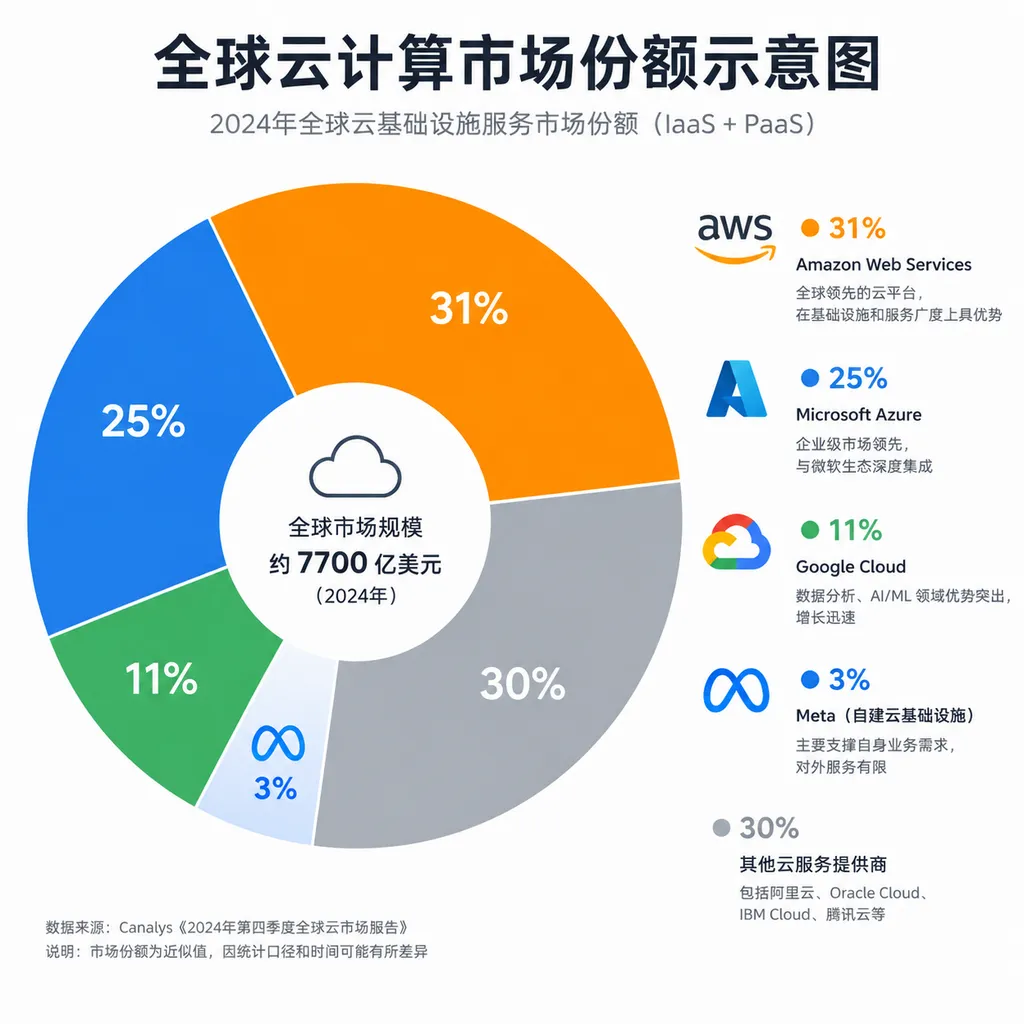
Time for some cold water. The global cloud infrastructure market is currently dominated by AWS at just over 30%, Azure above 20%, and Google Cloud in the teens, with the rest divided among Alibaba Cloud, Oracle, IBM, and others. Can Meta break into the top three? Almost impossible.
But Meta may not need to become a general-purpose cloud provider. It is more likely to pursue a vertical strategy: an AI-native cloud. In other words, instead of competing on S3, databases, or managed Kubernetes, it could focus exclusively on AI training and inference.
Players in this segment already include CoreWeave, Lambda Labs, Together AI, and Fireworks — all companies built around GPU rental and model APIs. CoreWeave’s 2025 IPO briefly pushed its valuation into the tens of billions of dollars, proving there is strong market demand.
This is where Meta’s advantages become clear:
- Massive scale: CoreWeave has hundreds of thousands of GPUs; Meta reportedly has over a million.
- Model inventory: Llama 4 is already running on Bedrock, while Muse Spark remains exclusive and can be directly productized.
- Network infrastructure: Meta’s global data centers and backbone networks are already in place.
- Research depth: FAIR and Meta’s GenAI teams can continuously produce new models.
So the more realistic conclusion is: Meta will not disrupt AWS, but it could carve out a significant position in the niche market of AI inference and model hosting. Similar to how Netflix didn’t become a TV network but fundamentally changed content distribution.
What This Means for Developers
From a technical perspective, the real question is: Will this make AI APIs cheaper, faster, and more diverse?
In the short term, probably yes. Another major player entering the market makes price competition almost inevitable. Llama 4 Maverick pricing on Bedrock is already not especially cheap. If Meta sells directly and cuts out AWS as the middle layer, it could theoretically offer more competitive pricing.
In the medium term, this will accelerate the inference arms race. Meta has MTIA chips, AWS has Trainium and Inferentia, Google has TPUs, and Microsoft has Maia. All four are investing heavily in proprietary silicon, and the direct result will likely be continued declines in inference costs for mainstream models. Between 2024 and 2026, API pricing for major large models already dropped by more than an order of magnitude — and that trend is unlikely to stop.
Long term, the key issue is how open Meta decides to be. Will it create a closed platform selling only its own models, like OpenAI’s API ecosystem? Or will it build a multi-model marketplace like Bedrock? The former is easier but has a lower ceiling; the latter is harder but has far greater potential. Given Zuckerberg’s consistent level of ambition, the latter seems more likely.
Final Thoughts
At its core, this news is not a sudden impulse from Meta, but rather the inevitable commercialization of hyperscale infrastructure investment. When you accumulate more compute power than you can use internally, selling it becomes the only rational option.
Can Meta Compute challenge AWS? Not in the short term. But it will make the already crowded AI cloud market even more competitive and give developers greater bargaining power. The companies that should really worry are second-tier cloud providers — independent GPU clouds like CoreWeave and regional AI cloud vendors. Once Meta enters the field, the middle ground becomes much narrower.
Zuckerberg’s bet is not really about whether Meta can become a second AWS. The real bet is this: in the AI-era reshuffling of the tech industry, can a social media giant capture another wave of infrastructure dividends? That’s a very substantial wager.
References
- Reports say Meta is building a cloud services business to externally sell idle AI compute power and models - ITHome: Chinese summary of Bloomberg’s original report, including key information on the Meta Compute project and the Muse Spark model.


