
Alibaba Three-in-One: QoderWork, Wukong, and MuleRun merged into a single Agent platform
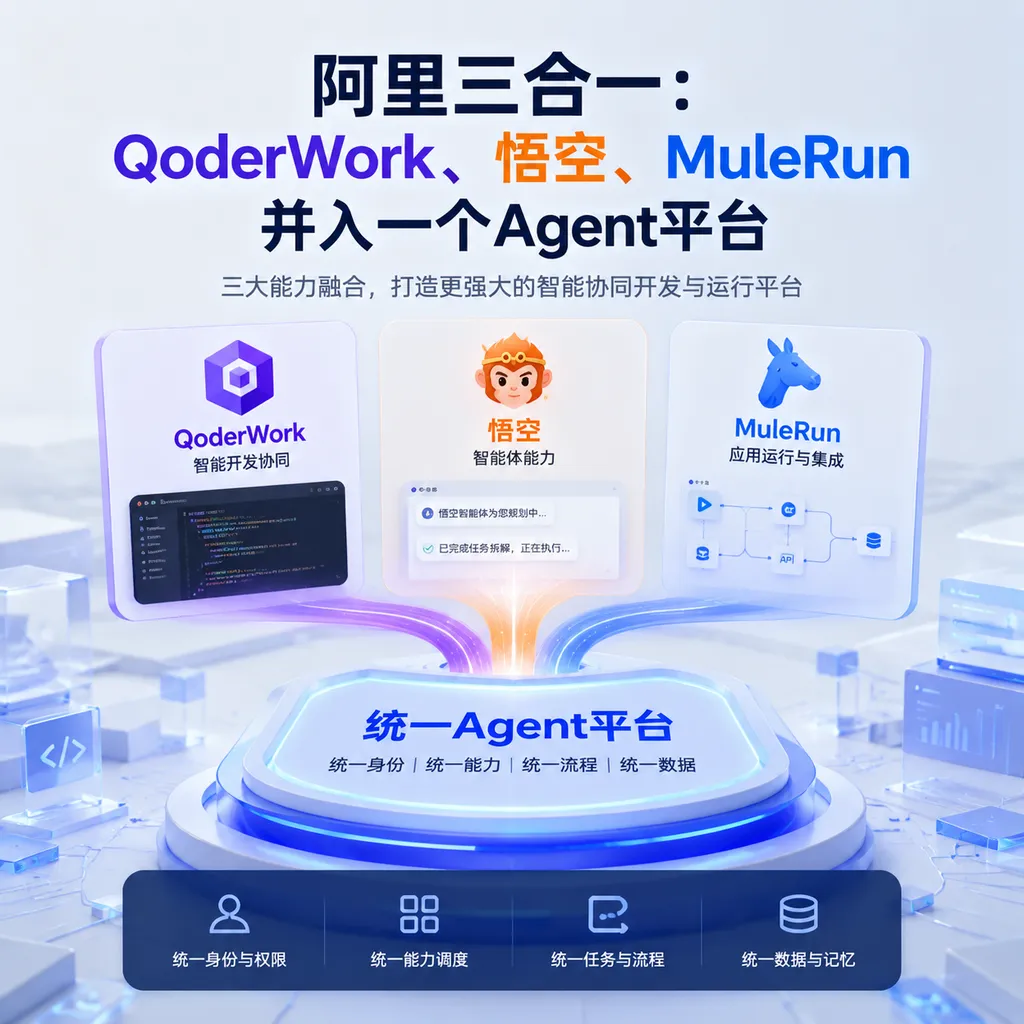
Alibaba has decided to end its internal Agent competition and integrate Wukong and MuleRun based on QoderWork, with the new post-90s DingTalk CEO, Chen Yusen, taking unified charge of the enterprise-level AI Agent product line.
Alibaba’s internal Agent “horse race,” which lasted for more than half a year, has finally produced a winner.
On July 2, multiple media outlets confirmed that Alibaba will integrate the product lines of QoderWork, Wukong, and MuleRun into one new AI product focused on enterprise productivity scenarios, with the project to be led by Chen Yusen, who just took over as CEO of DingTalk on June 11. The official statement is cautious: existing products and services will be seamlessly upgraded, and user rights will not be affected. But behind this statement lies Alibaba’s decision to forcibly consolidate its three internal Agent routes.
This is not a simple product merger—it’s a signal that Alibaba is doubling down on enterprise-grade Agents.
Three Products, Three Completely Different Paths
Let’s first look at the three products being merged, as that defines what the new product will look like.
QoderWork launched in January 2026 as a desktop AI agent, taking the “local-first” route—using natural language to directly operate applications and files on a computer for document creation, data analysis, and material organization. Over six months, it added expert suites for finance, law, and marketing; a design workstation; a “Consciousness” module for memory and reflection; and integrations with DingTalk, WeChat, and Feishu. Wu Yongming once said in an internal meeting that QoderWork had the highest DAU, WAU, and token consumption among all Alibaba AI tools—meaning it’s currently the group’s most commercially active Agent.
Wukong, released on March 17, is an enterprise-grade AI-native work platform that debuted under the DingTalk banner. Instead of simulating human clicks, it natively invokes thousands of DingTalk’s capabilities—approvals, calendars, contacts, and documents—through a CLI-like redesign. It inherits enterprise permissions, runs in a secure sandbox, and supports auditable token consumption. Its positioning is clear: to embed AI into the existing entry point of 20 million enterprises.
MuleRun (internally nicknamed “Running Mule”) is the least “Alibaba-like” of the three. It targets the global market, already operates in 43 countries, and supports multi-Agent parallelism, task decomposition, and standardized skill modules for code, data, documents, and multimedia. In June, it launched “Messages,” an enterprise collaboration app that brings Agents from personal workbenches to team collaboration. Chen Yusen gave it an ambitious tagline—“the world’s largest labor outsourcing company,” enabling anyone, even those who can’t code, to turn daily workflows into runnable Agents.
Why Base It on QoderWork Instead of Wukong
This is the most intriguing part of the integration.
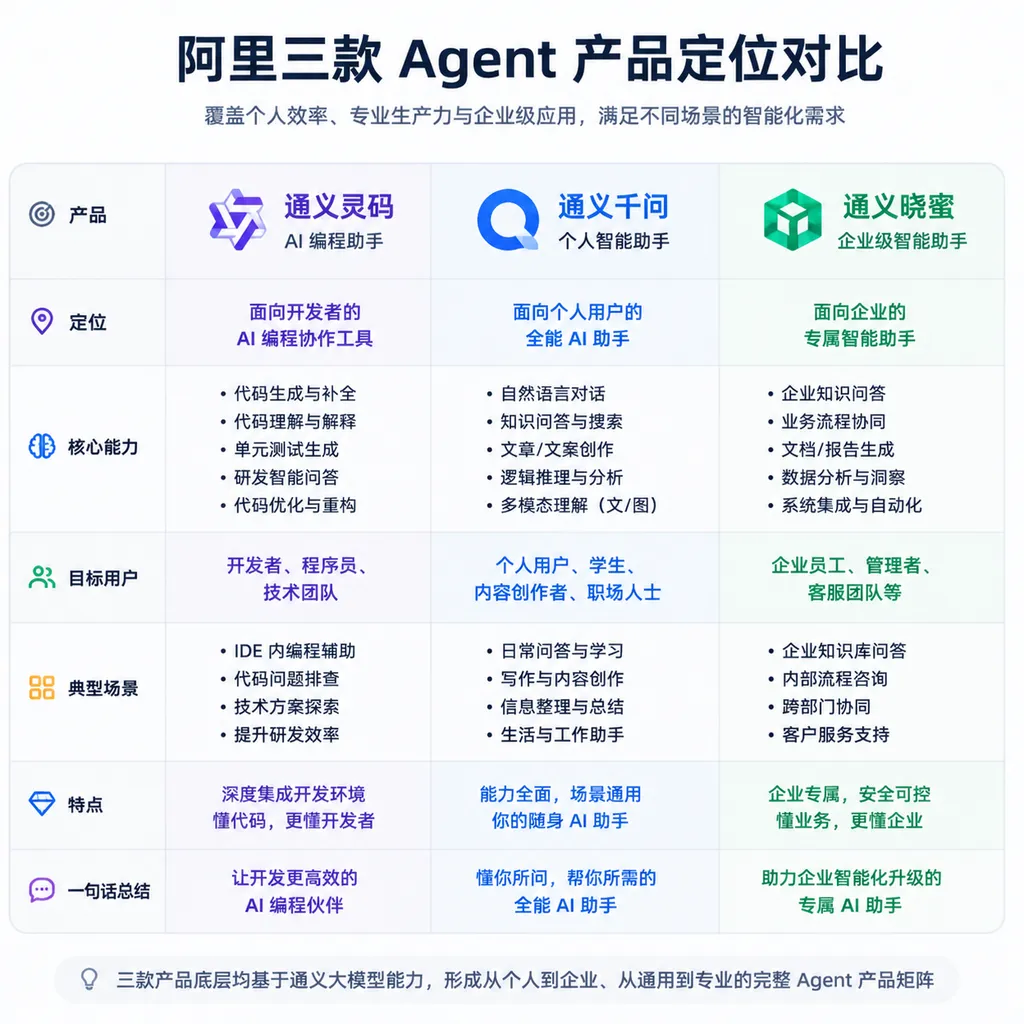
By traditional Alibaba logic, Wukong should naturally have been the mainline product: it was born within DingTalk, embedded across over 20 million enterprises, backed by the most strategic resources, and marketed as “the world’s first enterprise-grade AI-native work platform.” Yet the final decision makes QoderWork the base, appoints MuleRun’s Chen Yusen as CEO, and merges Wukong as a secondary component.
The reasons are already written in the data and reputation.
First, QoderWork is the only one with real traction. Its daily activity, weekly activity, and token consumption lead the group—hard data that commands influence internally. Without DingTalk’s historical burdens, QoderWork’s growth came bottom-up from desktop scenarios—its adoption directly reflects usability.
Second, Wukong’s situation is more complex than it appears. According to Caijing Tianxia, internal sources said Wukong “had every internal advantage, yet got the harshest criticism.” When it launched, the market already had more mature competitors—and even within Alibaba, some found better alternatives. Its deep integration with DingTalk is an advantage, but also makes it heavy and hard to evolve flexibly.
Third, though MuleRun launched last, its business feedback has been much stronger than Wukong’s. That’s why DingTalk announced in June that the Wukong and MuleRun teams would merge under “New Wukong,” led by MuleRun’s CTO Shu Junliang—an early signal of the direction. This latest QoderWork merger simply completes the puzzle.
An apt analogy: Wukong is the mythic hero trying to rebuild DingTalk, while MuleRun is the sturdy mule simply getting the job done. Alibaba’s rapid 24-hour leadership swap and this consolidation send a clear internal message—it’s not about positioning, it’s about performance.
Who Is Chen Yusen, and Why Him
Born in 1992, Chen graduated from Zhejiang University’s Chu Kochen Honors College in the “Qiushe Science Class” and was listed in Forbes Asia 30 Under 30. At 22, he founded cybersecurity company Chaitin Tech, which was acquired by Alibaba Cloud in 2019, bringing him into the Alibaba ecosystem. He later started a game company, which shut down in late 2023. On June 11, he became CEO of DingTalk, making him Alibaba’s youngest business unit head. He currently holds two titles—CEO of the Wukong Division and CEO of DingTalk.
His product philosophy sharply contrasts with his predecessor, Chen Hang. Chen Hang was top-down: DingTalk as the enterprise work entry point, with AI built around upgrading that gateway—breaking DingTalk apart and teaching AI to use its functions. Chen Yusen is bottom-up: rather than building a larger collaboration platform, he envisions a marketplace for generating, running, and trading AI labor—where anyone who can describe a workflow can create their own Agent.
After the merger, his challenge will be to reconcile these two philosophies—on one side, DingTalk’s 700 million users; on the other, MuleRun’s lightweight, market-driven Agent model. In an interview with LatePost, he admitted that the heavy legacy of big-tech infrastructure leaves room for startups to innovate. Now he has become the one carrying that legacy.
What the New Product Might Look Like
While there’s no official product reveal yet, combining the three teams’ capabilities sketches a likely outline:
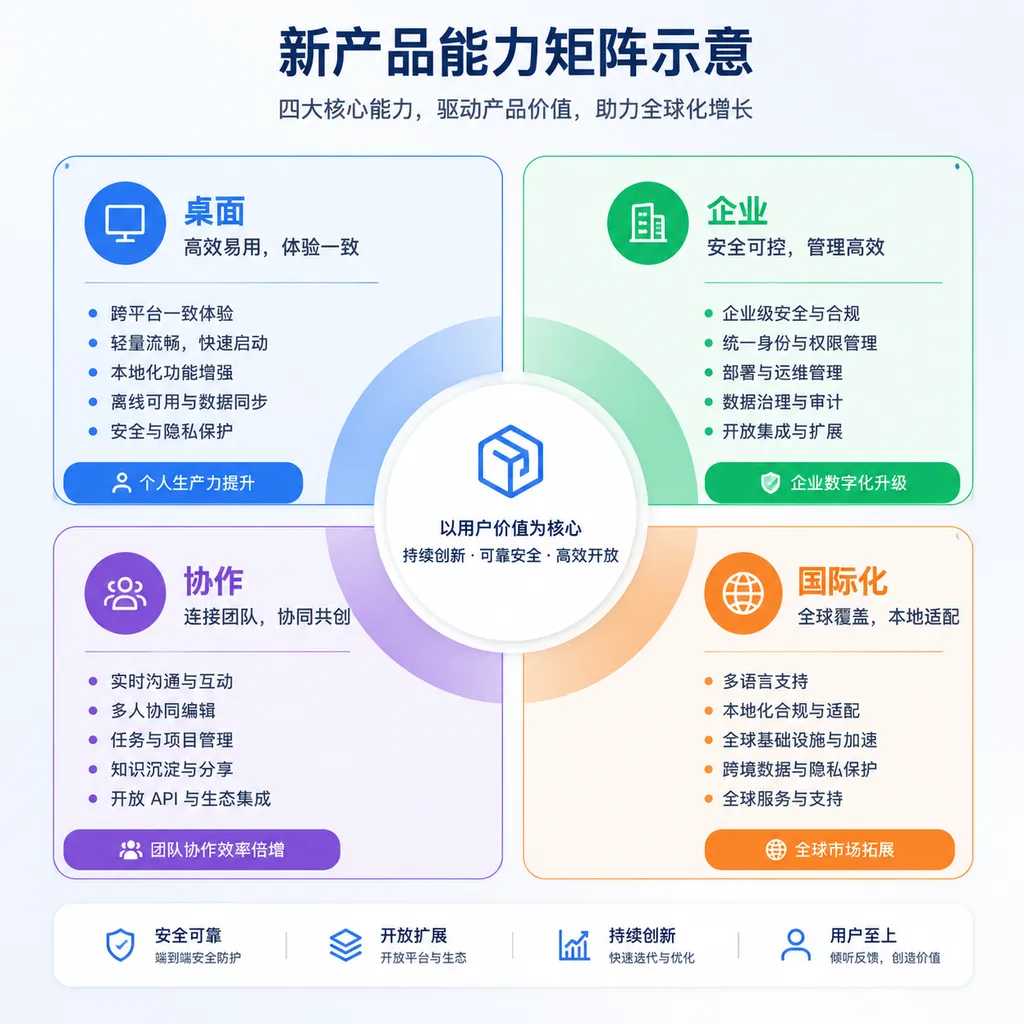
- Base Layer: QoderWork’s desktop Agent for local app control, file handling, and cross-software workflows
- Enterprise Capability Layer: Wukong’s native DingTalk functions—approvals, documents, calendars, contacts—plus enterprise permissions and sandbox security
- Collaboration & Marketplace Layer: MuleRun’s multi-Agent parallelism, task decomposition, Messages collaboration, and internationalization across 43 countries
- Expert Suites: QoderWork’s accumulated vertical packages for finance, law, marketing, and design
- Integration Layer: Connections to WeChat, DingTalk, Feishu, and MuleRun’s overseas IM channels—potentially Slack and others
If this system truly comes together, it would theoretically surpass all current enterprise Agent solutions—covering desktop, enterprise, collaboration, and international layers at once. The real challenge lies not in announcement but execution: the three teams’ tech stacks, product cultures, and codebases are far from naturally compatible.
Industry Perspective
Alibaba’s merger mirrors the recent moves by Tencent and ByteDance—big tech realizing that enterprise Agents can’t be developed independently through internal competition but require concentrated investment and integrated ecosystems for long-term success.
Gartner predicts that by the end of 2026, 40% of enterprise applications will embed AI Agents. Yet another figure stings more: 78% of enterprises are testing AI, but only 20% have seen clear ROI. This gap shows that the core competitiveness of enterprise Agents no longer lies in model capability, but in seamless integration with existing enterprise permissions, workflows, and cost systems.
Wukong originally targeted this pain point with its “inherited enterprise permissions, sandboxed operations, auditable tokens.” But that alone isn’t enough. Salesforce’s Agentforce dominates CRM, Microsoft’s Copilot excels in Office integration, and AWS Bedrock leads in cloud-based development—each with its own moat. For Alibaba to differentiate, it must weave together desktop reach (QoderWork), enterprise depth (Wukong), and collaborative globalization (MuleRun).
Shifting from internal competition to unified strategy reflects Alibaba’s recalibration of its Agent roadmap. How well it succeeds depends on whether Chen Yusen can, within 12 months, deliver a truly unified product, not just three wrappers under one shell.
For developers, all three products will continue to run normally in the short term—APIs and user rights remain unaffected. But over time, their capabilities will consolidate into the new platform. Teams currently integrating both QoderWork and Wukong should plan transition paths early.
By the way, OpenAI Hub already supports mainstream models including Tongyi Qianwen, allowing developers to invoke major domestic and international models with a single API key—cutting integration costs for Agent prototyping or benchmarking.
References
- Alibaba to Integrate QoderWork, Wukong, and MuleRun Agent Products; Existing Users Unaffected - IT Home: Core report covering the merger details, product backgrounds, and Chen Yusen’s appointment.


