EU gives Google a final ultimatum: Android system-level AI permissions must be opened up
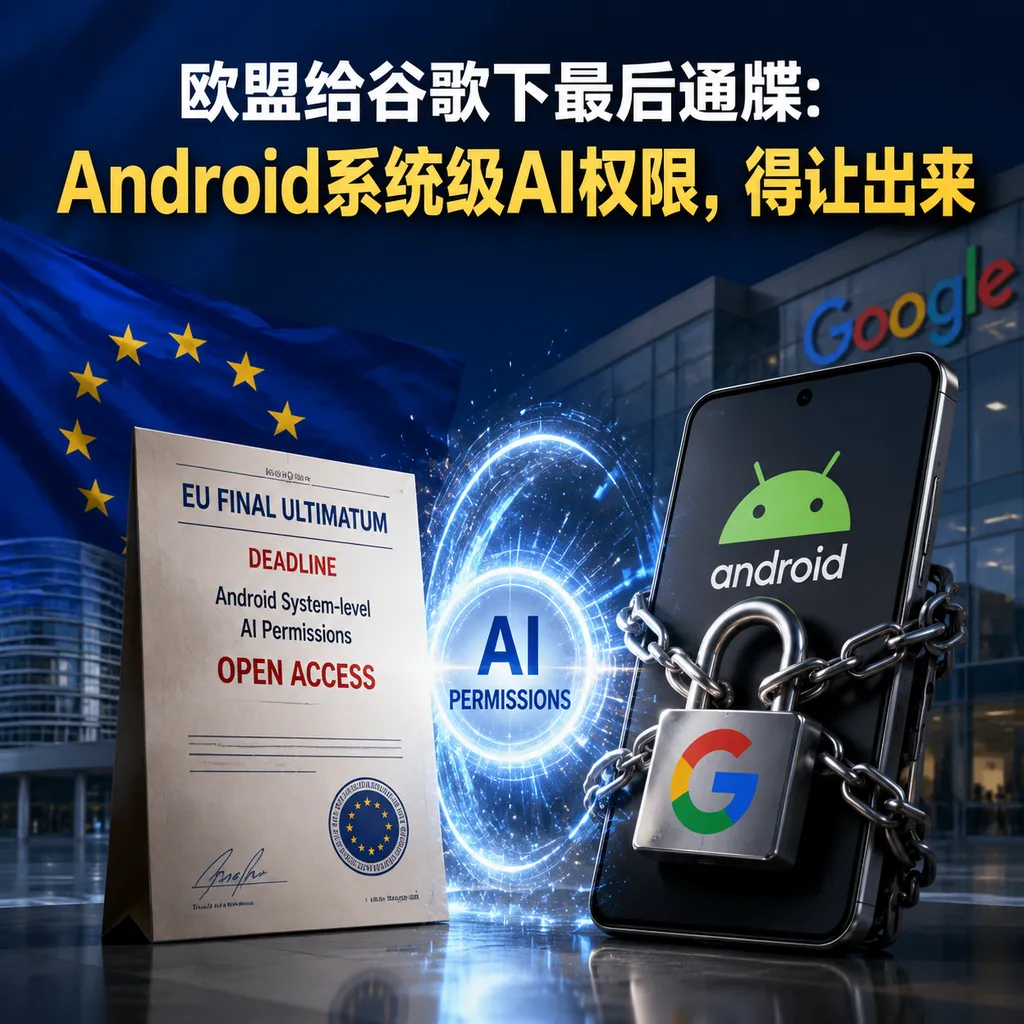
On July 16, the European Commission issued two mandatory orders to Google under the DMA, requiring the company to open 11 system-level Android features to third-party AI assistants and to share anonymized search data with search engines and AI chatbots. Gemini’s exclusive moat on Android has been dismantled, and for the first time, OpenAI and Anthropic can compete with Google at the system level.
On July 16, the hammer finally came down in Brussels. Acting under the Digital Markets Act (DMA), the European Commission issued two binding technical compliance measures against Google: eleven core Android functions that have been exclusive to Gemini must now be opened to third‑party AI assistants; meanwhile, Google’s accumulated search‑ranking, query, click, and browsing data must—after anonymization—be shared with eligible search engines and AI chatbots.
In other words, starting January next year (for search data) and July 2027 (for Android permissions), AI assistants that were previously locked out of the system layer—OpenAI’s ChatGPT, Anthropic’s Claude, and Perplexity—will finally be able to operate on Android phones sold within the EU. You could literally say “Hey Claude” and call a ride.
The case took exactly six months from the launch of the specification proceedings in January to the final ruling today. An initial consultation round happened in April, during which Google’s senior competition counsel Clare Kelly fired a few shots, claiming the process was “driven by competitor dissatisfaction rather than consumer benefit.” After the ruling, Kent Walker, another Google legal heavyweight, said in an email that “today’s decision could undermine vital privacy and security protections that millions of European users rely on.”
Strong words—yet inevitable. The DMA allows fines of up to 10 % of global annual revenue. Alphabet’s projected 2025 revenue nears $400 billion; anyone can do that math.
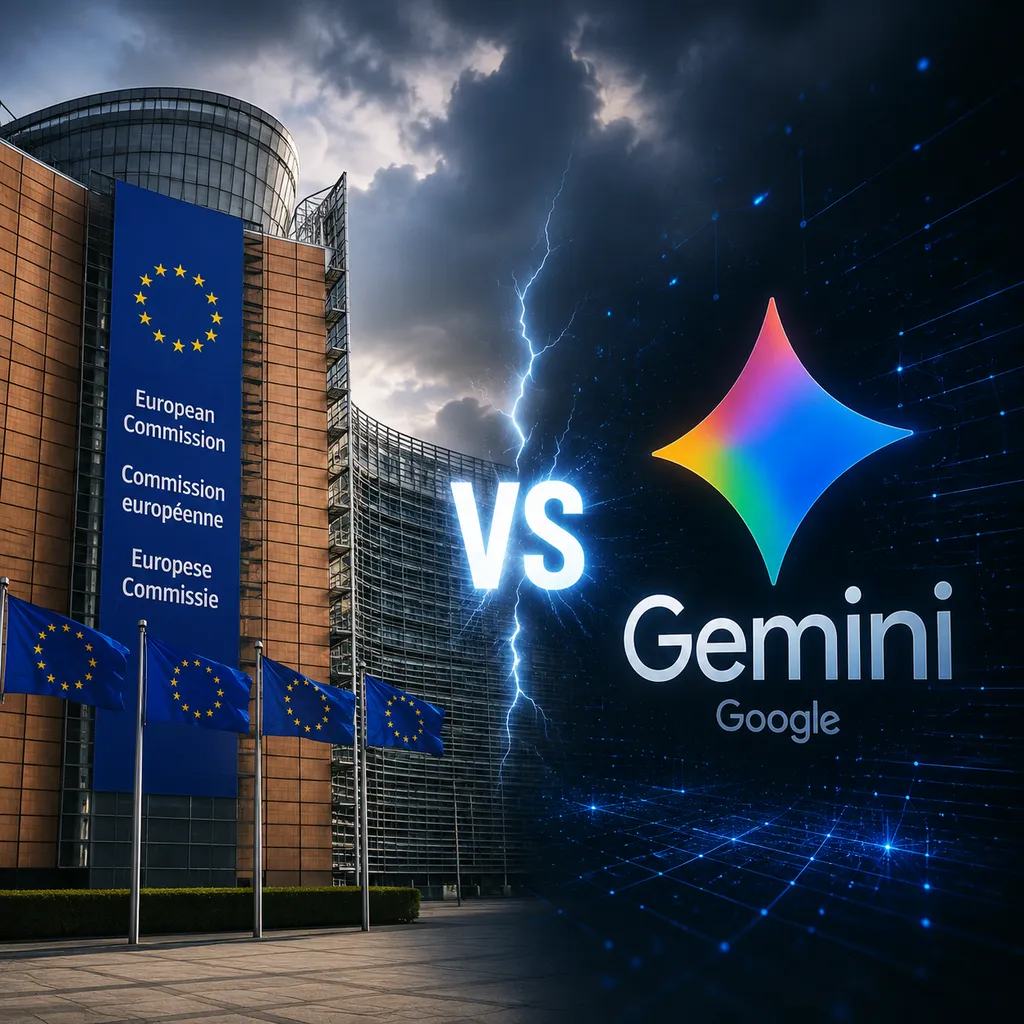
Gemini Has Been Eating Alone—Now It Must Share the Table
To grasp the weight of this ruling, you first need to see just how privileged Gemini has been on Android.
Currently, Gemini is the only assistant that can—at the Android system level—respond to hotkeys, read on‑screen context, and access local data to issue proactive suggestions. Installing ChatGPT or another app works only as an “application”: you have to open it manually, paste context, and copy results. Gemini, by contrast, is part of the “system.” It can live behind a wake word, read the screen, run in the background, and jump directly to Maps, ride‑hailing, or Calendar with a single phrase.
That’s exactly what the EU wants to crack open. As Commission tech‑policy chief Henna Virkkunen put it plainly, the goal is to redefine AI capability from a “downloadable app” into a “competitive operating‑system‑level function.”
The eleven Android system capabilities to be opened include, but are not limited to:
- Wake‑word / key activation: third‑party AIs can bind a hot word like “Hey Google” or be triggered by a hardware key
- Screen‑context access: ability to read what’s currently on the display (the basis for features like Gemini’s “Circle to Search”)
- Background and persistent operation: standby at system level without manual launch
- Cross‑app task orchestration: one‑sentence commands that span multiple apps—ride‑hailing, food orders, messaging
- Local‑model hardware API: access to NPU / GPU interfaces for on‑device models, to be opened free of charge
The killer item is that last one. Google’s Tensor chips and Android’s ML runtime have long been walled off: if you wanted to run a local model on the NPU, theoretically possible, Gemini Nano used a private channel. Now that channel must be equal‑access.
For Anthropic, OpenAI, and other companies building compact on‑device models, this is essentially a free admission ticket from the EU. Even Apple had to tie Apple Intelligence to OpenAI for a fallback because it lacked those on‑device compute interfaces. If Android opens first, Apple will feel the ripple pressure.
Search‑Data Sharing: The Real Nuclear Bomb
If Android openness cracks the physical gateway, search‑data sharing strikes at Google’s actual foundation.
Google’s moat has never been just about algorithms—it’s about user‑behavior data built up over twenty‑plus years: which queries lead to which results, how long users dwell, where they go afterward. That behavioral corpus drives ranking models that money alone can’t buy.
The EU now requires Google to share four categories of data:
| Data Type | Description | |------------|--------------| | Ranking data | Google’s ranking signals for search results | | Query data | What users searched for | | Click data | Which results they clicked | | Browsing data | Subsequent behavior chain |
Even more striking is the scope: the EU explicitly includes “AI chatbots with search functionality” as beneficiaries. So it’s not just search engines cross‑sharing—it means AI‑search products like ChatGPT Search, Claude’s connected search, and Perplexity all qualify to request anonymized Google data.
That single stroke could boost Perplexity’s valuation overnight. Its biggest weakness has been search quality lagging Google’s; access to raw behavior signals will slash the cost of training ranking models. ChatGPT Search likewise—OpenAI was relying on Bing’s backend; now it could ingest Google’s data stream, likely giving its UX a major lift.
Google may vet partners’ cybersecurity and data‑protection safeguards before sharing—that’s its firewall. Meanwhile, the EU set a formula for FRAND‑based (fair, reasonable, non‑discriminatory) pricing, preventing Google from pricing smaller rivals out of reach.
Timeline and Penalties: No Paper Tiger
The Commission’s schedule is explicit:
- January 2027 – Search‑data‑sharing mechanism goes live
- July 2027 – Android‑system permissions take effect in the next major Android release
- Non‑compliance penalties – up to 10 % of global annual revenue; repeat offenses up to 20 %
July 2027 sounds distant, but for Android it’s tight—its next OS architecture must rebuild the permission model at the framework level, far more than exposing a few new APIs. Google’s internal framework teams will be tied up for the next eighteen months.
One easy‑to‑miss detail: these changes apply only within the EU. That means the same Pixel phone will behave differently in Germany than in the United States. Such “regional forks” already exist on iOS (EU versions allow third‑party app stores) —now Android joins in. Fragmentation is the obvious cost, but Brussels doesn’t care; it’s betting on structural reform of the market itself.
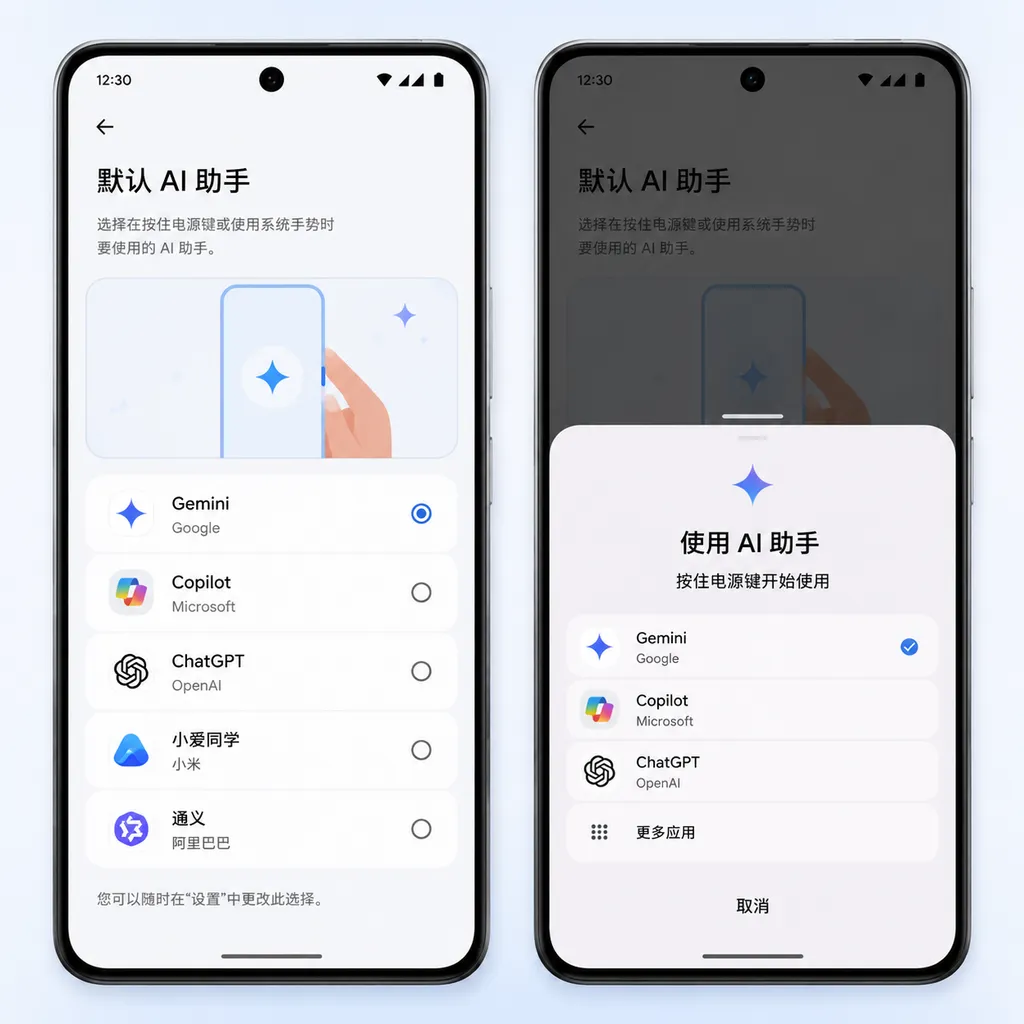
A Larger Thesis: The Forced Democratization of AI Distribution
Seen in broader context, this marks the “distribution‑layer war” phase of the AI‑assistant race.
From 2023 to 2025, competition centered on model capability—who had the smarter model, longer context, better code output. By 2026, capabilities are converging (GPT, Claude, Gemini each winning in specific niches). The battlefront shifts to access and distribution.
Google controls two dominant gateways: Android + Chrome + Search. Apple holds iOS + Safari. Together they capture nearly all mobile‑AI distribution. OpenAI, for all its power, is just an app—no system‑level wake word, no screen‑context access; users must open it manually each time.
The EU’s move in essence forces AI‑distribution rights out of OS vendors’ hands. It echoes Microsoft’s Windows‑browser ruling twenty years ago—but the stakes are bigger, since AI assistants could define human–computer interaction for the next decade.
For developers, the impact is immediate: starting next year in the EU market, you can legally request the same system‑level privileges as Gemini. No one knows how long that window will stay open, but it’s at least a moment of opportunity.
A Side Note
For cross‑model development teams, this ruling means a surge of AI‑assistant competition in Europe over the coming quarters. Developers in China or elsewhere experimenting with multi‑model comparisons or cross‑platform prototypes may find aggregation platforms like OpenAI Hub handy—one key can call GPT, Claude, Gemini, DeepSeek simultaneously, China‑accessible, OpenAI‑API‑compatible, no separate setup for Claude. Once Anthropic releases new system‑assistant APIs, such hubs can integrate them immediately.
Conclusion
Google’s resistance now looks largely theatrical—the DMA’s penalty structure is fixed. Unless Europe’s political landscape shifts dramatically, compliance is the only path. The real question is how, over the next eighteen months, OpenAI, Anthropic, and Perplexity exploit this opening to get their assistants onto Android users’ screens.
Whoever appears on EU users’ lock‑screen corner the very day the July 2027 Android release goes live could hold, for the next decade, a distribution slot equal to Gemini’s.
References
- EU presses Google: must open Android functions and share search data with AI rivals such as OpenAI – ITHome — Chinese report on Reuters original, includes Kent Walker’s statement and details on the 11 features
- EU launches specification proceedings against Google to ensure AI‑service interfaces and search data are open – ITHome — Background report from January when proceedings began, with interpretation of DMA Article 6(7) & (11)