DeepMind plays the biological resilience card to compete with Anthropic for science

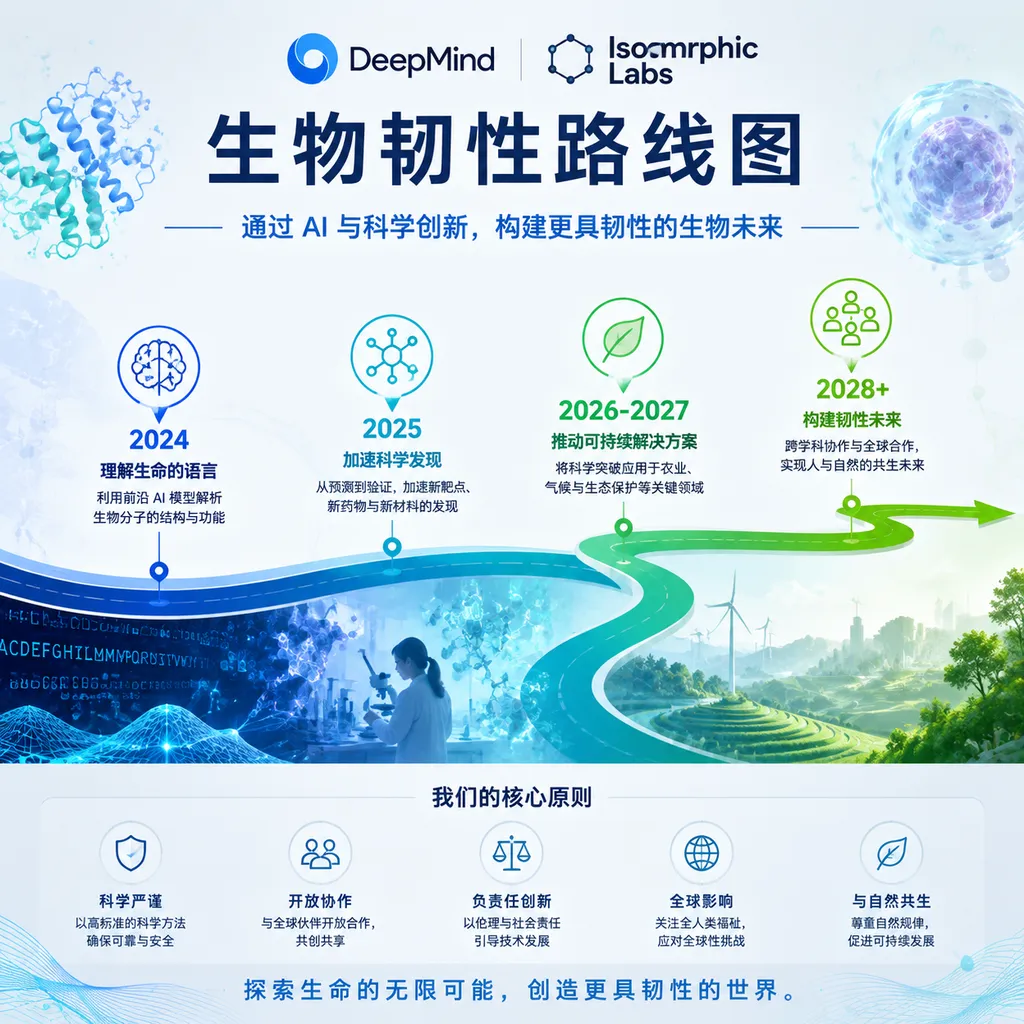
DeepMind and Isomorphic Labs jointly announced a bioresilience (Bioresilience) AI modeling program, extending the AlphaFold approach to the more challenging modeling of dynamic biological systems such as drug resistance and immune evasion, directly responding to the increasing pressure from Anthropic and OpenAI in the life sciences field.
DeepMind has laid its next card on the table after AlphaFold
On July 15, Google DeepMind and Isomorphic Labs jointly announced Our approach to bioresilience, publicly releasing their AI modeling roadmap for bioresilience. This is the first time in over two years since AlphaFold 3 that DeepMind has given a complete answer to the question “where do we go after structure prediction?”—and notably, it comes right after John Jumper’s departure, when many in the field were wondering whether DeepMind was about to slow down.
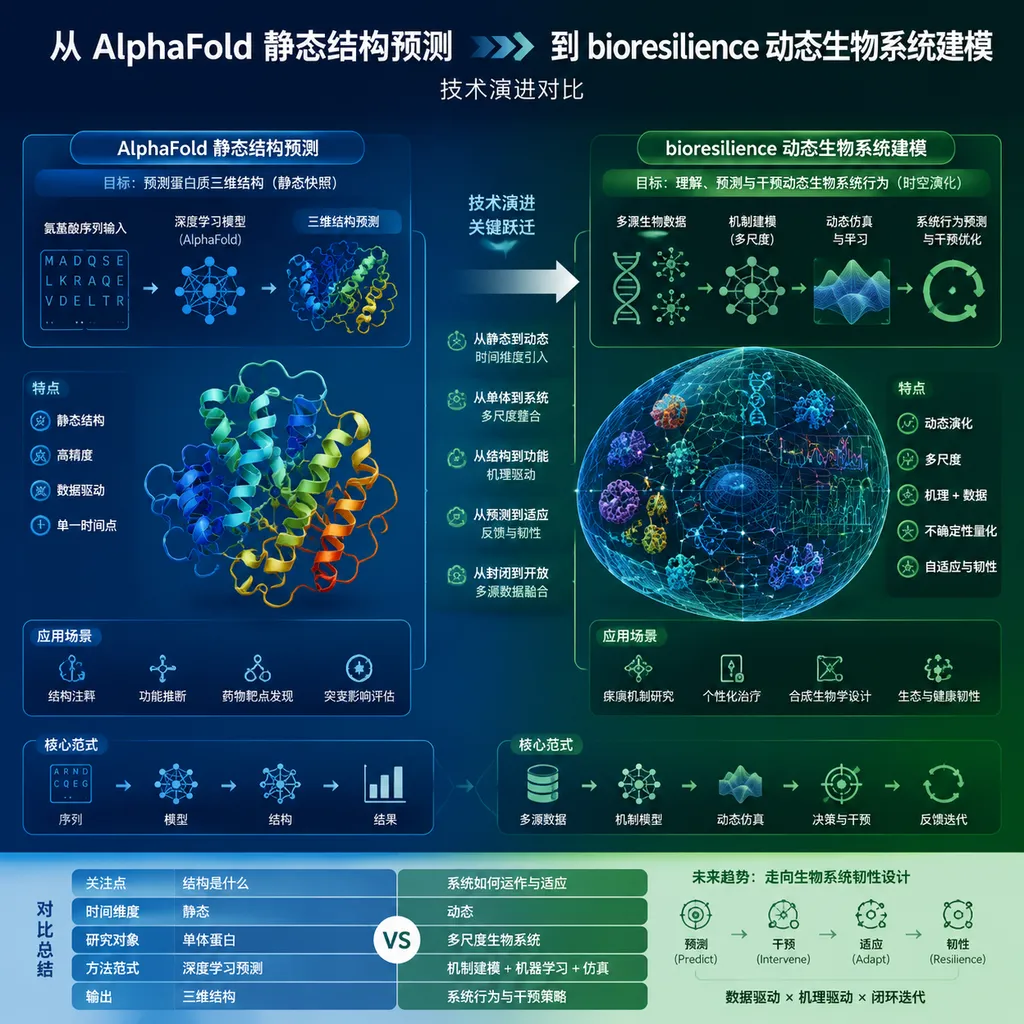
Let’s start with the bottom line: this is not the release of a new model, but rather a technical agenda. It pushes the AlphaFold series well beyond “predicting a static structure” into handling time-dependent biological system modeling problems—such as pathogen evolution, drug-resistance mutations, and the dynamic game between the immune system and pathogens. For those working in drug development, vaccines, or diagnostics, this is where the real bottleneck lies—AlphaFold tells you what a protein looks like, but not what the resistant strain will look like three years from now.
What is “bioresilience” and why talk about it now
DeepMind’s use of the term bioresilience is deliberate. It’s not about “curing one disease,” but rather “elevating humanity’s overall ability to respond to biological threats.” Specifically, it spans three categories of problems:
- Antimicrobial resistance (AMR): The World Health Organization has listed it as one of the most serious public health threats of the century. Traditional antibiotic research paths are largely exhausted. AI needs to be able to predict future generations of resistance mutations—not just give the structure of the current strain.
- Pandemic preparedness: After COVID-19, governments are stockpiling for the next outbreak. The real challenge is to model before a pathogen spreads, predicting potential cross-species transmission and immune evasion paths.
- Immune system modeling: Antibodies, T-cell receptors, MHC presentation—this entire system is dynamic and highly individualized. AlphaFold 3 has started to touch it, but it’s still far from enough.
When DeepMind talks about “AI modeling,” it doesn’t mean a single model but rather a layered set of capabilities: structure prediction + molecular dynamics approximation + evolutionary trajectory inference + immune system simulation. Each of these could stand alone as a field; combined, they form the backbone of bioresilience.
Think of it this way: AlphaFold took a static photo, while bioresilience wants to shoot a movie—one with branching plots that can even predict the villain’s next move.
A roadmap driven by the industry clock
If you only look at DeepMind, this might seem like a natural progression. But zooming out, you’ll see that nearly every frontier AI lab has been betting on life sciences simultaneously. DeepMind’s latest move is as much a response to competitors’ momentum as it is a proactive step.
A glance at the key events of the past year:
- February 2026 – Isomorphic Labs showcased IsoDDE (Drug Design Engine), labeled by external scientists as “close to AlphaFold 4.” The key difference: it’s closed-source and commercially focused, departing from AlphaFold’s early open-science path.
- April 2026 – OpenAI released GPT-Rosalind, a reasoning model for life sciences that can use Codex to access biological databases.
- April 2026 – Anthropic acquired Coefficient Bio (fewer than 10 people) for about $400 million in stock; the team’s core came from Genentech’s Prescient Design.
- June 9, 2026 – Claude Fable 5 launched, highlighting its life‑science capabilities—its underlying Mythos 5 model is roughly 10× faster in drug-design tasks and even completed gene‑therapy research autonomously.
- June 19, 2026 – John Jumper announced his departure from DeepMind to join Anthropic; within a week another symbolic figure left.
- July 15, 2026 – DeepMind + Isomorphic released the bioresilience roadmap.
The timeline makes the rhythm clear: less than a month after Jumper’s exit, DeepMind publicly unveiled its next‑generation technical agenda—a move charged with intent. It needed to send a message inward, outward, and to investors alike: even after AlphaFold, DeepMind still defines the “AI for Science” frontier.
Where the real technical difficulty lies
Many might see bioresilience as a natural extension of AlphaFold—just add a time dimension. But anyone who’s done molecular simulations knows the technical gap here is exponential.
Three specific hurdles stand out:
1. From static structure to dynamic conformations
AlphaFold 3 yields the “most probable conformation.” In reality, proteins constantly oscillate, reshape, bind, and unbind with other molecules. To model resistant mutations, you must know how the entire ensemble of conformations changes after mutation, not just a static snapshot.
Molecular dynamics (MD) is precise but astronomically expensive for full biological systems. DeepMind will likely pursue neural‑network‑based MD approximations—learning the potential‑energy surface, then rapidly sampling conformations. This approach works for small molecules; extending it to protein–protein and protein–ligand systems will be a decisive test for bioresilience.
2. Predicting evolutionary trajectories
Predicting the next generation of a pathogen involves a high‑dimensional stochastic process under selection pressure. You must simultaneously model host immune pressure, drug pressure, transmission bottlenecks, and the pathogen’s own fitness landscape.
DeepMind’s AlphaMissense work (predicting pathogenicity of point mutations) provides some foundation, but scaling it to questions like “What will MRSA look like in three years?” requires cross‑generation, reinforcement‑learning‑style modeling—a deep fusion of the AlphaGo self‑play framework with structural biology. This might be the boldest idea in the whole roadmap.
3. The immune system as a “multi‑agent environment”
Antibody maturation, T‑cell recognition, MHC presentation, and variations in individual HLA haplotypes together create a complexity rivaling economic systems. AlphaFold 3 can already predict antibody–antigen binding, but to design a broadly neutralizing antibody that handles multiple variants, you need to model the immune system as a multi‑agent environment.
Each of these technical areas is formidable on its own. The synergy of DeepMind + Isomorphic lies here: DeepMind builds foundational models, Isomorphic brings in pharma data and experimental feedback. That closed‑loop validation is invaluable—GPT‑Rosalind and Claude Fable 5 also need wet‑lab verification; whoever is closer to experimental data will iterate faster.
The contrast with Anthropic and OpenAI
Their life‑science strategies are diverging:
| Player | Entry Point | Core Assets | Commercial Path | |------|-------------|-------------|----------------| | DeepMind + Isomorphic | Molecular‑level modeling, drug design | AlphaFold series + IsoDDE + pharma collaborations | Candidate molecules, milestone payments | | Anthropic | Life‑science workflows | Claude for Life Sciences + Coefficient Bio team | API/subscription sales, permeating pharma R&D | | OpenAI | General reasoning + database integration | GPT‑Rosalind + Codex ecosystem | API sales, developer platform |
DeepMind bets on the heaviest assets—the full link from model to molecule. It’s slower but builds deep barriers. Anthropic bets on workflow integration—faster, but dependent on maintaining model superiority. OpenAI mostly uses life sciences as a showcase of reasoning power; its main battlefield remains general‑purpose AI.
By publishing the bioresilience roadmap, DeepMind effectively sketches a moat that Anthropic and OpenAI cannot easily cross in the short term, since success here demands mastery of large models, structural biology, and clinically validated experimental loops—a combination few organizations in the world possess.
Open or closed source: greater uncertainty this time
AlphaFold 2 was open‑source; AlphaFold 3 was semi‑open (AlphaFold Server free to use but not fully released); IsoDDE became closed‑source. The roadmap doesn’t say which way bioresilience will go, but commercial logic points toward closed‑source.
The reasoning is simple:
- Bioresilience capabilities tie directly to “pandemic preparedness,” a domain where governments pay for exclusivity.
- Isomorphic’s valuation and fundraising narrative depend on proprietary assets.
- After Jumper’s exit, the internal push for “AlphaFold‑spirit” openness may have weakened.
For academia, that’s not great news. After AlphaFold 2’s open release, structural‑biology research efficiency worldwide leapt forward. If bioresilience goes closed‑source, equitable access to these capabilities within global public‑health systems will become a real policy issue.
What it means for developers
In the short term, bioresilience models won’t be offered as general APIs like Claude or GPT. But watch for three key signals:
- Multimodal biological datasets are now hot commodities. Sequences, structures, microscopy, single‑cell omics, clinical data… AI‑for‑Bio teams will race to amass them, and toolchains for secondary data sources (PDB, UniProt, GISAID, etc.) will heat up.
- Physics‑constrained neural networks are emerging as research hotspots. Equivariant NNs and diffusion models for structure generation will keep yielding results—multimodal developers should keep an eye out.
- Agent + scientific‑toolchain integrations will accelerate. Claude for Life Sciences and GPT‑Rosalind follow this path, essentially turning LLMs into research assistants that invoke professional software (Rosetta, GROMACS, AutoDock). Tool‑integration developers have clear opportunities here.
As an aside, if you want to compare Claude Fable 5’s life‑science abilities, GPT‑Rosalind’s reasoning, and Gemini’s structural‑task performance, OpenAI Hub lets you do it with a single key—no need to apply for multiple foreign accounts. Such cross‑model benchmarking is the fastest way to judge whose life‑science stack is more robust.
A substantial judgment
Seen as a whole, Kevin Weil’s remark—“AI for Science in 2026 will be like AI for Software Engineering in 2025”—is materializing. Coding assistants have brought us Cursor, Claude Code, Copilot; AI for Bio hasn’t had its equivalent ‘Cursor moment’ yet, but the infrastructure layer is already in place.
With this bioresilience roadmap, DeepMind has effectively set a new technical ceiling for the entire field: if you only do static structure prediction, you’re stuck in the AlphaFold 3 generation; if you want to join the next wave, you must tackle dynamic conformations, evolutionary forecasting, and immune simulation. Raising that bar will force many AI‑bio startups either to level up or to narrow to specific niches.
As for whether DeepMind can actually deliver on this agenda—that will depend on the next 12 months: whether AlphaFold 4 emerges, whether Isomorphic’s clinical pipelines yield positive data, and how quickly DeepMind rebuilds its scientific team post‑Jumper. This roadmap is the starter pistol, not the finish line.
References
- Isomorphic Labs: DeepMind founders’ second act—building the AlphaFold of pharma (Zhihu) — a systematic overview of Isomorphic Labs’ founding background, the relationship between AlphaFold 3 and drug design, and the commercial foundation behind the bioresilience roadmap.