
ByteDance Seedream 5.0 Pro Officially Launches: Image Generation Begins Competing on Information Density

ByteDance officially released the multimodal image generation model Seedream 5.0 Pro today, featuring interactive precise editing, high–information-density layout composition, and native multilingual rendering. This model, previously previewed at the FORCE conference in June, has finally turned the idea of “using a single image like a PPT slide” into a real product.
ByteDance Seedream 5.0 Pro Goes Live Today: The Battlefield for Image Models Is Shifting from “Looks Good” to “Actually Usable”
On July 8, ByteDance officially released the multimodal image creation model Seedream 5.0 Pro. It is already available today in the Volcano Ark Experience Center, with Doubao and Jimeng following shortly after. The model first appeared as a preview at the FORCE Conference on June 23, alongside Seedance 2.5 and Doubao Audio 1.0. Now, it’s the first of the trio to actually launch.
Here’s the takeaway upfront: this upgrade is not another routine iteration of “sharper, more realistic, more beautiful.” The real problem Seedream 5.0 Pro is trying to solve is pushing image generation from “creating a nice-looking image” to “creating an image that can directly enter production workflows.” The gap between those two things is much larger than most developers imagine.
1. Treating a Single Image Like a Full PPT Slide
The first major capability Seedream 5.0 Pro promotes is called “complex information visualization.” In plain terms: it can directly turn dense data, concepts, and text into a complete infographic.
The official demo prompt is:
Generate a natural science infographic titled “Beginner’s Birdwatching Guide,” using a fresh-color grid layout. Display 8 common bird species with scientific illustrations, Chinese and English names, identification features, and related content.
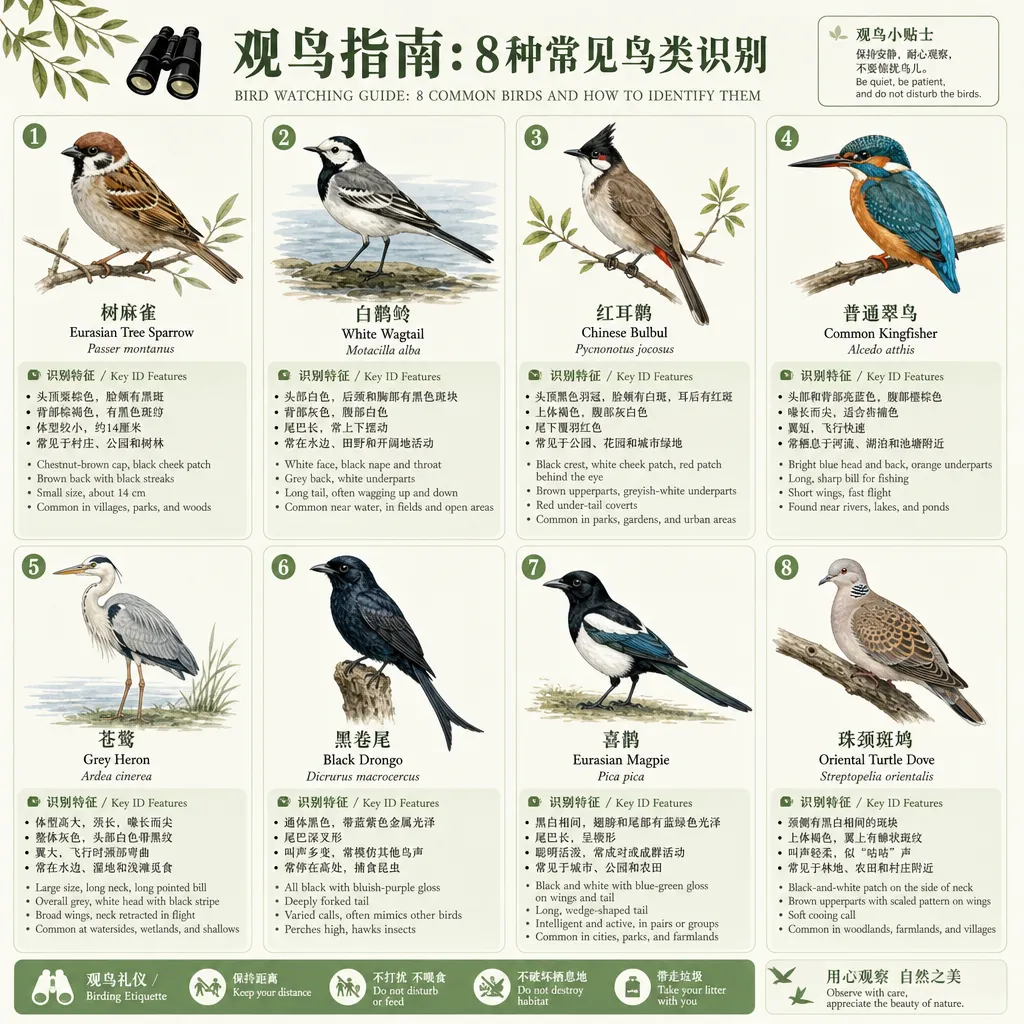
Anyone familiar with image models knows this kind of prompt used to be a disaster scenario. The text would blur, layouts would collapse, all 8 birds would look like the same species, and bilingual Chinese-English rendering would completely fall apart. When GPT-4o first launched, people were excitedly using Image Gen for posters, menus, and infographics, but very few were actually production-ready—because the text always needed manual fixing.
Seedream 5.0 Pro pushes this problem forward significantly. ByteDance describes it as “a single image capable of carrying a full PPT page worth of information.” Based on the demos, the layout structure is reasonable, text rendering is largely error-free, and the model natively supports more than 10 languages, including English, Spanish, Arabic, and Japanese, while automatically adapting to each language’s layout conventions. Details like right-to-left Arabic and Japanese kana mixed typesetting were historically among the easiest multilingual rendering points to fail.
What does this mean? It means high-frequency content-generation scenarios like operations, marketing, and education may genuinely need one fewer graphic designer. Information density is actually the key lever pulling image models from “art tools” toward “office productivity tools.”
2. Selection, Pointing, Sketches — Image Editing Finally Feels Like Figma
If information density solves “generation from 0 to 1,” then the second capability, “interactive precise editing,” solves “iteration from 1 to 100.”
Over the past six months, the fiercest competition in image editing hasn’t actually been generation quality—it’s been controllability in editing. Google’s Nano Banana, Adobe Firefly, and Flux.2 Kontext have all been pushing in this direction. The core contradiction is simple: users do not want to rewrite an entire prompt every time they change one small detail.
Seedream 5.0 Pro’s combination approach includes:
- Point selection and area selection: directly circle the area you want to modify on the canvas
- Sketch rendering: draw an arrow or directional line, and the model understands what should move and where
- Color and material replacement: instructions like “change this sofa to brown leather” can precisely target specific regions
- Layer separation: foreground, background, and characters can be extracted separately from generated images
- Multi-image fusion: combine elements from multiple reference images into one
The most interesting official demo is a multiple-choice worksheet image. The prompt is simply: “Help me complete all the multiple-choice questions above and write the corresponding calculation process.” The model can recognize the questions, solve them, and render the calculations in handwriting style directly onto the original image in the correct positions. This is no longer just editing—it combines visual understanding, reasoning, and rendering into a single process.
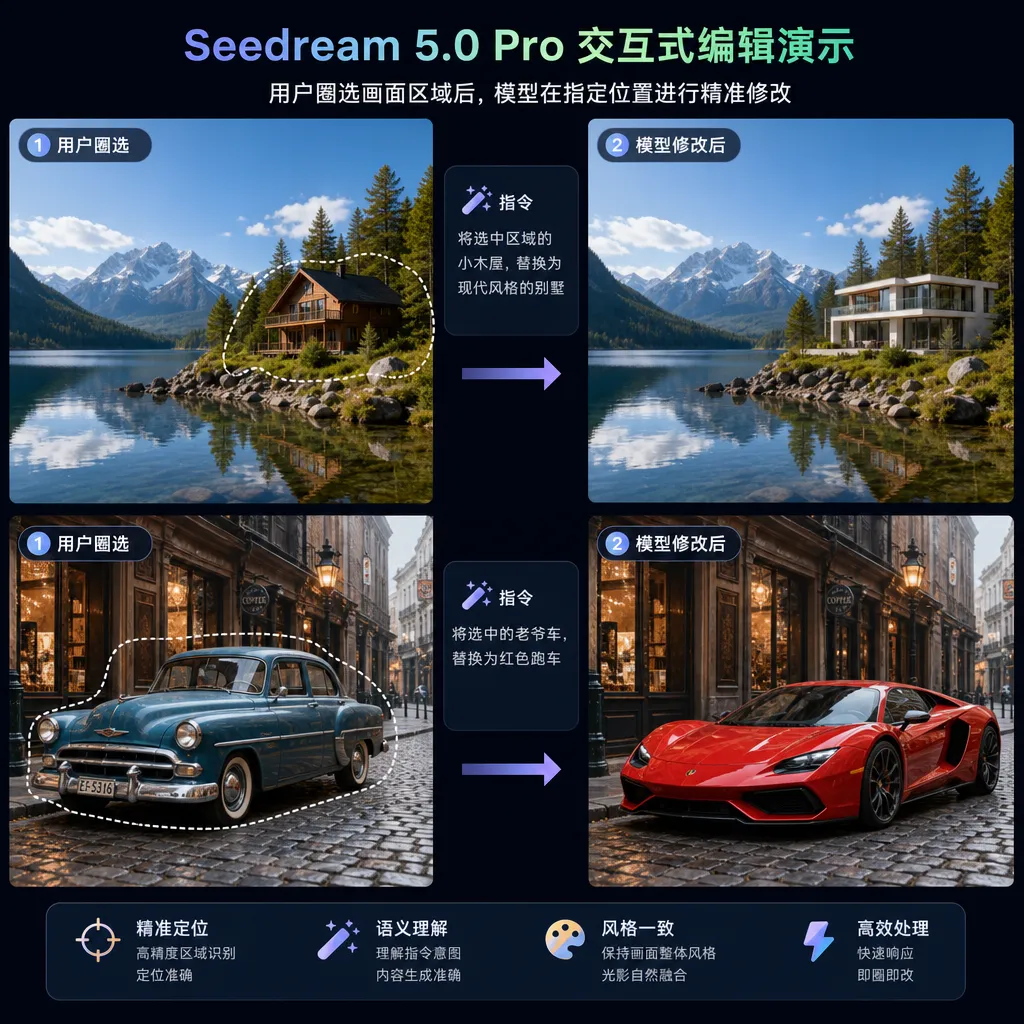
The layer separation feature deserves special attention. The biggest problem with traditional AIGC image generation has always been “single-pass generation with no modification capability.” If you wanted to adjust the background, you had to regenerate the entire image, and style drift was common. Layer separation gives AI-generated images PSD-like editability for the first time. It’s not yet fully non-destructive editing, but at least it opens a path for downstream workflows.
3. Compared with Nano Banana and Flux.2, What Is ByteDance Betting On?
Looking horizontally at the current image-model landscape:
- Google Nano Banana / Imagen 4: strong editing and comprehension abilities, but average performance in complex Chinese-language scenarios
- Flux.2: the most active open-source ecosystem, with smooth editing experiences in the Kontext series, but weaker information density and multilingual capabilities
- GPT-4o Image / Sora Image: excels at “understanding human intent,” but text rendering remains unstable
- Jimeng / Seedream series: among the top tier for Chinese-language scenarios, now betting heavily on information density and editability
ByteDance’s strategy is actually very clear: rather than competing with Midjourney on artistic aesthetics or with Flux on open-source ecosystems, it is directly targeting the “productivity” angle. Infographics, e-commerce detail pages, multilingual posters, educational courseware—these scenarios are produced at massive scale every day on the Chinese internet, and almost no model can currently handle them in one pass.
A Zhihu analysis noted that the previous generation of Seedream had already “reached #1 globally on Artificial Analysis rankings for both text-to-image and image editing.” Whether 5.0 Pro can maintain that position still depends on real-world testing, but from a product design perspective, ByteDance’s judgment this time appears very clear-headed.
4. Realistic Texture and Multilingual Support: Two Easily Overlooked Details
Beyond the two headline capabilities, Seedream 5.0 Pro also highlights two additional areas:
Realistic visual and portrait texture. ByteDance says the model “reproduces real-world lighting, materials, and skin texture while balancing CG expression and photographic realism.” This is especially important for portrait generation. Previous AI portraits often had a “plastic” appearance: overly smooth skin and unnaturally even lighting that looked fake at a glance. This generation specifically optimizes for “texture,” and combined with layer separation, e-commerce scenarios like portrait replacement, virtual try-ons, and hairstyle changes stand to benefit immediately.
Native multilingual input and generation. This is not just about “rendering multiple languages.” The key word is “native.” Many previous models were trained primarily in English and then layered with translation systems, meaning Chinese prompts were first translated into English before generation. The result was flattened expression and loss of cultural characteristics. Native support means the model directly understands Chinese semantics, Japanese honorifics, and the right-to-left cultural context of Arabic. For teams building global products, this is essential.
5. Looking at It Within ByteDance’s Broader Strategy
Stretch the timeline out a bit further. At the June FORCE Conference, ByteDance’s signal was very clear: all modalities + all industries.
Doubao 2.1 Pro’s coding capability benchmarks against Claude Opus 4.7 while cutting costs by 80%; Seedance 2.5 can directly generate 30-second videos and accepts up to 50 reference assets; Doubao Audio 1.0 can generate cinematic-grade soundtracks in one pass; and now there’s Seedream 5.0 Pro. Across text, code, image, video, and audio, ByteDance is turning the idea of a “full-stack AI suite” from a slogan into an actual product lineup.
At the conference, Tan Dai shared the following numbers: as of June, Doubao processes 180 trillion tokens per day on average, and enterprise customers consuming more than 1 trillion tokens annually have doubled from 100 to 200. At this scale, ByteDance’s models must follow a path of “usable, affordable, and deployable.” Seedream 5.0 Pro is the latest expression of that strategy in the image domain.
For developers, Seedream 5.0 Pro can already be tested directly through the Volcano Ark Experience Center. OpenAI Hub integration is also underway, which will eventually allow direct access through a unified API key, making it easy to benchmark against GPT-Image, Nano Banana, and Flux side-by-side—probably the simplest way to evaluate options.
6. Final Thoughts
In the image-generation space, 2023 was about “whether generation was possible,” 2024 was about “how good the generated images looked,” 2025 became about “whether the model understood instructions,” so what will 2026 focus on?
Based on Seedream 5.0 Pro’s positioning, the answer is already clear: competing on information density, editability, and whether models can truly integrate into real workflows.
The ceiling for artistic aesthetics was reached long ago. Midjourney V7 already produces images that look better than what most human artists can create. But what will ultimately determine the commercial value of image models is whether they can transform an “image” from an isolated output into a “working object” that can be edited, iterated, and used to carry information.
ByteDance’s direction this time is correct. What matters next is real-world testing—especially in three areas: rendering complex long-form Chinese text, maintaining consistency across multi-round editing, and API pricing. If any one of these falls short, the “productivity” promise discussed above will lose much of its value.
References
- ByteDance Releases Multimodal Image Creation Model Seedream 5.0 Pro: Complex Information Visualization and Interactive Precise Editing - IT Home: Initial release article for Seedream 5.0 Pro, including official demos and capability descriptions
- A Complete and Accessible Analysis of FLUX.2, Seedream (Jimeng), and Z-image - Zhihu Column: Comparative analysis of image models, including discussion of the previous Seedream generation’s performance on Artificial Analysis rankings


