
Tencent SkillPay launches: Agent skills can now truly receive payments for the first time.
On July 16, Tencent SkillHub launched SkillPay, a commercial paid-skill platform that integrates skill distribution, agent invocation, and payment into one. The first batch of participants includes leading players in the restaurant retail, AIGC, online travel, and financial data industries.
Tencent SkillPay Launch: For the First Time, Agent Skills Can Truly Make Money
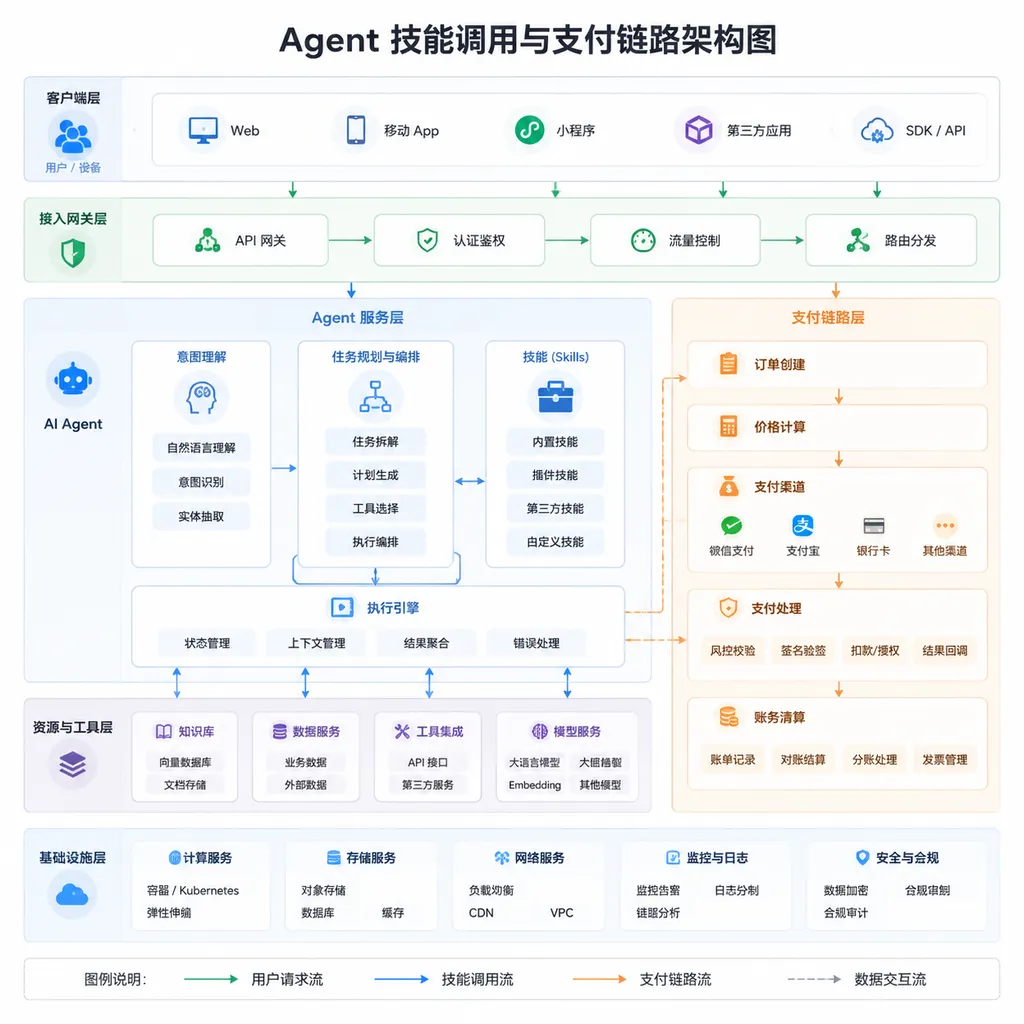
On July 16, Tencent SkillHub unveiled something that had been in the works for nearly half a year—SkillPay, a platform dedicated to monetizing paid Agent skills. In short, it connects what used to be three separate processes—Skill Distribution — Agent Invocation — Payment Settlement—into one complete chain.
What’s really interesting isn’t the platform itself, but that it acknowledges a reality: for the past two years, people building Agents have focused on making them capable of doing things, but those trying to build an Agent business have already hit the next wall—after the Agent calls a skill, how do you get paid?
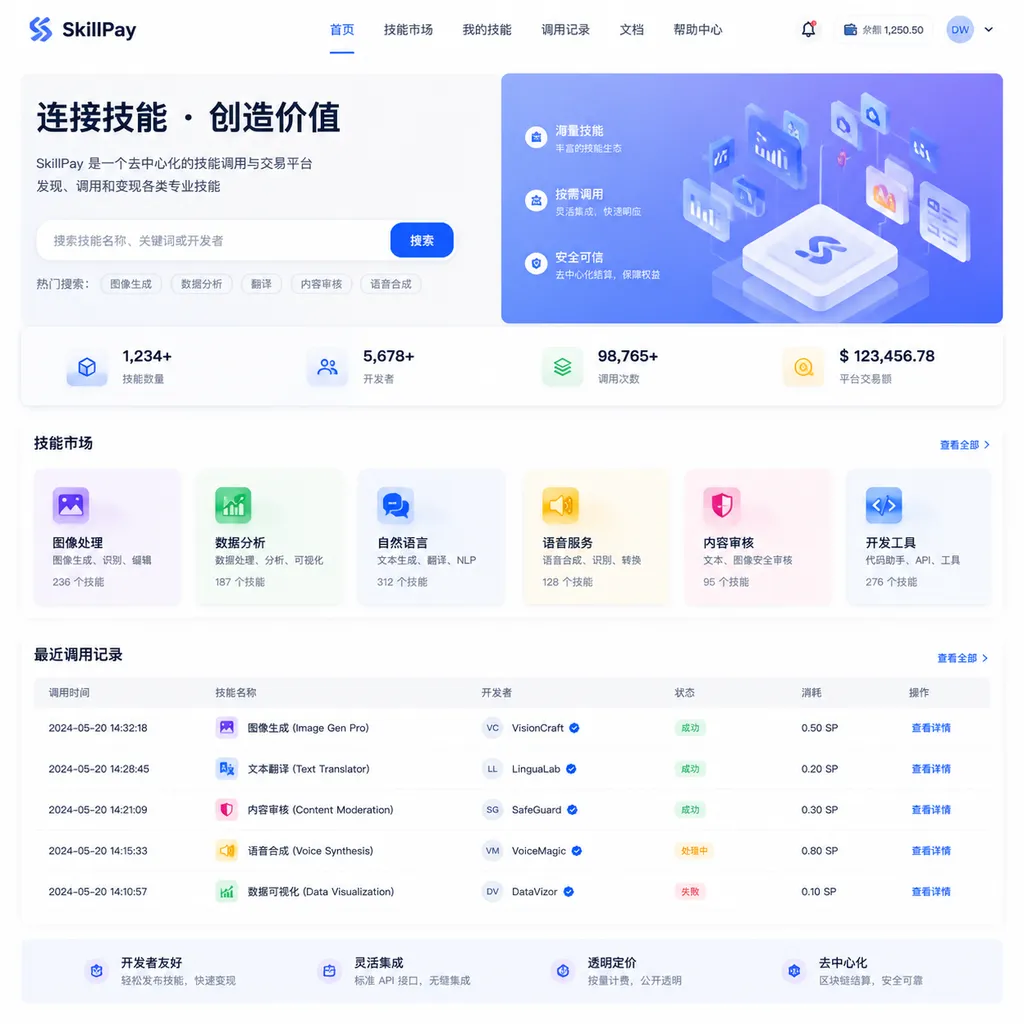
First, Let’s Clarify What SkillPay Actually Solves
To understand SkillPay, we need to see how a “paid skill” operated before it existed.
Suppose you’re a SaaS provider that offers recipe recommendations. You’ve trained an intelligent meal-planning Agent skill that performs exceptionally well, and you want to sell it to external restaurant Agents. The traditional workflow looked something like this:
- You have to build your own skill marketplace web page so others can find you.
- When a partner comes, you negotiate API authorization and authentication case by case.
- Billing is a headache — by usage count, by token, or subscription-based? Everyone does it differently.
- Reconciliation, settlement, revenue sharing, invoicing—all manual work.
- If a dispute arises, who is responsible? Who stores the call logs?
Anyone who’s done API business knows that the “training skills” part takes at most 30% of the effort; the rest—commercial infrastructure—is what eats up time. SkillHub previously solved distribution and invocation—allowing Agents to find and call skills. SkillPay now fills in the final mile: payment and settlement.
The official line says it “connects three parties.” In plain terms: skill providers just need to upload their skills and set prices; Agent developers just need to choose and call; SkillPay handles authentication, billing, settlement, and risk control.
What the First Batch of Partners Reveals
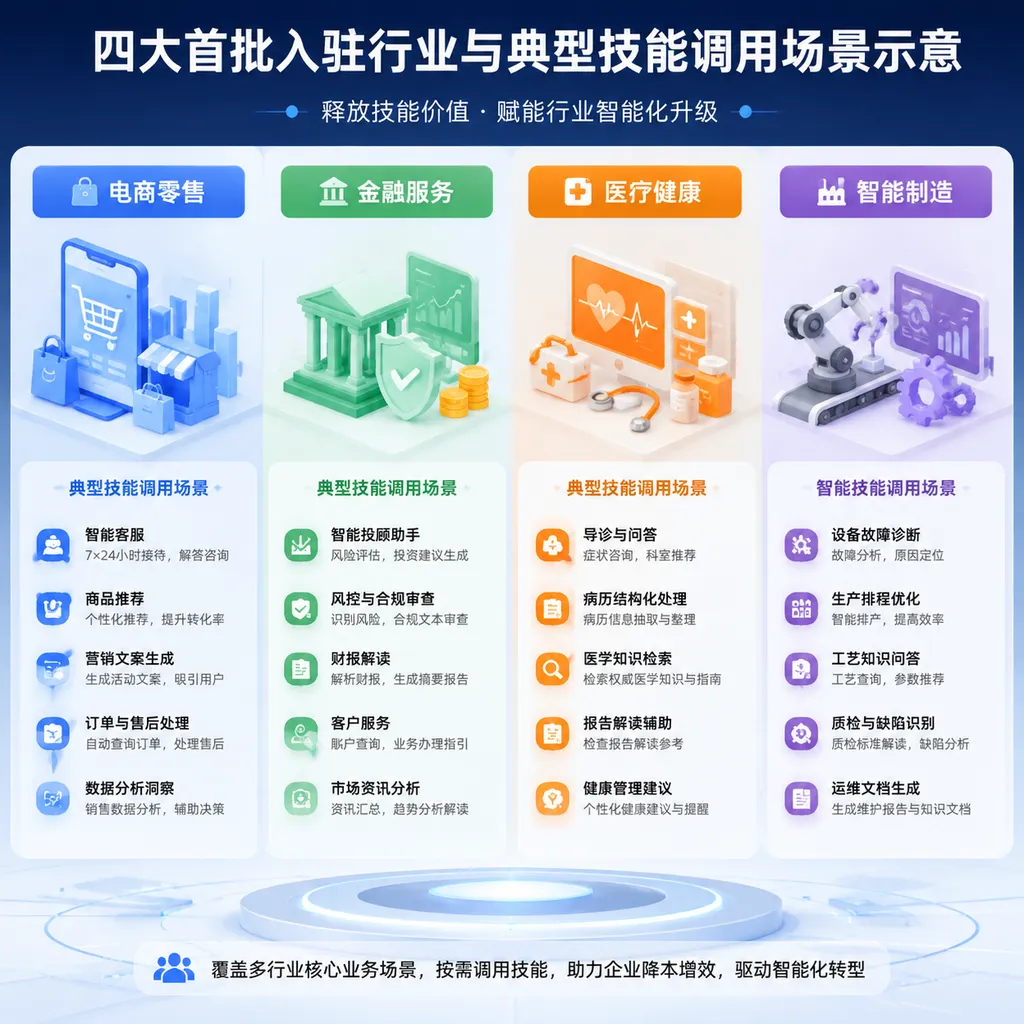
The first batch of SkillPay partners announced by Tencent covers four sectors:
- Food & Retail — high frequency, small transactions, well-defined scenarios
- AIGC Content Creation — high-value per call, reusable
- Online Travel — long transaction chains, multi-party settlements
- Financial Data Services — data itself is the commodity, fully API-ized
These weren’t randomly chosen. Food & Retail is all about high volume—an Agent might call skills dozens of times a day to check inventory, compare prices, or place orders. AIGC represents high unit value—each content generation costs a few cents to a few dollars, but each is a discrete commercial act. Online Travel has the most complex settlements—plane tickets, hotels, and attractions all involve different payment paths. Financial Data is the purest “data-as-a-product” case.
By enabling all four in one platform, SkillPay wants to test if one unified payment infrastructure can support four very different business models: high-frequency microtransactions, low-frequency high-value sales, multi-party splits, and pure API-based billing. If this works well, onboarding others later becomes straightforward.
Compared to Other Solutions, What Makes SkillPay Different?
Looking at the bigger picture, others have already explored the Agent skill monetization track.
OpenAI’s GPT Store was an early model, but it’s more like an app store—users subscribe to ChatGPT and use GPTs for free. Developer income comes from traffic sharing, essentially an “ad revenue share” model similar to early App Store days.
Anthropic’s MCP ecosystem takes a protocol-driven approach—standardizing how Agents connect to external tools—but leaves monetization largely untouched. How an MCP server charges, and whom it charges, is up to developers.
In China, ByteDance’s Coze and Baidu’s Agent platforms each have their own skill marketplaces, but monetization is mostly still in the “developer integration + platform subsidy” stage. True API billing and revenue sharing are rare.
SkillPay’s positioning is more like a hybrid of Stripe and an app store—it doesn’t build Agents or skills, only the infrastructure in between: Payments + Distribution. The benefit is that it doesn’t compete with application-layer players—anyone building an Agent can use it. The downside: it must be lightweight, fast, and cost-efficient—otherwise partners can easily build their own systems.
Here’s an important observation: winner-takes-all is unlikely for such infrastructure. The market will probably settle with two or three coexisting platforms, as different Agent ecosystems attach to different clouds. But Tencent has one card others can’t easily copy—WeChat Pay. Embedding “user password-free payments” in Agents is very different from embedding “inter-Agent reconciliation.” The former has far greater potential.
Technically, a Few Points Are Worth Considering
The official release kept technical details vague, but the phrase “secure and complete payment system” hints at several likely points:
1. Authentication is likely more than just an API key.
In Agent environments, one skill can be nested across multiple layers—App A calls Agent B, B calls Skill C, and C might use Provider D’s API. With traditional API keys, it’s impossible to trace “who actually spent the money.” To support revenue splitting, SkillPay must include a call-tracing mechanism—possibly OAuth-like delegated authorization or a proprietary Agent identity system.
2. Billing precision will exceed traditional APIs.
Agent calls can fail, partially succeed, or consume variable tokens—far more complex than SaaS. A task like “book a flight” might abort midway due to inventory changes. Should that be billed? How much? Rules must be explicit. SkillPay likely offers multiple billing models—per call, per token, per result, or by subscription—letting skill providers choose.
3. Risk control is a tough challenge.
Agents act “on behalf of users.” Once hijacked or hit by a prompt injection, they can trigger massive malicious calls. As a payment processor, SkillPay must decide in milliseconds whether a call “looks user-intended.” This anti-fraud capability could be Tencent’s key differentiator here.
A Bigger Question: Can the Agent Economy Actually Take Off?
Viewed in broader context, SkillPay is essentially a live test of whether the “Agent Economy” can be realized.
Over the past year, everyone has talked about Agents as the next platform, but few have achieved true business loops. The reason is simple — users aren’t yet used to paying for what Agents do. When you use Cursor to write code, you’re paying for Cursor’s subscription; when Coze helps you build a customer service Agent, you’re paying for its computing resources. The money for those “Agents calling other skills” almost never gets tracked or paid out.
What SkillPay aims to do is turn these “invisible calls” into “visible transactions.” Every skill call becomes a clear commercial action—with defined provider, consumer, amount, and timestamp. If this mechanism scales, Agents could create a genuine marketplace similar to today’s Web API ecosystem.
But there’s a practical question: who pays? End users? Unlikely—they pay for results, not for “calling a weather API three times.” The more likely path: Agent applications pay, folding skill-call costs into their SaaS pricing. This mirrors AWS’s early S3/Lambda model—lower layers bill by usage, upper layers by subscription, profitability living in between.
Whether this works depends on three things:
- Skill pricing must be low enough that app developers prefer using rather than rebuilding.
- Call stability must be high enough not to affect the app’s SLA.
- Settlement cycles must be short enough not to hurt cash flow.
Each of these is nontrivial. Launching SkillPay is step one; the real test comes in six months, when we see how many non-inaugural partners onboard voluntarily.
A Side Note
For developers, being able to call mainstream model APIs and paid skills within one Agent ecosystem can greatly boost efficiency. Tools like OpenAI Hub act as API aggregators—one key accesses GPT, Claude, Gemini, DeepSeek, etc.—with direct domestic connectivity and OpenAI-compatible format. It reduces time spent adapting model layers, letting developers focus more on skill-level monetization—the very piece SkillPay seeks to enable.
Summary
SkillPay marks a milestone for China’s Agent ecosystem in 2026. It doesn’t solve how smart Agents are—it solves whether the Agent business can work. The battles over technology have lasted two years; the battles over money are just beginning.
Signals to watch next:
- The rate of voluntary adoption among non-first-batch partners within six months
- Whether Tencent opens an easy-access channel for individual developers
- The level of native integration with WeChat Pay
- And whether we see the first independent developers making a living solely from selling skills
If that last one happens, it will mark the true beginning of the Agent economy.
References
- Zhihu – Discussion on Agent Commercialization — Industry comparisons of Agent skill monetization in China
- Juejin – Agent Development Practice — Developer-level insights on Agent skill integration and billing models
- ITHome – Domestic AI Platform Trends — AI product updates and industry news aggregation in China


