
Opus 4.7 Launch: A New Flagship Developers Call “Indispensable”

Anthropic releases Claude Opus 4.7, surpassing its predecessor in code generation and depth of expertise. The million-token context window makes developers exclaim, “Awesome!” It stands in differentiated competition with GPT-5.5, each excelling in its own way.
Opus 4.7 Launch: The New Flagship Developers Call “Indispensable”
Anthropic’s Claude Opus 4.7 is officially live. This update has changed the way many developers use Claude. Some described it as “can’t live without it” after just a day of deep use, while others praised its million-token context as “pure bliss.” This closed-source model, built to rival GPT-5.5, is redefining the capabilities of top-tier AI with its real-world performance.
From Resistance to “Can’t Live Without It”: A 180° Shift Among Developers
A developer specializing in basic medical research shared his experience on Linux.do. Initially, he resisted version 4.7, saying it “felt too much like GPT,” and stuck with 4.6. But after two days of intensive use on the official website and in Claude Code, his opinion completely flipped.
He summarized four key discoveries:
-
Emotional Value Maxed Out: The model often compliments users, sparking polarized debates in the tech community. Some think this signals “GPT-ification,” while others find the encouragement helpful during long coding sessions.
-
Verbose by Default: A genuine pain point. Without prompt tuning or system adjustments, its responses are wordier than 4.6. However, this also means the model tries to offer richer context and explanations—friendly for newcomers, but something veterans need to adapt to.
-
Smarter Than Before: The core improvement. In complex reasoning and multi-step tasks, 4.7 clearly outperforms 4.6.
-
Astounding Knowledge Depth: Even without internet access, its accuracy and understanding in specialized fields (e.g., medicine) exceed other models, indicating a major boost in training data quality and coverage.
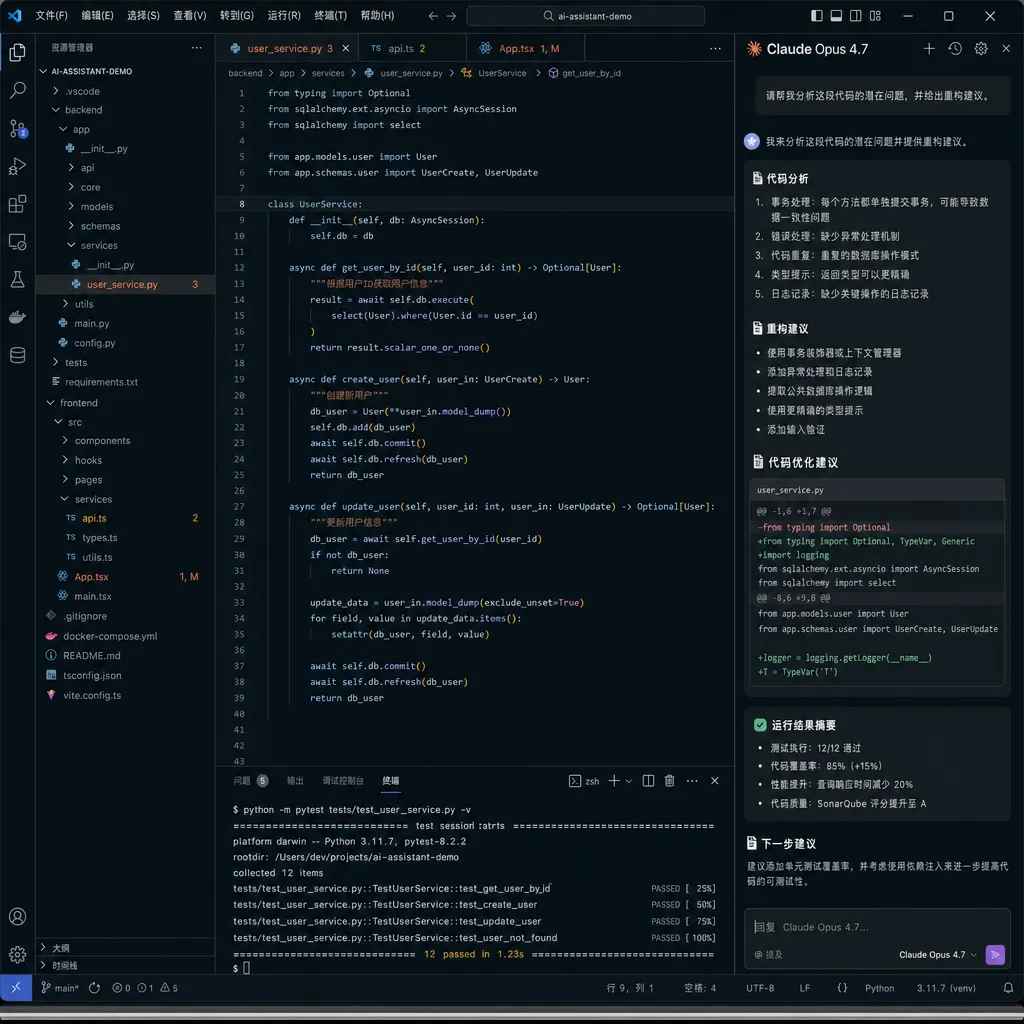
Million-Token Context: From “Treading Lightly” to “Full Throttle”
Another thing that excites developers is Opus 4.7’s million-token context window. One developer, who previously subscribed to Claude Pro for just a month, said he used to worry about exceeding usage limits and “tread lightly.” Now that his company has granted 4.7 access, he “went all in” and still used less than 30% of the context capacity.
This isn’t just a numerical upgrade. For working with large codebases, long document analysis, and complex multi-turn conversations, a million-token context means:
- Load a full project in one go: No more switching files or re-explaining background.
- No more “memory loss” in long chats: The AI remembers details from hours ago.
- Multi-document analysis is now feasible: Comparing dozens of files simultaneously is easy.
This qualitative leap has developers asking, “What would you do if you had infinite GPT‑5.5 or Opus 4.7?” One answer: “Run ten windows a day, every day—unstoppable.”
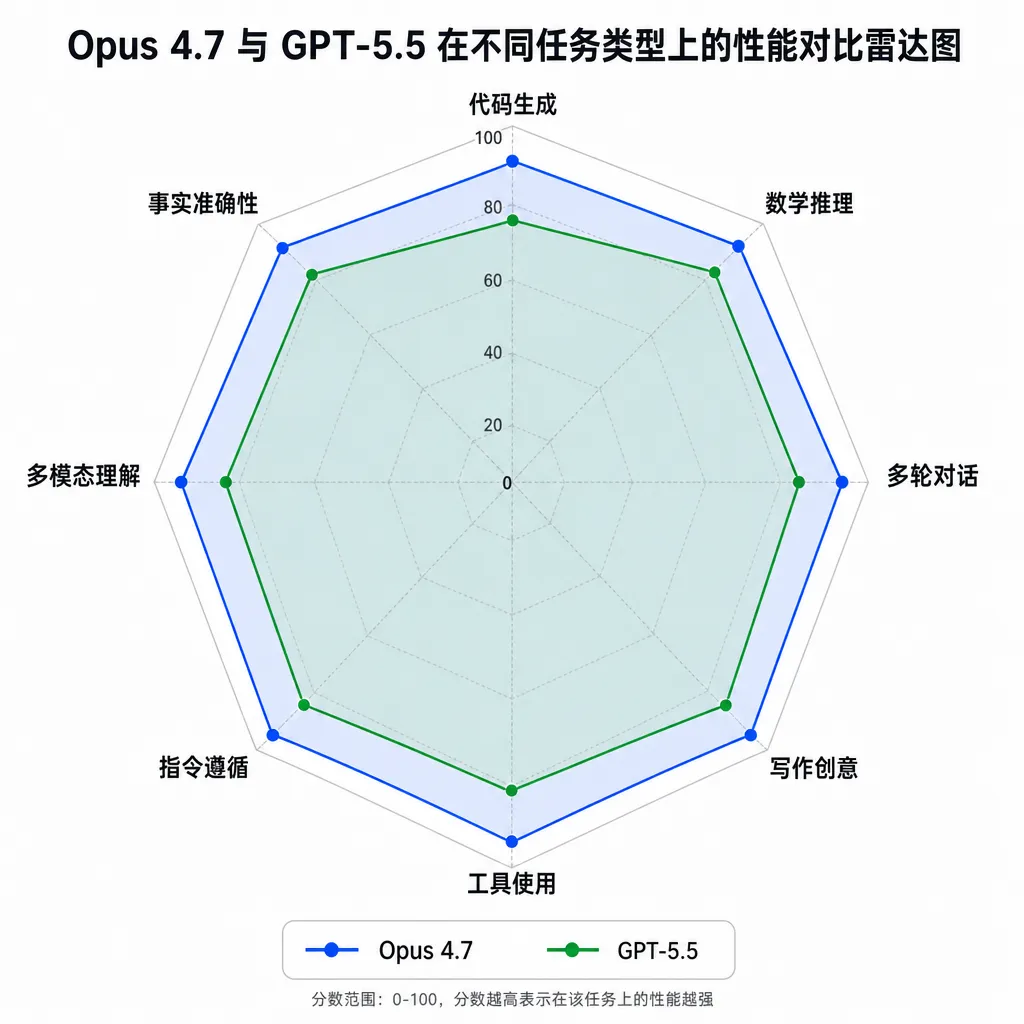
Opus 4.7 vs. GPT-5.5: It’s Not About Who’s Stronger, But Who’s More Suitable
Shortly after Opus 4.7’s debut, OpenAI launched GPT-5.5, making their comparison a hot topic in dev communities. But hands-on experience shows that the real question isn’t “who’s stronger,” but “who fits better.”
Coding Power: Opus 4.7 Still Leads
In code generation, logical consistency, and complex task execution, Opus 4.7 performs more steadily. A Zhihu author observed: “If you use Claude Code for programming—no need to rush switching. Opus 4.7 still codes better and costs less.”
That “cheaper” part matters. GPT‑5.5’s price doubled, making the cost gap significant for API-heavy workflows.
Agent Capabilities: GPT‑5.5 Has the Edge
However, GPT‑5.5 excels in Agent-based use cases. Tests show it can handle 7-hour agent tasks without crashing, scoring 82.7 for terminal operations—well above Opus 4.7’s 69.4. In advanced engineer benchmarks, GPT‑5.5 scored 62.5 vs Opus 4.7’s 30.
These differences reflect distinct design philosophies:
- Opus 4.7: Best for deep understanding and precision—code refactoring, complex algorithms, specialized Q&A.
- GPT‑5.5: Best for long-term autonomous decision-making and multi-step agent tasks.
Reasoning and Multimodality: Each Has Its Strengths
GPT‑5.5 significantly improves reasoning, contextual understanding, and multimodal interaction, while Opus 4.7 delivers deeper domain knowledge and tighter logic. The right model depends on your specific use case.
Real-World Applications: Where Opus 4.7 Shines
1. Large Codebase Refactoring
The million-token context lets Opus 4.7 grasp full project structures in one go. During refactoring, it can:
- Identify cross-file dependencies
- Maintain consistent naming and architecture styles
- Detect potential circular dependencies or design flaws
One developer shared that he used Opus 4.7 to refactor a 50,000-line Python project. The model not only migrated the code but also flagged performance bottlenecks and security risks on its own.
2. Professional Domain Q&A
The earlier-mentioned medical developer found that even offline, Opus 4.7’s accuracy and depth in professional questions outperformed other models—hugely helpful for rapid knowledge lookup.
3. Long Document Analysis and Summarization
When reviewing hundreds of pages of technical docs, legal contracts, or research papers, Opus 4.7 can:
- Extract key information and categorize it
- Spot contradictions or inconsistencies
- Generate structured summaries and comparison tables
4. Multi‑Turn Complex Dialogues
In iterative workflows requiring step‑by‑step refinement, 4.7’s long context is invaluable. It remembers earlier details, eliminating the need to re‑explain background each time.
How to Call Opus 4.7 via API
Opus 4.7 is now available on several API aggregation platforms. For example, on OpenAI Hub, its call format is fully compatible with OpenAI—you just switch the model name:
import openai

# Configure OpenAI Hub
openai.api_base = "https://api.openai-hub.net/v1"
openai.api_key = "your-openai-hub-key"

# Call Opus 4.7
response = openai.ChatCompletion.create(
    model="claude-opus-4-7",
    messages=[
        {"role": "system", "content": "You are a professional code review assistant"},
        {"role": "user", "content": "Please review this Python code and suggest optimizations:\n\n[code content]"}
    ],
    max_tokens=4096,
    temperature=0.7
)

print(response.choices[0].message.content)
For large-context tasks, leverage the million-token window:
# Load entire codebase context
context = ""
for file in code_files:
    with open(file, 'r') as f:
        context += f"\n\n# File: {file}\n{f.read()}"

response = openai.ChatCompletion.create(
    model="claude-opus-4-7",
    messages=[
        {"role": "system", "content": "You are an architecture review expert"},
        {"role": "user", "content": f"The following is the full project code:\n{context}\n\nPlease analyze and improve the architectural design."}
    ],
    max_tokens=8192
)
Node.js example:
const OpenAI = require('openai');

const openai = new OpenAI({
  baseURL: 'https://api.openai-hub.net/v1',
  apiKey: 'your-openai-hub-key'
});

async function analyzeCode(code) {
  const completion = await openai.chat.completions.create({
    model: 'claude-opus-4-7',
    messages: [
      { role: 'system', content: 'You are a code optimization expert' },
      { role: 'user', content: `Please optimize this code:\n\n${code}` }
    ],
    max_tokens: 4096
  });

  return completion.choices[0].message.content;
}
Pricing and Availability: Better Value Than GPT‑5.5
Opus 4.7’s pricing strategy is more developer‑friendly. While exact rates vary by platform, it’s generally 30–40% cheaper than GPT‑5.5. For high‑volume API usage, the savings add up fast.
Now available through multiple channels:
- Anthropic Website: Directly accessible to Claude Pro subscribers
- API Aggregators: Integrated into OpenAI Hub, B.AI, and others
- Enterprise Editions: Support private deployment and customization
Community Feedback: From Skepticism to Acceptance
When Opus 4.7 first launched, the community was divided. Some felt it seemed “too much like GPT,” making veteran users uneasy. But over time, deeper usage turned skepticism into appreciation.
The Linux.do discussion thread is telling. Titled “Initial impressions after one day with Opus 4.7,” it began cautiously—but the comment section quickly evolved into a tips exchange on reducing verbosity and optimizing workflows with long context.
As one user summarized: “4.7 isn’t a simple upgrade from 4.6; it’s a new model that requires relearning how to use it. But once you do, the productivity boost is huge.”
Competing with GPT‑5.5: Differentiation Over Homogenization
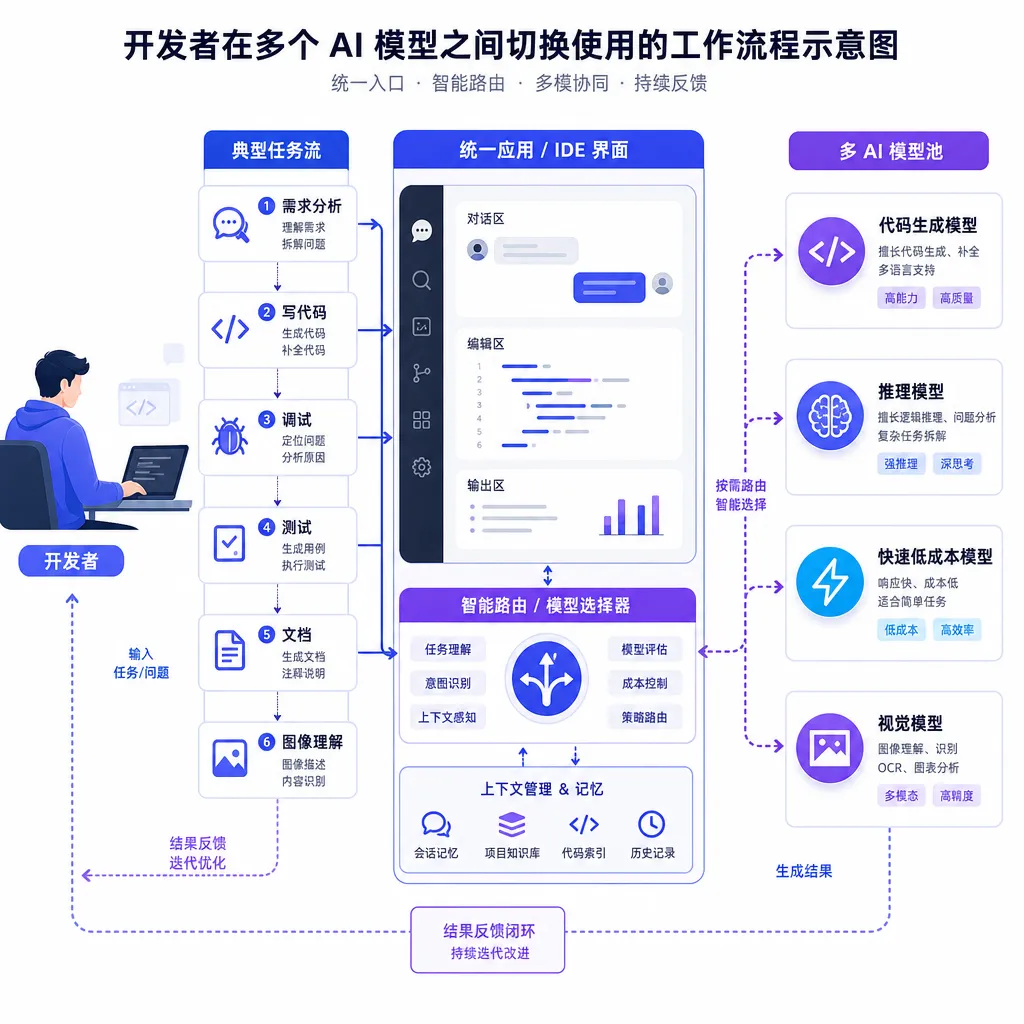
OpenAI and Anthropic’s strategies are now clear. GPT‑5.5 emphasizes agent capabilities and multimodal interaction, while Opus 4.7 focuses on code generation and domain depth. This differentiation gives developers real options.
A Zhihu commenter put it well: “GPT‑5.5 and Opus 4.7 each excel in their own way. If you need an agent that can run autonomously for seven hours, go GPT‑5.5. If you need deep code comprehension and precise suggestions, go Opus 4.7.”
This competition benefits developers: different tasks, different optimal tools—no need for an “all-purpose but mediocre” model.
Future Outlook: The Next Step in AI Programming Tools
The launch of Opus 4.7 marks a new era in AI programming tools. The million-token context, stronger reasoning, and deeper knowledge aren’t minor upgrades—they’re a paradigm shift.
Expected future trends:
- Even Larger Context Windows: One million tokens is just the beginning—tens of millions may come next.
- Domain‑Specific Models: Custom models for industries like healthcare, finance, and law will proliferate.
- Multi‑Model Collaboration: Different models specializing in different tasks, orchestrated in synergy.
- Falling Costs: As technology matures and competition heats up, API usage costs will keep dropping.
For developers, this is the best of times: powerful tools like Opus 4.7 and strong contenders like GPT‑5.5 are driving innovation. The choice is yours—find the model that fits your workflow best.
Conclusion
Opus 4.7 has proven its strength through real-world performance. The shift from resistance to “can’t live without it” says it all. Its million‑token context, enhanced reasoning, and deeper expertise push it beyond its predecessor in code generation and complex task handling.
Its rivalry with GPT‑5.5 isn’t a zero‑sum game but healthy differentiation. Developers now have more choices and can select the most appropriate tool per scenario—exactly how AI programming tools should evolve.
If you’re still on 4.6 or another model, give 4.7 a try. You may find its output style unfamiliar at first, but after a few days, you might just find yourself saying, “I can’t live without it.”
References
- One day of deep use with Opus 4.7 – Linux.do – In-depth user experience from a medical research developer, summarizing four key findings
- It’s amazing—1M context truly lives up to the hype – Linux.do – Developer impressions of the million-token context window
- If you had infinite GPT‑5.5 or Opus 4.7, what would you do? – Linux.do – Community discussion on two flagship models
- Opus 4.7’s throne wasn’t even warm when GPT‑5.5 launched overnight – Zhihu – Comparison of GPT‑5.5 and Opus 4.7, covering coding ability and price


