
New Stone Age launches Neo Claw: Command thousands of unmanned vehicles with a single sentence
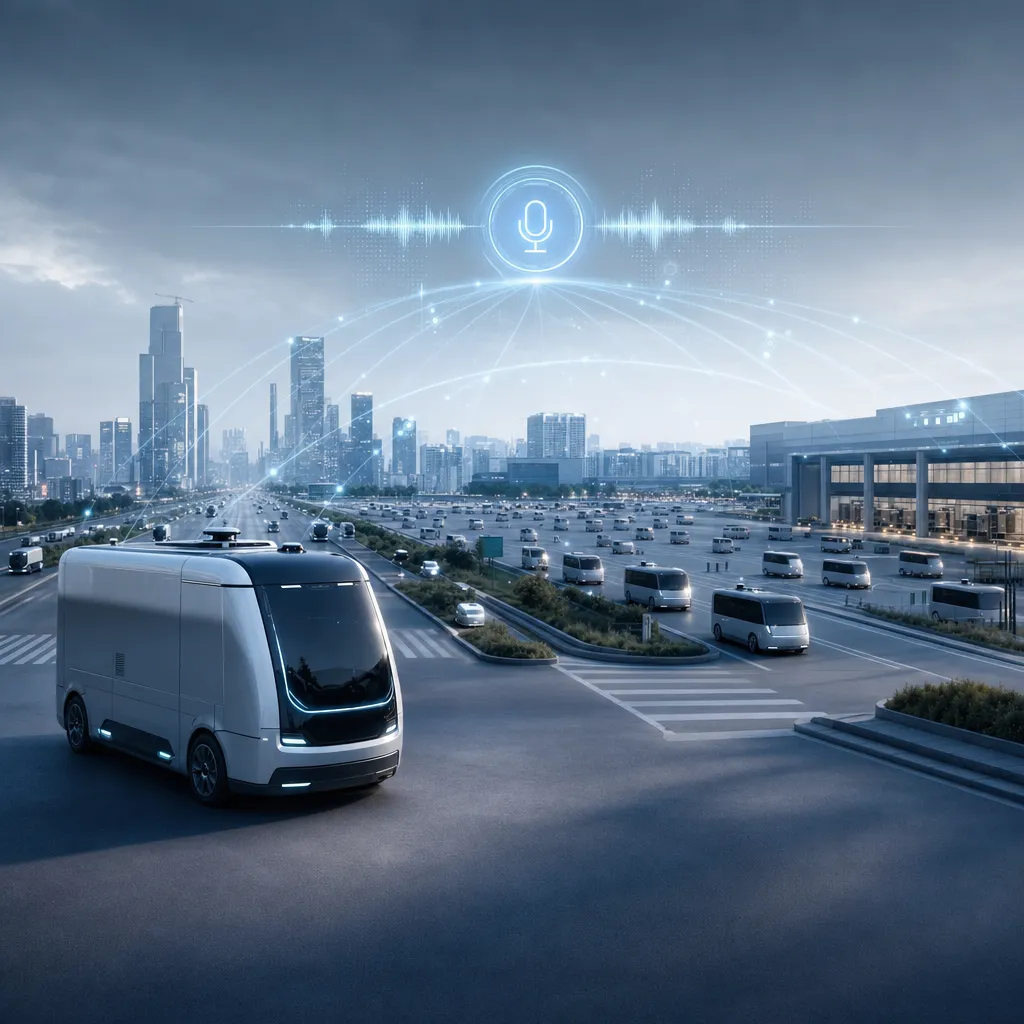
Neolithic launches the unmanned delivery industry’s first AI Agent, Neo Claw, boosting single-operator management efficiency from 10 vehicles to over 100, and reshaping fleet operations through natural language interaction.
Neolix Launches Neo Claw: Command a Thousand Autonomous Vehicles with One Sentence
How many people does it take to manage a thousand autonomous vehicles? Neolix’s answer: one person, one phone, one sentence.
On May 21st at the 2026 AI Partner·Beijing Yizhuang AI+ Industry Conference, Jinghua Xie, Co-founder and CPO of autonomous delivery company Neolix, unveiled the industry’s first AI agent — Neo Claw. The system’s core capability is straightforward: it allows an operator to manage a fleet as easily as sending a voice message, raising single-person management efficiency from 10 vehicles to over 100.
As autonomous driving technology matures, the real bottleneck has shifted from technology to scalable operations. Neolix has spent seven years progressing through compliance deployment, mass production, and large-scale operation. Now it seeks to solve a new problem: turning autonomous vehicle management from “professional operations” into “just talk.”
From 10 to 100 Vehicles: Where the Operational Bottleneck Lies
The autonomous delivery industry is in an awkward stage. Technically, L4 autonomy works; commercially, order volumes are rising; but operationally, human labor costs are expanding even faster.
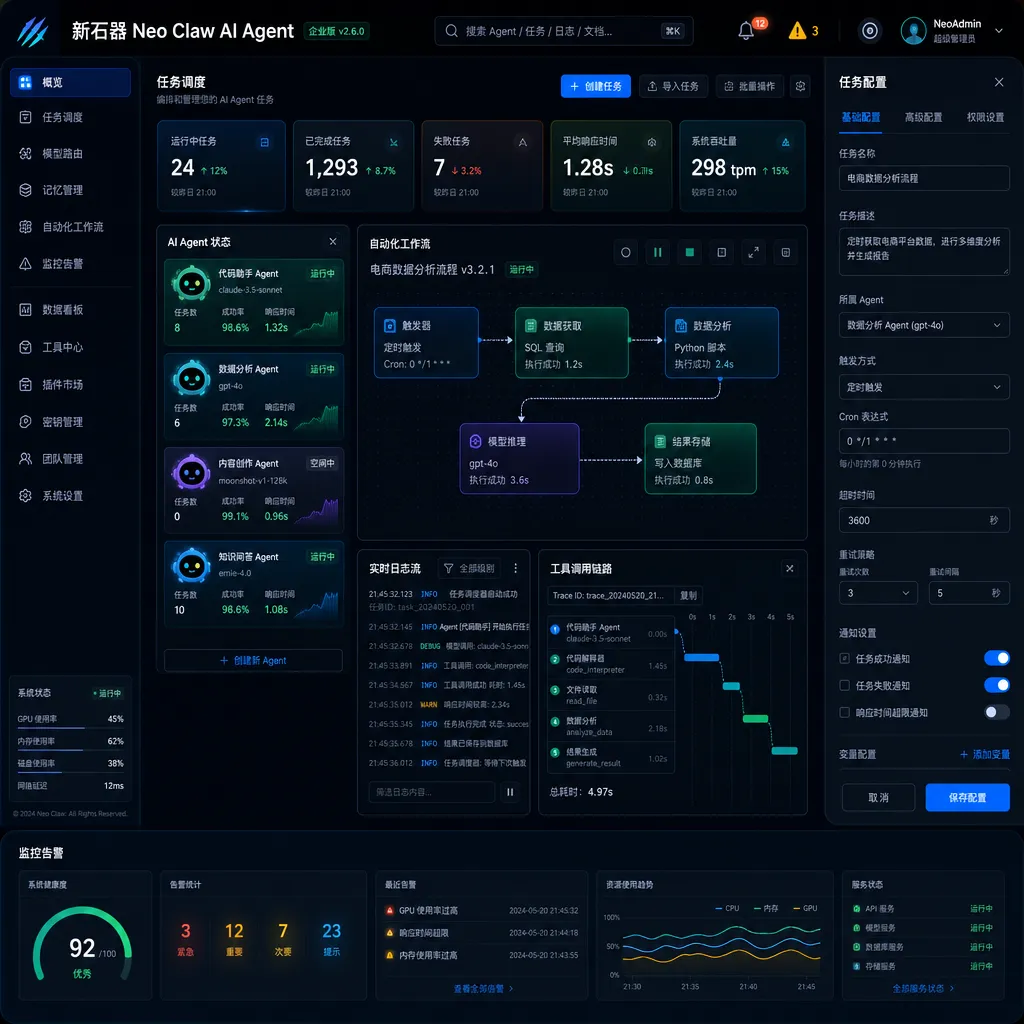
Traditionally, one operator managing 5–10 vehicles is already the limit. Watching screens, dispatching tasks, handling faults, compiling data — these repetitive tasks consume most of the time. When the fleet expands to dozens or hundreds of vehicles, the only solution has been to add more staff — but that leads to new problems: increased management complexity, inconsistent city-level operations, and high training costs.
The most fatal issue is “diseconomies of scale”: the larger the fleet, the higher the per-vehicle operating cost — directly hindering commercialization.
Xie emphasized during her talk: “The value of AI is not in writing more code, but in freeing our hands.” Neo Claw’s mission is to release operators from repetitive work so they can focus on high-value decisions.
What Neo Claw Can Do
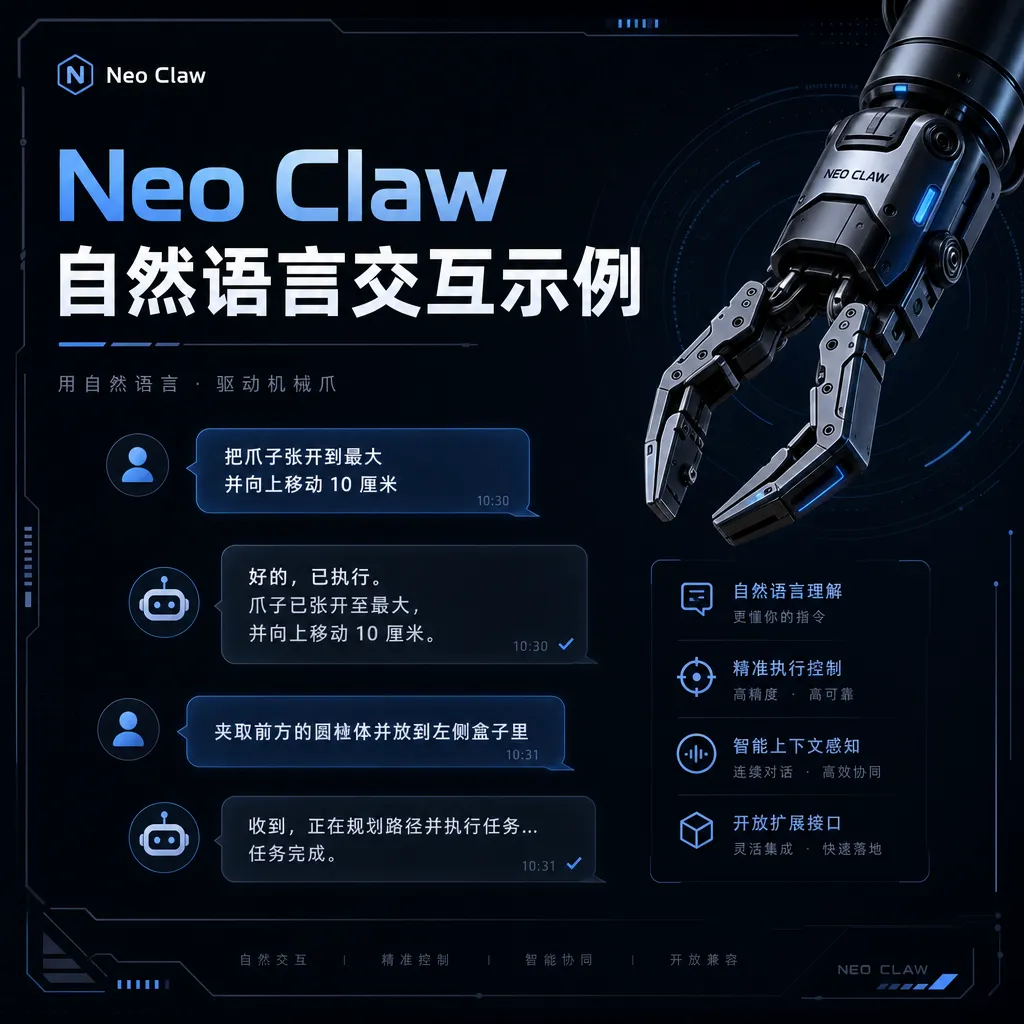
Neo Claw isn’t a simple voice assistant, but a hands-on AI Agent. It integrates core capabilities such as fleet management, vehicle control, and data analysis — able to directly command real autonomous vehicles to perform physical tasks.
Specifically, operators can use natural language to perform the following:
Vehicle Scheduling and Control
- “Send the nearby low-battery vehicles to charge.”
- “Open the doors of these 50 vehicles.”
- “Have all vehicles in Zone A return to the warehouse.”
The system understands commands, checks vehicle status, and executes them in batches — no need to open each detail page or manually select vehicles. One sentence gets the job done.
Complex Task Orchestration
When an operator says, “Dispatch 10 vehicles to stand by in the CBD,” Neo Claw automatically performs:
- Filters vehicles with enough charge and normal status.
- Calculates distance and ETA for each.
- Optimizes routes to avoid conflicts.
- Issues commands and monitors progress in real time.
Tasks that previously required manual coordination are now handled automatically by AI.
Data Analysis and Decision Support
- “What is today’s order completion rate in the CBD?”
- “Which vehicles had the highest failure rates last week?”
- “Predict how many vehicles we’ll need for tomorrow’s morning rush.”
Neo Claw can query operational data, generate reports, and even provide scheduling recommendations based on historical trends. Operators no longer need to export Excel sheets — they simply ask the AI.
Technical Implementation: Beyond Just a Big Model Wrapper
Neo Claw’s architecture isn’t overly complex, but every part is optimized for real-world use.
Multimodal Understanding
The system supports voice, text, and image input. Considering that operators often work outdoors and may not be able to type, Neo Claw adopts a “press to talk” interface — as simple as sending a WeChat voice message. It even recognizes various dialects like Sichuanese and Northeastern Mandarin, making it accessible to everyone.
Intent Recognition and Task Decomposition
When the user says, “Send the low-battery vehicles to charge,” the system must:
- Interpret the threshold for “low battery” (e.g., below 20%).
- Query qualifying vehicles.
- Assess each vehicle’s task status and issues.
- Plan charging station allocation to prevent congestion.
- Issue control commands and monitor execution.
Behind this lies a complete task orchestration engine — converting natural language into executable actions.
Safety Mechanisms
Neo Claw employs a dual safety framework:
Identity and Permission Authentication: Any command involving physical vehicle control (unlocking, starting, moving) requires identity verification and permission checks.
Vehicle Uniqueness Validation: When a user says “bring this vehicle here,” the system cross-checks with license plate, device ID, and GPS location to ensure correctness.
Manual Confirmation: For high-risk actions (batch startup, cross-region dispatch), Neo Claw prepares the tasks but requires human confirmation to execute. AI supports decisions — it doesn’t override humans.
Data Access Control: Sensitive business metrics are protected by strict access lists. Only authorized roles can view them, and every query is logged for auditing.
Real-World Results: From POC to Scaled Deployment
Neo Claw is now operational in parts of Qingdao and will gradually expand to more cities. Early results show clear improvements:
10× Efficiency Boost: One person can now manage over 100 vehicles. Operators focus on strategy and decision-making instead of screens and buttons.
Lower Training Costs: New staff don’t need to master complex dashboards — they just “say what they want done.” The system provides relevant command suggestions, enabling onboarding 3–5 times faster.
More Consistent Operations: Previously, performance varied across cities. Now AI handles standard tasks, drastically reducing human error.
Faster City Expansion: Entering a new city no longer requires setting up large local teams. Deploy Neo Claw, and existing operational capabilities scale instantly.
Industry Significance: The Dawn of AI-Driven Operations
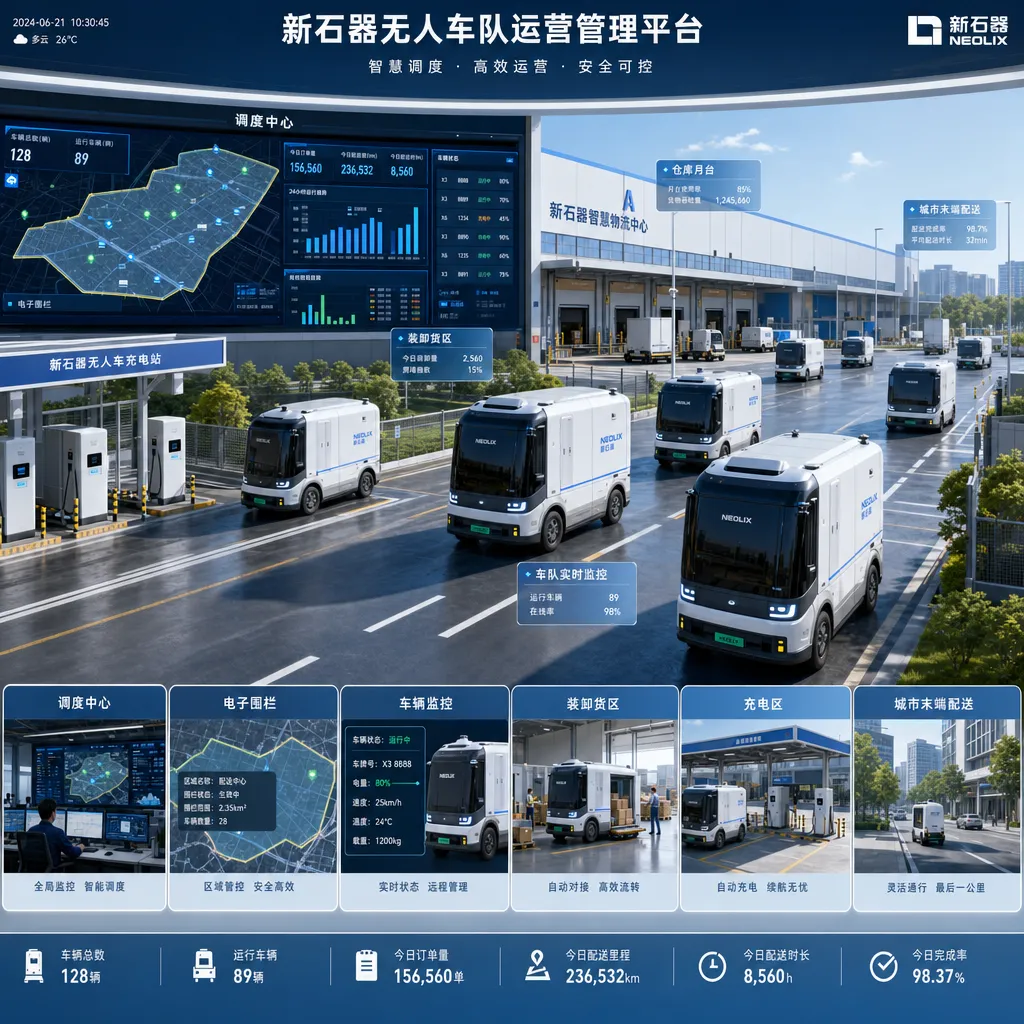
The launch of Neo Claw marks the beginning of the AI Operations Era in autonomous delivery — not just a technological upgrade for Neolix but a fundamental restructuring of the industry’s operational model.
From Technology-Driven to Operations-Driven
In recent years, competition centered on technology — whose self-driving was more stable, whose sensors were cheaper. But as the tech matures, the key differentiator becomes operational efficiency. Whoever manages more vehicles with fewer people gains the edge.
Neo Claw makes operational capabilities replicable through AI, not manpower — reshaping the business landscape across the industry.
Lowering Entry Barriers
Traditional autonomous fleet operations require specialized teams for scheduling, fault handling, and data analysis — all demanding training and experience. Neo Claw encapsulates all this into a natural-language interface, enabling non-experts to manage fleets easily.
That means more companies — from couriers and food delivery to retail — can adopt autonomous delivery without building an ops team from scratch.
Redefining Human–AI Collaboration
Neo Claw doesn’t replace operators; it redefines collaboration. AI handles standardized, repetitive tasks; humans handle decision-making and optimization. This division allows operators to focus on high-value work instead of tedious procedures.
Xie concluded: “With this iteration, we aim to simplify fleet operations and enable high-quality, sustainable scaling.” The logic is clear: only when operations are simple and low-cost can autonomous delivery reach true commercial scale.
Neolix’s Edge: A Moat Built Over Seven Years
Neo Claw’s launch builds upon Neolix’s deep foundation in autonomous delivery.
Scale Advantage: Neolix currently operates the world’s largest L4 delivery fleet, with cumulative mileage exceeding 150 million kilometers. These data fuel AI training and validate reliability.
Technological Barriers: With over 1,500 patents — more than half being invention patents — Neolix has built strong competency in L4 autonomy, fleet management, and holistic intelligent dispatching.
Global Footprint: Beyond China, Neolix has scaled deployments in 19 countries, gaining diverse experience across roads, regulations, and operating habits — enabling Neo Claw’s multi-scenario adaptability.
Product Ecosystem: From the 3 m³ X3 to the 6 m³ X6 and 12 m³ H12, Neolix covers multiple payload classes. Neo Claw must adapt to different vehicle models and control logic, demanding high system generality.
More importantly, Neolix is evolving from “autonomous delivery vehicles” toward embodied intelligence. Logistics involves three key links: transportation, loading/unloading, and handling. Autonomous vehicles address transportation; robots address the rest. Neolix is transitioning to “Neolix Robotics,” and Neo Claw may eventually coordinate both vehicles and robots.
Challenges and the Road Ahead
While Neo Claw is a milestone, several challenges remain before truly achieving “one-sentence control of a thousand vehicles.”
Understanding Complex Scenarios: Neo Claw now excels at standardized tasks, but edge cases — e.g., “drive the vehicle to the nearest repair point” — require contextual reasoning: What defines “repair point”? How to determine “nearest”? What if it’s full?
Multi-Agent Collaboration: At massive fleet scale, multiple AI agents may specialize (dispatch, maintenance, analytics). Coordinating them efficiently without conflicts is a systems challenge.
Cost Optimization: Large model inference is costly, especially under high concurrency. Balancing speed and cost will require innovation in model selection, inference optimization, and caching.
User Adoption: Though natural language reduces friction, users still need time to adapt. Good onboarding and feedback design will be key for long-term engagement.
In the long run, Neo Claw embodies a new operational paradigm. When AI can understand intent, autonomously execute complex tasks, and continuously self-improve, autonomous delivery’s business model will fundamentally change. Operations will shift from cost centers to AI-powered scalability levers.
Neolix’s timing for Neo Claw is no coincidence — it represents both a summary of seven years of accumulation and a bet on the industry’s future. As autonomous delivery enters the era of scaled competition, whoever first builds AI operational capability will hold the advantage.
References
- Neolix Neo Claw: AI-Integrated Solution, Zero-Threshold Fleet Command | 2026 AI Partner·Beijing Yizhuang AI+ Industry Conference - 36Kr (Chinese) — Excerpt from Jinghua Xie’s keynote at the AI+ Industry Conference.


