
Xiaomi MIX Fold 5 debuts Hyper OS 4: AI is no longer just a gimmick
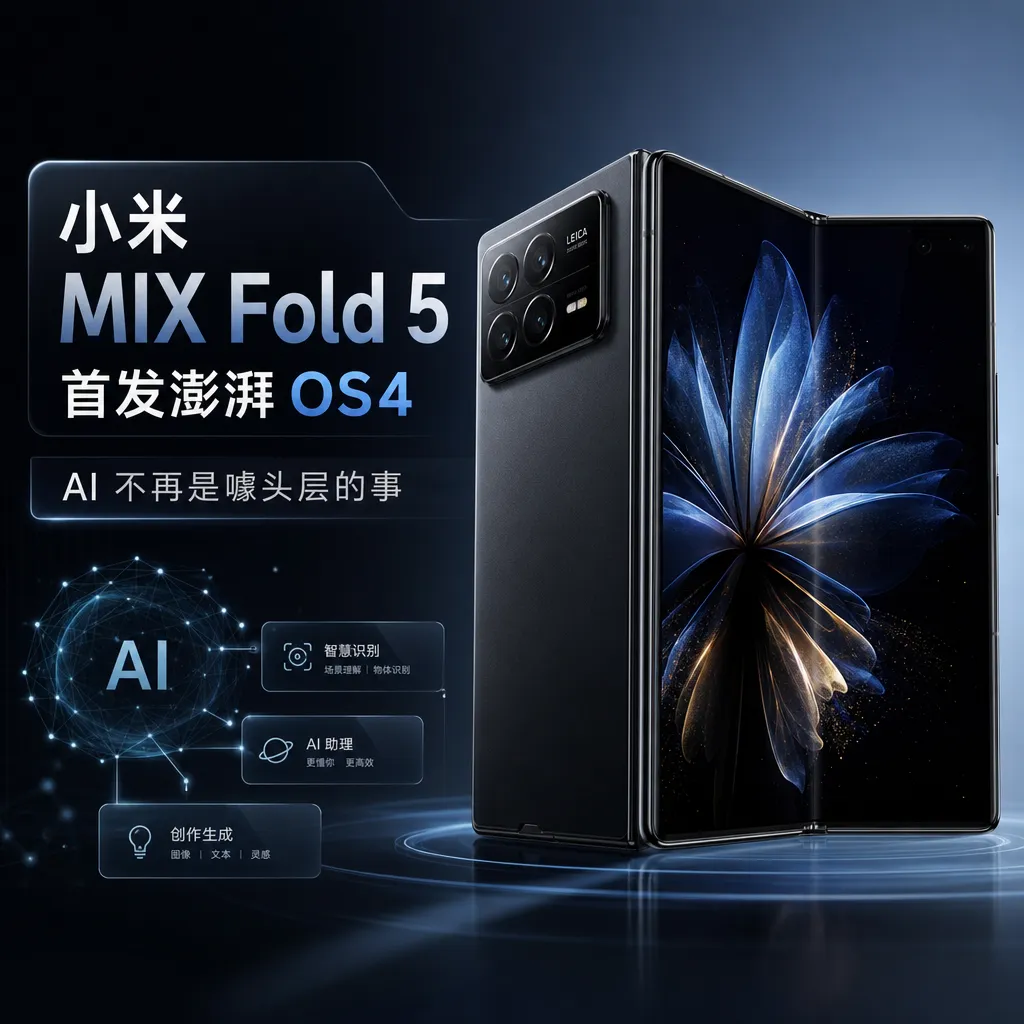
Leaks indicate that the Xiaomi MIX Fold 5 will debut with Surge OS4, with AI capabilities integrated across system applications. Paired with the self-developed Xuanjie O3 chip, the goal is to be “the best AI interaction platform.” This is Xiaomi’s flagship iteration in the foldable display segment, refined over two years.
Blogger @SmartPikachu dropped some more tidbits today: A “mystery wide foldable” will debut with Surge OS4, with system apps fully integrating AI, and it will also be the “most expensive Leica flagship in history.” This device is almost certainly the Xiaomi MIX Fold 5, which has taken nearly two years to get its next iteration.
Compared to simply piling up hardware specs, there’s a line in this leak that’s more worth pondering—“AI functions will align with app development.” Translation: Surge OS4’s AI won’t just stay in a “Xiao Ai Q&A” shell layer, but will dive into the internal logic of system apps. This represents a clear directional shift.
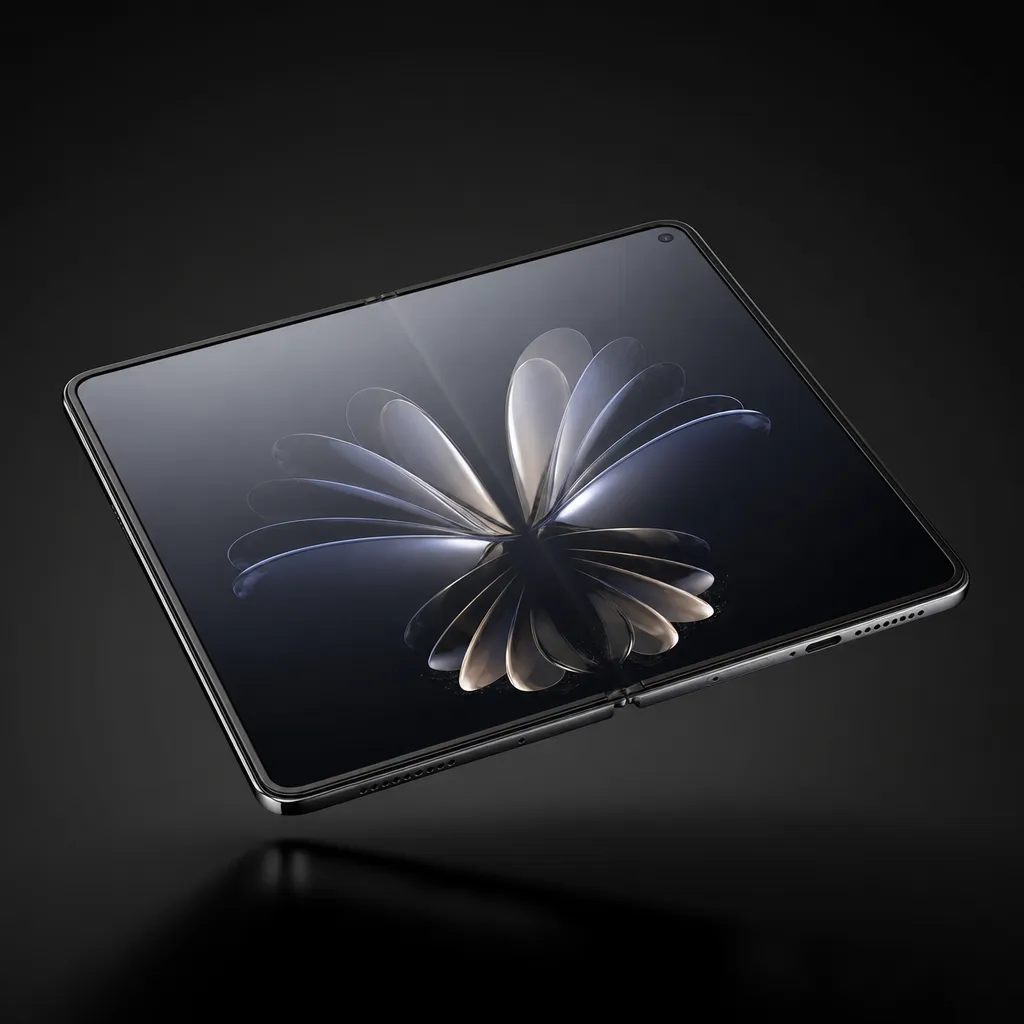
Two Years Sharpening the Sword — MIX Fold 5’s Trump Card is Chip + System
Let’s line up the timeline. The Xiaomi MIX Fold 4 launched in July 2024, starting at ¥8,999, with Snapdragon 8 Gen 3, a 7.98-inch inner screen, a 5100mAh Jinsha River battery, and Leica Summilux quad cameras. At the time, this was top-tier for foldables.
But the folding-screen track has been fiercely competitive over the past two years. Honor’s Magic V series pushed relentlessly for thinner and lighter designs, Vivo’s X Fold series brought imaging up to slab-flagship standards, OPPO’s Find N found its own groove in aspect ratio, and Huawei’s Mate XT triple-fold opened up an entirely new form factor. The MIX Fold 4 has basically been coasting for over a year.
Fold 5 holds two strong cards this time:
- Xuanjie O3: 3nm process, positioned against Snapdragon 8E5. This is Xiaomi’s second-generation self-developed flagship chip. Lei Jun and Lu Weibing have hinted that this year’s new Xuanjie has “very strong overall capability.”
- Surge OS4: Completely rewritten underlying logic, cutting large amounts of legacy code, with AI deeply integrated into the system rather than bolted on.
Add to that the positioning of “most expensive Leica flagship”—it’s pretty clear the MIX Fold 4’s ¥8,999 starting price won’t hold. Considering that this time they’ll likely include a 200MP main camera, make the crease virtually undetectable, and absorb the costs of the self-developed chip, breaking ¥10k is almost certain.
What Exactly Has Been Changed in Surge OS4
From the code level, quite a lot about Surge OS4 can already be uncovered.
First, there’s the UI layer. Rumors say this version will bring in a “liquid glass” design language, unifying the notification bar, control center, lock screen, and core interfaces. This name sounds familiar—Apple’s visionOS aesthetics are an unavoidable reference point. But for Xiaomi, running a unified design language through all core modules is already a huge workload. Whether it will be properly implemented depends on the actual device.
Second, the logic for large-screen multitasking has been reworked. This is the core use case for foldables and most criticized in past MIX Fold generations—inner-screen split view, floating windows, app relay were fragmented. Surge OS4 is said to have redesigned horizontal multitasking UI, with gestures redone according to foldable usage habits.
Then there’s the focus of this leak—AI Empowerment.
There are two layers here. One is what everyone is doing: system-level summarization, real-time subtitle translation, AI photo editing, call summaries, etc. These features are now in Vivo OriginOS, ColorOS, HarmonyOS NEXT, and no one has a fundamental lead.
The second is what’s noteworthy—“aligned with app development”.
In plain terms, Surge OS4 exposes AI capabilities as system infrastructure, allowing first-party apps (Xiaomi Gallery, Notes, Browser, File Manager, etc.) to directly call them, without each app integrating its own large model. This is actually the big move Android camp has been brewing for a year or two—standardizing AI capabilities like Camera API or Location API. Google’s AICore and Apple’s Apple Intelligence both follow this path.
Xiaomi’s logic here is sound. The question is whether third-party apps beyond system apps will also be opened up, when, and to whom. If only Xiaomi’s own apps benefit, then “AI interaction carrier” is still a bit overstated.

Foldable + AI — Does This Combination Actually Work
All manufacturers are now shouting “AI Phone,” but frankly, AI’s presence in slab phones is limited—most functions can run in the cloud, no need to squeeze them onto the device. Foldables are actually a more reasonable carrier for AI for three reasons:
- Larger screen, natural multitasking, AI agents have room to display. For example, left screen for AI booking flights, right screen for WeChat—on a slab phone this experience is awkward.
- Higher price, user base has higher tolerance for new features and is willing to be guinea pigs.
- Form factor requires differentiation, and AI is one of the few directions that can tell a fresh story.
But Foldable + AI has an awkward issue: foldable shipment volume this year is clearly declining. IDC data shows domestic foldable shipments in 2025 down nearly double digits YoY, mainly because price barriers and doubts about practicality haven’t been solved. Adding an AI concept might not reverse the market.
Xiaomi’s strategy is to treat the MIX Fold 5 as a showcase for its self-developed tech—Xuanjie, Surge OS, AI, Leica imaging, all piled into one device. How many units it sells isn’t important; what matters is it sets the technical benchmark for Xiaomi’s high-end product line in the coming year.
A Few Unanswered Questions
A few things the leak hasn’t clarified:
- Xuanjie O3’s NPU performance. How smoothly AI experiences run, how large a model can fit on-device, and what ends up on the NPU. Xiaomi hasn’t yet revealed exact numbers.
- Scale of the self-developed large model. MiLM series previously disclosed 6B and 13B models. Which runs on-device and which in the cloud is still unconfirmed.
- Launch date. Hong Kong media report “earliest July,” matching MIX Fold 4’s schedule, but the new Leica imaging system and Surge OS4 progress might push it to August.
- Price. ¥8,999 won’t hold, breaking ¥10k is likely—but by how much?
What It Means for Developers
If Surge OS4 truly opens system-level AI capabilities, application developers should pay attention to:
- API compatibility. Xiaomi’s self-developed frameworks have always been somewhat unique; whether cross-OEM AI standards (like Android AICore) can be directly used will depend on the SDK docs.
- Device-cloud coordination. Which tasks run on-device, which run in the cloud, how users choose, and how much control developers have.
- Adaptation costs for foldables. After horizontal UI redesign, existing logic for switching between portrait and landscape may need adjustment—test quickly after SDK release.
As an aside, for developers integrating large models into apps, if you just want to quickly verify AI features in foldable form factor, there’s no need to wait for Xiaomi’s SDK. OpenAI Hub already supports GPT, Claude, Gemini, DeepSeek, etc., all callable with one key, compatible with the OpenAI format, directly accessible domestically—get your upper-layer logic running, then switch to OEM’s on-device SDK when it’s out.
Final Thoughts
The real highlight of MIX Fold 5 isn’t the foldable itself—the form factor has no surprises anymore; lighter, thinner, less visible crease. The true focus is: Can Xiaomi use a self-developed chip + a rewritten system + a complete AI suite to restore “autonomy” in its high-end flagship lineup?
In the past, Xiaomi’s high-end was most criticized for “piling specs but not finding the soul in hardware-software synergy.” If Surge OS4 can truly make AI into system-level infrastructure rather than a bunch of scattered features, then MIX Fold 5 at least closes the loop in terms of experience narrative.
Whether the market buys in, and whether the ¥10k+ price will hold, is something we’ll see after July.
References
- ITHome: Rumor says Xiaomi MIX Fold 5 wide foldable will debut Surge OS4 — Original leak mentioning system app AI empowerment and “most expensive Leica flagship” positioning


